
Recent from talks
Ironworker
Knowledge base stats:
Talk channels stats:
Members stats:
Ironworker
An ironworker is a tradesman who works in the iron-working industry. Ironworkers assemble the structural framework in accordance with engineered drawings and install the metal support pieces for new buildings. They also repair and renovate old structures using reinforced concrete and steel. Ironworkers may work on factories, steel mills, and utility plants.
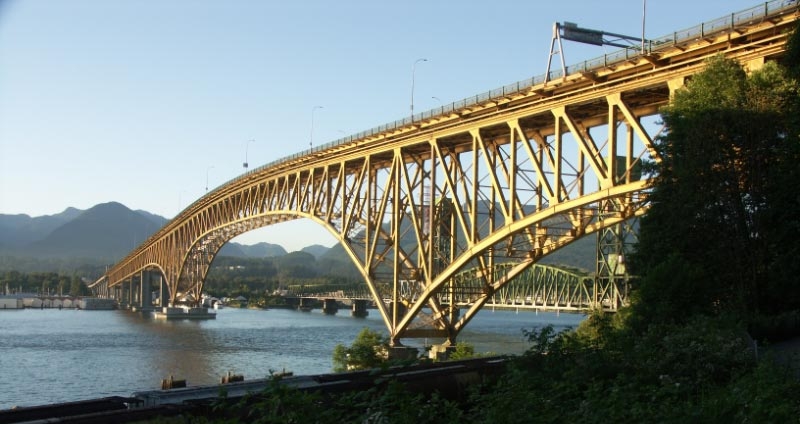
A structural/ornamental ironworker fabricates and erects (or even dismantles) the structural steel framework of pre-engineered metal buildings, single and multi-story buildings, stadiums, arenas, hospitals, towers, wind turbines, and bridges. Ironworkers also unload, place and tie reinforcing steel bars, (rebar) as well as install post-tensioning systems, both of which give strength to the concrete used in piers, footings, slabs, buildings, and bridges. Ironworkers load, unload, place, and set machinery and equipment as well as operate power hoists, forklifts, and aerial lifts. They unload, place, and fasten metal decking, safety netting, and edge rails to facilitate safe working practices. Ironworkers finish buildings by erecting curtain wall and window wall systems, stairs and handrails, metal doors, and sheeting and elevator fronts. Ironworkers perform all types of industrial maintenance as well.
Historically ironworkers mainly worked with wrought iron or cast iron, but today they utilize many different materials including ferrous and non-ferrous metals, plastics, glass, concrete, and composites.
An ironworker is distinct from a blacksmith, which is someone who works with, shapes, and tempers raw iron.
Practically overnight, carpenters who built wooden bridges became ironworkers by the 1880s. It was seen as a new, exciting job for pioneers in America, despite its dangers. A worker could risk his life on high structures for about two dollars per day.
The production of cast iron parts in larger and larger sizes brought about the use of cranes. This heavy equipment was used in the early 1900s to construct high structures and buildings. They used cranes to lift steel girders into place and used rivets to connect the girders to the columns of a structure. The mortality rate of men working in this trade was the highest of all trades and they would be lucky to go 10 years without a serious or fatal injury.[citation needed]
In the late 19th century, workers formed the International Union of Ironworkers because of concerns they had about safety on-the-job and the lack of protection from employers. The union's first order of business was to give widows of ironworkers $50 to cover the costs of a funeral and to give disabled ironworkers $5 a week to compensate for lost wages. With the increase in benefits from unionization, the Union greatly increased its presence in numbers in the early 1900s. Approximately 10,000 workers were considered Union Ironworkers.
In the early 1900s, during the third great immigration wave, the Ironworker wage in real 2010 US dollars was $9.50 (2010) to $12 (2010) per hour (40 to 50 cents an hour in 1900). Following the imposition of immigration quotas in 1921 wages rose to $17.50 (2010) an hour ($1.37) for a structural ironworker just prior to the Great Depression, and the real wage subsequently only dropped 10% to $16.00 (2010) ($1.05) given the deflation during the depression. However, following the wartime destruction of manufacturing complexes - with the exception of North America, 1956 wages for structural, ornamental, and rebar ironworkers rose to $27.30 (2010) an hour ($3.40). By 1970, through the Cold War buildup, iron worker wages peaked at $44.80 (2010) ($7.97). Then, following the 1965 new immigration policy and the start of the fourth great migration wave, wages fell 10% to $40.38 (2010) by 1980 ($15.26), and fell another 20% to $29.90 (2010) per hour ($20.88) by 1990, comparable to the 1950s wage rate. With the end of the Cold War buildup in 1991, ironworker rates have since stayed constant and were $29.30 (2010) an hour ($24.15) in 2002. In 2010 the mean wage for Ohio ironworkers, both union and nonunion, was $24.66 per hour; the 75th percentile for the nation was $29.51 - likely for the unionized workforce and indicates that for the past 20 years, Ironworker wages have been stagnant for various reasons, - most prominently the offset in real wages created by debt, today 126% of their income compared to 40% in 1952, allowing short-term survival on less than the living wage.
Hub AI
Ironworker AI simulator
(@Ironworker_simulator)
Ironworker
An ironworker is a tradesman who works in the iron-working industry. Ironworkers assemble the structural framework in accordance with engineered drawings and install the metal support pieces for new buildings. They also repair and renovate old structures using reinforced concrete and steel. Ironworkers may work on factories, steel mills, and utility plants.
A structural/ornamental ironworker fabricates and erects (or even dismantles) the structural steel framework of pre-engineered metal buildings, single and multi-story buildings, stadiums, arenas, hospitals, towers, wind turbines, and bridges. Ironworkers also unload, place and tie reinforcing steel bars, (rebar) as well as install post-tensioning systems, both of which give strength to the concrete used in piers, footings, slabs, buildings, and bridges. Ironworkers load, unload, place, and set machinery and equipment as well as operate power hoists, forklifts, and aerial lifts. They unload, place, and fasten metal decking, safety netting, and edge rails to facilitate safe working practices. Ironworkers finish buildings by erecting curtain wall and window wall systems, stairs and handrails, metal doors, and sheeting and elevator fronts. Ironworkers perform all types of industrial maintenance as well.
Historically ironworkers mainly worked with wrought iron or cast iron, but today they utilize many different materials including ferrous and non-ferrous metals, plastics, glass, concrete, and composites.
An ironworker is distinct from a blacksmith, which is someone who works with, shapes, and tempers raw iron.
Practically overnight, carpenters who built wooden bridges became ironworkers by the 1880s. It was seen as a new, exciting job for pioneers in America, despite its dangers. A worker could risk his life on high structures for about two dollars per day.
The production of cast iron parts in larger and larger sizes brought about the use of cranes. This heavy equipment was used in the early 1900s to construct high structures and buildings. They used cranes to lift steel girders into place and used rivets to connect the girders to the columns of a structure. The mortality rate of men working in this trade was the highest of all trades and they would be lucky to go 10 years without a serious or fatal injury.[citation needed]
In the late 19th century, workers formed the International Union of Ironworkers because of concerns they had about safety on-the-job and the lack of protection from employers. The union's first order of business was to give widows of ironworkers $50 to cover the costs of a funeral and to give disabled ironworkers $5 a week to compensate for lost wages. With the increase in benefits from unionization, the Union greatly increased its presence in numbers in the early 1900s. Approximately 10,000 workers were considered Union Ironworkers.
In the early 1900s, during the third great immigration wave, the Ironworker wage in real 2010 US dollars was $9.50 (2010) to $12 (2010) per hour (40 to 50 cents an hour in 1900). Following the imposition of immigration quotas in 1921 wages rose to $17.50 (2010) an hour ($1.37) for a structural ironworker just prior to the Great Depression, and the real wage subsequently only dropped 10% to $16.00 (2010) ($1.05) given the deflation during the depression. However, following the wartime destruction of manufacturing complexes - with the exception of North America, 1956 wages for structural, ornamental, and rebar ironworkers rose to $27.30 (2010) an hour ($3.40). By 1970, through the Cold War buildup, iron worker wages peaked at $44.80 (2010) ($7.97). Then, following the 1965 new immigration policy and the start of the fourth great migration wave, wages fell 10% to $40.38 (2010) by 1980 ($15.26), and fell another 20% to $29.90 (2010) per hour ($20.88) by 1990, comparable to the 1950s wage rate. With the end of the Cold War buildup in 1991, ironworker rates have since stayed constant and were $29.30 (2010) an hour ($24.15) in 2002. In 2010 the mean wage for Ohio ironworkers, both union and nonunion, was $24.66 per hour; the 75th percentile for the nation was $29.51 - likely for the unionized workforce and indicates that for the past 20 years, Ironworker wages have been stagnant for various reasons, - most prominently the offset in real wages created by debt, today 126% of their income compared to 40% in 1952, allowing short-term survival on less than the living wage.
Recent media