
Recent from talks
Steve Keen
Knowledge base stats:
Talk channels stats:
Members stats:
Steve Keen
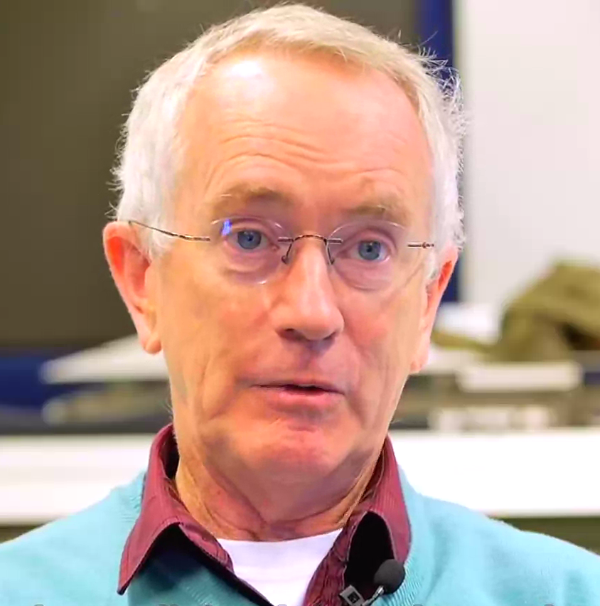
Steve Keen (born 28 March 1953) is an Australian economist and author. He considers himself a post-Keynesian and a critic of neoclassical economics.
Keen was formerly an associate professor of economics at University of Western Sydney, until he applied for voluntary redundancy in 2013, due to the closure of the economics program at the university. In 2014, he became a professor and Head of the School of Economics, History and Politics at Kingston University in London. He has since taken retirement and is crowd source funded to undertake independent research; he is an Honorary Professor UCL, and Distinguished Research Fellow at the Institute for Strategy Resilience & Security, University College London.
Keen was born in Sydney in 1953. His father was a bank manager. Keen graduated with a Bachelor of Arts in 1974 and a Bachelor of Laws in 1976, both from the University of Sydney. He then completed a Diploma of Education at the Sydney Teachers College in 1977.[citation needed]
In 1990, he completed a Master of Commerce in economics and economic history at the University of New South Wales. He completed his PhD in economics at the University of New South Wales in 1997.
Most of Steve Keen's recent work focuses on modeling Hyman Minsky's financial instability hypothesis and Irving Fisher's debt deflation. The hypothesis predicts that an overly large private debt to GDP ratio can cause deflation and depression. Here, the falling of the price level results in a continually rising real quantity of outstanding debt. Moreover, the continued deleveraging of outstanding debts increases the rate of deflation. Thus, debt and deflation act on and react to one another, resulting in a debt-deflation spiral. The outcome is a depression.
Keen's full-range critique of neoclassical economics is contained in his book Debunking Economics. Keen presents a wide variety of critiques on neoclassical economic theory. He argues they show neoclassical assumptions which are fundamentally flawed. Keen claims several neoclassical assumptions are empirically unsupported (that is, they are unsupported by observable and repeatable phenomena) nor are they desirable for society at large (that is, they do not necessarily produce either efficiency or equity for the majority). He argues economists' overall conclusions are very sensitive to small changes in these assumptions.
Keen has attempted to counter Karl Marx's theory (in his view Marx's pre-1857 view, specifically) from a post-Keynesian perspective, by arguing machines can add more product-value over their operational lifetime than the total value of depreciation charged "during those asset lives".
For example, the total value of sausages produced by a sausage machine over its useful life might be greater than the value of the machine. Depreciation, he implies, was the weak point in Marx's social accounting system all along. Keen argues all factors of production can add new value to outputs. However he gives credit to Marx for contributing to the "financial instability hypothesis" of Hyman Minsky.[full citation needed]
Hub AI
Steve Keen AI simulator
(@Steve Keen_simulator)
Steve Keen
Steve Keen (born 28 March 1953) is an Australian economist and author. He considers himself a post-Keynesian and a critic of neoclassical economics.
Keen was formerly an associate professor of economics at University of Western Sydney, until he applied for voluntary redundancy in 2013, due to the closure of the economics program at the university. In 2014, he became a professor and Head of the School of Economics, History and Politics at Kingston University in London. He has since taken retirement and is crowd source funded to undertake independent research; he is an Honorary Professor UCL, and Distinguished Research Fellow at the Institute for Strategy Resilience & Security, University College London.
Keen was born in Sydney in 1953. His father was a bank manager. Keen graduated with a Bachelor of Arts in 1974 and a Bachelor of Laws in 1976, both from the University of Sydney. He then completed a Diploma of Education at the Sydney Teachers College in 1977.[citation needed]
In 1990, he completed a Master of Commerce in economics and economic history at the University of New South Wales. He completed his PhD in economics at the University of New South Wales in 1997.
Most of Steve Keen's recent work focuses on modeling Hyman Minsky's financial instability hypothesis and Irving Fisher's debt deflation. The hypothesis predicts that an overly large private debt to GDP ratio can cause deflation and depression. Here, the falling of the price level results in a continually rising real quantity of outstanding debt. Moreover, the continued deleveraging of outstanding debts increases the rate of deflation. Thus, debt and deflation act on and react to one another, resulting in a debt-deflation spiral. The outcome is a depression.
Keen's full-range critique of neoclassical economics is contained in his book Debunking Economics. Keen presents a wide variety of critiques on neoclassical economic theory. He argues they show neoclassical assumptions which are fundamentally flawed. Keen claims several neoclassical assumptions are empirically unsupported (that is, they are unsupported by observable and repeatable phenomena) nor are they desirable for society at large (that is, they do not necessarily produce either efficiency or equity for the majority). He argues economists' overall conclusions are very sensitive to small changes in these assumptions.
Keen has attempted to counter Karl Marx's theory (in his view Marx's pre-1857 view, specifically) from a post-Keynesian perspective, by arguing machines can add more product-value over their operational lifetime than the total value of depreciation charged "during those asset lives".
For example, the total value of sausages produced by a sausage machine over its useful life might be greater than the value of the machine. Depreciation, he implies, was the weak point in Marx's social accounting system all along. Keen argues all factors of production can add new value to outputs. However he gives credit to Marx for contributing to the "financial instability hypothesis" of Hyman Minsky.[full citation needed]
Recent media