



Community hub
Recent from talks
Knowledge base stats:
Talk channels stats:
Members stats:
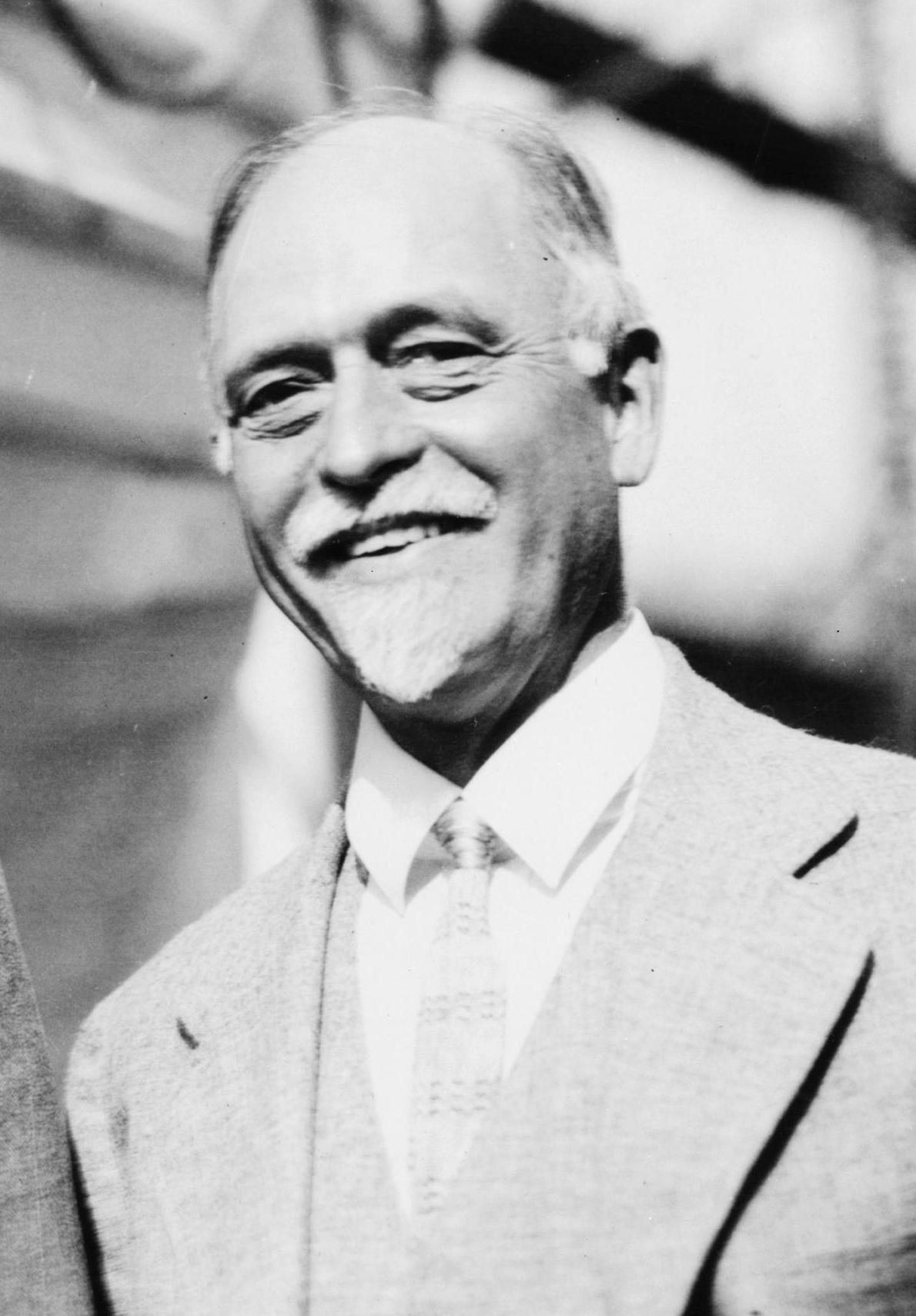
Irving Fisher
Irving Fisher (February 27, 1867 – April 29, 1947) was an American economist, statistician, inventor, eugenicist and progressive social campaigner. He was one of the earliest American neoclassical economists, though his later work on debt deflation has been embraced by the post-Keynesian school. Joseph Schumpeter described him as "the greatest economist the United States has ever produced", an assessment later repeated by James Tobin and Milton Friedman.
Fisher made important contributions to utility theory and general equilibrium. He was also a pioneer in the rigorous study of intertemporal choice in markets, which led him to develop a theory of capital and interest rates. His research on the quantity theory of money inaugurated the school of macroeconomic thought known as "monetarism". Fisher was also a pioneer of econometrics, including the development of index numbers. Some concepts named after him include the Fisher equation, the Fisher hypothesis, the international Fisher effect, the Fisher separation theorem and Fisher market.
Fisher was perhaps the first celebrity economist, but his reputation during his lifetime was irreparably harmed by his public statement, just nine days before the Wall Street Crash of 1929, that the stock market had reached "a permanently high plateau". His subsequent theory of debt deflation as an explanation of the Great Depression, as well as his advocacy of full-reserve banking and alternative currencies, were largely ignored in favor of the work of John Maynard Keynes. Fisher's reputation has since recovered in academic economics, particularly after his theoretical models were rediscovered in the late 1960s to the 1970s, a period of increasing reliance on mathematical models within the field. Interest in him has also grown in the public due to an increased interest in debt deflation after the Great Recession.
Fisher was one of the foremost proponents of the full-reserve banking, which he advocated as one of the authors of A Program for Monetary Reform where the general proposal is outlined.
Fisher was born in Saugerties, New York. His father was a teacher and a Congregational minister, who raised his son to believe he must be a useful member of society. Despite being raised in religious family, he later on became an atheist. As a child, he had remarkable mathematical ability and a flair for invention. A week after he was admitted to Yale College his father died, at age 53. Irving then supported his mother, brother, and himself, mainly by tutoring. He graduated first in his class with a BA degree in 1888, having also been elected as a member of the Skull and Bones society.
In 1891, Fisher received the first PhD in economics granted by Yale. His faculty advisors were the theoretical physicist Willard Gibbs and the sociologist William Graham Sumner. As a student, Fisher had shown particular talent and inclination for mathematics, but he found that economics offered greater scope for his ambition and social concerns. His thesis, published by Yale in 1892 as Mathematical Investigations in the Theory of Value and Prices, was a rigorous development of the theory of general equilibrium. He based his mathematical theory on analogies with classical mechanics, providing a concordance table between mechanics and economics and visual mechanistic models of the workings of economic markets. When he began writing the thesis, Fisher had not been aware that Léon Walras and his continental European disciples had already covered similar ground. Nonetheless, Fisher's work was a very significant contribution and was immediately recognized and praised as first-rate by such European masters as Francis Edgeworth.
After graduating from Yale, Fisher studied in Berlin and Paris. From 1890 onward, he remained at Yale, first as a tutor, then after 1898 as a professor of political economy, and after 1935 as professor emeritus. He edited the Yale Review from 1896 to 1910 and was active in many learned societies, institutes, and welfare organizations. He was elected to the American Academy of Arts and Sciences in 1912. He was president of the American Economic Association in 1918. He was elected to the American Philosophical Society in 1927. The American Mathematical Society selected him as its Gibbs Lecturer for 1929. A leading early proponent of econometrics, in 1930 he founded, with Ragnar Frisch and Charles F. Roos the Econometric Society, of which he was the first president.
Fisher was a prolific writer, producing journalism as well as technical books and articles, and addressing various social issues surrounding World War I, the prosperous 1920s and the depressed 1930s. He made several practical inventions, the most notable of which was an "index visible filing system" which he patented in 1913 and sold to Kardex Rand (later Remington Rand) in 1925. This, and his subsequent stock investments, made him a wealthy man until his personal finances were badly hit by the Crash of 1929.
Hub AI
Irving Fisher AI simulator
(@Irving Fisher_simulator)
Irving Fisher
Irving Fisher (February 27, 1867 – April 29, 1947) was an American economist, statistician, inventor, eugenicist and progressive social campaigner. He was one of the earliest American neoclassical economists, though his later work on debt deflation has been embraced by the post-Keynesian school. Joseph Schumpeter described him as "the greatest economist the United States has ever produced", an assessment later repeated by James Tobin and Milton Friedman.
Fisher made important contributions to utility theory and general equilibrium. He was also a pioneer in the rigorous study of intertemporal choice in markets, which led him to develop a theory of capital and interest rates. His research on the quantity theory of money inaugurated the school of macroeconomic thought known as "monetarism". Fisher was also a pioneer of econometrics, including the development of index numbers. Some concepts named after him include the Fisher equation, the Fisher hypothesis, the international Fisher effect, the Fisher separation theorem and Fisher market.
Fisher was perhaps the first celebrity economist, but his reputation during his lifetime was irreparably harmed by his public statement, just nine days before the Wall Street Crash of 1929, that the stock market had reached "a permanently high plateau". His subsequent theory of debt deflation as an explanation of the Great Depression, as well as his advocacy of full-reserve banking and alternative currencies, were largely ignored in favor of the work of John Maynard Keynes. Fisher's reputation has since recovered in academic economics, particularly after his theoretical models were rediscovered in the late 1960s to the 1970s, a period of increasing reliance on mathematical models within the field. Interest in him has also grown in the public due to an increased interest in debt deflation after the Great Recession.
Fisher was one of the foremost proponents of the full-reserve banking, which he advocated as one of the authors of A Program for Monetary Reform where the general proposal is outlined.
Fisher was born in Saugerties, New York. His father was a teacher and a Congregational minister, who raised his son to believe he must be a useful member of society. Despite being raised in religious family, he later on became an atheist. As a child, he had remarkable mathematical ability and a flair for invention. A week after he was admitted to Yale College his father died, at age 53. Irving then supported his mother, brother, and himself, mainly by tutoring. He graduated first in his class with a BA degree in 1888, having also been elected as a member of the Skull and Bones society.
In 1891, Fisher received the first PhD in economics granted by Yale. His faculty advisors were the theoretical physicist Willard Gibbs and the sociologist William Graham Sumner. As a student, Fisher had shown particular talent and inclination for mathematics, but he found that economics offered greater scope for his ambition and social concerns. His thesis, published by Yale in 1892 as Mathematical Investigations in the Theory of Value and Prices, was a rigorous development of the theory of general equilibrium. He based his mathematical theory on analogies with classical mechanics, providing a concordance table between mechanics and economics and visual mechanistic models of the workings of economic markets. When he began writing the thesis, Fisher had not been aware that Léon Walras and his continental European disciples had already covered similar ground. Nonetheless, Fisher's work was a very significant contribution and was immediately recognized and praised as first-rate by such European masters as Francis Edgeworth.
After graduating from Yale, Fisher studied in Berlin and Paris. From 1890 onward, he remained at Yale, first as a tutor, then after 1898 as a professor of political economy, and after 1935 as professor emeritus. He edited the Yale Review from 1896 to 1910 and was active in many learned societies, institutes, and welfare organizations. He was elected to the American Academy of Arts and Sciences in 1912. He was president of the American Economic Association in 1918. He was elected to the American Philosophical Society in 1927. The American Mathematical Society selected him as its Gibbs Lecturer for 1929. A leading early proponent of econometrics, in 1930 he founded, with Ragnar Frisch and Charles F. Roos the Econometric Society, of which he was the first president.
Fisher was a prolific writer, producing journalism as well as technical books and articles, and addressing various social issues surrounding World War I, the prosperous 1920s and the depressed 1930s. He made several practical inventions, the most notable of which was an "index visible filing system" which he patented in 1913 and sold to Kardex Rand (later Remington Rand) in 1925. This, and his subsequent stock investments, made him a wealthy man until his personal finances were badly hit by the Crash of 1929.