
Recent from talks
Strategic bomber
Knowledge base stats:
Talk channels stats:
Members stats:
Strategic bomber
A strategic bomber is a medium-to-long-range bomber aircraft designed to drop large amounts of air-to-ground weaponry onto a distant target for the purposes of debilitating the enemy's capacity to wage war. Unlike tactical bombers, penetrators, fighter-bombers, and attack aircraft, which are used in air interdiction operations to attack enemy combatants and military equipment, strategic bombers are designed to fly into enemy territory to destroy strategic targets (e.g., infrastructure, logistics, military installations, factories, etc.). In addition to strategic bombing, strategic bombers can be used for tactical missions. There are currently only three countries that operate strategic heavy bombers: the United States, Russia and China.
The modern strategic bomber role appeared after strategic bombing was widely employed, and atomic bombs were first used during World War II. Nuclear strike missions (i.e., delivering nuclear-armed missiles or bombs) can potentially be carried out by most modern fighter-bombers and strike fighters, even at intercontinental range, with the use of aerial refueling, so any nation possessing this combination of equipment and techniques theoretically has such capability. Primary delivery aircraft for a modern strategic bombing mission need not always necessarily be a heavy bomber type, and any modern aircraft capable of nuclear strikes at long range is equally able to carry out tactical missions with conventional weapons. An example is France's Mirage IV, a small strategic bomber replaced in service by the ASMP-equipped Mirage 2000N fighter-bomber and Rafale multirole fighter.
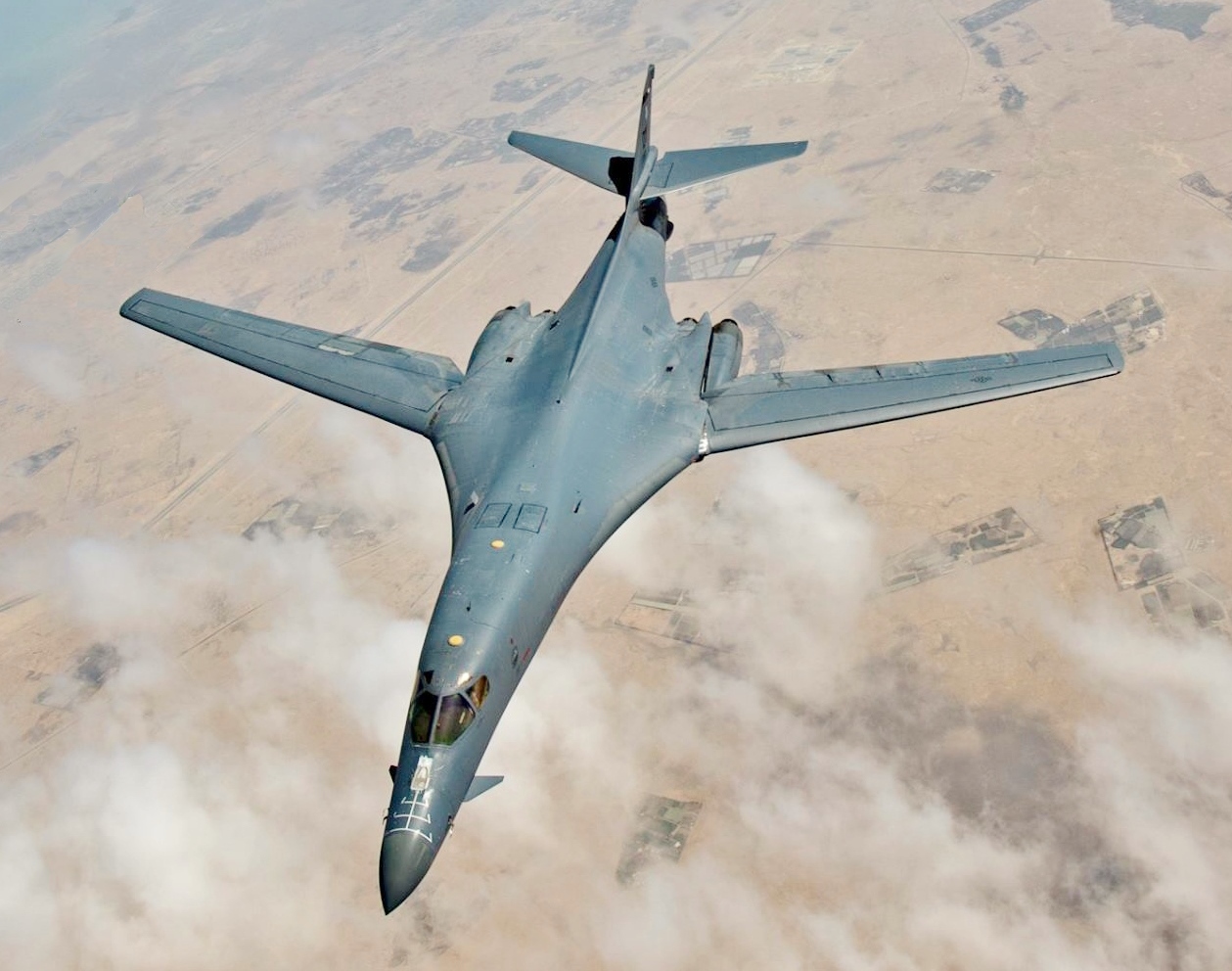
As of 2025[update], the United States Air Force is the largest operator with 130 strategic bombers in active service, between the B-52 Stratofortress, B-1 Lancer, and Northrop B-2 Spirit. The People's Liberation Army is second with 120 Xi'an H-6 bombers, and the Russian Air Force third, with 119 bombers between its Tu-95, Tu-22M, and Tu-160.
The first strategic bombing efforts took place during World War I (1914–18), by the Russians with their Sikorsky Ilya Muromets bomber (the first heavy four-engine aircraft), and by the Germans using Zeppelins or long-range multi-engine Gotha aircraft. Zeppelins reached England on bombing raids by 1916, forcing the British to create extensive defense systems including some of the first anti-aircraft guns which were often used with searchlights to highlight the enemy machines overhead. Late in the war, American fliers under the command of Brig. Gen. Billy Mitchell were developing multi-aircraft "mass" bombing missions behind German lines, although the Armistice ended full realization of what was being planned.
Study of strategic bombing continued in the interwar years. Many books and articles predicted a fearful prospect for any future war, paced by political fears such as those expressed by British Prime Minister Stanley Baldwin who told the House of Commons early in the 1930s that "the bomber will always get through" no matter what defensive systems were undertaken. It was widely believed by the late 1930s that strategic "terror" bombing of cities in any war would quickly result in devastating losses and might decide a conflict in a matter of days or weeks. But theory far exceeded what most air forces could actually put into the air. Germany focused on short-range tactical bombers. Britain's Royal Air Force began developing four-engine long-range bombers only in the late 1930s. The U.S. Army Air Corps (Army Air Forces as of mid-1941) was severely limited by small budgets in the late 1930s, and only barely saved the B-17 bomber that would soon be vital. The equally important B-24 first flew in 1939. Both aircraft would constitute the bulk of the bomber force for USAAF strategic bombing in Europe and Allied day bomber units more generally.
At the start of World War II, so-called "strategic" bombing was initially carried out by medium bomber aircraft which were typically twin-engined, armed with several defensive guns, but only possessed limited bomb-carrying capacity and range. Both Britain and the US were developing larger two- and four-engined designs, which began to replace or supplement the smaller aircraft by 1941–42. After American entry into the war in December 1941, the U.S. 8th Air Force began to develop a daylight bombing capacity using improved B-17 and B-24 four-engine aircraft. In order to assemble the formations to carry out these bombing campaigns, assembly ships were used to quickly form defensive combat boxes. The RAF concentrated its efforts on night bombing. But neither force was able to develop adequate bombsights or tactics to allow for often-bragged "pinpoint" accuracy. The post-war U.S. Strategic Bombing Survey studies supported the overall notion of strategic bombing, but underlined many of its shortcomings as well. Attempts to create pioneering examples of "smart bombs" resulted in the Azon ordnance, deployed in the European Theater and CBI Theater from B-24s.
Following the untimely death of the top German advocate for strategic bombing, General Walther Wever in early June 1936, the focus of Nazi Germany's Luftwaffe bomber forces, the so-named Kampfgeschwader (bomber wings) became the battlefield support of the German Army as part of the general Blitzkrieg form of warfare, carried out with both medium bombers such as the Heinkel He 111, and Schnellbombers such as the Junkers Ju 88A. Support for the Ural bomber project before the start of WW II dwindled after Wever's death, with the only aircraft design that could closely match the Allied bomber force's aircraft – the Heinkel He 177A, originated in early November 1937, deployed in its initial form in 1941–42, hampered by a RLM requirement for it to also perform medium-angle dive bombing, not rescinded until September 1942 – unable to perform either function properly, with a powerplant selection and particular powerplant installation design features on the 30-meter wingspan Greif, that led to endless problems with engine fires. The trans-Atlantic ranged Amerika Bomber program started in March 1942 sought to ameliorate the lack of a long-range bomber for the Luftwaffe, but led only to three Messerschmitt- and two Junkers-built prototypes ever flying, and no operational "heavy bombers" for strategic use for the Third Reich beyond the roughly one thousand He 177s built.
By the end of the Second World War in 1945, the "heavy" bomber, epitomized by the British Avro Lancaster and American Boeing B-29 Superfortress used in the Pacific Theater, showed what could be accomplished by area bombing of Japan's cities and the often small and dispersed factories within them. Under Major General Curtis LeMay, the U.S. 20th Air Force, based in the Mariana Islands, undertook low-level incendiary bombing missions, results of which were soon measured in the number of square miles destroyed. The air raids on Japan had withered the nation's ability to continue fighting, although the Japanese government delayed surrender until atomic bombs were dropped on Hiroshima and Nagasaki in August 1945.
Hub AI
Strategic bomber AI simulator
(@Strategic bomber_simulator)
Strategic bomber
A strategic bomber is a medium-to-long-range bomber aircraft designed to drop large amounts of air-to-ground weaponry onto a distant target for the purposes of debilitating the enemy's capacity to wage war. Unlike tactical bombers, penetrators, fighter-bombers, and attack aircraft, which are used in air interdiction operations to attack enemy combatants and military equipment, strategic bombers are designed to fly into enemy territory to destroy strategic targets (e.g., infrastructure, logistics, military installations, factories, etc.). In addition to strategic bombing, strategic bombers can be used for tactical missions. There are currently only three countries that operate strategic heavy bombers: the United States, Russia and China.
The modern strategic bomber role appeared after strategic bombing was widely employed, and atomic bombs were first used during World War II. Nuclear strike missions (i.e., delivering nuclear-armed missiles or bombs) can potentially be carried out by most modern fighter-bombers and strike fighters, even at intercontinental range, with the use of aerial refueling, so any nation possessing this combination of equipment and techniques theoretically has such capability. Primary delivery aircraft for a modern strategic bombing mission need not always necessarily be a heavy bomber type, and any modern aircraft capable of nuclear strikes at long range is equally able to carry out tactical missions with conventional weapons. An example is France's Mirage IV, a small strategic bomber replaced in service by the ASMP-equipped Mirage 2000N fighter-bomber and Rafale multirole fighter.
As of 2025[update], the United States Air Force is the largest operator with 130 strategic bombers in active service, between the B-52 Stratofortress, B-1 Lancer, and Northrop B-2 Spirit. The People's Liberation Army is second with 120 Xi'an H-6 bombers, and the Russian Air Force third, with 119 bombers between its Tu-95, Tu-22M, and Tu-160.
The first strategic bombing efforts took place during World War I (1914–18), by the Russians with their Sikorsky Ilya Muromets bomber (the first heavy four-engine aircraft), and by the Germans using Zeppelins or long-range multi-engine Gotha aircraft. Zeppelins reached England on bombing raids by 1916, forcing the British to create extensive defense systems including some of the first anti-aircraft guns which were often used with searchlights to highlight the enemy machines overhead. Late in the war, American fliers under the command of Brig. Gen. Billy Mitchell were developing multi-aircraft "mass" bombing missions behind German lines, although the Armistice ended full realization of what was being planned.
Study of strategic bombing continued in the interwar years. Many books and articles predicted a fearful prospect for any future war, paced by political fears such as those expressed by British Prime Minister Stanley Baldwin who told the House of Commons early in the 1930s that "the bomber will always get through" no matter what defensive systems were undertaken. It was widely believed by the late 1930s that strategic "terror" bombing of cities in any war would quickly result in devastating losses and might decide a conflict in a matter of days or weeks. But theory far exceeded what most air forces could actually put into the air. Germany focused on short-range tactical bombers. Britain's Royal Air Force began developing four-engine long-range bombers only in the late 1930s. The U.S. Army Air Corps (Army Air Forces as of mid-1941) was severely limited by small budgets in the late 1930s, and only barely saved the B-17 bomber that would soon be vital. The equally important B-24 first flew in 1939. Both aircraft would constitute the bulk of the bomber force for USAAF strategic bombing in Europe and Allied day bomber units more generally.
At the start of World War II, so-called "strategic" bombing was initially carried out by medium bomber aircraft which were typically twin-engined, armed with several defensive guns, but only possessed limited bomb-carrying capacity and range. Both Britain and the US were developing larger two- and four-engined designs, which began to replace or supplement the smaller aircraft by 1941–42. After American entry into the war in December 1941, the U.S. 8th Air Force began to develop a daylight bombing capacity using improved B-17 and B-24 four-engine aircraft. In order to assemble the formations to carry out these bombing campaigns, assembly ships were used to quickly form defensive combat boxes. The RAF concentrated its efforts on night bombing. But neither force was able to develop adequate bombsights or tactics to allow for often-bragged "pinpoint" accuracy. The post-war U.S. Strategic Bombing Survey studies supported the overall notion of strategic bombing, but underlined many of its shortcomings as well. Attempts to create pioneering examples of "smart bombs" resulted in the Azon ordnance, deployed in the European Theater and CBI Theater from B-24s.
Following the untimely death of the top German advocate for strategic bombing, General Walther Wever in early June 1936, the focus of Nazi Germany's Luftwaffe bomber forces, the so-named Kampfgeschwader (bomber wings) became the battlefield support of the German Army as part of the general Blitzkrieg form of warfare, carried out with both medium bombers such as the Heinkel He 111, and Schnellbombers such as the Junkers Ju 88A. Support for the Ural bomber project before the start of WW II dwindled after Wever's death, with the only aircraft design that could closely match the Allied bomber force's aircraft – the Heinkel He 177A, originated in early November 1937, deployed in its initial form in 1941–42, hampered by a RLM requirement for it to also perform medium-angle dive bombing, not rescinded until September 1942 – unable to perform either function properly, with a powerplant selection and particular powerplant installation design features on the 30-meter wingspan Greif, that led to endless problems with engine fires. The trans-Atlantic ranged Amerika Bomber program started in March 1942 sought to ameliorate the lack of a long-range bomber for the Luftwaffe, but led only to three Messerschmitt- and two Junkers-built prototypes ever flying, and no operational "heavy bombers" for strategic use for the Third Reich beyond the roughly one thousand He 177s built.
By the end of the Second World War in 1945, the "heavy" bomber, epitomized by the British Avro Lancaster and American Boeing B-29 Superfortress used in the Pacific Theater, showed what could be accomplished by area bombing of Japan's cities and the often small and dispersed factories within them. Under Major General Curtis LeMay, the U.S. 20th Air Force, based in the Mariana Islands, undertook low-level incendiary bombing missions, results of which were soon measured in the number of square miles destroyed. The air raids on Japan had withered the nation's ability to continue fighting, although the Japanese government delayed surrender until atomic bombs were dropped on Hiroshima and Nagasaki in August 1945.
Recent media