
Recent from talks
Air interdiction
Knowledge base stats:
Talk channels stats:
Members stats:
Air interdiction
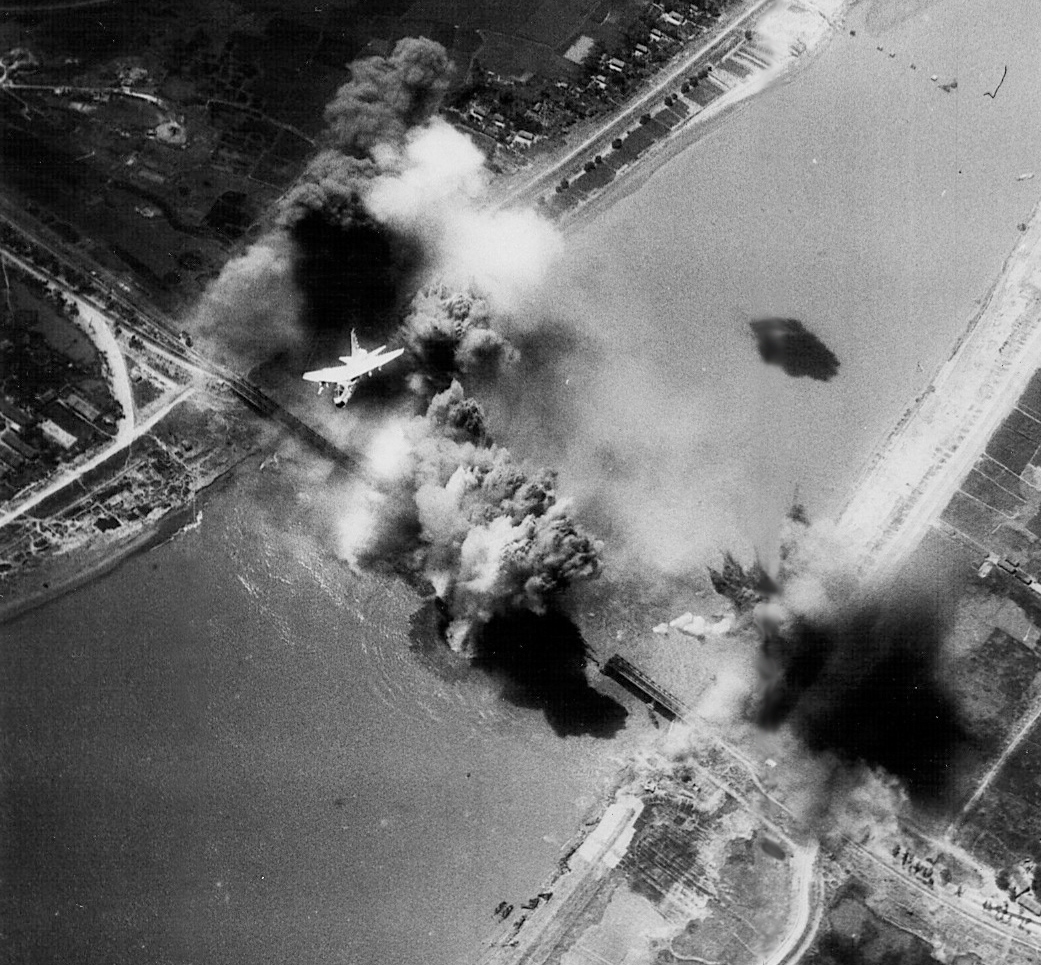
Air interdiction (AI), also known as deep air support (DAS), is the use of preventive tactical bombing and strafing by combat aircraft against enemy targets that are not an immediate threat, to delay, disrupt or hinder later enemy engagement on friendly forces. It is a core capability of virtually all military air forces, and has been conducted in conflicts since World War I. Aircraft that are used for this purpose are known as interdictors.
A distinction is often made between tactical and strategic air interdiction, depending on the objectives of the operation. Typical objectives in tactical interdiction are meant to affect events rapidly and locally, for example through direct destruction of forces or supplies en route to the active battle area. By contrast, strategic objectives are often broader and more long-term, with fewer direct attacks on enemy fighting capabilities, instead focusing on infrastructure, logistics and other supportive assets.
Deep air support can be contrasted with close air support, highlighting the difference between their respective objectives. Close air support, as the name suggests, is directed towards targets close to friendly ground units, as closely coordinated air-strikes, in direct support of active engagement with the enemy. Deep air support or air interdiction is carried out further from the active fighting, based more on strategic planning and less directly coordinated with ground units. Despite being more strategic than close air support, air interdiction should not be confused with strategic bombing, which is unrelated to ground operations.
Air interdiction can cause the physical destruction or attrition of soldiers and matériel before they can reach the battlefield, sever enemy's lines of communication, prevent soldiers and matériel from reaching the battlefield. It can create systemic inefficiencies in the enemy's logistic system so that soldiers and matériel arrive at the battlefield more slowly or in an uneconomical manner.
In the lead up to the invasion of France, the Allied strategic bomber force was switched from the destruction of the enemy air force and means of production to a destruction of the railway routes to the intended landing areas. Once the landings were underway, the Allied tactical and strategic air forces were used to prevent the German strategic armoured reserves from being brought up to the coast and reinforce the divisions there.
Operation Strangle was a series of air interdiction operations during the Italian Campaign of World War II by the Allied air forces to interdict German supply routes in Italy north of Rome from 19 March 1944 to 11 May 1944. Its aim was to prevent essential supplies from reaching German forces in Central Italy and compel a German withdrawal. The strategic goal of the air assault was to eliminate or greatly reduce the need for a ground assault on the region. The Allies failed in the overly ambitious objective of the campaign, namely the forced withdrawal of German forces from the Gustav Line, and did not curtail the flow of supplies. However, the air interdiction seriously complicated the German conduct of defensive operations and played a major role in the success of the subsequent Allied ground assault Operation Diadem.
Two principal interdiction lines were maintained across the narrow boot of Italy. This meant that no through trains were able to run from the Po Valley to the front line, and that south of Florence nearly all supplies had to be moved by truck. Over the course of eight weeks, the Allies flew 21,000 sorties (388 per day) and dropped 22,500 tonnes of bombs. The operation employed medium bombers and fighter bombers over a 150-square-mile (390 km2) area from Rome to Pisa and from Pescara to Rimini.
Operation Strangle was a sustained interdiction attack on North Korea's supplies and communications by the United Nations forces during the Korean War. Beginning in August 1951, the campaign's 87,552 interdiction sorties were credited with destroying 276 locomotives, 3,820 railroad cars, 19,000 rail cuts,[clarification needed] and 34,211 other vehicles.[citation needed] The North Koreans countered the campaign by moving anti-aircraft (AA) guns and crews towards the front line and placing them in higher concentrations around important targets, causing heavy casualties in the UN forces. Despite high losses, Operation Strangle destroyed 900 AA gun positions and damaged 443.
Hub AI
Air interdiction AI simulator
(@Air interdiction_simulator)
Air interdiction
Air interdiction (AI), also known as deep air support (DAS), is the use of preventive tactical bombing and strafing by combat aircraft against enemy targets that are not an immediate threat, to delay, disrupt or hinder later enemy engagement on friendly forces. It is a core capability of virtually all military air forces, and has been conducted in conflicts since World War I. Aircraft that are used for this purpose are known as interdictors.
A distinction is often made between tactical and strategic air interdiction, depending on the objectives of the operation. Typical objectives in tactical interdiction are meant to affect events rapidly and locally, for example through direct destruction of forces or supplies en route to the active battle area. By contrast, strategic objectives are often broader and more long-term, with fewer direct attacks on enemy fighting capabilities, instead focusing on infrastructure, logistics and other supportive assets.
Deep air support can be contrasted with close air support, highlighting the difference between their respective objectives. Close air support, as the name suggests, is directed towards targets close to friendly ground units, as closely coordinated air-strikes, in direct support of active engagement with the enemy. Deep air support or air interdiction is carried out further from the active fighting, based more on strategic planning and less directly coordinated with ground units. Despite being more strategic than close air support, air interdiction should not be confused with strategic bombing, which is unrelated to ground operations.
Air interdiction can cause the physical destruction or attrition of soldiers and matériel before they can reach the battlefield, sever enemy's lines of communication, prevent soldiers and matériel from reaching the battlefield. It can create systemic inefficiencies in the enemy's logistic system so that soldiers and matériel arrive at the battlefield more slowly or in an uneconomical manner.
In the lead up to the invasion of France, the Allied strategic bomber force was switched from the destruction of the enemy air force and means of production to a destruction of the railway routes to the intended landing areas. Once the landings were underway, the Allied tactical and strategic air forces were used to prevent the German strategic armoured reserves from being brought up to the coast and reinforce the divisions there.
Operation Strangle was a series of air interdiction operations during the Italian Campaign of World War II by the Allied air forces to interdict German supply routes in Italy north of Rome from 19 March 1944 to 11 May 1944. Its aim was to prevent essential supplies from reaching German forces in Central Italy and compel a German withdrawal. The strategic goal of the air assault was to eliminate or greatly reduce the need for a ground assault on the region. The Allies failed in the overly ambitious objective of the campaign, namely the forced withdrawal of German forces from the Gustav Line, and did not curtail the flow of supplies. However, the air interdiction seriously complicated the German conduct of defensive operations and played a major role in the success of the subsequent Allied ground assault Operation Diadem.
Two principal interdiction lines were maintained across the narrow boot of Italy. This meant that no through trains were able to run from the Po Valley to the front line, and that south of Florence nearly all supplies had to be moved by truck. Over the course of eight weeks, the Allies flew 21,000 sorties (388 per day) and dropped 22,500 tonnes of bombs. The operation employed medium bombers and fighter bombers over a 150-square-mile (390 km2) area from Rome to Pisa and from Pescara to Rimini.
Operation Strangle was a sustained interdiction attack on North Korea's supplies and communications by the United Nations forces during the Korean War. Beginning in August 1951, the campaign's 87,552 interdiction sorties were credited with destroying 276 locomotives, 3,820 railroad cars, 19,000 rail cuts,[clarification needed] and 34,211 other vehicles.[citation needed] The North Koreans countered the campaign by moving anti-aircraft (AA) guns and crews towards the front line and placing them in higher concentrations around important targets, causing heavy casualties in the UN forces. Despite high losses, Operation Strangle destroyed 900 AA gun positions and damaged 443.
Recent media