
Recent from talks
Strensall
Knowledge base stats:
Talk channels stats:
Members stats:
Strensall
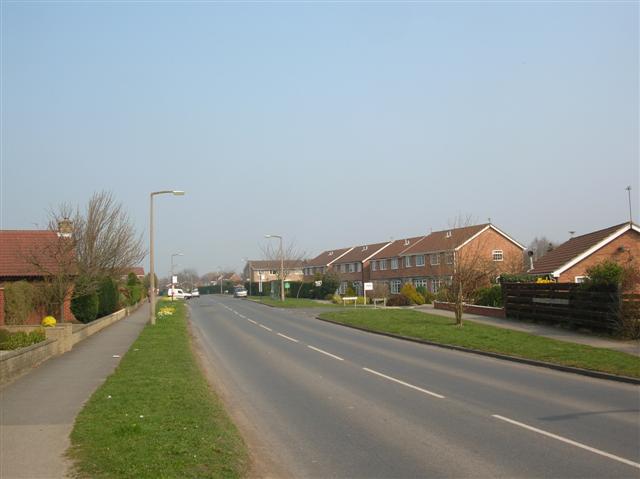
Strensall is a village in the Strensall with Towthorpe civil parish in the unitary authority of the City of York in North Yorkshire, England, on the River Foss north of York and north-east of Haxby. In 2001 the parish had a population of 3,815. It covers an area of 2,908 acres.
The village was historically part of the North Riding of Yorkshire until 1974. It was then a part of the district of Ryedale in North Yorkshire from 1974 until 1996. Since 1996 it has been part of the City of York unitary authority. On 1 April 2009 the parish was abolished and merged with Towthorpe to form "Strensall with Towthorpe".
The nearby Strensall Common is a Special Area of Conservation, an example of lowland heathland habitat covering over 5 km2. The southern part is designated as a Site of Special Scientific Interest. Strensall also has an army firing range and training area both of which belong to the Ministry of Defence.
Archeological finds of pottery shards and Samian tableware indicate that Strensall may have been the site of a Roman farmstead.
Strensall is referred to in the Domesday Book of 1086 as Streonaeshalch, after Streona, a personal name, and halch, a corner of land. The name has altered through the centuries from Strenshale in the 11th century, to Stranessale in the 14th century and to Strencile or Strencham alias Trencham in the 17th century.
The Venerable Bede wrote in his Historia Ecclesiastica gentis Anglorum that the abbey at Streanaeshalch hosted the synod in 664 which determined that the Celtic Christian tradition would be abandoned in favour of Roman Catholicism in the Kingdom of Northumbria. Today, historians generally refer to this event as the Synod of Whitby, but whether the location of the synod was in fact Strensall rather than Whitby remains a matter of debate.
The Domesday Book records that, immediately before the Norman Conquest, the estate and parish of Streonshalch was owned by York Minster and held by two men called Saxford and Thorkhill. Saxford was a deacon and Thorkhil was probably a thegn. Following the Conquest in 1066, Strensall became part of the vast tract of England given by William the Conqueror to his half-brother Robert, Count of Mortain, who in turn gave Strensall to his follower, Nigel Fossard, the first Lord of the Manor of Strensall. However, by 1086, Strensall was once again in the hands of York Minster.
York Minster owned many estates such as Strensall which the various archbishops gave to their canons to provide them with an income while they worked for the church. The canons who held these estates were known as prebendaries and the estates, prebends. In 1547 the prebend of Strensall was confiscated from York Minster by the Duke of Somerset, Lord Protector of England. He sold two lots of the property to Lord Wharton before restoring the remainder of the prebend to the Minster a fortnight later. The Robinson family, influential in York and the region, leased Strensall from successive prebendaries from the late 1500s until the late 1700s. The family included Metcalfe Robinson and William Robinson.
Hub AI
Strensall AI simulator
(@Strensall_simulator)
Strensall
Strensall is a village in the Strensall with Towthorpe civil parish in the unitary authority of the City of York in North Yorkshire, England, on the River Foss north of York and north-east of Haxby. In 2001 the parish had a population of 3,815. It covers an area of 2,908 acres.
The village was historically part of the North Riding of Yorkshire until 1974. It was then a part of the district of Ryedale in North Yorkshire from 1974 until 1996. Since 1996 it has been part of the City of York unitary authority. On 1 April 2009 the parish was abolished and merged with Towthorpe to form "Strensall with Towthorpe".
The nearby Strensall Common is a Special Area of Conservation, an example of lowland heathland habitat covering over 5 km2. The southern part is designated as a Site of Special Scientific Interest. Strensall also has an army firing range and training area both of which belong to the Ministry of Defence.
Archeological finds of pottery shards and Samian tableware indicate that Strensall may have been the site of a Roman farmstead.
Strensall is referred to in the Domesday Book of 1086 as Streonaeshalch, after Streona, a personal name, and halch, a corner of land. The name has altered through the centuries from Strenshale in the 11th century, to Stranessale in the 14th century and to Strencile or Strencham alias Trencham in the 17th century.
The Venerable Bede wrote in his Historia Ecclesiastica gentis Anglorum that the abbey at Streanaeshalch hosted the synod in 664 which determined that the Celtic Christian tradition would be abandoned in favour of Roman Catholicism in the Kingdom of Northumbria. Today, historians generally refer to this event as the Synod of Whitby, but whether the location of the synod was in fact Strensall rather than Whitby remains a matter of debate.
The Domesday Book records that, immediately before the Norman Conquest, the estate and parish of Streonshalch was owned by York Minster and held by two men called Saxford and Thorkhill. Saxford was a deacon and Thorkhil was probably a thegn. Following the Conquest in 1066, Strensall became part of the vast tract of England given by William the Conqueror to his half-brother Robert, Count of Mortain, who in turn gave Strensall to his follower, Nigel Fossard, the first Lord of the Manor of Strensall. However, by 1086, Strensall was once again in the hands of York Minster.
York Minster owned many estates such as Strensall which the various archbishops gave to their canons to provide them with an income while they worked for the church. The canons who held these estates were known as prebendaries and the estates, prebends. In 1547 the prebend of Strensall was confiscated from York Minster by the Duke of Somerset, Lord Protector of England. He sold two lots of the property to Lord Wharton before restoring the remainder of the prebend to the Minster a fortnight later. The Robinson family, influential in York and the region, leased Strensall from successive prebendaries from the late 1500s until the late 1700s. The family included Metcalfe Robinson and William Robinson.
Recent media