
Recent from talks
Pocket pistol
Knowledge base stats:
Talk channels stats:
Members stats:
Pocket pistol
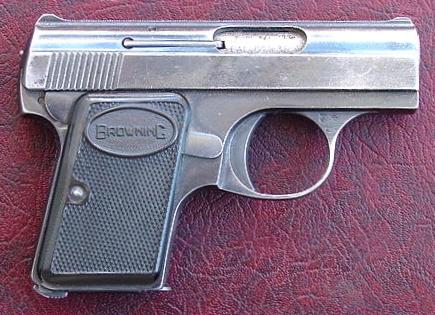
In American English, a pocket pistol is any small, pocket-sized semi-automatic pistol (or less commonly referencing either derringers, or revolvers), and is suitable for concealed carry in a pocket or a similar small space.
Pocket pistols are sometimes categorized as smaller than sub-compact pistols, but the distinction is not clear-cut as some small sub-compact pistols may be categorized as pocket pistols, and some large pocket pistols may be classified as sub-compact pistols.[citation needed]
Pocket pistols were popular in the United States until the 1960s and 1970s, when most states passed laws limiting or prohibiting the carry of concealed weapons. However, the passage of "shall issue permits" in the 1980s and 1990s, resulted in a resurgence in the popularity of pocket pistols in the United States, creating new markets for small, simple, reliable, concealed-carry firearms.
In general use, the term pocket pistol is purely descriptive, but "mouse gun" (used especially for those of the smallest calibers) is often a pejorative. Likewise, pocket pistols, due to their small size, often are lumped in with Saturday night specials, another pejorative term, which are typically inexpensive small-caliber handguns.
The pocket pistol originated in the mid-17th century as a small, concealable flintlock known as the Queen Anne pistol, the coat pistol, or the pocket pistol. This was used throughout the 18th century, evolving from a weapon reserved for the wealthy to a common sidearm in broader use as more and more manufacturers made them by the start of the 19th century.
The original 19th-century vest-sized pocket pistol was the Philadelphia Deringer. The advent of the metallic cartridge gave us the classic double barrel .41 Rimfire Remington Model 95 which achieved such widespread popularity, that it has completely overshadowed all other designs, becoming synonymous with the word "Derringer". The Remington double-barrel derringer design is still being manufactured (150 years after they were first introduced) by American Derringer, Bond Arms, and Cobra Arms, all of whom manufacture derringers in a variety of calibers from .22 long rifle to .45 Long Colt & .410 bore.
Hopkins and Allen produced a "7-shot .22 solid frame double action revolver, made between 1875 and 1907, known as the XL No. 3 Double Action small frame. The .32 Smith & Wesson Safety Hammerless of 1888 to 1892 with the 2 inch barrel became known as a 'Bicycle' gun at some point, and the First Model Ladysmith (the 1902 M Frame Model .22 Hand Ejector), was often referred to as a 'Bicycle' gun. Iver Johnson made a similar gun – the Model 1900 Double Action small frame, a 7-shot .22, which appeared in 1900 and remained in production for 41 years."
Introduced in the late 19th century, snubnosed revolvers such as the "Banker Special", "Sheriff's Model", and "Shopkeeper Special" versions of the Colt Single Action Army revolvers were made by Colt's Manufacturing Company. The Smith & Wesson Safety Hammerless models were produced from 1887 to just before World War II. They were chambered in either .32 S&W or .38 S&W with a 5-shot cylinder. They were most often produced with 2-inch, 3-inch, or 3.5-inch barrels. These top-break revolvers were designed for fast reloading and concealed carry as the hammer was internal and would not snag on drawing the revolver from a pocket. They also had a grip safety. They were known as "The New Departure" to reflect the company's new approach to designing revolvers. Compared to other revolvers, this design sacrifices power and range for maneuverability and concealment. Similar "hammerless" designs proved popular with other manufacturers such as Iver Johnson and Harrington & Richardson. In 1952, Smith & Wesson introduced the more modern hand ejector model the Smith & Wesson Centennial Model 40.
Hub AI
Pocket pistol AI simulator
(@Pocket pistol_simulator)
Pocket pistol
In American English, a pocket pistol is any small, pocket-sized semi-automatic pistol (or less commonly referencing either derringers, or revolvers), and is suitable for concealed carry in a pocket or a similar small space.
Pocket pistols are sometimes categorized as smaller than sub-compact pistols, but the distinction is not clear-cut as some small sub-compact pistols may be categorized as pocket pistols, and some large pocket pistols may be classified as sub-compact pistols.[citation needed]
Pocket pistols were popular in the United States until the 1960s and 1970s, when most states passed laws limiting or prohibiting the carry of concealed weapons. However, the passage of "shall issue permits" in the 1980s and 1990s, resulted in a resurgence in the popularity of pocket pistols in the United States, creating new markets for small, simple, reliable, concealed-carry firearms.
In general use, the term pocket pistol is purely descriptive, but "mouse gun" (used especially for those of the smallest calibers) is often a pejorative. Likewise, pocket pistols, due to their small size, often are lumped in with Saturday night specials, another pejorative term, which are typically inexpensive small-caliber handguns.
The pocket pistol originated in the mid-17th century as a small, concealable flintlock known as the Queen Anne pistol, the coat pistol, or the pocket pistol. This was used throughout the 18th century, evolving from a weapon reserved for the wealthy to a common sidearm in broader use as more and more manufacturers made them by the start of the 19th century.
The original 19th-century vest-sized pocket pistol was the Philadelphia Deringer. The advent of the metallic cartridge gave us the classic double barrel .41 Rimfire Remington Model 95 which achieved such widespread popularity, that it has completely overshadowed all other designs, becoming synonymous with the word "Derringer". The Remington double-barrel derringer design is still being manufactured (150 years after they were first introduced) by American Derringer, Bond Arms, and Cobra Arms, all of whom manufacture derringers in a variety of calibers from .22 long rifle to .45 Long Colt & .410 bore.
Hopkins and Allen produced a "7-shot .22 solid frame double action revolver, made between 1875 and 1907, known as the XL No. 3 Double Action small frame. The .32 Smith & Wesson Safety Hammerless of 1888 to 1892 with the 2 inch barrel became known as a 'Bicycle' gun at some point, and the First Model Ladysmith (the 1902 M Frame Model .22 Hand Ejector), was often referred to as a 'Bicycle' gun. Iver Johnson made a similar gun – the Model 1900 Double Action small frame, a 7-shot .22, which appeared in 1900 and remained in production for 41 years."
Introduced in the late 19th century, snubnosed revolvers such as the "Banker Special", "Sheriff's Model", and "Shopkeeper Special" versions of the Colt Single Action Army revolvers were made by Colt's Manufacturing Company. The Smith & Wesson Safety Hammerless models were produced from 1887 to just before World War II. They were chambered in either .32 S&W or .38 S&W with a 5-shot cylinder. They were most often produced with 2-inch, 3-inch, or 3.5-inch barrels. These top-break revolvers were designed for fast reloading and concealed carry as the hammer was internal and would not snag on drawing the revolver from a pocket. They also had a grip safety. They were known as "The New Departure" to reflect the company's new approach to designing revolvers. Compared to other revolvers, this design sacrifices power and range for maneuverability and concealment. Similar "hammerless" designs proved popular with other manufacturers such as Iver Johnson and Harrington & Richardson. In 1952, Smith & Wesson introduced the more modern hand ejector model the Smith & Wesson Centennial Model 40.
Recent media