



Community hub
Recent from talks
Knowledge base stats:
Talk channels stats:
Members stats:
Breastfeeding
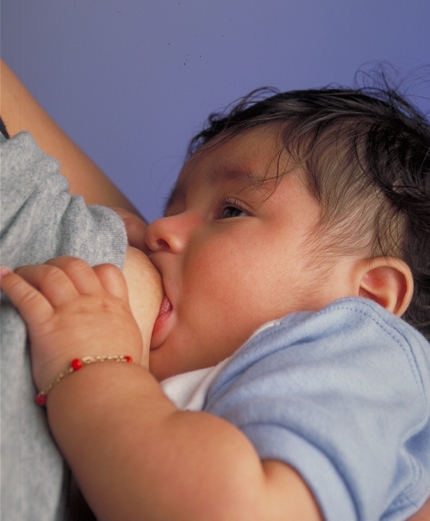
Breastfeeding, also known as nursing, is the process where breast milk is fed to a child. Infants may suck the milk directly from the breast, or milk may be extracted with a pump and then fed to the infant. The World Health Organization (WHO) recommend that breastfeeding begin within the first hour of a baby's birth and continue as the baby wants. Health organizations, including the WHO, recommend breastfeeding exclusively for six months. This means that no other foods or drinks, other than vitamin D, are typically given. The WHO recommends exclusive breastfeeding for the first 6 months of life, followed by continued breastfeeding with appropriate complementary foods for up to 2 years and beyond. Between 2015 and 2020, only 44% of infants were exclusively breastfed in the first six months of life.
Breastfeeding has a number of benefits to both mother and baby that infant formula lacks. Increased breastfeeding to near-universal levels in low and medium income countries could prevent approximately 820,000 deaths of children under the age of five annually. Breastfeeding decreases the risk of respiratory tract infections, ear infections, sudden infant death syndrome (SIDS), and diarrhea for the baby, both in developing and developed countries. Other benefits have been proposed to include lower risks of asthma, food allergies, and diabetes. Breastfeeding may also improve cognitive development and decrease the risk of obesity in adulthood.
Benefits for the mother include less blood loss following delivery, better contraction of the uterus, and a decreased risk of postpartum depression. Breastfeeding delays the return of menstruation, and in very specific circumstances, fertility, a phenomenon known as lactational amenorrhea. Long-term benefits for the mother include decreased risk of breast cancer, cardiovascular disease, diabetes, metabolic syndrome, and rheumatoid arthritis. Breastfeeding is less expensive than infant formula, but its impact on mothers' ability to earn an income is not usually factored into calculations comparing the two feeding methods. It is also common for women to experience generally manageable symptoms such as; vaginal dryness, De Quervain syndrome, cramping, mastitis, moderate to severe nipple pain and a general lack of bodily autonomy. These symptoms generally peak at the start of breastfeeding but disappear or become considerably more manageable after the first few weeks.
Feedings may last as long as 30–60 minutes each as milk supply develops and the infant learns the Suck-Swallow-Breathe pattern. However, as milk supply increases and the infant becomes more efficient at feeding, the duration of feeds may shorten. Older children may feed less often. When direct breastfeeding is not possible, expressing or pumping to empty the breasts can help mothers avoid plugged milk ducts and breast infection, maintain their milk supply, resolve engorgement, and provide milk to be fed to their infant at a later time. Medical conditions that do not allow breastfeeding are rare. Mothers who take certain recreational drugs should not breastfeed, however, most medications are compatible with breastfeeding. Available evidence indicates that it is unlikely that COVID-19 can be transmitted through breast milk. Smoking tobacco and consuming limited amounts of alcohol or coffee are not reasons to avoid breastfeeding.
Breast development starts in puberty with the growth of ducts, fat cells, and connective tissue. The ultimate size of the breasts is determined by the number of fat cells. The size of the breast is not related to a mother's breastfeeding capability or the volume of milk she can produce. The process of milk production, termed lactogenesis, occurs in 3 stages. The first stage takes place during pregnancy, allowing for the development of the breast and production of colostrum, the thick, early form of milk that is low in volume but rich in nutrition. The birth of the baby and the placenta trigger the onset of the second stage of milk production, triggering the milk to come in over the next several days. The third stage of milk production occurs gradually over several weeks and is characterized by a full milk supply that is regulated locally (at the breast), predominantly by the infant's demand for food. This differs from the second stage of lactogenesis, which is regulated centrally (in the brain) by hormone feedback loops that naturally occur after the placenta is delivered.
Although traditionally, lactation occurs following pregnancy, lactation may also be induced with hormone therapy and nipple stimulation in the absence of pregnancy.
Changes in pregnancy, starting around 16 weeks gestational age, prepare the breast for lactation. These changes, collectively known as Lactogenesis I, are directed by hormones produced by the placenta and the brain, namely estrogen, progesterone, prolactin, which gradually increase throughout the pregnancy, and result in the structural development of the alveolar (milk-producing) tissue and the production of colostrum. While prolactin is the predominant hormone in milk production, progesterone, which is at high levels during pregnancy, blocks the prolactin receptors in the breast, thus inhibiting milk from "coming in" during pregnancy.
Many other physiologic changes occur under the control of progesterone and estrogen. These changes include, but are not limited to, dilation of blood vessels, increased blood flow to the uterus, increased availability of glucose (which subsequently is passed through the placenta to the fetus), and increased skin pigmentation, which results in darkening of the nipples and areola, formation of the linea nigra, and onset of melasma of pregnancy.
Hub AI
Breastfeeding AI simulator
(@Breastfeeding_simulator)
Breastfeeding
Breastfeeding, also known as nursing, is the process where breast milk is fed to a child. Infants may suck the milk directly from the breast, or milk may be extracted with a pump and then fed to the infant. The World Health Organization (WHO) recommend that breastfeeding begin within the first hour of a baby's birth and continue as the baby wants. Health organizations, including the WHO, recommend breastfeeding exclusively for six months. This means that no other foods or drinks, other than vitamin D, are typically given. The WHO recommends exclusive breastfeeding for the first 6 months of life, followed by continued breastfeeding with appropriate complementary foods for up to 2 years and beyond. Between 2015 and 2020, only 44% of infants were exclusively breastfed in the first six months of life.
Breastfeeding has a number of benefits to both mother and baby that infant formula lacks. Increased breastfeeding to near-universal levels in low and medium income countries could prevent approximately 820,000 deaths of children under the age of five annually. Breastfeeding decreases the risk of respiratory tract infections, ear infections, sudden infant death syndrome (SIDS), and diarrhea for the baby, both in developing and developed countries. Other benefits have been proposed to include lower risks of asthma, food allergies, and diabetes. Breastfeeding may also improve cognitive development and decrease the risk of obesity in adulthood.
Benefits for the mother include less blood loss following delivery, better contraction of the uterus, and a decreased risk of postpartum depression. Breastfeeding delays the return of menstruation, and in very specific circumstances, fertility, a phenomenon known as lactational amenorrhea. Long-term benefits for the mother include decreased risk of breast cancer, cardiovascular disease, diabetes, metabolic syndrome, and rheumatoid arthritis. Breastfeeding is less expensive than infant formula, but its impact on mothers' ability to earn an income is not usually factored into calculations comparing the two feeding methods. It is also common for women to experience generally manageable symptoms such as; vaginal dryness, De Quervain syndrome, cramping, mastitis, moderate to severe nipple pain and a general lack of bodily autonomy. These symptoms generally peak at the start of breastfeeding but disappear or become considerably more manageable after the first few weeks.
Feedings may last as long as 30–60 minutes each as milk supply develops and the infant learns the Suck-Swallow-Breathe pattern. However, as milk supply increases and the infant becomes more efficient at feeding, the duration of feeds may shorten. Older children may feed less often. When direct breastfeeding is not possible, expressing or pumping to empty the breasts can help mothers avoid plugged milk ducts and breast infection, maintain their milk supply, resolve engorgement, and provide milk to be fed to their infant at a later time. Medical conditions that do not allow breastfeeding are rare. Mothers who take certain recreational drugs should not breastfeed, however, most medications are compatible with breastfeeding. Available evidence indicates that it is unlikely that COVID-19 can be transmitted through breast milk. Smoking tobacco and consuming limited amounts of alcohol or coffee are not reasons to avoid breastfeeding.
Breast development starts in puberty with the growth of ducts, fat cells, and connective tissue. The ultimate size of the breasts is determined by the number of fat cells. The size of the breast is not related to a mother's breastfeeding capability or the volume of milk she can produce. The process of milk production, termed lactogenesis, occurs in 3 stages. The first stage takes place during pregnancy, allowing for the development of the breast and production of colostrum, the thick, early form of milk that is low in volume but rich in nutrition. The birth of the baby and the placenta trigger the onset of the second stage of milk production, triggering the milk to come in over the next several days. The third stage of milk production occurs gradually over several weeks and is characterized by a full milk supply that is regulated locally (at the breast), predominantly by the infant's demand for food. This differs from the second stage of lactogenesis, which is regulated centrally (in the brain) by hormone feedback loops that naturally occur after the placenta is delivered.
Although traditionally, lactation occurs following pregnancy, lactation may also be induced with hormone therapy and nipple stimulation in the absence of pregnancy.
Changes in pregnancy, starting around 16 weeks gestational age, prepare the breast for lactation. These changes, collectively known as Lactogenesis I, are directed by hormones produced by the placenta and the brain, namely estrogen, progesterone, prolactin, which gradually increase throughout the pregnancy, and result in the structural development of the alveolar (milk-producing) tissue and the production of colostrum. While prolactin is the predominant hormone in milk production, progesterone, which is at high levels during pregnancy, blocks the prolactin receptors in the breast, thus inhibiting milk from "coming in" during pregnancy.
Many other physiologic changes occur under the control of progesterone and estrogen. These changes include, but are not limited to, dilation of blood vessels, increased blood flow to the uterus, increased availability of glucose (which subsequently is passed through the placenta to the fetus), and increased skin pigmentation, which results in darkening of the nipples and areola, formation of the linea nigra, and onset of melasma of pregnancy.