
Recent from talks
Sudharmono
Knowledge base stats:
Talk channels stats:
Members stats:
Sudharmono
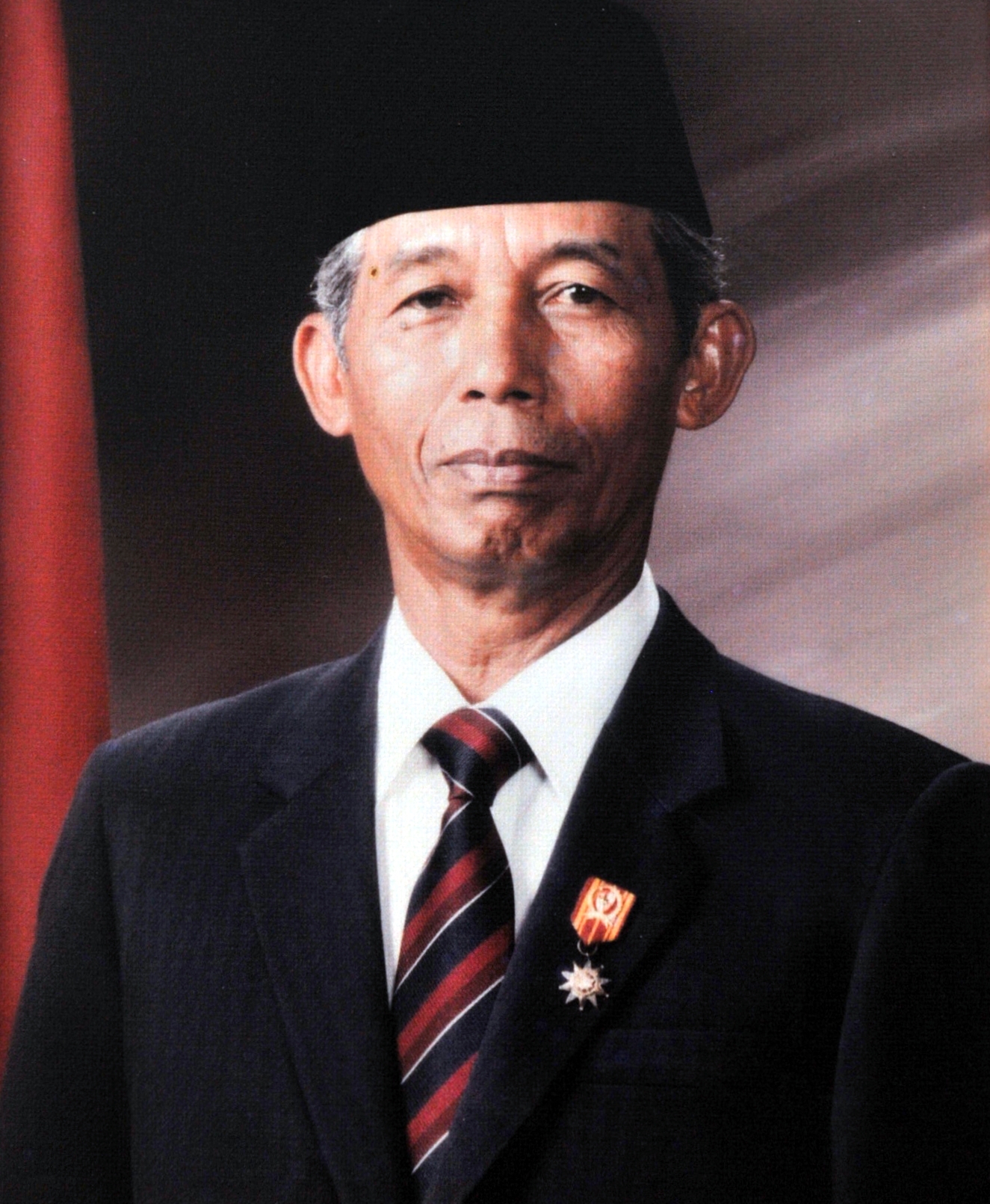
Sudharmono (EVO: Soedharmono; 12 March 1927 – 25 January 2006), also known by his nickname Pak Dar, was an Indonesian Army officer and politician who served as the fifth vice president of Indonesia from 1988 until 1993 under the New Order regime. Previously, he served in several positions in the government and military, including as the Chairman of Golkar, State Secretary of Indonesia, and a lieutenant general in the army.
Sudharmono was born on 12 March 1927, in Gresik, East Java. He completed his Middle School education in 1945. Following the Proclamation of Indonesian Independence, he dropped out from any further education to join the army in the Indonesian National Revolution. He became the Commander of the Ronggolawe Division in the army, a position which he held throughout the war. After the Dutch retreated from Indonesia in 1949, Sudharmono completed his Secondary education before going to Jakarta in 1952 to join the Military Law Academy, which he completed the course in 1956. He then served in Medan, North Sumatra, as an Army Attorney from 1957 to 1961. He remained in the army until 1968 and served in the Indonesia–Malaysia confrontation and the Supreme Operations Command (KOTI).
Following the Fall of Sukarno, after the 30 September Movement, and after the rise of Suharto, Sudharmono left the army after being named Cabinet Secretary as well as Chairman of the Economic Stability Council by Suharto. In 1970, Sudharmono was moved from the position of Cabinet Secretary to the State Secretary, a position which allowed him to assist Suharto in the day-to-day running of the Government. At the 1983 Golkar National Conference, with Suharto's support, Sudharmono was elected as the Chairman of Golkar. In 1988, during the election of vice president at the General Assembly of the People's Consultative Assembly (MPR), he was elected as vice president to accompany Suharto.
As vice president, Sudharmono was extremely active in governing. Despite this, however, the military showed their displeasure at Sudharmono's election as vice president, as he represented the civil and bureaucratic wing of Golkar. This culminated in March 1993, during the General Assembly of the MPR, where the army nominated Try Sutrisno as vice president without the consent of Suharto. Although Suharto was likely displeased, Suharto did not want an open conflict with the military deputies and accepted Try as his vice president. Following the end of his term, he published two books, both autobiographies. In May 1998, on the eve of Suharto's fall, Sudharmono, together with former vice presidents Umar Wirahadikusumah, and Try Sutrisno, visited Suharto at his residence to discuss possible options. Sudharmono died on 25 January 2006, after being treated at Metropolitan Medical Center hospital. His body was interred in the Kalibata Heroes' Cemetery, Jakarta.
Sudharmono was born on 12 March 1927, in Cerme village, Gresik, East Java, Dutch East Indies (now Indonesia). His father was Soepijo Wirodiredjo, the son of a carik (secretary) of the Village of Kabalan, in Kanor District, Bojonegoro, who began his career as an intern at the Balen District office. His mother was Raden Nganten Sukarsi, the daughter of a priyayi from Bojonegoro. He was the third child of four children, having 2 older siblings. An older sister, Mbak Siti, and an older brother, Mas Sunar. When he was 2 years old, his father moved to Tuban, Central Java, to become a clerk at the local government. His mother would die while giving birth to Sudharmono's fourth and youngest sibling. 6 Months later, his father died due to illness, after a few months of being treated in Surabaya. Though before he died, his father had been moved back to Tambakrejo, Bojonegoro.
Following the death of both of his parents, he moved from Surabaya to Jombang. During his time in Jombang, Sudharmono went to live with an uncle, who was a clerk who worked for the local government. He would then move to Wringinanom (in Gresik) and then to Rembang. In Rembang, he lived with his grandmother, Mbah Putri, who was from his mother's side of the family. He began his elementary school education at the Hollandsch-Inlandsche School (HIS). At HIS, he was accelerated by his teacher from the first grade straight to the third grade. He then continued his education in Semarang, Central Java, where he majored in exact sciences. His education was cut short however with the arrival of the Japanese in 1942.
Following the Proclamation of Indonesian Independence, he dropped out of further education to join the army in the Indonesian National Revolution. There, he assisted in collecting weapons from the Japanese troops in preparation for the formation of an Indonesian Army. He would later become the Commander of the Ronggolawe Division, a position which he held throughout the war against the returning Dutch troops. During the war, he took part in the guerilla war against the Dutch around Wonosobo and Magelang. After the Dutch retreated from Indonesia in 1949, Sudharmono completed his Secondary Education before going to Jakarta in 1952 to join the Military Law Academy, which he completed the course in 1956. It was around this time that he befriended then-military officer Leonardus Benjamin Moerdani.
He then served in Medan, North Sumatra, as an Army Attorney from 1957 to 1961. In 1962, Sudharmono received his degree in law after completing a course at Military Law University. After this, Sudharmono was appointed chairman of the Central Government Personnel Orders Unit and provided administrative assistance to the government. During the Indonesia–Malaysia confrontation, President Sukarno formed the Supreme Operations Command (KOTI), which was a war command immediately under Sukarno's control. In 1963, Sudharmono joined KOTI and was given the role of Joint Centre Operations Member for the Supreme Operations.
Hub AI
Sudharmono AI simulator
(@Sudharmono_simulator)
Sudharmono
Sudharmono (EVO: Soedharmono; 12 March 1927 – 25 January 2006), also known by his nickname Pak Dar, was an Indonesian Army officer and politician who served as the fifth vice president of Indonesia from 1988 until 1993 under the New Order regime. Previously, he served in several positions in the government and military, including as the Chairman of Golkar, State Secretary of Indonesia, and a lieutenant general in the army.
Sudharmono was born on 12 March 1927, in Gresik, East Java. He completed his Middle School education in 1945. Following the Proclamation of Indonesian Independence, he dropped out from any further education to join the army in the Indonesian National Revolution. He became the Commander of the Ronggolawe Division in the army, a position which he held throughout the war. After the Dutch retreated from Indonesia in 1949, Sudharmono completed his Secondary education before going to Jakarta in 1952 to join the Military Law Academy, which he completed the course in 1956. He then served in Medan, North Sumatra, as an Army Attorney from 1957 to 1961. He remained in the army until 1968 and served in the Indonesia–Malaysia confrontation and the Supreme Operations Command (KOTI).
Following the Fall of Sukarno, after the 30 September Movement, and after the rise of Suharto, Sudharmono left the army after being named Cabinet Secretary as well as Chairman of the Economic Stability Council by Suharto. In 1970, Sudharmono was moved from the position of Cabinet Secretary to the State Secretary, a position which allowed him to assist Suharto in the day-to-day running of the Government. At the 1983 Golkar National Conference, with Suharto's support, Sudharmono was elected as the Chairman of Golkar. In 1988, during the election of vice president at the General Assembly of the People's Consultative Assembly (MPR), he was elected as vice president to accompany Suharto.
As vice president, Sudharmono was extremely active in governing. Despite this, however, the military showed their displeasure at Sudharmono's election as vice president, as he represented the civil and bureaucratic wing of Golkar. This culminated in March 1993, during the General Assembly of the MPR, where the army nominated Try Sutrisno as vice president without the consent of Suharto. Although Suharto was likely displeased, Suharto did not want an open conflict with the military deputies and accepted Try as his vice president. Following the end of his term, he published two books, both autobiographies. In May 1998, on the eve of Suharto's fall, Sudharmono, together with former vice presidents Umar Wirahadikusumah, and Try Sutrisno, visited Suharto at his residence to discuss possible options. Sudharmono died on 25 January 2006, after being treated at Metropolitan Medical Center hospital. His body was interred in the Kalibata Heroes' Cemetery, Jakarta.
Sudharmono was born on 12 March 1927, in Cerme village, Gresik, East Java, Dutch East Indies (now Indonesia). His father was Soepijo Wirodiredjo, the son of a carik (secretary) of the Village of Kabalan, in Kanor District, Bojonegoro, who began his career as an intern at the Balen District office. His mother was Raden Nganten Sukarsi, the daughter of a priyayi from Bojonegoro. He was the third child of four children, having 2 older siblings. An older sister, Mbak Siti, and an older brother, Mas Sunar. When he was 2 years old, his father moved to Tuban, Central Java, to become a clerk at the local government. His mother would die while giving birth to Sudharmono's fourth and youngest sibling. 6 Months later, his father died due to illness, after a few months of being treated in Surabaya. Though before he died, his father had been moved back to Tambakrejo, Bojonegoro.
Following the death of both of his parents, he moved from Surabaya to Jombang. During his time in Jombang, Sudharmono went to live with an uncle, who was a clerk who worked for the local government. He would then move to Wringinanom (in Gresik) and then to Rembang. In Rembang, he lived with his grandmother, Mbah Putri, who was from his mother's side of the family. He began his elementary school education at the Hollandsch-Inlandsche School (HIS). At HIS, he was accelerated by his teacher from the first grade straight to the third grade. He then continued his education in Semarang, Central Java, where he majored in exact sciences. His education was cut short however with the arrival of the Japanese in 1942.
Following the Proclamation of Indonesian Independence, he dropped out of further education to join the army in the Indonesian National Revolution. There, he assisted in collecting weapons from the Japanese troops in preparation for the formation of an Indonesian Army. He would later become the Commander of the Ronggolawe Division, a position which he held throughout the war against the returning Dutch troops. During the war, he took part in the guerilla war against the Dutch around Wonosobo and Magelang. After the Dutch retreated from Indonesia in 1949, Sudharmono completed his Secondary Education before going to Jakarta in 1952 to join the Military Law Academy, which he completed the course in 1956. It was around this time that he befriended then-military officer Leonardus Benjamin Moerdani.
He then served in Medan, North Sumatra, as an Army Attorney from 1957 to 1961. In 1962, Sudharmono received his degree in law after completing a course at Military Law University. After this, Sudharmono was appointed chairman of the Central Government Personnel Orders Unit and provided administrative assistance to the government. During the Indonesia–Malaysia confrontation, President Sukarno formed the Supreme Operations Command (KOTI), which was a war command immediately under Sukarno's control. In 1963, Sudharmono joined KOTI and was given the role of Joint Centre Operations Member for the Supreme Operations.
Recent media