



Community hub
Recent from talks
Knowledge base stats:
Talk channels stats:
Members stats:
Sullivan Expedition
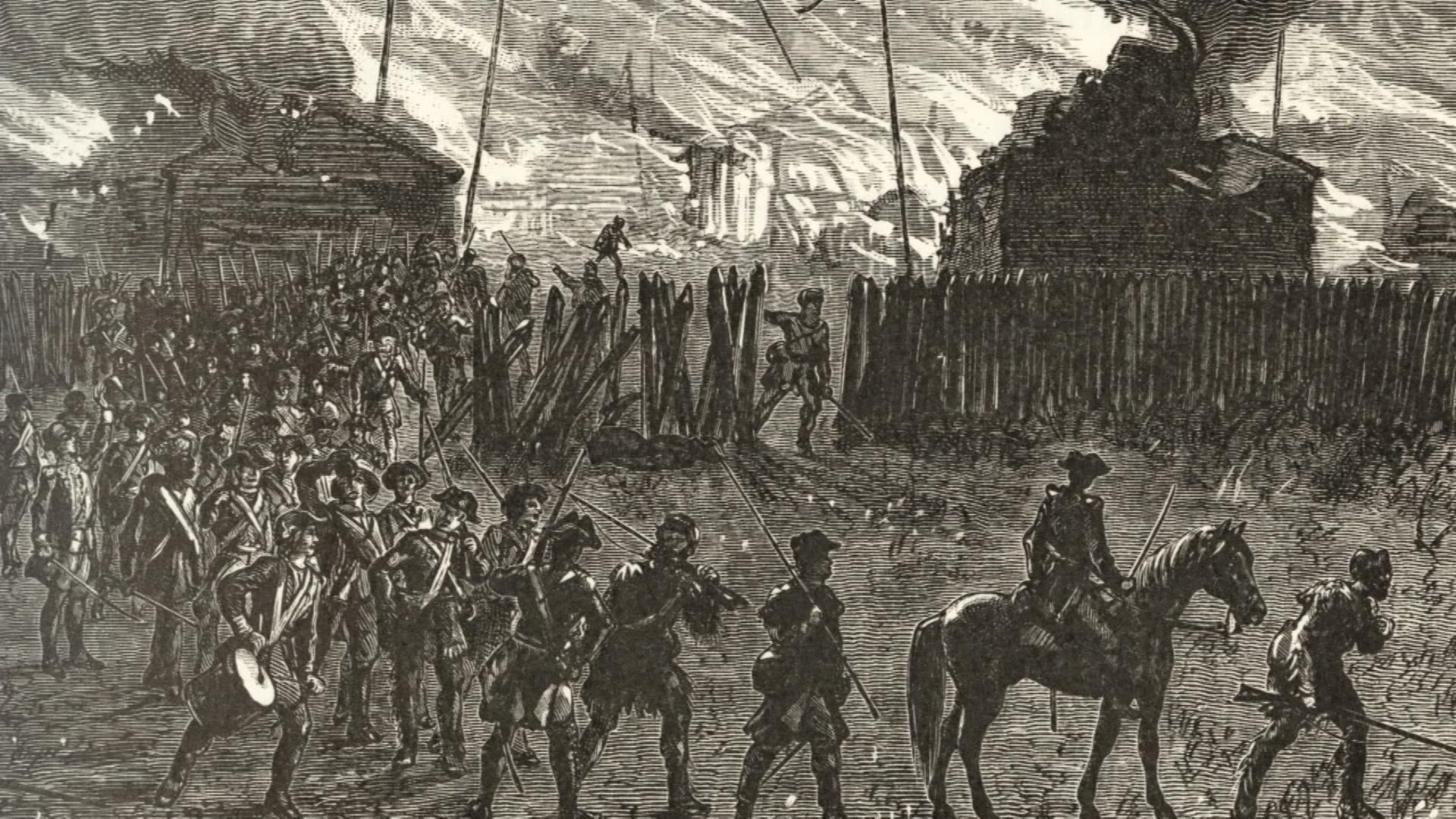
The Sullivan Expedition (also known as the Sullivan-Clinton Expedition, the Sullivan Campaign, and the Sullivan-Clinton Campaign) was a United States military campaign under the command of General John Sullivan during the American Revolutionary War, lasting from June to October 1779, against the four British-allied nations of the Iroquois (also known as the Haudenosaunee). The campaign was ordered by George Washington in response to Iroquois and Loyalist attacks on American settlements in the Wyoming Valley, and Cherry Valley. The campaign had the aim of "the total destruction and devastation of their settlements." Four Continental Army brigades carried out a scorched-earth campaign in the territory of the Iroquois Confederacy in what is now central New York.
The expedition was largely successful, with 40 Iroquois villages razed and their crops and food stores destroyed. The campaign drove just over 5,000 Iroquois to Fort Niagara seeking British protection, and depopulated the area for post-war settlement. Some scholars argue that it was an attempt to annihilate the Iroquois and describe the campaign as a genocide although this term is disputed. Today this area is the heartland of Upstate New York, with thirty-five monoliths marking the path of Sullivan's troops and the locations of the Iroquois villages they razed dotting the region, having been erected by the New York State Education Department in 1929 to commemorate the 150th anniversary of the expedition.
Led by Major General John Sullivan and Brigadier General James Clinton, the expedition was conducted during the summer of 1779, beginning on June 18 when the army marched from Easton, Pennsylvania, to October 3 when it abandoned Fort Sullivan, built at Tioga, to return to George Washington's main camp in New Jersey. While the campaign had only one major battle at Newtown on the Chemung River in western New York, the expedition severely damaged the Iroquois nations' economies by destroying their crops, villages, and chattels. The death toll from exposure, starvation and disease the following winter dwarfed the casualties received in the Battle of Newtown, during which Sullivan's army of 3,200 Continental soldiers decisively defeated about 600 Iroquois and Loyalists.
In response to 1778 attacks by Iroquois and Loyalists on American settlements, such as on Cobleskill, German Flatts, the Wyoming Valley and Cherry Valley, as well as Iroquois support of the British during the 1777 Battles of Saratoga, Sullivan's army carried out a scorched-earth campaign to put an end to Iroquois attacks. The American force methodically destroyed 40 Iroquois villages throughout the Finger Lakes region of western New York. Thousands of Indigenous refugees fled to Fort Niagara on Lake Ontario at the mouth of the Niagara River. The devastation created great hardship for those who sheltered under British military protection outside Fort Niagara that winter, and many starved or froze to death, despite efforts by the British authorities to supply food and provide shelter using their limited resources.
When the Revolutionary War began, British officials, as well as the colonial Continental Congress, sought the allegiance (or at least the neutrality) of the Iroquois Confederacy, also known as the Six Nations. The Iroquois eventually divided over what course to pursue. Most Senecas, Cayugas, Onondagas, and Mohawks chose to ally themselves with the British. Most Oneidas and Tuscaroras joined the American revolutionaries, thanks in part to the influence of Presbyterian missionary Samuel Kirkland. For the Iroquois, the American Revolution became a civil war.
The Iroquois homeland lay on the frontier between the Province of Quebec and the provinces of New York and Pennsylvania. Following the October 1777 surrender of British General John Burgoyne's forces after the Battles of Saratoga, Loyalists and their Iroquois allies began raiding American frontier settlements, as well as the villages of the Oneida. From a base at Fort Niagara, men such as Loyalist commander Major John Butler, Mohawk military leader Joseph Brant, and Seneca war chiefs Sayenqueraghta and Cornplanter led the joint British-Indigenous raids.
On May 30, 1778, a raid on Cobleskill by Brant's Volunteers resulted in the deaths of 22 regulars and militia. On June 10, 1778, the Board of War of the Continental Congress concluded that a major Indian war was in the offing. Since a defensive war would prove inadequate, the board called for an expedition of 3,000 men against Fort Detroit and a similar thrust into Seneca country to punish the Iroquois. Congress designated Major General Horatio Gates to lead the expedition and appropriated funds for the campaign. Despite these efforts, the campaign did not occur until the following year.
On July 3, 1778, Butler, Sayenqueraghta and Cornplanter led a mixed force of Indigenous warriors and Rangers in an attack on the Wyoming Valley, a rebel granary and settlement along the north branch of the Susquehanna River in what is now Pennsylvania. Roughly 300 of the armed Patriot defenders were killed at the Battle of Wyoming, after which houses, barns, and mills were razed throughout the valley.
Hub AI
Sullivan Expedition AI simulator
(@Sullivan Expedition_simulator)
Sullivan Expedition
The Sullivan Expedition (also known as the Sullivan-Clinton Expedition, the Sullivan Campaign, and the Sullivan-Clinton Campaign) was a United States military campaign under the command of General John Sullivan during the American Revolutionary War, lasting from June to October 1779, against the four British-allied nations of the Iroquois (also known as the Haudenosaunee). The campaign was ordered by George Washington in response to Iroquois and Loyalist attacks on American settlements in the Wyoming Valley, and Cherry Valley. The campaign had the aim of "the total destruction and devastation of their settlements." Four Continental Army brigades carried out a scorched-earth campaign in the territory of the Iroquois Confederacy in what is now central New York.
The expedition was largely successful, with 40 Iroquois villages razed and their crops and food stores destroyed. The campaign drove just over 5,000 Iroquois to Fort Niagara seeking British protection, and depopulated the area for post-war settlement. Some scholars argue that it was an attempt to annihilate the Iroquois and describe the campaign as a genocide although this term is disputed. Today this area is the heartland of Upstate New York, with thirty-five monoliths marking the path of Sullivan's troops and the locations of the Iroquois villages they razed dotting the region, having been erected by the New York State Education Department in 1929 to commemorate the 150th anniversary of the expedition.
Led by Major General John Sullivan and Brigadier General James Clinton, the expedition was conducted during the summer of 1779, beginning on June 18 when the army marched from Easton, Pennsylvania, to October 3 when it abandoned Fort Sullivan, built at Tioga, to return to George Washington's main camp in New Jersey. While the campaign had only one major battle at Newtown on the Chemung River in western New York, the expedition severely damaged the Iroquois nations' economies by destroying their crops, villages, and chattels. The death toll from exposure, starvation and disease the following winter dwarfed the casualties received in the Battle of Newtown, during which Sullivan's army of 3,200 Continental soldiers decisively defeated about 600 Iroquois and Loyalists.
In response to 1778 attacks by Iroquois and Loyalists on American settlements, such as on Cobleskill, German Flatts, the Wyoming Valley and Cherry Valley, as well as Iroquois support of the British during the 1777 Battles of Saratoga, Sullivan's army carried out a scorched-earth campaign to put an end to Iroquois attacks. The American force methodically destroyed 40 Iroquois villages throughout the Finger Lakes region of western New York. Thousands of Indigenous refugees fled to Fort Niagara on Lake Ontario at the mouth of the Niagara River. The devastation created great hardship for those who sheltered under British military protection outside Fort Niagara that winter, and many starved or froze to death, despite efforts by the British authorities to supply food and provide shelter using their limited resources.
When the Revolutionary War began, British officials, as well as the colonial Continental Congress, sought the allegiance (or at least the neutrality) of the Iroquois Confederacy, also known as the Six Nations. The Iroquois eventually divided over what course to pursue. Most Senecas, Cayugas, Onondagas, and Mohawks chose to ally themselves with the British. Most Oneidas and Tuscaroras joined the American revolutionaries, thanks in part to the influence of Presbyterian missionary Samuel Kirkland. For the Iroquois, the American Revolution became a civil war.
The Iroquois homeland lay on the frontier between the Province of Quebec and the provinces of New York and Pennsylvania. Following the October 1777 surrender of British General John Burgoyne's forces after the Battles of Saratoga, Loyalists and their Iroquois allies began raiding American frontier settlements, as well as the villages of the Oneida. From a base at Fort Niagara, men such as Loyalist commander Major John Butler, Mohawk military leader Joseph Brant, and Seneca war chiefs Sayenqueraghta and Cornplanter led the joint British-Indigenous raids.
On May 30, 1778, a raid on Cobleskill by Brant's Volunteers resulted in the deaths of 22 regulars and militia. On June 10, 1778, the Board of War of the Continental Congress concluded that a major Indian war was in the offing. Since a defensive war would prove inadequate, the board called for an expedition of 3,000 men against Fort Detroit and a similar thrust into Seneca country to punish the Iroquois. Congress designated Major General Horatio Gates to lead the expedition and appropriated funds for the campaign. Despite these efforts, the campaign did not occur until the following year.
On July 3, 1778, Butler, Sayenqueraghta and Cornplanter led a mixed force of Indigenous warriors and Rangers in an attack on the Wyoming Valley, a rebel granary and settlement along the north branch of the Susquehanna River in what is now Pennsylvania. Roughly 300 of the armed Patriot defenders were killed at the Battle of Wyoming, after which houses, barns, and mills were razed throughout the valley.