Hubbry Logo
Sun AxelssonSun AxelssonMain
Open search
Sun Axelsson
Community hub
Sun Axelsson
logo
8 pages, 0 posts
0 subscribers
Be the first to start a discussion here.
Sun Axelsson
Sun Axelsson
from Wikipedia

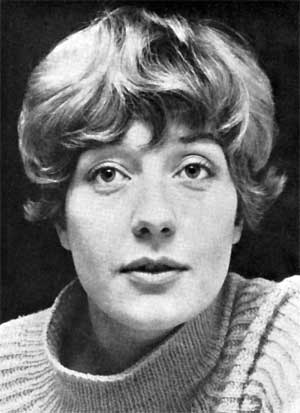
Sun Axelsson, approximately 1960.

Sun Axelsson (19 August 1935 in Gothenburg, Sweden – 14 January 2011 in Stockholm[1]) was a Swedish poet, novelist, translator and journalist.

Life

[edit]

Axelsson was the youngest daughter of the master gardener Karl Edvin Axelsson and Mignon Axelsson. She went to school in her home town of Gothenburg and then she continued at the University of Stockholm where she took a graduate degree in teaching and journalism.

As reporter she worked for the literary review magazines BLM and Ord and Bild, and also in daily newspapers: Expressen, Aftonbladet and Stockholms-Tidningen.

In 1959, Axelsson debuted with her first collection of poetry: Goalless (Mållös), and then she travelled extensively, with lengthy stays in Latin America, France and Greece.

She spent the whole of 1960 in Chile, and developed a relationship with the Chilean poet Nicanor Parra. While living in Santiago she also formed a close friendship with Nobel Prize–winning poet Pablo Neruda. The events of her time in Chile and her personal experience of them are portrayed in The cradle of fire (Eldens vagga).

Later, she wrote Stones in the mouth (Stenar i munnen), published under the male pseudonym Jan Olov Hedlund, describing the terror and repression of Greece under the military junta. and Honey wolves (Honungsvargar).[2]

Axelsson translated into Swedish a remarkable number of authors, among them: Pablo Neruda, Federico García Lorca, Jorge Luis Borges, Harold Pinter, Yiannis Ritsos, Octavio Paz, Sergio Badilla Castillo and Juan Cameron.

The author's trilogy which began with A dreamed life (Drömmen om ett liv, 1978),[3] and finished with The night season (Nattens arstid, 1989) was bestowed with numerous awards, from places such as the Swedish Academy as well as from several international cultural institutions.

Work

[edit]
  • Jag har en själ i Paris (My soul in Paris. 1990) novel
  • Vindarnas barn (The boy of the winds. 1991) novel
  • Ljusets hotell (Clarity Hotel. 1991), poetry collection
  • Den första kärleken (The first love. 1991) short stories
  • Tystnad och eko (Silence and echo. 1994) novel
  • Svalornas tid (Time of swallows. 1996) short stories
  • Sand. (1997) poetry collection
  • Eget liv (Own life 2000) novel
  • Drömmen om ett liv (A dreamed Life) novel
  • Honungsvargar (Honey wolves) novel
  • Nattens årstid (The night season) novel
  • Evighetens stränder (Eternity ends. 2001), novel

References

[edit]

Further reading

[edit]
[edit]
Revisions and contributorsEdit on WikipediaRead on Wikipedia
from Grokipedia
Sun Axelsson is a Swedish poet, novelist, translator, journalist, and filmmaker known for her autobiographical writings that emerged as a major force in 1970s Swedish women's literature, as well as for introducing Latin American poetry to Swedish readers through her translations. Her lyrical and introspective style, often drawing on personal experiences across continents, established her as a pioneering voice in autofiction and cosmopolitan narrative. Born in Gothenburg in 1935 to a Swedish father who served as the city's head gardener and a German-born mother, Axelsson grew up in the gardener's residence at Slottsskogen, an upbringing that became central to her later autobiographical works. She studied at Stockholm University and lived extensively abroad, including long periods in Chile, Greece, and Paris, experiences that shaped her politically engaged writing and translations of poets such as Pablo Neruda. Her debut poetry collection Mållös appeared in 1959, followed by the breakthrough travelogue Eldens vagga in 1962, which reflected her time in Latin America. Axelsson gained widespread recognition with her autobiographical trilogy—Drömmen om ett liv (1978), Honungsvargar (1984), and Nattens årstid (1989)—regarded as classics in the genre of women's autobiography and precursors to later autofiction trends. She also wrote under the pseudonym Jan Olov Hedlund to publish politically charged works, such as Stenar i munnen (1969), critiquing oppression in Greece. In addition to her literary output, she contributed as a literary and film critic for publications including Expressen and Aftonbladet, and collaborated on film projects as screenwriter and director, including as screenwriter for Gå på vattnet om du kan (1979). Axelsson died in Stockholm in 2011.

Early life and education

Childhood and family background

Sun Axelsson was born on 10 August 1935, in Gothenburg, Sweden. She was the youngest child of Karl Edvin Axelsson, who served as the city's head gardener (stadsträdgårdsmästare). Her childhood unfolded in the family residence situated in the heart of Slottsskogen park, a service home provided through her father's role overseeing the city's green spaces. This placement immersed her in a lush, verdant environment filled with ponds, animal enclosures, and expansive natural areas that formed the backdrop of her early years. The park became a safe oasis and realm of dreams for Axelsson, yet her childhood was also marked by alienation due to her mother's German background, experiences of bullying, and family difficulties, including her mother's illness and death when Sun was 13. She sought refuge in the greenery amid feelings of exclusion and insecurity at home, which shaped her lyrical sensibility and later writing.

Education and early career steps

Sun Axelsson's upper secondary education was interrupted in Gothenburg; she moved to Stockholm and finished her studentexamen there as a private examinee at Enskilda gymnasiet in 1956. She then enrolled at Stockholms högskola (now Stockholm University), where she studied literary history during the periods 1956–1958 and 1960–1962. Between 1959 and 1960, she also pursued literature studies at the University of Santiago in Chile. After her university studies, Axelsson began her professional career as a teacher in Stockholm, working at schools including Franska skolan and Nya Elementarskolan för flickor. Her role in education marked her transition into professional life in the capital, where she established herself following her academic training.

Literary career

Poetry debut and early works

Sun Axelsson made her literary debut with the poetry collection Mållös in 1959. Published by Bonniers as part of the Lilla lyrikserien series, this slim volume marked her entry as a writer and was characterized as a naïve and playful collection of poems. The work reflected an early style that was sensitive and poetically dreamlike, featuring lyrical expressions typical of her initial approach to poetry. Following her debut, Axelsson did not publish additional independent poetry collections during the 1960s, as her writing shifted toward prose, travelogues, and novels. Her next poetry collection, In i världen, appeared in 1974, signaling a return to poetic form after a period focused on other genres. The early poetry, particularly Mållös, established her as a voice with a distinctive, introspective quality that would evolve in later works.

Novels and prose writing

Sun Axelsson's transition to prose writing marked a significant expansion of her literary expression, incorporating autobiographical elements and lyrical prose that echoed her poetic roots. She published early novels such as Väktare (1963) and Opera Komick (1965), which featured surrealist and black-humour elements exploring themes of identity, relationships, and existential dissolution. Her major breakthrough in prose came with the autobiographical novel Drömmen om ett liv in 1978, published by Albert Bonniers Förlag. This work, drawing on personal experiences including childhood and literary life, formed the first part of her acclaimed autobiographical trilogy. It featured candid, lyrical exploration of female experience, independence, and self-discovery. Axelsson's novels and prose generally appeared through Albert Bonniers Förlag, contributing to her reputation as a writer who bridged poetry and prose with intimate, experiential storytelling. Her autobiographical works are regarded as classics in women's literature and precursors to autofiction.

Journalism and translation work

Literary criticism and journalism

Sun Axelsson established herself as a prominent literary critic and cultural journalist in Sweden from the late 1950s through the 1970s, contributing to key newspapers and cultural periodicals. Her work appeared in influential outlets including Bonniers Litterära Magasin (BLM), Ord & Bild, Expressen, Aftonbladet, and Stockholms-Tidningen, where she published reviews of contemporary literature alongside more essayistic pieces. During the 1960s and 1970s, Axelsson increasingly incorporated politically engaged reportage and documentary elements into her journalism, reflecting her commitment to international solidarity movements. Notable examples include Stenar i munnen (1969), issued under the male pseudonym Jan Olov Hedlund to ensure credibility in its account of oppression under the Greek military junta, and Terrorn i Chile (1974), a collection of witness testimonies documenting repression after the 1973 coup in Chile. Axelsson's literary criticism helped introduce and frame works from Latin America and Greece for Swedish audiences, often overlapping with her translation efforts to broaden the reception of international poetry and prose during this era. Her internationally oriented perspective as a critic and journalist contributed significantly to the politically aware literary discourse in Sweden throughout the 1960s and 1970s.

Translations of international authors

Sun Axelsson made substantial contributions to Swedish literature through her translations of international authors, with a particular emphasis on Latin American poetry and prose that introduced significant voices to Swedish readers. Her work focused mainly on writers from Chile, Argentina, and Mexico, reflecting her deep engagement with the region during extended stays abroad. During her time in Chile in the early 1960s, Axelsson met Pablo Neruda and translated a broad selection of his poems from collections including Residencia en la tierra, Canto general, Odas elementales, and others into the volume Den mjuka orkanen: dikter, published in 1971. This translation, along with her earlier renderings of Neruda's poems in Swedish literary journals starting in the late 1950s and early 1960s, played a key role in familiarizing Swedish audiences with his lyrical and politically engaged work. Axelsson also translated Jorge Luis Borges extensively, beginning with the anthology Biblioteket i Babel in 1963, which compiled selections from Ficciones and El Aleph (in collaboration with Marina Torres in early editions), and continued with later editions and selections from those same works up to 2011. Her translations helped bring Borges' intricate short fiction to Swedish readers over several decades. She rendered works by other Latin American poets, including Nicanor Parra as early as 1958 in periodicals, and contributed to translations of Octavio Paz, notably the chapter "Mitt liv med vågen" in the 1991 anthology Örn eller sol?. In 1991, Axelsson compiled and participated in translating Bevingade lejon: 11 chilenska poeter i översättning, an anthology that featured contemporary Chilean poets such as Raúl Zurita and Jorge Teillier, further advancing the presence of Chilean literature in Sweden. Her translation efforts, concentrated particularly in the 1960s through the 1990s, emphasized poetry and highlighted the political and cultural vibrancy of Latin American writing during that era.

Screenwriting and film contributions

Film scripts and credits

Sun Axelsson contributed to Swedish cinema as a screenwriter, with credits spanning feature films and television productions. Her primary screenwriting work includes the screenplay for Gå på vattnet om du kan (1979), co-written with director Stig Björkman, a drama starring Lena Nyman as a night nurse navigating personal and existential challenges. This marked her notable entry into film scripting, drawing on her background as an author to craft intimate, character-driven narratives. The feature film Honungsvargar (1990), directed by Christina Olofson, was adapted from her autobiographical novel of the same name—the second book in her autobiographical trilogy. Axelsson also contributed to the television production Canto Libre - den fria sången (1980), where she is credited for translation. These credits reflect her limited but distinctive involvement in screenwriting, complementing her extensive literary career without overshadowing it.

Role in Swedish cinema

Sun Axelsson made distinctive contributions to Swedish cinema as a screenwriter and film critic, leveraging her literary expertise to bring nuanced, autobiographical, and politically engaged perspectives to the screen. Her involvement reflected the broader challenges and opportunities for women in the industry during the 1970s and 1980s, when female voices behind the camera remained underrepresented. She collaborated closely with director Stig Björkman, co-directing the documentary Vårt hem på jorden: En grekisk mor hälsar på sin dotter i Sverige (1971) and co-writing the screenplay for the feature film Gå på vattnet om du kan (1979), which explored themes of romance intertwined with political activism. Later, her novel Honungsvargar (1984) was adapted into a feature film directed by Christina Olofson in 1990, exemplifying how her prose influenced Swedish filmmaking through literary adaptations. Beyond direct creative credits, Axelsson's role as a film critic proved especially significant in advocating for feminist perspectives in cinema. Writing for publications including Chaplin, she defended Mai Zetterling's The Girls (1968) against widespread criticism, asserting that “It’s still as awkward to be a woman in a man’s society, in a world mostly run by male idiots, as it was a few hundred years ago.” This intervention highlighted ongoing gender inequalities in both society and the film industry, positioning Axelsson as an important voice in the push for greater artistic and feminist freedom in Swedish cinema. Her multifaceted engagement—spanning screenwriting, documentary co-direction, and critical advocacy—bridged literature and film while contributing to the gradual diversification of narratives and discourse in Swedish cinema.

Personal life

Travels, residences, and influences

Sun Axelsson's life was characterized by extensive international residences and travels that profoundly influenced her writing and translation work. She lived for extended periods in Spain, France, Chile, and Greece, among other places, experiences that infused her prose with documentary and autofictional elements drawn from political and cultural encounters abroad. In Chile, she resided in Santiago in the early 1960s, where she studied at the university. These experiences shaped her travelogue Eldens vagga (1962). She later edited the documentary Terrorn i Chile (1974), a collection of witness testimonies on repression following the 1973 military coup. She also lived on the Greek islands of Hydra and Leros from the mid-1960s into the early 1970s, owning a home on Leros with her husband, but faced constant surveillance and interrogation under the military junta, leading to expulsion and the eventual loss of their property; these harrowing experiences informed her books Stenar i munnen (1969) and Evighetens stränder (2001). Her long-term stays in Spain and France contributed to her broad engagement with European and Latin American cultures, while her time in Chile and her translations of major Latin American writers such as Pablo Neruda and Jorge Luis Borges reflected the deep influence of Latin American literature on her own work and editorial projects, including the anthology Bevingade lejon featuring eleven Chilean poets. These residences and travels abroad provided the personal and political raw material for much of her autobiographical writing, allowing her to explore themes of resistance, exile, and cross-cultural identity.

Personal relationships and experiences

Sun Axelsson was the youngest daughter of Karl Edvin Axelsson, a head gardener in Gothenburg, and his German-born wife Mignon Axelsson (née Runze de Grahl). She grew up in the head gardener’s residence at Slottsskogen surrounded by a number of rough brothers and her dying and anxiety-prone mother, whose illness marked her early years. Her mother passed away when Axelsson was a teenager, an event compounded by her foreign heritage and experiences of bullying that contributed to feelings of alienation during her upbringing, which she later said came to characterize her artistry. An early love affair with the poet Lasse Söderberg provided an escape during her youth, an experience depicted in her autobiographical novel Drömmen om ett liv. In Stockholm's literary circles of the late 1950s and early 1960s, Axelsson formed close connections with older male poets and figures such as Pär Rådström, Artur Lundkvist, and Åke Janzon, often appearing as a muse-like presence for these mentors and friends. She entered a deep romantic relationship with the Chilean poet Nicanor Parra, 25 years her senior, whom she met in those circles; the relationship's painful collapse—after she learned he had a family—became the central focus of her novel Nattens årstid, which also traces her development toward independence. Axelsson was married to the British sculptor Michael Piper from 1963 to 1974. In her final book Evighetens stränder, she described their years together as one of the happiest periods of her life and presented the work partly as a memoir and homage to Piper. Her long-term life partner was the film critic and director Stig Björkman, who remembered her as an enormously generous person whose giving nature extended to nurturing emerging talents in everything she undertook. These relationships and personal experiences deeply informed her autobiographical trilogy—Drömmen om ett liv, Honungsvargar, and Nattens årstid—which portray her as a vulnerable young woman thirsty for love and life amid emotional challenges.

Death and legacy

Final years and death

Sun Axelsson spent her final years in Stockholm, where she suffered from a prolonged illness. She died on January 14, 2011, in Stockholm at the age of 75, passing away during the night leading to Saturday. Her death was announced in major Swedish newspapers shortly afterward. Dagens Nyheter reported her passing after a longer period of illness, noting her renown for works such as the novel Honungsvargar and her translations of Nobel laureates. Svenska Dagbladet's obituary similarly cited her extended illness and included a remembrance from critic Caj Lundgren, who described her as open and direct in person as in her writing: "Hon var likadan i verkligheten som i böckerna – öppen och rak." On the day of her burial in February 2011, Svenska Dagbladet published a tribute by Mats Gellerfelt expressing sorrow that her authorship had ended so early, while affirming its lasting value: "Sun Axelsson kommer att läsas av generationer" and that what she left behind "skänker rikedom."

Posthumous recognition

Sun Axelsson's legacy endures primarily through her inclusion in archival and biographical projects dedicated to Nordic women's literature and film, which have affirmed her contributions since her death in 2011. In the Svenskt kvinnobiografiskt lexikon, published in 2018, she is described as one of the most prominent authors to emerge from the 1970s explosion in women's autobiographies, with her trilogy Drömmen om ett liv, Honungsvargar, and Nattens årstid—later collected as Ett eget liv—regarded as a forerunner of the autofiction trend that gained prominence in the early 2000s. Her portrayal of childhood at the head gardener’s home in Gothenburg’s Slottsskogen has been characterized as a modern classic. Her contributions to Swedish cinema are similarly documented in the Nordic Women in Film database, with an entry credited in 2021 that highlights her work as a screenwriter for Gå på vattnet om du kan (1979) and director of the documentary Vårt hem på jorden (1971), as well as her film criticism and television documentaries on authors. These resources position her within broader histories of Nordic women's creative output, though her oeuvre remains largely accessible only in Swedish, with limited international translation and circulation.
Add your contribution
Related Hubs
User Avatar
No comments yet.