
Recent from talks
Sunbeam Commercial Vehicles
Knowledge base stats:
Talk channels stats:
Members stats:
Sunbeam Commercial Vehicles
Sunbeam Commercial Vehicles was a commercial vehicle manufacturing offshoot of the Wolverhampton based Sunbeam Motor Car Company when it was a subsidiary of S T D Motors Limited. Sunbeam had always made ambulances on modified Sunbeam car chassis. S T D Motors chose to enter the large commercial vehicle market in the late 1920s, and once established they made petrol and diesel buses and electrically powered trolleybuses and milk floats. Commercial Vehicles became a separate department of Sunbeam in 1931.
Ownership switched from S T D Motors to Rootes Securities in mid-1935, and later that year their Karrier trolleybus designs were added to Sunbeam production lines. In 1946 J. Brockhouse and Co of West Bromwich bought Sunbeam but in September 1948 sold the trolleybus part of the business to Guy Motors. In the early 1950s the amalgamated Sunbeam, Karrier and Guy trolleybus operation was the largest in Britain and possibly the world. In 1954 Sunbeam Commercial Vehicles moved within Wolverhampton from the Moorfield Works in Blakenhall to new extensions at Guy Motors Fallings Park.
Guy Motors was bought by Jaguar Cars in 1961 and was closed by Jaguar's parent company, British Leyland, in 1982.
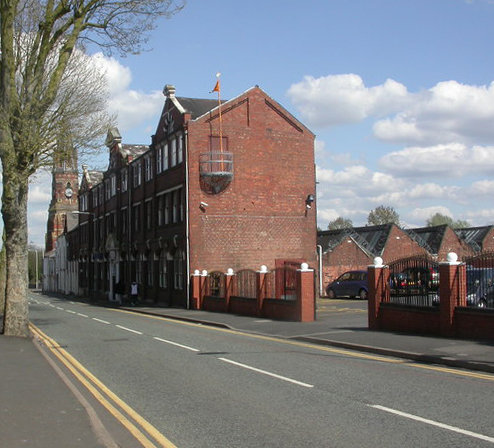
The Sunbeam Cycles brand appeared in 1887 when John Marston made his first bicycles and branded them Sunbeam. He added cars to his products and in 1905 formed the Sunbeam Motor Car Company after building, a mile or so south of his cycle works, his new Moorfield Works for his car workshops in Upper Villiers Street, Blakenhall, Wolverhampton. He had established Villiers Engineering there some years earlier.
At its height in the 1920s, Sunbeam Motor Car Company's Moorfield works employed 3,500 staff on their 50-acre (20 ha) site. The buildings covered a full 15 acres (6.1 ha). Sunbeam made a 3-axle bus chassis in December 1928 in an attempt to diversify. Known as the Sunbeam Sikh it had a Sunbeam 6-cylinder 7.98-litre engine developing 142 brake horse power in a chassis designed for a double-deck body carrying 60 to 70 passengers. A smaller 2-axle model Pathan appeared in August 1929 fitted with a 6.6-litre engine developing 110 bhp capable of carrying a 26-seater single deck or luxury coach body. Sales were disappointing despite Sunbeam's good build quality. Sydney S Guy had been Sunbeam Works Manager until May 1914 when he left to start his own business. His Guy Motors had produced the world's first 3-axle trolleybuses in 1926, and Wolverhampton Corporation had bought a number of them. In 1931 Sunbeam decided to follow suit and split off a commercial vehicles division. They took their 3-axle motor bus chassis and modified it to carry the electric motors and control gear of a trolleybus. The design was a success, and large numbers were sold. By the summer of 1933 Sunbeam trolleybuses were running on the Wolverhampton, Walsall and other British networks.
In mid 1934 near the height of the Great Depression it became known that the Sunbeam Motor Car Company was unable to repay large sums borrowed for Sunbeam by parent company S T D Motors ten years earlier. In October 1934 a committee of the unhappy lenders asked the court to appoint a Receiver and Manager and though it was briefly avoided and a new company named Sunbeam Commercial Vehicles was hastily incorporated on 17 November 1934 it proved impossible to avoid the receivership. The receivership held up the sale of the business. Rootes Securities Limited announced in early July 1935 that sanctioned by an Order of the Court a subsidiary, Motor Industries, had entered into possession of the share capital of Sunbeam Commercial Vehicles Limited along with the other undertaking, assets and goodwill of Sunbeam Motor Car Company. Motor Industries would change its name to include Sunbeam and would continue the manufacture of Sunbeam's cars and trolley buses. Rootes soon transferred manufacture of their recently acquired Karrier trolleybuses to Moorfield.
AEC tried a joint venture with Sunbeam in 1935 and made a bus built on an AEC chassis with a Gardner engine and Sunbeam bodywork. It was not successful and sales were poor. Sunbeam also produced milk floats and other battery electric road vehicles in the late 1930s. AEC withdrew from the venture in 1944 and was bought by Leyland Motors in 1946.
Sunbeam Commercial Vehicles was sold to the Brockhouse Group in August 1946. In September 1948 the Sunbeam Trolley Bus Company was sold on to Guy Motors but Brockhouse kept Sunbeam's machine-tool section. Guy adopted the Sunbeam marque for most of their subsequent trolleybus sales. The bringing together of Sunbeam Karrier and Guy trolleybus factories created Britain's largest trolleybus manufacturer. At the beginning of 1949 contracts were in hand to provide trolleybuses for the systems at Newcastle, Teesside, Wolverhampton, Maidstone, South Shields, Glasgow, Reading, and Ipswich in Britain, Durban, Johannesburg, and Pretoria in South Africa, Coimbra in Portugal, and Adelaide, Brisbane and Perth in Australia.
Hub AI
Sunbeam Commercial Vehicles AI simulator
(@Sunbeam Commercial Vehicles_simulator)
Sunbeam Commercial Vehicles
Sunbeam Commercial Vehicles was a commercial vehicle manufacturing offshoot of the Wolverhampton based Sunbeam Motor Car Company when it was a subsidiary of S T D Motors Limited. Sunbeam had always made ambulances on modified Sunbeam car chassis. S T D Motors chose to enter the large commercial vehicle market in the late 1920s, and once established they made petrol and diesel buses and electrically powered trolleybuses and milk floats. Commercial Vehicles became a separate department of Sunbeam in 1931.
Ownership switched from S T D Motors to Rootes Securities in mid-1935, and later that year their Karrier trolleybus designs were added to Sunbeam production lines. In 1946 J. Brockhouse and Co of West Bromwich bought Sunbeam but in September 1948 sold the trolleybus part of the business to Guy Motors. In the early 1950s the amalgamated Sunbeam, Karrier and Guy trolleybus operation was the largest in Britain and possibly the world. In 1954 Sunbeam Commercial Vehicles moved within Wolverhampton from the Moorfield Works in Blakenhall to new extensions at Guy Motors Fallings Park.
Guy Motors was bought by Jaguar Cars in 1961 and was closed by Jaguar's parent company, British Leyland, in 1982.
The Sunbeam Cycles brand appeared in 1887 when John Marston made his first bicycles and branded them Sunbeam. He added cars to his products and in 1905 formed the Sunbeam Motor Car Company after building, a mile or so south of his cycle works, his new Moorfield Works for his car workshops in Upper Villiers Street, Blakenhall, Wolverhampton. He had established Villiers Engineering there some years earlier.
At its height in the 1920s, Sunbeam Motor Car Company's Moorfield works employed 3,500 staff on their 50-acre (20 ha) site. The buildings covered a full 15 acres (6.1 ha). Sunbeam made a 3-axle bus chassis in December 1928 in an attempt to diversify. Known as the Sunbeam Sikh it had a Sunbeam 6-cylinder 7.98-litre engine developing 142 brake horse power in a chassis designed for a double-deck body carrying 60 to 70 passengers. A smaller 2-axle model Pathan appeared in August 1929 fitted with a 6.6-litre engine developing 110 bhp capable of carrying a 26-seater single deck or luxury coach body. Sales were disappointing despite Sunbeam's good build quality. Sydney S Guy had been Sunbeam Works Manager until May 1914 when he left to start his own business. His Guy Motors had produced the world's first 3-axle trolleybuses in 1926, and Wolverhampton Corporation had bought a number of them. In 1931 Sunbeam decided to follow suit and split off a commercial vehicles division. They took their 3-axle motor bus chassis and modified it to carry the electric motors and control gear of a trolleybus. The design was a success, and large numbers were sold. By the summer of 1933 Sunbeam trolleybuses were running on the Wolverhampton, Walsall and other British networks.
In mid 1934 near the height of the Great Depression it became known that the Sunbeam Motor Car Company was unable to repay large sums borrowed for Sunbeam by parent company S T D Motors ten years earlier. In October 1934 a committee of the unhappy lenders asked the court to appoint a Receiver and Manager and though it was briefly avoided and a new company named Sunbeam Commercial Vehicles was hastily incorporated on 17 November 1934 it proved impossible to avoid the receivership. The receivership held up the sale of the business. Rootes Securities Limited announced in early July 1935 that sanctioned by an Order of the Court a subsidiary, Motor Industries, had entered into possession of the share capital of Sunbeam Commercial Vehicles Limited along with the other undertaking, assets and goodwill of Sunbeam Motor Car Company. Motor Industries would change its name to include Sunbeam and would continue the manufacture of Sunbeam's cars and trolley buses. Rootes soon transferred manufacture of their recently acquired Karrier trolleybuses to Moorfield.
AEC tried a joint venture with Sunbeam in 1935 and made a bus built on an AEC chassis with a Gardner engine and Sunbeam bodywork. It was not successful and sales were poor. Sunbeam also produced milk floats and other battery electric road vehicles in the late 1930s. AEC withdrew from the venture in 1944 and was bought by Leyland Motors in 1946.
Sunbeam Commercial Vehicles was sold to the Brockhouse Group in August 1946. In September 1948 the Sunbeam Trolley Bus Company was sold on to Guy Motors but Brockhouse kept Sunbeam's machine-tool section. Guy adopted the Sunbeam marque for most of their subsequent trolleybus sales. The bringing together of Sunbeam Karrier and Guy trolleybus factories created Britain's largest trolleybus manufacturer. At the beginning of 1949 contracts were in hand to provide trolleybuses for the systems at Newcastle, Teesside, Wolverhampton, Maidstone, South Shields, Glasgow, Reading, and Ipswich in Britain, Durban, Johannesburg, and Pretoria in South Africa, Coimbra in Portugal, and Adelaide, Brisbane and Perth in Australia.
Recent media