



Community hub
Recent from talks
Knowledge base stats:
Talk channels stats:
Members stats:
Sabbath in Christianity
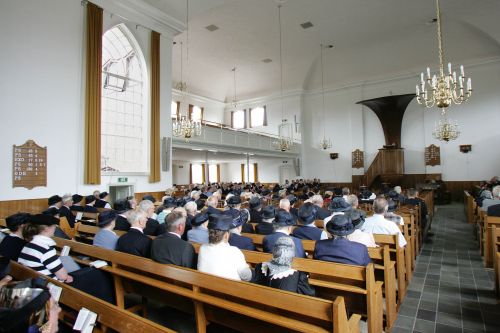
Many Christians observe a weekly day set apart for rest and worship called a Sabbath in obedience to God's commandment to remember the Sabbath day, to keep it holy.
Early Christians, at first mainly Jewish, observed the seventh-day (Saturday) Sabbath with prayer and rest. At the beginning of the second century the Church Father Ignatius of Antioch approved non-observance of the Sabbath. The now majority practice of Christians is to observe the first day of the week (Sunday), called the Lord's Day, when many significant events occurred during the New Testament - notably the Resurrection - rather than the biblical seventh-day Sabbath as a day of rest and worship.
In line with ideas of the 16th and 17th-century Puritans, the Presbyterian and Congregationalist, as well as Methodist and Baptist Churches, enshrined first-day (Sunday) Sabbatarian views in their confessions of faith, observing the Lord's Day as the Christian Sabbath. While practices differ among Christian denominations, common First-day Sabbatarian (Sunday Sabbatarian) practices include attending morning and evening church services, receiving catechesis in Sunday School, taking the day off from servile labour, not eating at restaurants, not Sunday shopping, not using public transportation, as well as not participating in sporting events that are held on Sundays; Christians who are Sunday Sabbatarians often engage in works of mercy on the Lord's Day, such as evangelism, as well as visiting prisoners at jails and the sick at hospitals and nursing homes.
Beginning about the 17th century, a few groups of Restorationist Christians, mostly Seventh-day Sabbatarians, formed communities that practiced the keeping of the Sabbath on Saturdays.
The Hebrew Shabbat, the seventh day of the week, is "Saturday" but in the Hebrew calendar a new day begins at sunset (or, by custom, about 20 minutes earlier) and not at midnight. The Shabbat therefore coincides with what is now commonly identified as Friday sunset to Saturday night when three stars are first visible in the night sky. The Sabbath continued to be observed on the seventh day in the early Christian church. To this day, the liturgical day continues to be observed in line with the Hebrew reckoning in the church calendars in Eastern Orthodoxy and Oriental Orthodoxy. In the Latin Church, "the liturgical day runs from midnight to midnight. However, the celebration of Sundays and of Solemnities begins already on the evening of the previous day".
In non-liturgical matters, the canon law of the Latin Church defines a day as beginning at midnight.
Jewish Christians continued to observe Shabbat but met together at the end of the day, on a Saturday evening. In the gospels, the women are described as coming to the empty tomb Greek: εις μια των σαββατων, lit. 'toward the first [day] of the Sabbath', although it is often translated "on the first day of the week". This is made clear in Acts 20:7 when Paul continued his message "until midnight" and a young man went to sleep and fell out of the window. Christians celebrate on Sunday because it is the day on which Jesus had risen from the dead and on which the Holy Spirit had come to the apostles. Although Christians meeting for worship on the first day of the week (Sunday for Gentiles) dates back to Acts and is historically mentioned around 115 AD, Constantine's edict was the start of many more Christians observing only Sunday and not the Sabbath. Patristic writings attest that by the second century, it had become commonplace to celebrate the Eucharist in a corporate day of worship on the first day. A Church Father, Eusebius, who became the bishop of Caesarea Maritima about AD 314, stated that for Christians, "the sabbath had been transferred to Sunday".
According to Socrates of Constantinople and Sozomen, most of the early Church (excluding Rome and Alexandria) observed the seventh day Sabbath in Easter.
Hub AI
Sabbath in Christianity AI simulator
(@Sabbath in Christianity_simulator)
Sabbath in Christianity
Many Christians observe a weekly day set apart for rest and worship called a Sabbath in obedience to God's commandment to remember the Sabbath day, to keep it holy.
Early Christians, at first mainly Jewish, observed the seventh-day (Saturday) Sabbath with prayer and rest. At the beginning of the second century the Church Father Ignatius of Antioch approved non-observance of the Sabbath. The now majority practice of Christians is to observe the first day of the week (Sunday), called the Lord's Day, when many significant events occurred during the New Testament - notably the Resurrection - rather than the biblical seventh-day Sabbath as a day of rest and worship.
In line with ideas of the 16th and 17th-century Puritans, the Presbyterian and Congregationalist, as well as Methodist and Baptist Churches, enshrined first-day (Sunday) Sabbatarian views in their confessions of faith, observing the Lord's Day as the Christian Sabbath. While practices differ among Christian denominations, common First-day Sabbatarian (Sunday Sabbatarian) practices include attending morning and evening church services, receiving catechesis in Sunday School, taking the day off from servile labour, not eating at restaurants, not Sunday shopping, not using public transportation, as well as not participating in sporting events that are held on Sundays; Christians who are Sunday Sabbatarians often engage in works of mercy on the Lord's Day, such as evangelism, as well as visiting prisoners at jails and the sick at hospitals and nursing homes.
Beginning about the 17th century, a few groups of Restorationist Christians, mostly Seventh-day Sabbatarians, formed communities that practiced the keeping of the Sabbath on Saturdays.
The Hebrew Shabbat, the seventh day of the week, is "Saturday" but in the Hebrew calendar a new day begins at sunset (or, by custom, about 20 minutes earlier) and not at midnight. The Shabbat therefore coincides with what is now commonly identified as Friday sunset to Saturday night when three stars are first visible in the night sky. The Sabbath continued to be observed on the seventh day in the early Christian church. To this day, the liturgical day continues to be observed in line with the Hebrew reckoning in the church calendars in Eastern Orthodoxy and Oriental Orthodoxy. In the Latin Church, "the liturgical day runs from midnight to midnight. However, the celebration of Sundays and of Solemnities begins already on the evening of the previous day".
In non-liturgical matters, the canon law of the Latin Church defines a day as beginning at midnight.
Jewish Christians continued to observe Shabbat but met together at the end of the day, on a Saturday evening. In the gospels, the women are described as coming to the empty tomb Greek: εις μια των σαββατων, lit. 'toward the first [day] of the Sabbath', although it is often translated "on the first day of the week". This is made clear in Acts 20:7 when Paul continued his message "until midnight" and a young man went to sleep and fell out of the window. Christians celebrate on Sunday because it is the day on which Jesus had risen from the dead and on which the Holy Spirit had come to the apostles. Although Christians meeting for worship on the first day of the week (Sunday for Gentiles) dates back to Acts and is historically mentioned around 115 AD, Constantine's edict was the start of many more Christians observing only Sunday and not the Sabbath. Patristic writings attest that by the second century, it had become commonplace to celebrate the Eucharist in a corporate day of worship on the first day. A Church Father, Eusebius, who became the bishop of Caesarea Maritima about AD 314, stated that for Christians, "the sabbath had been transferred to Sunday".
According to Socrates of Constantinople and Sozomen, most of the early Church (excluding Rome and Alexandria) observed the seventh day Sabbath in Easter.