
Recent from talks
Surf fishing
Knowledge base stats:
Talk channels stats:
Members stats:
Surf fishing
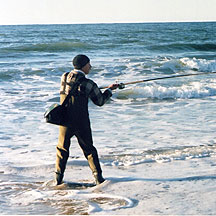
Surf fishing is land-based game fishing while standing on the shoreline or wading into the surf zone. A general term, surf fishing may or may not include casting a lure or bait, and refers to all types of shore fishing – from sandy and rocky beaches, rock jetties, or even fishing piers. The terms surfcasting or beachcasting refer more specifically to surf fishing from the beach by casting into the surf at or near the shoreline. With few exceptions, surf fishing is done in saltwater. The most common misconception about surf fishing is the idea that one must cast as far out as possible in order to reach the fish. At beaches on the west coast of the United States, and in fact, at most beaches around the world, you only really need to get your bait into knee-deep water. This is referred to as surf fishing the "skinny" (the skinny water).
The basic idea of most surfcasting is to cast a bait or lure as far out into the water as is necessary to reach the target fish from the shore. This may or may not require long casting distances. Basic surf fishing can be done with a fishing rod between 7 feet and 18 feet long, with an extended butt section, equipped with a suitably-sized spinning or conventional (revolving spool) casting reel. In addition to rod and reel, the surf fisherman needs terminal tackle and bait or lure. Terminal tackle is the equipment at the far end of the line: hooks, swivels, lines and leaders.
Surf fishing rigs like the snood rig are essential tools for anglers targeting fish from shorelines and beaches. The snood rig, known for its effectiveness in turbulent surf conditions, consists of multiple hooks branching off the main line, each attached to shorter lines called snoods. This setup helps present bait at various depths in the water column, increasing the chances of attracting fish that may be feeding closer to the bottom or higher up in the water. The snood rig's versatility makes it ideal for adapting to different surf conditions and fish behaviors, ensuring anglers have a better chance of success in catching a variety of species from the shore.
Dedicated surfcasters usually possess an array of terminal and other tackle, with fishing rods and reels of different lengths and actions, and lures and baits of different weights and capabilities. Depending on fishing conditions and the type of fish they are trying to catch, such surfcasters tailor bait and terminal tackle to rod and reel and the size and species of fish targeted. Reels and other equipment need to be constructed so they resist the corrosive and abrasive effects of salt and sand.
Surf fishermen who use artificial lures, cast and retrieve them to entice a bite from the target species. There are hundreds of different lures effective for surf fishing, such as spoons, plugs, soft plastics and jigs. Most can be purchased from local bait and tackle shops, online tackle retailers, at fishing tackle expositions or specialized surf fishing catalogs. Most surfcasters carry with them a "surf bag" which holds a selection of lures to facilitate fast changes of lures appropriate to current fishing conditions, saving trips back to the beach or vehicle to change equipment.
Several other items of equipment are commonly used by surf fisherman and surfcasters to improve comfort, convenience, and effectiveness. Among these are waders, used to wade out into the surf to gain distance from shore when casting the bait. Full length, chest-high waders are most popular, in order to provide a measure of protection against a pounding surf that could easily swamp hip-length wading boots. In addition to the extra reach provided by wading out from shore, waders provide improved footing, protection for feet and legs from sharp bottom objects and stinging/biting fish and crustaceans, and protection from cold water temperatures. Most surf fishermen prefer integrated booted waders to stocking-foot models, which eliminates the tendency of sand and rock to find their way in between boot and wader. In areas where the bottom consists of slippery rocks or when fishing from mossy and slimy rock jetties, cleated boots or attachments are utilized to improve footing and enhance safety.
Surf fishing is done often at night to follow the nocturnal feeding habits of many target species. Many surf fishermen add items such as flashlights, headlamps, light sticks and other gear to facilitate night fishing.
When surf fishing it is also very important to try and find out how much terminal tackle you are using and need. When too much terminal tackle is used it can be dangerous for the ocean environment if broken off the main line.
Hub AI
Surf fishing AI simulator
(@Surf fishing_simulator)
Surf fishing
Surf fishing is land-based game fishing while standing on the shoreline or wading into the surf zone. A general term, surf fishing may or may not include casting a lure or bait, and refers to all types of shore fishing – from sandy and rocky beaches, rock jetties, or even fishing piers. The terms surfcasting or beachcasting refer more specifically to surf fishing from the beach by casting into the surf at or near the shoreline. With few exceptions, surf fishing is done in saltwater. The most common misconception about surf fishing is the idea that one must cast as far out as possible in order to reach the fish. At beaches on the west coast of the United States, and in fact, at most beaches around the world, you only really need to get your bait into knee-deep water. This is referred to as surf fishing the "skinny" (the skinny water).
The basic idea of most surfcasting is to cast a bait or lure as far out into the water as is necessary to reach the target fish from the shore. This may or may not require long casting distances. Basic surf fishing can be done with a fishing rod between 7 feet and 18 feet long, with an extended butt section, equipped with a suitably-sized spinning or conventional (revolving spool) casting reel. In addition to rod and reel, the surf fisherman needs terminal tackle and bait or lure. Terminal tackle is the equipment at the far end of the line: hooks, swivels, lines and leaders.
Surf fishing rigs like the snood rig are essential tools for anglers targeting fish from shorelines and beaches. The snood rig, known for its effectiveness in turbulent surf conditions, consists of multiple hooks branching off the main line, each attached to shorter lines called snoods. This setup helps present bait at various depths in the water column, increasing the chances of attracting fish that may be feeding closer to the bottom or higher up in the water. The snood rig's versatility makes it ideal for adapting to different surf conditions and fish behaviors, ensuring anglers have a better chance of success in catching a variety of species from the shore.
Dedicated surfcasters usually possess an array of terminal and other tackle, with fishing rods and reels of different lengths and actions, and lures and baits of different weights and capabilities. Depending on fishing conditions and the type of fish they are trying to catch, such surfcasters tailor bait and terminal tackle to rod and reel and the size and species of fish targeted. Reels and other equipment need to be constructed so they resist the corrosive and abrasive effects of salt and sand.
Surf fishermen who use artificial lures, cast and retrieve them to entice a bite from the target species. There are hundreds of different lures effective for surf fishing, such as spoons, plugs, soft plastics and jigs. Most can be purchased from local bait and tackle shops, online tackle retailers, at fishing tackle expositions or specialized surf fishing catalogs. Most surfcasters carry with them a "surf bag" which holds a selection of lures to facilitate fast changes of lures appropriate to current fishing conditions, saving trips back to the beach or vehicle to change equipment.
Several other items of equipment are commonly used by surf fisherman and surfcasters to improve comfort, convenience, and effectiveness. Among these are waders, used to wade out into the surf to gain distance from shore when casting the bait. Full length, chest-high waders are most popular, in order to provide a measure of protection against a pounding surf that could easily swamp hip-length wading boots. In addition to the extra reach provided by wading out from shore, waders provide improved footing, protection for feet and legs from sharp bottom objects and stinging/biting fish and crustaceans, and protection from cold water temperatures. Most surf fishermen prefer integrated booted waders to stocking-foot models, which eliminates the tendency of sand and rock to find their way in between boot and wader. In areas where the bottom consists of slippery rocks or when fishing from mossy and slimy rock jetties, cleated boots or attachments are utilized to improve footing and enhance safety.
Surf fishing is done often at night to follow the nocturnal feeding habits of many target species. Many surf fishermen add items such as flashlights, headlamps, light sticks and other gear to facilitate night fishing.
When surf fishing it is also very important to try and find out how much terminal tackle you are using and need. When too much terminal tackle is used it can be dangerous for the ocean environment if broken off the main line.
Recent media