
Recent from talks
Surf lifesaving
Knowledge base stats:
Talk channels stats:
Members stats:
Surf lifesaving
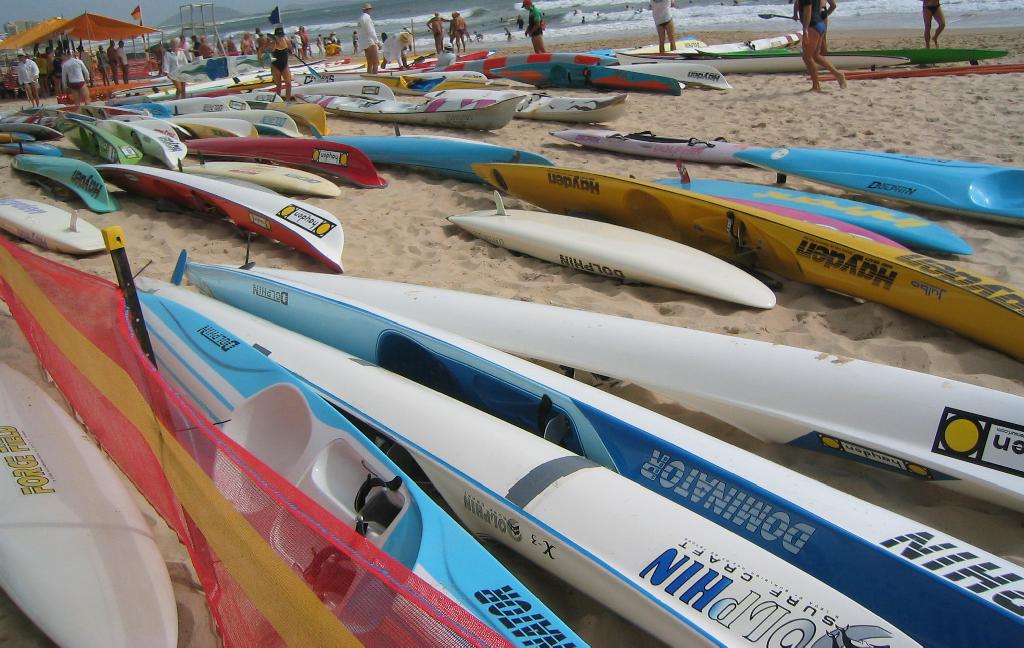
Surf lifesaving is a multifaceted social movement that comprises key aspects of voluntary lifeguard services and competitive surf sport. Originating in early 20th century Australia, the movement has expanded globally to other countries, including New Zealand, Ireland, South Africa, and the United Kingdom.[failed verification] Surf lifesavers in Australia are colloquially known as "Clubbies".
Surf lifesaving originated in Australia in 1907 in response to drownings at local beaches in Sydney. Such groups became necessary following the relaxing of laws prohibiting daylight bathing on Australian beaches. Volunteer groups of men were trained in life saving methods and patrolled the beaches as lifesavers looking after public safety.
There had been some debate between Manly Life Saving Club, Bronte Surf Lifesaving Club and Bondi Surf Bathers' Life Saving Club as to which was formed first. After a panel of SLSA historians reviewed all the documentation provided by each club in 2005, SLSA agreed that they recognise Bondi as the first surf life saving club. They stated "A hardy perennial in surf lifesaving history is the question of the first surf club – Bondi or Bronte. As this study has shown, the first group of organised lifesavers formed on Manly Beach in 1899. While moves on Bondi, Bronte and Manly in early 1907 saw the organisation of irregulars, it was the surf bathers of Bondi who first organised themselves as a formal club in February 1907". The Bondi Surf Bathers' Life Saving Club was officially established on 21 February 1907, at the Royal Hotel in Bondi – as was recorded in the newspaper The East Sydney Argus, and in the Waverley Council minutes acknowledging receipt of a letter from the newly formed group.
On 10 October 1907, the Surf Bathing Association of New South Wales (SBANSW) was founded with nine clubs and affiliated associations. The nine "foundation" clubs were the Royal Life Saving Society, Manly Surf Club, Bondi Surf Bathers' Life Saving Club, Coogee Surf Life Brigade (Coogee Surf Life Saving Club), Bronte Surf Brigade (Bronte Surf Lifesaving Club), Bondi Surf and Social Club (North Bondi Surf Life Saving Club), Tamarama Surf Club (later disbanded, however nowadays Tamarama Surf Life Saving Club), Maroubra Surf Club (Maroubra Surf Life Saving Club), United Wanderers Surf Club, and Woollahra Surf Club. The first club outside of Sydney was Kiama Surf Bather's Club, founded in 1908.
The first New Zealand Surf Lifesaving Clubs began in the years 1909 to 1910 leading off with: Castlecliff (Wanganui), Lyall Bay (Wellington), New Brighton (Christchurch) and Worser Bay (Wellington). Within the next few years other clubs started forming around five regions: Wellington, Christchurch, Dunedin, Gisborne/Napier/New Plymouth and Wanganui.
In the northern region, Piha Surf Life Saving Club was founded in 1934 and as such is the oldest club on Auckland's west coast and is the home of Piha Rescue. Soon after the New Zealand clubs were formed, rivalry began to take place which created the forming of competition between the clubs and regions. By early 1912 competitions were being organised by Wellington's Maranui Club, with male members competing in squads of eight. The competitions consisted of a land drill and 'reel test'. The first New Zealand National Champs where clubs were able to compete was held in 1922.
The Surf Life Saving Great Britain (SLSGB) organisation was formed in 1955. Volunteer clubs patrolled beaches in England at Bude and St. Agnes in Cornwall and at Brighton, their aim to protect, rescue and resuscitate bathers. Voluntary organisations exist in Germany, such as DLRG and Wasserwacht.
Lifesavers are volunteers that typically patrol in groups under a patrol captain for a given period of time on weekend and public holidays under a roster system. In order to be a surf lifesaver a person must hold a Bronze Medallion or a Surf Rescue Certificate and pass an annual proficiency test. Lifesavers who are on patrol wear red and yellow cloth caps on the head. While not performing rescues they are also required to wear long-sleeve yellow shirts and red shorts to provide protection against the sun. Support Operations Lifesavers are required to wear the appropriate functional attire. This includes wetsuits for RWC (Rescue Water Craft) drivers, JRB/ORB (jet and offshore rescue boat) crew and high visibility tabards for Duty Officers who liaise with other emergency services at major incidents. The crews of various Lifesaver helicopter services over the country wear appropriate aviation equipment. Each surf life saving club also has a competition cap with distinct colours or patterns. These are worn during competition and for training on the beach. The patrolled area of the beach is marked out with red and yellow flags and beachgoers are encouraged to swim between the flags. Those wishing to use surfcraft are required to remain outside the flags.
Hub AI
Surf lifesaving AI simulator
(@Surf lifesaving_simulator)
Surf lifesaving
Surf lifesaving is a multifaceted social movement that comprises key aspects of voluntary lifeguard services and competitive surf sport. Originating in early 20th century Australia, the movement has expanded globally to other countries, including New Zealand, Ireland, South Africa, and the United Kingdom.[failed verification] Surf lifesavers in Australia are colloquially known as "Clubbies".
Surf lifesaving originated in Australia in 1907 in response to drownings at local beaches in Sydney. Such groups became necessary following the relaxing of laws prohibiting daylight bathing on Australian beaches. Volunteer groups of men were trained in life saving methods and patrolled the beaches as lifesavers looking after public safety.
There had been some debate between Manly Life Saving Club, Bronte Surf Lifesaving Club and Bondi Surf Bathers' Life Saving Club as to which was formed first. After a panel of SLSA historians reviewed all the documentation provided by each club in 2005, SLSA agreed that they recognise Bondi as the first surf life saving club. They stated "A hardy perennial in surf lifesaving history is the question of the first surf club – Bondi or Bronte. As this study has shown, the first group of organised lifesavers formed on Manly Beach in 1899. While moves on Bondi, Bronte and Manly in early 1907 saw the organisation of irregulars, it was the surf bathers of Bondi who first organised themselves as a formal club in February 1907". The Bondi Surf Bathers' Life Saving Club was officially established on 21 February 1907, at the Royal Hotel in Bondi – as was recorded in the newspaper The East Sydney Argus, and in the Waverley Council minutes acknowledging receipt of a letter from the newly formed group.
On 10 October 1907, the Surf Bathing Association of New South Wales (SBANSW) was founded with nine clubs and affiliated associations. The nine "foundation" clubs were the Royal Life Saving Society, Manly Surf Club, Bondi Surf Bathers' Life Saving Club, Coogee Surf Life Brigade (Coogee Surf Life Saving Club), Bronte Surf Brigade (Bronte Surf Lifesaving Club), Bondi Surf and Social Club (North Bondi Surf Life Saving Club), Tamarama Surf Club (later disbanded, however nowadays Tamarama Surf Life Saving Club), Maroubra Surf Club (Maroubra Surf Life Saving Club), United Wanderers Surf Club, and Woollahra Surf Club. The first club outside of Sydney was Kiama Surf Bather's Club, founded in 1908.
The first New Zealand Surf Lifesaving Clubs began in the years 1909 to 1910 leading off with: Castlecliff (Wanganui), Lyall Bay (Wellington), New Brighton (Christchurch) and Worser Bay (Wellington). Within the next few years other clubs started forming around five regions: Wellington, Christchurch, Dunedin, Gisborne/Napier/New Plymouth and Wanganui.
In the northern region, Piha Surf Life Saving Club was founded in 1934 and as such is the oldest club on Auckland's west coast and is the home of Piha Rescue. Soon after the New Zealand clubs were formed, rivalry began to take place which created the forming of competition between the clubs and regions. By early 1912 competitions were being organised by Wellington's Maranui Club, with male members competing in squads of eight. The competitions consisted of a land drill and 'reel test'. The first New Zealand National Champs where clubs were able to compete was held in 1922.
The Surf Life Saving Great Britain (SLSGB) organisation was formed in 1955. Volunteer clubs patrolled beaches in England at Bude and St. Agnes in Cornwall and at Brighton, their aim to protect, rescue and resuscitate bathers. Voluntary organisations exist in Germany, such as DLRG and Wasserwacht.
Lifesavers are volunteers that typically patrol in groups under a patrol captain for a given period of time on weekend and public holidays under a roster system. In order to be a surf lifesaver a person must hold a Bronze Medallion or a Surf Rescue Certificate and pass an annual proficiency test. Lifesavers who are on patrol wear red and yellow cloth caps on the head. While not performing rescues they are also required to wear long-sleeve yellow shirts and red shorts to provide protection against the sun. Support Operations Lifesavers are required to wear the appropriate functional attire. This includes wetsuits for RWC (Rescue Water Craft) drivers, JRB/ORB (jet and offshore rescue boat) crew and high visibility tabards for Duty Officers who liaise with other emergency services at major incidents. The crews of various Lifesaver helicopter services over the country wear appropriate aviation equipment. Each surf life saving club also has a competition cap with distinct colours or patterns. These are worn during competition and for training on the beach. The patrolled area of the beach is marked out with red and yellow flags and beachgoers are encouraged to swim between the flags. Those wishing to use surfcraft are required to remain outside the flags.
Recent media