Hubbry Logo
LifesavingLifesavingMain
Open search
Lifesaving
Community hub
Lifesaving
logo
8 pages, 0 posts
0 subscribers
Be the first to start a discussion here.
Lifesaving
Lifesaving
from Wikipedia
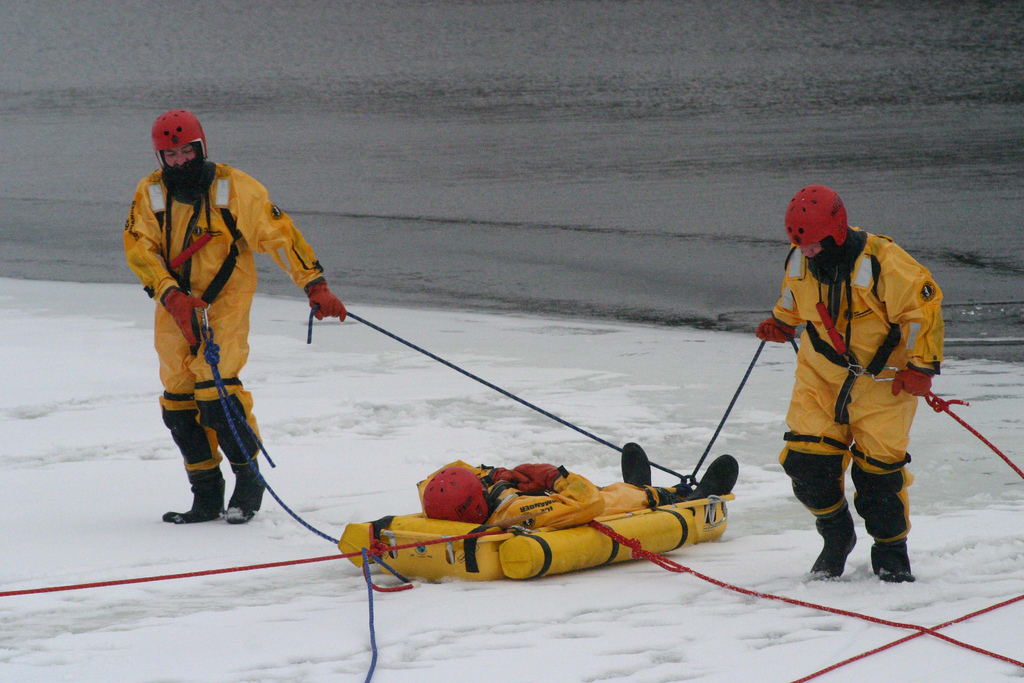
Ice rescue training in Canada
Lifesaving doll dummies for rescue training in water

Lifesaving is the act involving rescue, resuscitation and first aid. It often refers to water safety and aquatic rescue; however, it could include ice rescue, flood and river rescue, swimming pool rescue and other emergency medical services. Lifesaving also refers to sport where lifesavers compete based on skills, technique, speed and teamwork. Lifesaving activities specialized in oceanic environment is called surf lifesaving or coastal lifesaving.[1]

Those who participate in lifesaving activities as a volunteer are called lifesavers, and those who are employed to professionally perform lifesaving activities are called lifeguards. Surf lifesaving is a particularly common application. Lifesaving can also be developed as an aquatic sport.

History

[edit]

Origins

[edit]
Memorial in Douglas, Isle of Man, to one of RNLI's earliest rescues: rescuing the sailors from the St George in 1830.

In the early nineteenth century, most seamen did not swim; swimming was not considered a recreational sport. Working aloft or trimming sails was always dangerous as just one single misjudged step could send a man crashing to the deck or over the side. Normally the odds of rescue were slim to none at all. Typically, sailing vessels could not change sails or lower a boat quickly nor did their crews practice rescue maneuvers. Additionally, a drowning man in anything more than flat and calm water was hard to spot.[2]

On Wednesday 12 September 1804, the log of HMS Victory, recorded a unique rescue at sea, "Moderate Breezes and hazy, shifted the main sails, at 9 tacked at 9.55 James Archibald, Seaman fell overboard, downed Cutter and got him safe in, being saved by Mr. Edward Flin masters mate, jumping overboard after him."[3][4] Edward Flin's action was witnessed by Lord Horatio Nelson, who was so impressed by Flin's heroic action, that he promoted him on the spot to Lieutenant in HMS Bittern.[5][6][7]

On 4 October 1843 a similar mishap was recorded in a log entry of the frigate USS United States (1797). "From 4 to 8 moderate breezes and clear weather at 5.22 David Black (Cooper) fell overboard, hove to with maintop sail to the mast and sent the Barge & 2nd Cutter in search of him... At 1030 hove to and hoisted up the 2nd Cutter all search proving ineffectual"[8]Herman Melville, who joined the USS United States in Oahu, as an Ordinary Seaman, later used this incident in his novel White Jacket. There David Black becomes “Bungs” a man ironically charged with maintaining the frigate’s cork life-buoys; and is said to have exclaimed “I will never go a loft, and don’t intend to fall overboard.” Melville adds the next day Black fell over the side and after a five hour search the frigate resumed course.[9]

The first life saving organization, the Royal National Institution for the Preservation of Life from Shipwreck, was established in England in 1824 by Sir William Hillary.[10] While living on the Isle of Man in 1808, he became aware of the treacherous nature of the Irish Sea, with many ships being wrecked around the Manx coast. He soon drew up plans for a national lifeboat service manned by trained crews, but received little response from the Admiralty.

However, on appealing to the more philanthropic members of London society, the plans were adopted and, with the help of two members of Parliament (Robert Wilson and George Hibbert), the National Institution for the Preservation of Life from Shipwreck was founded in 1824.

One of the Institution's first rescues was of the packet St George, which had foundered on Conister Rock at the entrance to Douglas Harbour. Hillary took part in the successful operation and everyone was ultimately rescued. Thirty years later the Institution's title was changed to the Royal National Lifeboat Institution and the first of the new lifeboats to be built was stationed at Douglas in recognition of Hillary's work.

Spread

[edit]
Evanston Life Saving Crew (Evanston, Illinois), 1894

Similar services were established in other countries, in Belgium (1838), Denmark (1848), United States (1848), Sweden (1856), France (1865), Germany (1885), Turkey (1868), Russia (1872), Italy (1879) and Spain (1880). In 1891 the Royal Life Saving Society was created to affiliate British and Irish lifesaving and lifeguarding clubs. It expanded its operations to Canada and Australia in 1894. In 1913 the DLRG was founded in Germany.[11]

The first international lifesaving conference was held in Marseille, France in 1878, but it was not until 1910 that the first international lifesaving organisation, FIS (Fédération Internationale de Sauvetage Aquatique), was founded.[12]

In 1971 Australia, Great Britain, New Zealand, South Africa and the United States founded another international organization called World Life Saving (WLS). FIS and WLS merged into a new organisation, International Life Saving Federation (ILS) in 1993 with its headquarters in Leuven, Belgium.

International Life Saving Federation

[edit]

The International Life Saving Federation (ILS) was established on 27 March 1910 in Paris, France. The ILS is primarily known as the world authority and head in the global effort to "prevent drowning and regroups national life saving organisations/federations aiming at improving water safety, water rescue, lifesaving and lifeguarding and lifesaving sport[13]".

Coogee Beach Surf Lifesaving Club

Activities

[edit]

Surf lifesaving developed in Australia and is often simply called "lifesaving". It focuses on drowning prevention and rescue in a coastal setting. General lifesaving does not limit its activities to beaches - its aim is to promote water safety around ponds, lakes, rivers, pools, in the home, at school and in any other applicable environments.[14] This is why landlocked countries like Switzerland, Austria, Kazakhstan, Macedonia, Serbia, Azerbaijan, Czech Republic and Slovakia, are also full members of ILS.

Lifesavers are volunteers and usually stationed at a club house. They provide training for lifesaver/lifeguard qualifications as well as educating the general public.

As a sport

[edit]
Boy scouts taking a lifesaving lesson. Chiba, Japan

Lifesaving has become a growing sport in many countries.[15] The sport can be contested in swimming pools or on beaches in the surf, each being a separate discipline of the sport.

Lifesaving is one of the official sports of The World Games, a quadrennial multi-sport event for sports and disciplines that are not in the Olympic programme.[16]

Cardiopulmonary resuscitation

[edit]

Cardiopulmonary resuscitation, otherwise known as CPR is the most common form of life saving. CPR can be easily understood through this simplified table.[17]

ADULT and older CHILD CHILD 1 to 8 yrs BABY up to 1 yr
CPR ratios for 1 person 30 compressions to 2 breaths 30 compressions to 2 breaths 30 compressions to 2 puffs
CPR ratios for 2 persons 30 compressions to 2 breaths 30 compressions to 2 breaths 30 compressions to 2 puffs
Chest pressure 2 hands 1-2 hands 2 fingers
CPR compression rate Approximately 100 per minute Approximately 100 per minute Approximately 100 per minute
Compression depth One-third of a chest depth One-third of a chest depth One-third of a chest depth
Head tilt Maximum Minimum None
Rescue breaths 2 full breaths 2 small breaths 2 puffs
Breathing rate 1 breath in 1 second 1 small breath in 1 second 1 puff in 1 second

DRSABCD

[edit]

All collapsed victims should be carefully assessed to decide what emergency care is needed. This method of assessment is known as DRSABCD, this method is explained in the following table.[18]

D Check for Dangers
R Check Response
S Send for help
A Clear and open the Airway
B Check for normal Breathing
C Give 30 chest Compressions at 100 per minute, followed by 2 rescue breaths
D Defibrillate – attach AED as soon as available. Follow the prompts.

See also

[edit]

References

[edit]
Revisions and contributorsEdit on WikipediaRead on Wikipedia
from Grokipedia
Lifesaving is the coordinated practice of preventing drowning and water-related injuries through rescue techniques, resuscitation, first aid, and water safety education, primarily in aquatic environments such as beaches, pools, and open waters. It involves both professional lifeguards and trained volunteers who respond to emergencies, employing tools like rescue tubes, buoys, and boats to save lives at risk from submersion or hazardous conditions. Globally, lifesaving efforts are guided by organizations such as the International Life Saving Federation (ILS), which coordinates drowning prevention, training standards, and lifesaving sports across more than 100 national members to promote uniform skills and awareness. The origins of organized lifesaving trace back to the , when European, Asian, and American societies formed lifeboat services to aid victims, with early U.S. efforts in the 1700s launching dories from shore to distressed mariners. By the late , as shipwrecks declined due to improved , focus shifted to beach safety, with paid lifeguards emerging in places like and to prevent swimmer drownings using region-specific methods like surf skis and rescue boards. International collaboration began in 1878 with the first global lifesaving in , , leading to the formation of the Fédération Internationale de Sauvetage Aquatique (FIS) in 1910 and its merger with the World Life Saving organization in 1993 to create the ILS. Key aspects of lifesaving include rigorous training programs that build physical and mental skills for rescues, such as under simulated distress conditions, towing victims, and CPR administration, often certified by national bodies like the United States Lifesaving Association (USLA), founded in 1965 as the National Surf Life Saving Association and renamed in 1979 to encompass all open-water rescuers. Lifesaving has also evolved into a competitive since the early , with events in pools and oceans testing rescue proficiency through disciplines like simulated rescues, line throws, and obstacle swims, intended to hone real-world capabilities while fostering international standards. These efforts have saved countless lives; for instance, the U.S. Lifesaving Service, a precursor to the , rescued 178,741 people from 1786 to 1915 before merging in 1915. Today, lifesaving emphasizes prevention through public education campaigns, such as teaching survival to children, reducing global rates that claim approximately 300,000 lives annually (as of 2021).

Overview

Definition and Principles

Lifesaving is defined as the integrated practice of preventing , performing aquatic rescues, providing , and administering in water-related emergencies. This encompasses a range of activities aimed at protecting individuals from submersion or immersion hazards, with a primary focus on open and recreational aquatic environments such as beaches, pools, and rivers. The discipline integrates skills like , , and emergency response to mitigate risks and ensure victim survival. Core principles of lifesaving emphasize the prioritization of the rescuer's above all else, followed by a thorough assessment of environmental dangers and the victim's condition before any intervention. Rescuers must first achieve by recognizing the and accepting responsibility, then conduct an assessment to evaluate factors like currents, , and personal capabilities, questioning whether a rescue is feasible. The action phase involves developing and executing a plan, favoring non-contact methods—such as talking to the victim, reaching with , or throwing flotation devices—to avoid direct physical engagement that could endanger the rescuer or escalate the situation. Finally, aftercare ensures ongoing support, including and summoning help, until the victim is . These principles, rooted in minimizing secondary drownings, guide all lifesaving operations worldwide. Lifesaving distinguishes between professional lifeguarding, which involves paid personnel employed by facilities or authorities to provide continuous supervision and rapid response in designated aquatic areas, and volunteer lifesaving efforts, where trained members beaches or events on a part-time, unpaid basis, often through clubs during peak seasons. While both share core skills in and , lifeguards typically operate in structured, year-round settings with formal employment, whereas volunteers focus on seasonal, community-driven prevention and response. The term "lifesaving" originated as an in the late 1500s, initially describing actions or apparatus that preserve life, with its first recorded use in 1598. It evolved significantly in the through organized maritime efforts, as volunteer groups and federal services like the U.S. Life-Saving Service formalized practices to aid shipwrecked sailors, shifting from ad hoc interventions to structured protocols for coastal and open-water emergencies. This development aligned with broader humanitarian initiatives, such as the Massachusetts Humane Society's establishment of equipped stations in 1807, laying the groundwork for modern lifesaving as a coordinated discipline. The International Life Saving Federation now standardizes these practices globally.

Global Importance

Lifesaving plays a critical role in addressing , which remains a leading cause of unintentional worldwide, with an estimated 300,000 people dying from drowning in 2021 alone. The 2024 Global Status Report on Prevention confirms these figures, noting a 38% decline in drowning death rates since 2000, from 6.1 to 3.8 per 100,000 population, while highlighting persistent challenges in low-resource settings. Over 90% of these deaths occur in low- and middle-income countries, where rates are more than three times higher than in high-income nations, disproportionately affecting children under five and rural populations with limited access to safe water environments. Despite this progress, drowning deaths remain unevenly distributed, with low-income regions in and bearing the highest burden. The economic and social costs of drowning are profound, estimated at a minimum of $146 billion annually in international dollars, encompassing lost , medical expenses, and the value of statistical . In low-income countries, these costs can exceed 0.8% of , exacerbating cycles as families lose breadwinners and face long-term from non-fatal incidents. Healthcare systems are further strained by the treatment of survivors, who often require intensive care for injuries or disabilities, with global non-fatal drownings contributing to millions of disability-adjusted years lost each year. Lifesaving initiatives integrate into broader efforts, aligning with the , particularly SDG 3 (good health and well-being) and SDG 6 (clean water and sanitation), by promoting education and infrastructure to prevent as a barrier to and community resilience. The 2021 UN General Assembly Resolution on Global Drowning Prevention underscores this linkage, calling for national plans that enhance multisectoral responses to reduce 's impact on . A notable example is 's surf lifesaving programs, which have contributed to a 26% reduction in overall rates (from 1.45 to 1.08 per 100,000 population) since 2002, with rates for children aged 0–4 years dropping by 59% through community patrols, public education campaigns, and safety measures implemented post-2000. These efforts, led by organizations like , demonstrate how targeted prevention can yield sustained declines, saving thousands of lives and informing global strategies.

History

Early Origins

Prior to the 19th century, lifesaving efforts were largely informal and community-driven, relying on local volunteers rather than organized institutions. In ancient and early modern , documented services emerged as early as the , with the Jingkou Life-saving Society in (formerly Chinkiang) formally established in 1702 by philanthropists to aid victims and survivors along the River; this group provided rewards for rescues and maintained equipment like boats and ropes. In , coastal rescues were similarly ad hoc, conducted by fishermen, villagers, and rudimentary beach patrols who used basic tools such as ropes and horses to assist stranded mariners, particularly along busy trade routes like the . A notable event highlighting the risks occurred on September 12, 1804, aboard under Admiral Horatio Nelson's command in the . A seaman fell overboard, and Edward Flinn jumped in to him, an act witnessed and rewarded by Nelson with a promotion, underscoring the need for better organized rescue methods. The need for structured approaches gained momentum in the early 19th century, culminating in the founding of the Royal National Lifeboat Institution (RNLI) on March 4, 1824, by Sir William Hillary in the . Motivated by frequent along Britain's coasts, Hillary— a and veteran of the —proposed a national voluntary service equipped with lifeboats and trained crews, initially named the National Institution for the Preservation of Life from Shipwreck; the organization quickly established stations and saved its first lives that year. Early European developments followed suit, with establishing the Société de Sauvetage de Belgique in 1838 under government initiative to organize rescues along its coast. This service deployed lifeboats and rocket apparatus at key stations, marking one of the continent's first state-supported lifesaving frameworks and influencing similar efforts in neighboring countries. These foundations in laid the groundwork for broader global spread after 1850.

Global Spread

The dissemination of lifesaving practices beyond began in the mid-19th century, building on European maritime innovations to address regional drowning risks in expanding colonial and industrial contexts. In the United States, the first federal lifesaving efforts were established in 1848 through the Revenue Cutter Service, which deployed life-saving stations along the East Coast to aid shipwrecked mariners amid growing maritime traffic. This initiative evolved into the formal U.S. Life-Saving Service by 1871 under the , which expanded to over 200 stations nationwide, emphasizing organized patrols, beach apparatus drills, and like buoys to save thousands of lives annually. British colonial influences facilitated the spread to and , where coastal drowning incidents prompted the adaptation of lifesaving techniques to surf conditions. In , the Bondi Surf Bathers' Life Saving Club was founded in 1907 in , marking the birth of organized and inspiring similar clubs across the continent, with patrols using reel-and-line systems derived from British models to prevent beach fatalities. followed suit in 1910 with the formation of its first surf lifesaving clubs, such as at Lyall Bay and New Brighton, integrating British lifesaving drills with local knowledge to establish a network of volunteer clubs that emphasized prevention through flags and supervision. In the , the Royal Life Saving Society (RLSS) was established in 1891 by a coalition of swimming instructors and philanthropists to standardize lifesaving education, promoting artificial respiration and water rescue methods that rapidly influenced nations. The RLSS's syllabus and certification programs were exported to , , and by the early 20th century, fostering local societies that tailored European techniques to diverse environments, such as river rescues in and coastal patrols in . Early initiatives in and emerged in the , often through missionary and colonial channels adapting Western practices to local needs. In , organized lifesaving efforts began with the founding of the Japan Life Guard Association in 1983, which became the Japan Lifesaving Association in 1991, incorporating training focused on coastal and river rescues to build public awareness and volunteer networks. In , the South African Life Saving Society, influenced by British settlers, began operations in the 1910s with beach patrols in .

Key Milestones and Organizations

The Fédération Internationale de Sauvetage Aquatique (FIS), a predecessor to the International Life Saving Federation (ILS), was established on 27 March 1910 in Saint-Ouen, near , , with a primary emphasis on preventing through standardized and international among aquatic organizations. This founding marked the beginning of organized global efforts to address water-related fatalities, building on earlier national initiatives in and beyond. In 1993, the FIS merged with the World Life Saving (WLS) organization on 24 February in , , creating the modern ILS and significantly broadening its scope to encompass over 50 member nations from both European-focused rescue traditions and practices. The merger integrated the FIS's more than 30 full member organizations with the WLS's over 20, fostering a unified platform for worldwide prevention and lifesaving standards. Post-World War II developments revitalized lifesaving activities amid renewed focus on public safety, including the formation of WLS in 1971 in Cronulla, , which emphasized beach and surf rescue competitions. This era saw lifesaving gain prominence in Olympic-related multi-sport events, culminating in its official inclusion at the in in 1985, where pool and beach disciplines were contested for the first time. In the , the ILS advanced its methodologies post-2010 by incorporating digital training resources, such as webinar series and guidelines for to enhance global accessibility. By 2020, the ILS had intensified its response to effects on water safety, developing strategies within its Prevention framework to address rising flood risks and through targeted and programs. Since 2020, the ILS has continued to adapt, incorporating virtual training during the and expanding programs, with over 120 member organizations as of 2025.

Organizations

International Bodies

The International Life Saving Federation (ILS) serves as the primary global authority for drowning prevention, water safety, aquatic rescue, and lifesaving sports, coordinating efforts among national organizations worldwide. Established through the Fédération Internationale de Sauvetage Aquatique (FIS) on March 27, 1910, in Saint-Ouen, , , the ILS considers this date its official founding, with the modern entity formed in 1993 via the merger of FIS and World Life Saving (WLS) in , . Headquartered in , , the ILS oversees 108 member organizations across five regions: , , , , and International, promoting unified standards for rescue techniques, lifeguard training, and competitive lifesaving events to reduce water-related injuries and fatalities globally. The ILS fosters international collaboration on , notably partnering with the (WHO) to co-sponsor events and advance global drowning prevention strategies. A key platform for this coordination is the ILS World Conference on Prevention, held biennially since its inception in 1997 in , , where experts share research, best practices, and policy recommendations; the 2025 edition is scheduled for November 21-23 in Sharm El Sheikh, Egypt, emphasizing and community interventions. These conferences build on the ILS's commitment to the "World Water Safety" initiative, a trademarked framework that integrates education, advocacy, and response protocols to address as a leading cause of unintentional injury death. Within its structure, the ILS operates through specialized commissions that develop and disseminate standards. The Lifesaving Sport Commission oversees international competitions, including the biennial Lifesaving World Championships, ensuring consistent rules for disciplines like ocean rescues and pool events to promote skill development and . Complementing this, the Drowning Prevention Commission focuses on and education, producing guidelines for public campaigns, , and integration of technologies—such as AI-supported monitoring systems—that augment human lifeguards without replacing them, as outlined in recent position statements. The Rescue Commission and Business Commission further support operational standards and resource allocation, respectively, enabling member organizations to implement evidence-based practices tailored to local contexts.

National and Regional Societies

National and regional lifesaving societies play a crucial role in adapting international standards to local contexts, focusing on community-based prevention, training, and rescue operations tailored to regional water hazards and cultural needs. These organizations often collaborate with international bodies like the International Life Saving Federation (ILS) to align practices while addressing unique national challenges, such as coastal currents in or inland waterways in . The Royal Life Saving Society Commonwealth, established in 1891, serves as a key network across multiple nations, promoting prevention through education and programs. It operates in 27 countries, delivering initiatives like instruction and campaigns adapted to diverse environments from urban pools to rural rivers. The society emphasizes awards such as the Certificate, which recognizes proficiency in (CPR) and emergency response skills, fostering widespread community training. In the , the United States Lifesaving Association (USLA), founded in 1965 as the National Surf Life Saving Association and renamed in , concentrates on professional standards for open-water lifeguarding along coastal and inland beaches. Comprising over 100 local chapters nationwide, the USLA develops national training protocols, advocates for public education on rip currents and beach safety, and supports certification to minimize drownings in high-traffic aquatic areas. Its efforts include research-driven guidelines that have influenced municipal policies on lifeguard deployment and equipment use. Surf Life Saving , formed in 1907 following the establishment of the first volunteer club at , coordinates extensive beach patrols and youth development programs across the continent. The organization oversees more than 400 patrolled beaches through its network of over 300 clubs, where volunteers provide year-round safety services, including preventive actions like and to guide swimmers to flagged areas. Historically, surf lifesavers have been credited with rescuing over 715,000 people since inception, significantly reducing rates through proactive vigilance and rapid response capabilities. In , the Deutsche Lebens-Rettungs-Gesellschaft (DLRG) in exemplifies a large-scale regional model, with over 1.9 million members and supporters (as of 2025) dedicated to water rescue and education. Founded in , the DLRG operates through approximately 1,700 local groups, conducting swimming courses, lifeguard training, and patrols on lakes, rivers, and coastal areas, while emphasizing preventive measures like public awareness campaigns on flood risks and boating safety. Its vast membership enables comprehensive coverage, including youth programs that integrate lifesaving into school curricula to build long-term .

Core Techniques

Prevention and Safety Education

Prevention and safety education form the cornerstone of lifesaving efforts, focusing on proactive strategies to minimize drowning risks through awareness, environmental modifications, and skill-building. Effective drowning prevention includes installing physical barriers, such as four-sided isolation fences around pools with self-closing and self-latching gates, which reduce a child's access to water and lower drowning risk by up to 83% compared to perimeter fencing. Warning signage in aquatic environments, including no-diving and depth indicators, alerts users to hazards and encourages cautious behavior, serving as a low-cost layer of protection in public pools, beaches, and rivers. Swim education programs targeted at children emphasize water competency skills like floating, treading water, and recognizing distress, providing evidence-based protection that can reduce drowning rates among young participants by 88% for children aged 1-4 years. Public awareness campaigns amplify these strategies by mobilizing communities and policymakers. The International Life Saving Federation (ILS), in collaboration with the (WHO), promotes World Drowning Prevention Day on July 25 each year, established by A/RES/75/273 in 2021, to spotlight drowning's global toll—approximately 300,000 deaths annually—and advocate for scalable solutions like and policy reforms. These initiatives encourage activities such as "going blue" awareness events and local workshops, fostering international cooperation to address preventable water-related fatalities, particularly in low- and middle-income countries where 92% of drownings occur. Risk assessment is essential for tailoring prevention to specific settings and vulnerable populations. In controlled environments like pools, primary risks involve unauthorized access by non-swimmers and young children, mitigated through constant supervision and barriers; beaches present challenges from currents and changing tides, requiring presence and user on safe zones; rivers amplify dangers with swift, unpredictable currents and submerged obstacles, heightening threats to non-swimmers, who face elevated drowning odds due to limited buoyancy skills. Vulnerable groups, including children under 5, males engaging in risk-taking behaviors, and individuals from low-socioeconomic backgrounds with less exposure, demand targeted interventions like community outreach to address disparities in access to safe water environments. Integrating water safety into formal education ensures long-term impact. By 2025, mandatory swimming and curricula exist in numerous countries, including all Nordic nations where primary school programs emphasize basic aquatic skills from early grades, as well as , , , and expanding regions in like and provinces. These programs, often governed by national standards, teach risk recognition and self- techniques, contributing to reduced incidences among youth and aligning with WHO recommendations for teaching school-age children basic , , and safe skills, as outlined in the 2024 Global status report on drowning prevention.

Rescue Operations

Rescue operations in lifesaving prioritize non-contact methods to minimize risks to the rescuer, such as dual drowning, where the victim may and pull the rescuer under. The primary types of rescues include reach, throw, tow, and contact approaches, ordered by increasing risk. A reach rescue involves extending an object like a pole, , or from a position to pull the victim to without entering the . In a throw rescue, a buoyant device such as a life ring or kickboard is hurled to the victim, who grasps it while the rescuer pulls from shore or a stable point. Tow rescues employ lines or flotation aids to draw the victim toward , often from a or after a throw, maintaining distance where possible. Contact rescues, used only as a last resort, require the rescuer to enter the and physically touch the victim, such as by supporting under the arms or using a cross-chest carry, but these are avoided to prevent exhaustion or entanglement. Essential equipment enhances safety and reach during operations. Rescue tubes, foam-filled flotation devices worn around the rescuer's torso, provide for both parties and allow for effective in open water. Ring buoys or rescue cans, throwable aids with attached lines up to 200 feet, are standard for pool and coastal environments to extend range without direct contact. In challenging open-water scenarios, such as rip currents or offshore incidents, helicopters equipped with hoist systems and swimmers deploy from units to extract victims rapidly, often lowering a or swimmer to the site. Protocols vary by environment to address unique hazards. In still , such as pools or calm lakes, rescues focus on straightforward reach or throw methods, with quick victim removal using backboards for suspected spinal injuries to prevent further damage during extraction. Surf environments demand advanced techniques, including swimming parallel to shore to escape currents before , and in-water stabilization for spinal injuries by maintaining the victim's head and alignment with flotation aids until reaching shallow . For spinal considerations across both settings, rescuers assess for signs like numbness or unnatural head position, immobilizing the victim in-line during transport to avoid aggravation. Effective coordination ensures efficient responses through defined roles. Spotters on shore or towers monitor for distress, communicate via whistles or radios, and alert the while preparing . In-water , equipped with tubes or fins, execute the approach and tow, maintaining visual contact with the . Shore support handles landing zones, victim handover, and backup calls, often using the to synchronize efforts and prevent secondary incidents. Prevention remains the first line of defense, underscoring the need for vigilant surveillance before any operation begins.

Emergency Medical Response

Emergency medical response in lifesaving focuses on stabilizing individuals through immediate life-support measures, bridging the gap between extraction from danger and professional medical intervention. This involves rapid assessment and application of protocols tailored to or near-drowning scenarios, where victims may exhibit , , or secondary complications like . Protocols emphasize high-quality interventions to restore oxygenation and circulation, drawing from international standards adapted for aquatic emergencies. A foundational framework for emergency response is the DRSABCD action plan, widely adopted by lifesaving organizations for systematic assessment and intervention. This plan begins with Danger assessment to ensure rescuer safety before approaching the victim. Next, Response checks for responsiveness by calling out and gently stimulating the person, such as squeezing their shoulders. If unresponsive, Send for help by activating emergency services (e.g., calling 000 in ) or instructing a bystander to do so. Airway management follows, opening the mouth to clear obstructions and tilting the head back to maintain patency, often rolling the victim onto their side if is suspected. Breathing is evaluated by looking, listening, and feeling for normal respirations; if absent or inadequate (fewer than two breaths in 10 seconds), proceed to CPR. Compressions initiate chest compressions if no is detected, and Defibrillation is applied if an automated external defibrillator (AED) is available, following its prompts. This sequence prioritizes safety and timely action to maximize survival odds in out-of-hospital settings. Cardiopulmonary resuscitation (CPR) forms the core of these protocols, with specific parameters for adults and children to ensure effective circulation and ventilation. For adults, rescuers deliver 30 chest compressions followed by 2 rescue breaths (30:2 ratio), at a depth of at least 5 cm but not exceeding 6 cm, and a rate of 100-120 compressions per minute, allowing full chest recoil between compressions. In children (ages 1-8 years), the same 30:2 ratio applies for single rescuers, with compressions to one-third of the chest depth—approximately 5 cm—also at 100-120 per minute; two rescuers may use a 15:2 ratio for efficiency. These techniques aim to minimize interruptions and optimize blood flow, particularly critical in hypoxic states from submersion. As of 2025, the guidelines reinforce the integration of compression-only CPR for bystanders in adult witnessed out-of-hospital, recommending continuous compressions without ventilations to simplify response and reduce hesitation among untrained rescuers. This approach, delivering uninterrupted compressions at 100-120 per minute to a depth of 5-6 cm, has been shown to improve outcomes by prioritizing circulation in the initial minutes before professional help arrives, while trained lifesavers continue with full 30:2 cycles. For pediatric cases, bystanders are encouraged to include breaths if willing, but compression-only remains an acceptable alternative. Post-resuscitation care addresses common complications in water rescues, such as and exhaustion, which can exacerbate shock or lead to . For , rescuers handle victims gently to avoid inducing arrhythmias, removing wet clothing from conscious individuals and wrapping them in insulating blankets for passive rewarming; unconscious victims retain wet clothes but receive coverings to prevent further heat loss, with oxygen administered via if available. Active rewarming is deferred until transport to avoid complications like . Exhaustion in rescued persons, often from prolonged struggle or cold exposure, is managed by positioning them for rest, monitoring for signs of shock (e.g., pale , rapid ), and providing supplemental oxygen to support recovery, ensuring transfer to medical care without delay. These measures stabilize the victim during the critical post-rescue phase, reducing secondary risks.

Lifesaving Sport

Disciplines and Skills

Lifesaving as a sport encompasses a range of competitive disciplines designed to test athletes' proficiency in rescue techniques, physical endurance, and decision-making under pressure, primarily governed by the International Life Saving Federation (ILS). These events simulate real-world aquatic emergencies while emphasizing speed and accuracy in controlled environments. Pool disciplines focus on indoor settings, beach disciplines occur on sandy shores with access, and events integrate open-water challenges, all conducted under timed conditions to evaluate performance. Pool disciplines form the core of indoor competitions, requiring precise swimming and handling of rescue equipment. The 200m superlifesaver event, for instance, combines multiple skills in a continuous sequence: competitors start in the water and swim 75 m freestyle, then dive to recover a submerged manikin within 5 m of the pick-up line, surface the manikin and carry it to the turning edge, touch the wall and release the manikin; next, don fins and a rescue tube within 5 m of the turning edge and swim 50 m freestyle, then fix the rescue tube around a floating manikin within 5 m of the turning edge and tow it to touch the finish edge of the pool, all within a single timed effort to mimic a comprehensive rescue scenario. Obstacle swims challenge agility and freestyle technique over 100 meters (with four obstacles) or 200 meters (with eight obstacles), where athletes must dive under and over barriers while maintaining speed. Manikin carries emphasize strength and buoyancy control, such as the 50-meter variant where competitors swim 25 meters freestyle, submerge to retrieve a manikin from the pool bottom, and carry it 25 meters to the finish, often using fins for propulsion in longer versions like the 100-meter event. Beach disciplines extend the sport to coastal environments, integrating running, , and equipment use to replicate surf dynamics. Beach runs test sprinting endurance over 1 kilometer (two 500-meter legs) or 2 kilometers (four legs), often as components where teams exchange batons. Surf races involve a 400-meter marked by in the , demanding wave navigation and open-water stamina. Board paddles require athletes to paddle a rescue board around a flagged course before sprinting ashore to finish, honing balance and upper-body power. Simulated , such as the tube , simulate patient extraction: one competitor swims out to tow a "victim" (manikin or ) using a rescue tube, while a partner assists in dragging it to shore within a timed limit. Ocean events build on beach formats with greater emphasis on advanced watercraft and team coordination in unpredictable seas. Surf ski races involve paddling a specialized around buoys for distances up to 800 meters, finishing in the water to assess stability and against currents and waves. Tube rescues in ocean settings mirror beach variants but incorporate surf conditions, requiring swimmers to deploy tubes for over longer, more hazardous distances. Flag relays add a strategic sprint element, where fewer flags than competitors are placed on the ; teams run, swim if needed, and for flags in a race to secure them first, promoting quick reactions and positioning. Across all disciplines, athletes must demonstrate core skill requirements, including efficient strokes for speed and distance, towing techniques to transport victims without exhaustion, and adept handling of equipment like fins, rescue tubes, boards, and under strict time constraints. These proficiencies ensure competitors not only excel in competition but also maintain readiness for practical lifesaving applications, with events structured to progressively increase complexity and realism.

Competitions and Events

Lifesaving sports competitions are governed by the International Life Saving Federation (ILS), with the ILS Sport Commission overseeing the development and enforcement of standardized rules across international events. These rules, detailed in the ILS Competition Rule Book, ensure consistency in judging, equipment, and safety protocols for more than 10 disciplines, including pool events like the 100m manikin tow with fins and beach events such as the surf race. The premier event is the ILS Lifesaving World Championships (LWC), held biennially by the ILS since 1994, with the first edition in , , attracting 4,000 to 5,000 competitors from national teams and interclub divisions over 17 to 18 days. The championships feature separate categories for youth (ages 15-18), open (minimum age 16), and masters (typically 35 and over), allowing participants of varying experience levels to compete in simulated scenarios. Notable past hosts include in 2022 and in 2024, with the 2026 event scheduled for Port Elizabeth, . Lifesaving has been included in The since the second edition in in 1985, providing a multi-sport platform for top performers outside the Olympics. These games feature elite national teams and individuals in selected pool and beach disciplines, with competitions lasting two days and emphasizing speed and precision in rescue techniques. The in , , included events like the 100m rescue medley, drawing the eight best teams and individuals per category from ILS rankings. World records highlight the sport's athletic demands, such as the men's open 100m manikin tow with fins, set at 47.68 seconds by Hynes Harrison of at the 2024 LWC in . Similarly, the women's open record stands at 54.20 seconds, achieved by Madison Kidd of in on September 27, 2025. These benchmarks, ratified by the ILS, underscore ongoing advancements in technique and training within the governed disciplines.

Training and Development

Certification Programs

Certification programs in lifesaving provide structured training to equip individuals with essential skills for aquatic and emergency response, progressing from foundational qualifications to advanced instructional roles. These programs are offered by national and international organizations, ensuring standardized competencies in proficiency, techniques, and . Participants typically undergo rigorous assessments to earn certifications that validate their readiness to serve as lifeguards or water safety personnel. The Bronze Medallion stands as the primary entry-level , targeting individuals aged 14 and older (or 13 in some jurisdictions with prerequisites). It encompasses core elements such as a 400-meter swim within 12-13 minutes using various strokes, practical simulations including tows and spinal management, and foundational CPR using the DRSABCD protocol. Training duration varies from 15 hours in intensive formats to spread sessions over weeks, emphasizing judgment, fitness, and knowledge to prevent and respond to incidents. Advanced certifications, such as Instructor and Trainer awards, build on entry-level qualifications and demand substantial practical , often exceeding 100 hours of or to demonstrate expertise in delivering . These roles require candidates to hold current credentials, complete specialized courses (e.g., 20-40 hours for instructor ), and pass evaluations on instructional methods and assessment techniques. Instructors focus on and CPR skills, while trainers develop and oversee program delivery, ensuring adherence to organizational standards. Key programs include the Royal Life Saving Society's (RLSS) National Water Safety Management Programme (NWSMP), a modular suite for supervisors and workers near water, covering awareness, , and emergency planning across levels valid for two years. Similarly, the Lifesaving Association (USLA) oversees training through certified agencies, featuring 40-hour initial open-water courses that integrate beach-specific rescues, , and annual refreshers to maintain certification standards. Evaluation across these programs involves practical simulations, such as timed rescues and scenario-based drills, alongside written or oral exams on , with independent examiners verifying proficiency. Certifications generally require recertification every 1-2 years through updated and assessments to reflect evolving protocols.

Modern Innovations and Equipment

Modern lifesaving equipment has evolved to incorporate advanced materials and designs that enhance portability, durability, and functionality. Rescue boards, such as inflatable models developed in partnership with organizations like the Royal National Lifeboat Institution (RNLI), prioritize accessibility and ease of transport for beach and open-water operations, allowing lifeguards to deploy them rapidly without compromising stability. Automated external defibrillators (AEDs) remain essential for cardiac emergencies in aquatic settings, with compact, user-friendly models like the Lifeline VIEW providing multilingual CPR guidance and extended battery life to support non-expert rescuers in delivering timely shocks. Wearable technologies, including smart vests equipped with integrated sensors, enable real-time monitoring—such as and oxygen levels—for both rescuers and at-risk swimmers, facilitating early intervention during patrols or rescues. Technological innovations have significantly improved surveillance and response capabilities in lifesaving. Drone surveillance for beach patrols gained widespread adoption following 2018 trials in , where a survey of beachgoers on the North indicated 96% felt safer with drone surveillance and 81% strongly agreed that drones enhanced lifeguards' ability to detect hazards like rip currents. By 2025, these systems are routinely used in regions like New York and for aerial monitoring of water conditions and swimmer distress, often integrating cameras for real-time data transmission to patrol teams; for instance, as of July 2025, expanded drone deployments along 14 miles of es to aid in protecting swimmers. AI-powered applications for risk prediction, such as the Coral Manta 3000 and YOLOv11-based detection systems, analyze video feeds to identify behaviors within seconds, alerting responders and reducing response times in pools and coastal areas. Research developments since 2020 emphasize integrating emerging tools into training and operations. Studies on wearable automated external defibrillators (AEDs), akin to cardioverter defibrillators like the LifeVest, demonstrate their potential to protect high-risk individuals from sudden by continuously monitoring and delivering shocks, with studies indicating over 95% first shock success rates and 96% one-year survival among users. (VR) training simulations provide immersive scenarios for hazard recognition and rescue techniques, outperforming traditional methods in knowledge retention and operational readiness as evidenced by controlled evaluations. Sustainability efforts in lifesaving gear focus on reducing environmental impact while maintaining efficacy. Eco-friendly rescue equipment, including life jackets made from non-toxic, recyclable foams free of PVC and phthalates, supports community-level production in developing regions and minimizes marine pollution from discarded gear. Innovations in durable, long-lasting materials for rescue boards and buoys, as promoted by RNLI international programs, extend equipment lifespan and lower replacement costs, aligning with global standards for environmentally responsible aquatic safety.

References

Add your contribution
Related Hubs
User Avatar
No comments yet.