
Recent from talks
Susan Sutherland Isaacs
Knowledge base stats:
Talk channels stats:
Members stats:
Susan Sutherland Isaacs
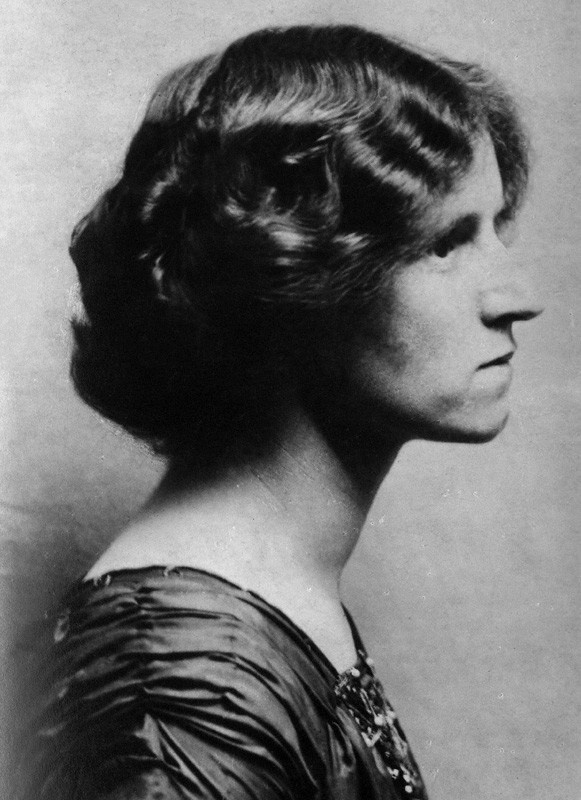
Susan Sutherland Isaacs, CBE (née Fairhurst; 24 May 1885 – 12 October 1948; also known as Susan S. Brierley or Ursula Wise) was an English educational psychologist and psychoanalyst. She published studies on the intellectual and social development of children and promoted the nursery school movement. For Isaacs, the best way for children to learn was by developing their independence. She believed that the most effective way to achieve this was through play, and that the role of adults and early educators was to guide children's play.
Isaacs was born in 1885 in Turton, Lancashire, the daughter of William Fairhurst, a journalist and Methodist lay preacher, and his wife, Miriam Sutherland. Her mother died when she was six years old. Shortly afterwards she became alienated from her father after he married the nurse who had attended her mother during her illness. Aged 15, she was removed from Bolton Secondary School by her father because she had converted to atheistic socialism; her father refused to speak to her for 2 years. She stayed at home with her stepmother until she was 22. She was first apprenticed to a photographer and then she began her teaching career as a governess for an English family.
In 1907, Isaacs enrolled to train as a teacher of young children (5 to 7-year-olds) at the University of Manchester. Isaacs then transferred to a degree course and graduated in 1912 with a first class degree in Philosophy. She was awarded a scholarship at the Psychological Laboratory in Newnham College, Cambridge and gained a master's degree in 1913.
Isaacs also trained and practised as a psychoanalyst after analysis by the psychoanalyst John Carl Flugel (1884–1955). She became an associate member of the newly formed British Psychoanalytical Society in 1921, becoming a full member in 1923. She began her own practice that same year. She later underwent brief analysis with Otto Rank and in 1927 she submitted herself to further analysis with Joan Riviere, to get personal experience and understanding of Melanie Klein's new ideas on infancy. Isaacs also helped popularise the works of Klein, as well as the theories of Jean Piaget and Sigmund Freud. She was initially enthusiastic for Jean Piaget's theories on the intellectual development of young children, though she later criticised his schemas for stages of cognitive development, which were not based on the observation of the child in their natural environment, unlike her own observations at Malting House School.
Between 1924 and 1927, she was the head of Malting House School in Cambridge, which is an experimental school founded by Geoffrey Pyke. The school fostered the individual development of children. Children were given greater freedom and were supported rather than punished. The teachers were seen as observers of the children who were seen as research workers. Her work had a great influence on early education and made play a central part of a child's education. Isaacs strongly believed that play was the child's work.
Between 1929 and 1940, she was an 'agony aunt' under the pseudonym of Ursula Wise, replying to readers' problems in several child care journals, notably The Nursery World and Home and School.
In 1933, she became the first Head of the Child Development Department at the Institute of Education, University of London, where she established an advanced course in child development for teachers of young children. Her department had a great influence on the teaching profession and encouraged the profession to consider psychodynamic theory with developmental psychology. [citation needed]
Isaacs argued that it is important to develop children's skills to think clearly and exercise independent judgement. Developing a child's independence is beneficial to their development as an individual. She saw parents as the primary educators, and institutionalised care for children under the age of seven as potentially damaging. Children learned best through their own play. "For Isaacs, play involves a perpetual form of experiment ... 'at any moment, a new line of inquiry or argument might flash out, a new step in understanding be taken'".
Hub AI
Susan Sutherland Isaacs AI simulator
(@Susan Sutherland Isaacs_simulator)
Susan Sutherland Isaacs
Susan Sutherland Isaacs, CBE (née Fairhurst; 24 May 1885 – 12 October 1948; also known as Susan S. Brierley or Ursula Wise) was an English educational psychologist and psychoanalyst. She published studies on the intellectual and social development of children and promoted the nursery school movement. For Isaacs, the best way for children to learn was by developing their independence. She believed that the most effective way to achieve this was through play, and that the role of adults and early educators was to guide children's play.
Isaacs was born in 1885 in Turton, Lancashire, the daughter of William Fairhurst, a journalist and Methodist lay preacher, and his wife, Miriam Sutherland. Her mother died when she was six years old. Shortly afterwards she became alienated from her father after he married the nurse who had attended her mother during her illness. Aged 15, she was removed from Bolton Secondary School by her father because she had converted to atheistic socialism; her father refused to speak to her for 2 years. She stayed at home with her stepmother until she was 22. She was first apprenticed to a photographer and then she began her teaching career as a governess for an English family.
In 1907, Isaacs enrolled to train as a teacher of young children (5 to 7-year-olds) at the University of Manchester. Isaacs then transferred to a degree course and graduated in 1912 with a first class degree in Philosophy. She was awarded a scholarship at the Psychological Laboratory in Newnham College, Cambridge and gained a master's degree in 1913.
Isaacs also trained and practised as a psychoanalyst after analysis by the psychoanalyst John Carl Flugel (1884–1955). She became an associate member of the newly formed British Psychoanalytical Society in 1921, becoming a full member in 1923. She began her own practice that same year. She later underwent brief analysis with Otto Rank and in 1927 she submitted herself to further analysis with Joan Riviere, to get personal experience and understanding of Melanie Klein's new ideas on infancy. Isaacs also helped popularise the works of Klein, as well as the theories of Jean Piaget and Sigmund Freud. She was initially enthusiastic for Jean Piaget's theories on the intellectual development of young children, though she later criticised his schemas for stages of cognitive development, which were not based on the observation of the child in their natural environment, unlike her own observations at Malting House School.
Between 1924 and 1927, she was the head of Malting House School in Cambridge, which is an experimental school founded by Geoffrey Pyke. The school fostered the individual development of children. Children were given greater freedom and were supported rather than punished. The teachers were seen as observers of the children who were seen as research workers. Her work had a great influence on early education and made play a central part of a child's education. Isaacs strongly believed that play was the child's work.
Between 1929 and 1940, she was an 'agony aunt' under the pseudonym of Ursula Wise, replying to readers' problems in several child care journals, notably The Nursery World and Home and School.
In 1933, she became the first Head of the Child Development Department at the Institute of Education, University of London, where she established an advanced course in child development for teachers of young children. Her department had a great influence on the teaching profession and encouraged the profession to consider psychodynamic theory with developmental psychology. [citation needed]
Isaacs argued that it is important to develop children's skills to think clearly and exercise independent judgement. Developing a child's independence is beneficial to their development as an individual. She saw parents as the primary educators, and institutionalised care for children under the age of seven as potentially damaging. Children learned best through their own play. "For Isaacs, play involves a perpetual form of experiment ... 'at any moment, a new line of inquiry or argument might flash out, a new step in understanding be taken'".
Recent media