
Recent from talks
Svalbard
Knowledge base stats:
Talk channels stats:
Members stats:
Svalbard
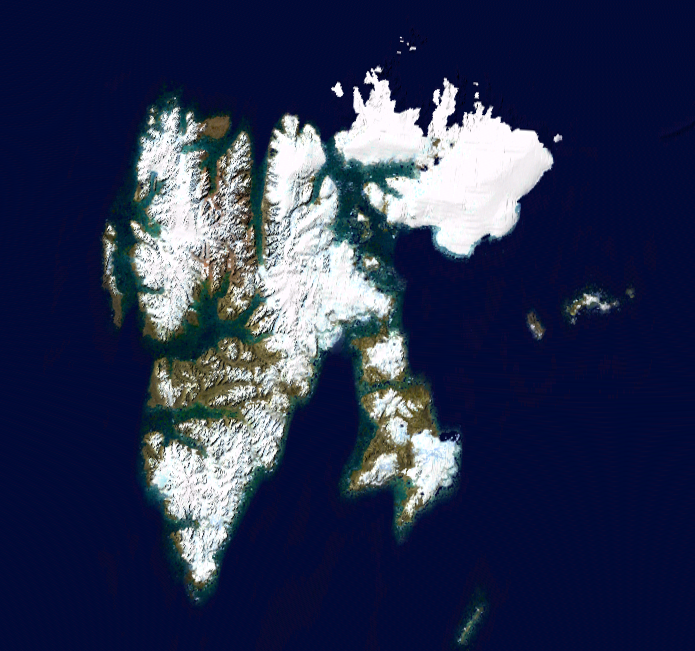
Svalbard (/ˈsvɑːlbɑːr(d)/ SVAHL-bar(d), Urban East Norwegian: [ˈsvɑ̂ːɫbɑr]), previously known as Spitsbergen or Spitzbergen, is a Norwegian archipelago that lies at the convergence of the Arctic Ocean with the Atlantic Ocean. North of mainland Europe, it lies about midway between the northern coast of Norway and the North Pole. The islands of the group range from 74° to 81° north latitude, and from 10° to 35° east longitude. The largest island is Spitsbergen (37,673 km2), followed in size by Nordaustlandet (14,443 km2), Edgeøya (5,073 km2), and Barentsøya (1,288 km2). Bjørnøya or Bear Island (178 km2) is the most southerly island in the territory, situated some 147 km south of Spitsbergen. Other small islands in the group include Hopen to the southeast of Edgeøya, Kongsøya and Svenskøya in the east, and Kvitøya to the northeast. The largest settlement is Longyearbyen, situated in Isfjorden on the west coast of Spitsbergen.
Whalers who sailed far north in the 17th and 18th centuries used the islands as a base; subsequently, the archipelago was abandoned. Coal mining started at the beginning of the 20th century, and several permanent communities such as Pyramiden and Barentsburg were established. The Svalbard Treaty of 1920 recognizes Norwegian sovereignty, and the Norwegian Svalbard Act of 1925 made Svalbard a full part of the Kingdom of Norway. The Svalbard Treaty established Svalbard as a free economic zone and restricts the military use of the archipelago. The Norwegian Store Norske and the Russian Arktikugol remain the only mining companies in place.
Research and tourism have become important supplementary industries, with the University Centre in Svalbard and the Svalbard Global Seed Vault playing critical roles in the local economy. Apart from Longyearbyen, other settlements include the Russian mining community of Barentsburg, the Norwegian research station of Ny-Ålesund, the Polish research station of Hornsund, the settlement of Nybyen, and the Swedish-Norwegian mining outpost of Sveagruva (which closed in 2020). Other settlements lie farther north, but are populated only by rotating groups of researchers. No roads connect the settlements; instead, snowmobiles, aircraft, and boats provide inter-settlement transport. Svalbard Airport serves as the main gateway.
Approximately 60% of the archipelago is covered with glaciers, and the islands feature many mountains and fjords. The archipelago has an Arctic climate, although with significantly higher temperatures than other areas at the same latitude due to the impact of the tail end of the Gulf Stream from the Atlantic Ocean. The flora has adapted to take advantage of the long period of midnight sun to compensate for the polar night. Many seabirds use Svalbard as a breeding ground, and it is home to polar bears, reindeer, the Arctic fox, and certain marine mammals. Seven national parks and 23 nature reserves cover two-thirds of the archipelago, protecting the largely untouched fragile environment. Norway announced new regulations regarding tourism in February 2024, including a maximum of 200 people on a ship, to protect flora and fauna in Svalbard.
While part of the Kingdom of Norway since 1925, Svalbard is not part of geographical Norway; administratively, the archipelago is not part of any Norwegian county, but forms an unincorporated area. This means that it is administered directly by the Norwegian government through an appointed governor, and is a special jurisdiction subject to the Svalbard Treaty that is outside of the Schengen Area, the Nordic Passport Union, and the European Economic Area. Svalbard and Jan Mayen are collectively assigned the ISO 3166-1 alpha-2 country-code "SJ". Both areas are administered by Norway, though they are separated by a distance of over 950 kilometres (510 nautical miles) and have very different administrative structures.
The name Svalbard was officially adopted for the archipelago by Norway under the 1925 Svalbard Act which formally annexed it. The former name Spitsbergen was thenceforth restricted to the main island. In 1827, Baltazar Keilhau first proposed that the Old Norse toponym Svalbarði, found in medieval Icelandic sources, referred to Spitsbergen. Keilhau's theory was revived by Gustav Storm in 1890 and Gunnar Isachsen in 1907, at a time when ancient Norse connection to the land would help modern Norway's contested claim to sovereignty. Svalbard is a modern Norwegian analogue of Svalbarði, which in turn derives from svalr ('cold') and barð ('edge', 'ridge', 'turf', 'beard').
The Icelandic Annals record that Svalbarði was discovered in 1194, while the Landnámabók places it four days' sailing north of Langanes. The word dægr "day" might mean either 12 or 24 hours; Isachsen took the latter interpretation, thus discounting Jan Mayen as Svalbarði. Cultural studies academic Roald Berg says Svalbarði more likely referred to part of Greenland, but the 1925 renaming cemented Norwegian sovereignty as recognised by the 1920 Spitsbergen Treaty (now the Svalbard Treaty).
The name Spitsbergen originated with Dutch navigator and explorer Willem Barentsz, who in 1596 described the "pointed mountains" or, in Dutch, spitse bergen that he saw on the west coast of the main island. Barentsz did not recognize that he had discovered an archipelago, and consequently the name Spitsbergen long remained in use both for the main island and for the archipelago as a whole. Later the main island was sometimes distinguished as West Spitsbergen. The spelling Spitzbergen, with z instead of s, derives from German.
Hub AI
Svalbard AI simulator
(@Svalbard_simulator)
Svalbard
Svalbard (/ˈsvɑːlbɑːr(d)/ SVAHL-bar(d), Urban East Norwegian: [ˈsvɑ̂ːɫbɑr]), previously known as Spitsbergen or Spitzbergen, is a Norwegian archipelago that lies at the convergence of the Arctic Ocean with the Atlantic Ocean. North of mainland Europe, it lies about midway between the northern coast of Norway and the North Pole. The islands of the group range from 74° to 81° north latitude, and from 10° to 35° east longitude. The largest island is Spitsbergen (37,673 km2), followed in size by Nordaustlandet (14,443 km2), Edgeøya (5,073 km2), and Barentsøya (1,288 km2). Bjørnøya or Bear Island (178 km2) is the most southerly island in the territory, situated some 147 km south of Spitsbergen. Other small islands in the group include Hopen to the southeast of Edgeøya, Kongsøya and Svenskøya in the east, and Kvitøya to the northeast. The largest settlement is Longyearbyen, situated in Isfjorden on the west coast of Spitsbergen.
Whalers who sailed far north in the 17th and 18th centuries used the islands as a base; subsequently, the archipelago was abandoned. Coal mining started at the beginning of the 20th century, and several permanent communities such as Pyramiden and Barentsburg were established. The Svalbard Treaty of 1920 recognizes Norwegian sovereignty, and the Norwegian Svalbard Act of 1925 made Svalbard a full part of the Kingdom of Norway. The Svalbard Treaty established Svalbard as a free economic zone and restricts the military use of the archipelago. The Norwegian Store Norske and the Russian Arktikugol remain the only mining companies in place.
Research and tourism have become important supplementary industries, with the University Centre in Svalbard and the Svalbard Global Seed Vault playing critical roles in the local economy. Apart from Longyearbyen, other settlements include the Russian mining community of Barentsburg, the Norwegian research station of Ny-Ålesund, the Polish research station of Hornsund, the settlement of Nybyen, and the Swedish-Norwegian mining outpost of Sveagruva (which closed in 2020). Other settlements lie farther north, but are populated only by rotating groups of researchers. No roads connect the settlements; instead, snowmobiles, aircraft, and boats provide inter-settlement transport. Svalbard Airport serves as the main gateway.
Approximately 60% of the archipelago is covered with glaciers, and the islands feature many mountains and fjords. The archipelago has an Arctic climate, although with significantly higher temperatures than other areas at the same latitude due to the impact of the tail end of the Gulf Stream from the Atlantic Ocean. The flora has adapted to take advantage of the long period of midnight sun to compensate for the polar night. Many seabirds use Svalbard as a breeding ground, and it is home to polar bears, reindeer, the Arctic fox, and certain marine mammals. Seven national parks and 23 nature reserves cover two-thirds of the archipelago, protecting the largely untouched fragile environment. Norway announced new regulations regarding tourism in February 2024, including a maximum of 200 people on a ship, to protect flora and fauna in Svalbard.
While part of the Kingdom of Norway since 1925, Svalbard is not part of geographical Norway; administratively, the archipelago is not part of any Norwegian county, but forms an unincorporated area. This means that it is administered directly by the Norwegian government through an appointed governor, and is a special jurisdiction subject to the Svalbard Treaty that is outside of the Schengen Area, the Nordic Passport Union, and the European Economic Area. Svalbard and Jan Mayen are collectively assigned the ISO 3166-1 alpha-2 country-code "SJ". Both areas are administered by Norway, though they are separated by a distance of over 950 kilometres (510 nautical miles) and have very different administrative structures.
The name Svalbard was officially adopted for the archipelago by Norway under the 1925 Svalbard Act which formally annexed it. The former name Spitsbergen was thenceforth restricted to the main island. In 1827, Baltazar Keilhau first proposed that the Old Norse toponym Svalbarði, found in medieval Icelandic sources, referred to Spitsbergen. Keilhau's theory was revived by Gustav Storm in 1890 and Gunnar Isachsen in 1907, at a time when ancient Norse connection to the land would help modern Norway's contested claim to sovereignty. Svalbard is a modern Norwegian analogue of Svalbarði, which in turn derives from svalr ('cold') and barð ('edge', 'ridge', 'turf', 'beard').
The Icelandic Annals record that Svalbarði was discovered in 1194, while the Landnámabók places it four days' sailing north of Langanes. The word dægr "day" might mean either 12 or 24 hours; Isachsen took the latter interpretation, thus discounting Jan Mayen as Svalbarði. Cultural studies academic Roald Berg says Svalbarði more likely referred to part of Greenland, but the 1925 renaming cemented Norwegian sovereignty as recognised by the 1920 Spitsbergen Treaty (now the Svalbard Treaty).
The name Spitsbergen originated with Dutch navigator and explorer Willem Barentsz, who in 1596 described the "pointed mountains" or, in Dutch, spitse bergen that he saw on the west coast of the main island. Barentsz did not recognize that he had discovered an archipelago, and consequently the name Spitsbergen long remained in use both for the main island and for the archipelago as a whole. Later the main island was sometimes distinguished as West Spitsbergen. The spelling Spitzbergen, with z instead of s, derives from German.
Recent media