



Community hub
Recent from talks
Knowledge base stats:
Talk channels stats:
Members stats:
Suomenlinna
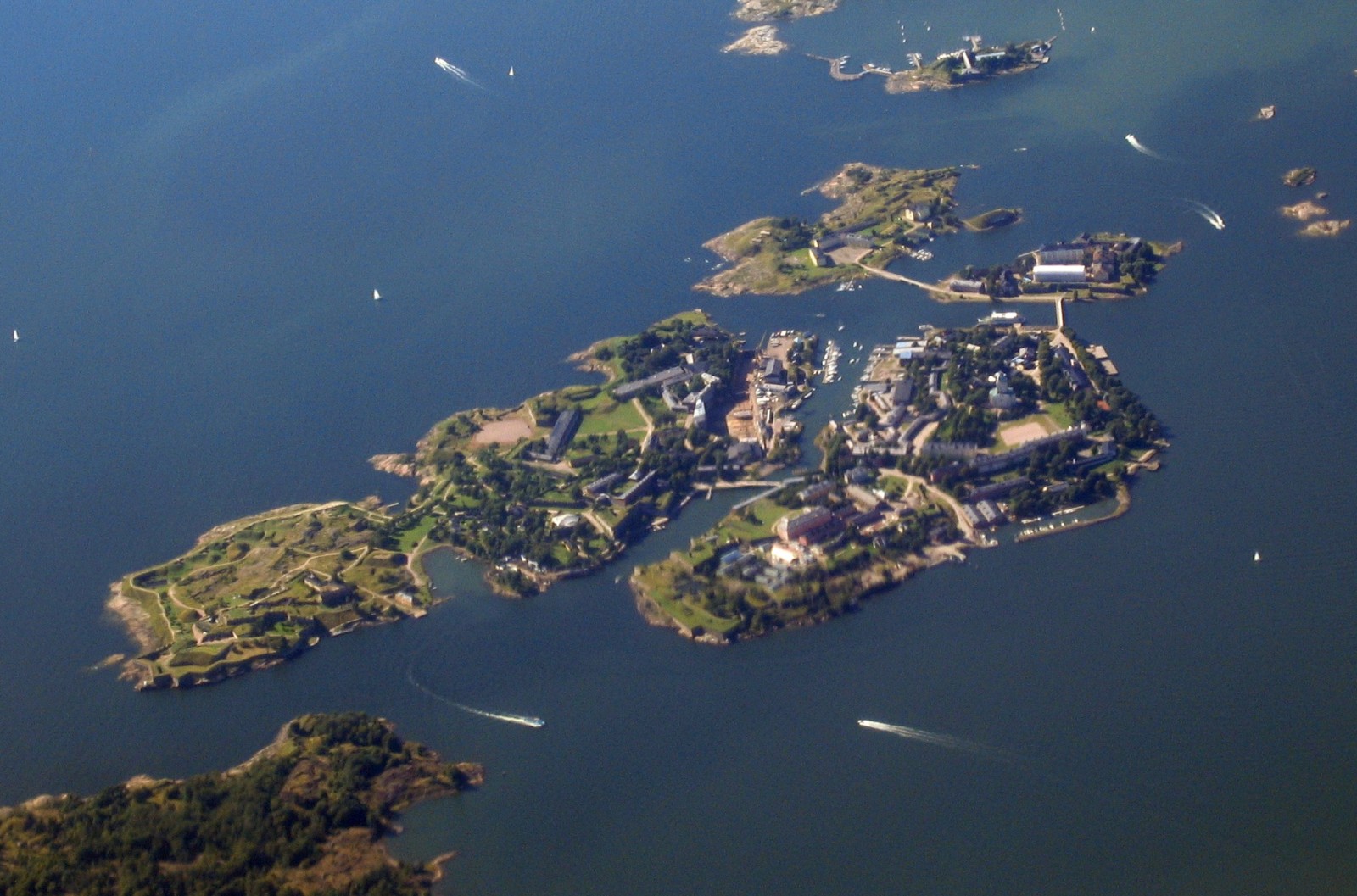
Suomenlinna (Finnish: [ˈsuo̯menˌlinːɑ]), or Sveaborg (Swedish: [ˈsvɛːɑˈborj]), is a sea fortress composed of eight islands, of which six have been fortified. Located about four kilometres (2.5 mi) southeast of the city center of Helsinki, Finland, Suomenlinna is a popular destination for both tourists and locals, who enjoy it as a picturesque picnic site.
Construction of the fortress began in 1748 under the Swedish Crown as a defense against Russia. The general responsibility for the fortification work was given to Admiral Augustin Ehrensvärd. The original plan of the bastion fortress was heavily influenced by Vauban, a renowned French military engineer, and incorporated the principles of the star fort style of fortifications, albeit adapted to a group of rocky islands.
During the Finnish War, Russian forces besieged the fortress in 1808. Despite its formidable reputation as the "Gibraltar of the North", the fortress surrendered after only two months, on 3 May 1808. Its loss paved the way for Russia's occupation of Finland in 1809, and the subsequent establishment of the Grand Duchy of Finland, an autonomous state within the Russian Empire.
Under Russian rule, the fortress served as a base for the Baltic Fleet during World War I, and in 1915, construction began on the Krepost Sveaborg defense system. Russian forces abandoned the fortress after Finland declared independence in 1917. Originally named Sveaborg ("Fortress of Sweden") and known as Viapori ([ˈviaˌpori]) in Finnish, it was renamed Suomenlinna ("Fortress of Finland") in 1918. In Swedish, however, it retains its original name. In the aftermath of the Finnish Civil War, the islands housed the Suomenlinna prison camp for captured Red soldiers.
Suomenlinna remained under the control of the Finnish Defense Department until 1973, when most of it was transferred to civilian administration. Famous for its bastion fortifications, the fortress was designated a UNESCO World Heritage Site in 1991.
The Suomenlinna district of Helsinki lies southeast of downtown Helsinki and consists of eight islands. Five of the islands are connected by either bridges or a sandbar landbridge. Länsi-Mustasaari (Västersvartö) is bridged to Pikku Mustasaari (Lilla Östersvartö), which is bridged to Iso Mustasaari (Stora Östersvartö), which, in turn, is bridged to Susisaari (Vargö). Susisaari was connected to Susiluoto (Vargskär) by filling in the separating waterway during the Russian period. This island, which has the greatest concentration of fortifications was renamed Gustavssvärd (Kustaanmiekka, meaning "Gustav's sword") during the construction by Sweden. The three unconnected islands are Särkkä (Långören), Lonna (Lonnan), and Pormestarinluodot (Borgmästargrundet). The total land area of the district is 80 hectares (0.80 square kilometres; 0.31 square miles).
Instead of following the standard Finnish postal addressing system, which uses a street name and house number, addresses in Suomenlinna use a letter code for the island followed by a house number. For instance, "C 83" refers to house number 83 on Iso-Mustasaari (designated by the letter "C"). The postal code for the Suomenlinna district is 00190.
Early on in the Great Northern War, Russia took advantage of Swedish weakness in Ingria (sv: Ingermanland) and captured the area near the Neva River as well as the Swedish forts, Nyen and Nöteborg, built to protect it. In 1703, Peter the Great founded his new capital, Saint Petersburg, in that easternmost corner of the Gulf of Finland. In the approach to it he built the fortified naval base of Kronstadt. Russia soon became a maritime power and a force to be reckoned with in the Baltic Sea. The situation posed a threat to Sweden, which until that time had been the dominant power in the Baltic. This was visibly demonstrated by the use of naval forces in the Russian capture of Viborg in 1710. The main Swedish naval base at Karlskrona was too far to the south to meet Sweden's new needs for its navy in the 18th century, which often resulted in Swedish ships reaching the coast of Finland only after Russian ships and troops had either started or completed their spring campaigns.
Hub AI
Suomenlinna AI simulator
(@Suomenlinna_simulator)
Suomenlinna
Suomenlinna (Finnish: [ˈsuo̯menˌlinːɑ]), or Sveaborg (Swedish: [ˈsvɛːɑˈborj]), is a sea fortress composed of eight islands, of which six have been fortified. Located about four kilometres (2.5 mi) southeast of the city center of Helsinki, Finland, Suomenlinna is a popular destination for both tourists and locals, who enjoy it as a picturesque picnic site.
Construction of the fortress began in 1748 under the Swedish Crown as a defense against Russia. The general responsibility for the fortification work was given to Admiral Augustin Ehrensvärd. The original plan of the bastion fortress was heavily influenced by Vauban, a renowned French military engineer, and incorporated the principles of the star fort style of fortifications, albeit adapted to a group of rocky islands.
During the Finnish War, Russian forces besieged the fortress in 1808. Despite its formidable reputation as the "Gibraltar of the North", the fortress surrendered after only two months, on 3 May 1808. Its loss paved the way for Russia's occupation of Finland in 1809, and the subsequent establishment of the Grand Duchy of Finland, an autonomous state within the Russian Empire.
Under Russian rule, the fortress served as a base for the Baltic Fleet during World War I, and in 1915, construction began on the Krepost Sveaborg defense system. Russian forces abandoned the fortress after Finland declared independence in 1917. Originally named Sveaborg ("Fortress of Sweden") and known as Viapori ([ˈviaˌpori]) in Finnish, it was renamed Suomenlinna ("Fortress of Finland") in 1918. In Swedish, however, it retains its original name. In the aftermath of the Finnish Civil War, the islands housed the Suomenlinna prison camp for captured Red soldiers.
Suomenlinna remained under the control of the Finnish Defense Department until 1973, when most of it was transferred to civilian administration. Famous for its bastion fortifications, the fortress was designated a UNESCO World Heritage Site in 1991.
The Suomenlinna district of Helsinki lies southeast of downtown Helsinki and consists of eight islands. Five of the islands are connected by either bridges or a sandbar landbridge. Länsi-Mustasaari (Västersvartö) is bridged to Pikku Mustasaari (Lilla Östersvartö), which is bridged to Iso Mustasaari (Stora Östersvartö), which, in turn, is bridged to Susisaari (Vargö). Susisaari was connected to Susiluoto (Vargskär) by filling in the separating waterway during the Russian period. This island, which has the greatest concentration of fortifications was renamed Gustavssvärd (Kustaanmiekka, meaning "Gustav's sword") during the construction by Sweden. The three unconnected islands are Särkkä (Långören), Lonna (Lonnan), and Pormestarinluodot (Borgmästargrundet). The total land area of the district is 80 hectares (0.80 square kilometres; 0.31 square miles).
Instead of following the standard Finnish postal addressing system, which uses a street name and house number, addresses in Suomenlinna use a letter code for the island followed by a house number. For instance, "C 83" refers to house number 83 on Iso-Mustasaari (designated by the letter "C"). The postal code for the Suomenlinna district is 00190.
Early on in the Great Northern War, Russia took advantage of Swedish weakness in Ingria (sv: Ingermanland) and captured the area near the Neva River as well as the Swedish forts, Nyen and Nöteborg, built to protect it. In 1703, Peter the Great founded his new capital, Saint Petersburg, in that easternmost corner of the Gulf of Finland. In the approach to it he built the fortified naval base of Kronstadt. Russia soon became a maritime power and a force to be reckoned with in the Baltic Sea. The situation posed a threat to Sweden, which until that time had been the dominant power in the Baltic. This was visibly demonstrated by the use of naval forces in the Russian capture of Viborg in 1710. The main Swedish naval base at Karlskrona was too far to the south to meet Sweden's new needs for its navy in the 18th century, which often resulted in Swedish ships reaching the coast of Finland only after Russian ships and troops had either started or completed their spring campaigns.