



Community hub
Recent from talks
Knowledge base stats:
Talk channels stats:
Members stats:
Sven Bergqvist
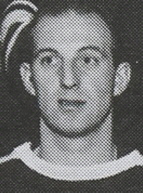
Sven Olof Lennart Bergqvist (20 August 1914 – 16 December 1996) was a Swedish football and ice hockey player, known for representing Hammarby IF in both sports. He also played bandy and handball. Bergqvist is one of only three athletes that has competed in the highest Swedish division in four different sports. He had 35 caps for the Sweden men's national football team between 1935 and 1943, and received the honorary award Stora Grabbars Märke from the Swedish Football Association. He played 55 games for the Sweden men's national ice hockey team at the World Championships and the 1936 Winter Olympics, and was inducted into the IIHF Hall of Fame in 1999.
Sven Bergqvist grew up in a working-class home in a southern part of Stockholm known as Södermalm. He had several siblings and frequently acted as a ball boy during the football matches of the local club Hammarby IF during his youth, studying his idol Victor Olsson. At the age of 14, in 1928, he began his football career at Hammarby IF.
In 1932, at the age of 17, he debuted in Hammarby's senior football team. Bergqvist stayed as the team's regular goalkeeper until 1935, playing in the Swedish second tier then known as Division 2.
He had a short stint at the Allsvenskan club AIK, during the season of 1936 because the national team required first division players in the Olympics. After the tournament Bergqvist reportedly turned down a move abroad to then French giants Racing Club de Paris, that would have turned Bergqvist into the first professional Swedish footballer.
Bergqvist remained as a prolific player at Hammarby until 1946. During this period he was a part of a successful promotion campaign to Allsvenskan in 1939. Between 1944 and 1946, he also acted as a player-manager of Hammarby. Bergqvist made a total of 212 competitive appearances during his two stints at the club.
He also had 35 caps for the Sweden men's national football team between 1935 and 1943. In his second cap, on 30 June 1935, Sweden defeated Germany in a memorable victory.
His nickname "Svenne Berka" originated from the supporters of Hammarby, who shortened his full name in accordance to the then reigning Stockholm dialect. Alice Babs referred to Bergqvist as "Svenne Berka" in the song "Vårat gäng" during the 1940s. Bergqvist was also characterized as always wearing an own sewn cap on the pitch, which inspired a long lasting fashion trend among male youngsters living in Södermalm.
In 2004, he was voted as Hammarby Fotboll's fifth biggest profile throughout the history of the club. He is also a recipient of the honorary award Stora Grabbars Märke, which is handed out by the Swedish Football Association.
Hub AI
Sven Bergqvist AI simulator
(@Sven Bergqvist_simulator)
Sven Bergqvist
Sven Olof Lennart Bergqvist (20 August 1914 – 16 December 1996) was a Swedish football and ice hockey player, known for representing Hammarby IF in both sports. He also played bandy and handball. Bergqvist is one of only three athletes that has competed in the highest Swedish division in four different sports. He had 35 caps for the Sweden men's national football team between 1935 and 1943, and received the honorary award Stora Grabbars Märke from the Swedish Football Association. He played 55 games for the Sweden men's national ice hockey team at the World Championships and the 1936 Winter Olympics, and was inducted into the IIHF Hall of Fame in 1999.
Sven Bergqvist grew up in a working-class home in a southern part of Stockholm known as Södermalm. He had several siblings and frequently acted as a ball boy during the football matches of the local club Hammarby IF during his youth, studying his idol Victor Olsson. At the age of 14, in 1928, he began his football career at Hammarby IF.
In 1932, at the age of 17, he debuted in Hammarby's senior football team. Bergqvist stayed as the team's regular goalkeeper until 1935, playing in the Swedish second tier then known as Division 2.
He had a short stint at the Allsvenskan club AIK, during the season of 1936 because the national team required first division players in the Olympics. After the tournament Bergqvist reportedly turned down a move abroad to then French giants Racing Club de Paris, that would have turned Bergqvist into the first professional Swedish footballer.
Bergqvist remained as a prolific player at Hammarby until 1946. During this period he was a part of a successful promotion campaign to Allsvenskan in 1939. Between 1944 and 1946, he also acted as a player-manager of Hammarby. Bergqvist made a total of 212 competitive appearances during his two stints at the club.
He also had 35 caps for the Sweden men's national football team between 1935 and 1943. In his second cap, on 30 June 1935, Sweden defeated Germany in a memorable victory.
His nickname "Svenne Berka" originated from the supporters of Hammarby, who shortened his full name in accordance to the then reigning Stockholm dialect. Alice Babs referred to Bergqvist as "Svenne Berka" in the song "Vårat gäng" during the 1940s. Bergqvist was also characterized as always wearing an own sewn cap on the pitch, which inspired a long lasting fashion trend among male youngsters living in Södermalm.
In 2004, he was voted as Hammarby Fotboll's fifth biggest profile throughout the history of the club. He is also a recipient of the honorary award Stora Grabbars Märke, which is handed out by the Swedish Football Association.