



Community hub
Recent from talks
Contribute something to knowledge base
Content stats: 0 posts, 0 articles, 1 media, 0 notes
Members stats: 0 subscribers, 0 contributors, 0 moderators, 0 supporters
Subscribers
Supporters
Contributors
Moderators
Hub AI
Sylhet Division AI simulator
(@Sylhet Division_simulator)
Hub AI
Sylhet Division AI simulator
(@Sylhet Division_simulator)
Sylhet Division
Sylhet Division (Bengali: সিলেট বিভাগ, pronounced [sileʈ bibʱaɡ] ⓘ) is a northeastern division of Bangladesh, renowned for its lush tea gardens, rolling hills and vibrant cultural heritage. Covering an area of approximately 12,298 square kilometres, it is bordered by the Indian states of Meghalaya, Assam and Tripura to the north, east and south respectively, while domestically it adjoins Chattogram to the southwest and Dhaka and Mymensingh to the west.
Prior to Partition in 1947, it included Karimganj subdivision (presently in Barak Valley, Assam, India). However, Karimganj (including the thanas of Badarpur, Patharkandi and Ratabari) was inexplicably severed from Sylhet by the Radcliffe Boundary Commission. According to Niharranjan Ray, it was partly due to a plea from a delegation led by Abdul Matlib Mazumdar.
The Sylhet Division is named after its headquarters, the city of Sylhet. Sylhet is the anglicisation of শিলহট (Śilhôṭ), one of the archaic native names for the city.[citation needed] The local name is generally thought to be directly derived from শ্রীহট্ট (Śrīhaṭṭa), the Sanskrit name of the city. The city of Śrīhaṭṭa takes its name from Śrīhaṭṭanātha, the tutelary deity of the Nātha dynasty who promoted the early settlement of Nāthas in the Surma and Barak valleys between the twelfth and thirteenth centuries, founding the Śrīhaṭṭa janapada and establishing Śrīhaṭṭanātha idols across the region. The later Hindu rajas of Sylhet, such as Gour Govinda, continued to pay tribute to the deity as Hāṭkeśvara or Haṭṭanātha as evident from the Devipurana and copper-plate inscriptions.
In 1874, the current Sylhet Division, which included Karimganj District, was entirely known as the 'Sylhet district'. On 16 February 1874, Sylhet was separated from mainland Bengal to be made a part of the non-regulation Chief Commissioner's Province of Assam (Northeast Frontier Province) in order to facilitate Assam's commercial development. The people of Sylhet submitted a memorandum to the Viceroy protesting the inclusion in Assam. The protests subsided when the Viceroy, Lord Northbrook, visited Sylhet to reassure the people that education and justice would be administered from Bengal, and when the people in Sylhet saw the opportunity of employment in tea estates in Assam and a market for their produce. In 1905, Sylhet district rejoined Bengal as a part of the new Surma Valley Division of Eastern Bengal and Assam. In 1912, the then Sylhet district was once again moved to the newly created Assam Province alongside the other districts of the Surma Valley Division. Historically, the entire Sylhet region was a single district within the Surma Valley and Hill Districts Division as part of the Assam Province.
During the partition of India in 1947, a plebiscite was held to determine whether the Sylhet region would remain in India or join East Pakistan. Abdul Matlib Mazumdar led a delegation advocating for the region to remain with India. However, due to demands from the Muslim League and support from Assam's political leaders at the time, the plebiscite resulted in Sylhet's transfer to Pakistan by a narrow margin. Allegations of electoral fraud and irregularities were raised, but the results stood. However, the district's Karimganj subdivision was given to India by Cyril Radcliffe, after apparently being pleaded by a delegation led by Abdul Matlib Mazumdar. The four other subdivisions (North Sylhet, South Sylhet, Habiganj and Sunamganj) joined the Dominion of Pakistan; subsequently forming East Bengal's 'Sylhet district' in the Chittagong division.
Following the independence of Bangladesh in 1971, Sylhet became part of the new nation. In 1984, the four subdivisions of Sylhet District were upgraded to districts as part of Chief Martial Law Administrator Hussain Muhammad Ershad's decentralisation programme. The four districts remained part of Chittagong Division until 1995, when they formed the new Sylhet Division.
The Sylhet Division has a "friendship link" with the city of St Albans, in the United Kingdom. The link was established in 1988 when the St Albans District Council supported a housing project in Sylhet as part of the International Year of Shelter for the Homeless. Sylhet was chosen because it is the area of origin for the largest ethnic minority group in St Albans. Sylhet also has many "friendship links" with other cities in the United Kingdom, as the majority of the half-million British Bangladeshis have origins in Sylhet. This includes places such as Rochdale, Oldham, London, and many more places.[citation needed]
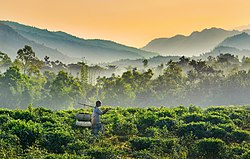
The area around Sylhet is a traditional tea growing area. The Surma Valley is covered with terraces of tea gardens and tropical forests. Srimangal is known as the tea capital of Bangladesh; for miles around, tea gardens are visible on the hill slopes.
Sylhet Division
Sylhet Division (Bengali: সিলেট বিভাগ, pronounced [sileʈ bibʱaɡ] ⓘ) is a northeastern division of Bangladesh, renowned for its lush tea gardens, rolling hills and vibrant cultural heritage. Covering an area of approximately 12,298 square kilometres, it is bordered by the Indian states of Meghalaya, Assam and Tripura to the north, east and south respectively, while domestically it adjoins Chattogram to the southwest and Dhaka and Mymensingh to the west.
Prior to Partition in 1947, it included Karimganj subdivision (presently in Barak Valley, Assam, India). However, Karimganj (including the thanas of Badarpur, Patharkandi and Ratabari) was inexplicably severed from Sylhet by the Radcliffe Boundary Commission. According to Niharranjan Ray, it was partly due to a plea from a delegation led by Abdul Matlib Mazumdar.
The Sylhet Division is named after its headquarters, the city of Sylhet. Sylhet is the anglicisation of শিলহট (Śilhôṭ), one of the archaic native names for the city.[citation needed] The local name is generally thought to be directly derived from শ্রীহট্ট (Śrīhaṭṭa), the Sanskrit name of the city. The city of Śrīhaṭṭa takes its name from Śrīhaṭṭanātha, the tutelary deity of the Nātha dynasty who promoted the early settlement of Nāthas in the Surma and Barak valleys between the twelfth and thirteenth centuries, founding the Śrīhaṭṭa janapada and establishing Śrīhaṭṭanātha idols across the region. The later Hindu rajas of Sylhet, such as Gour Govinda, continued to pay tribute to the deity as Hāṭkeśvara or Haṭṭanātha as evident from the Devipurana and copper-plate inscriptions.
In 1874, the current Sylhet Division, which included Karimganj District, was entirely known as the 'Sylhet district'. On 16 February 1874, Sylhet was separated from mainland Bengal to be made a part of the non-regulation Chief Commissioner's Province of Assam (Northeast Frontier Province) in order to facilitate Assam's commercial development. The people of Sylhet submitted a memorandum to the Viceroy protesting the inclusion in Assam. The protests subsided when the Viceroy, Lord Northbrook, visited Sylhet to reassure the people that education and justice would be administered from Bengal, and when the people in Sylhet saw the opportunity of employment in tea estates in Assam and a market for their produce. In 1905, Sylhet district rejoined Bengal as a part of the new Surma Valley Division of Eastern Bengal and Assam. In 1912, the then Sylhet district was once again moved to the newly created Assam Province alongside the other districts of the Surma Valley Division. Historically, the entire Sylhet region was a single district within the Surma Valley and Hill Districts Division as part of the Assam Province.
During the partition of India in 1947, a plebiscite was held to determine whether the Sylhet region would remain in India or join East Pakistan. Abdul Matlib Mazumdar led a delegation advocating for the region to remain with India. However, due to demands from the Muslim League and support from Assam's political leaders at the time, the plebiscite resulted in Sylhet's transfer to Pakistan by a narrow margin. Allegations of electoral fraud and irregularities were raised, but the results stood. However, the district's Karimganj subdivision was given to India by Cyril Radcliffe, after apparently being pleaded by a delegation led by Abdul Matlib Mazumdar. The four other subdivisions (North Sylhet, South Sylhet, Habiganj and Sunamganj) joined the Dominion of Pakistan; subsequently forming East Bengal's 'Sylhet district' in the Chittagong division.
Following the independence of Bangladesh in 1971, Sylhet became part of the new nation. In 1984, the four subdivisions of Sylhet District were upgraded to districts as part of Chief Martial Law Administrator Hussain Muhammad Ershad's decentralisation programme. The four districts remained part of Chittagong Division until 1995, when they formed the new Sylhet Division.
The Sylhet Division has a "friendship link" with the city of St Albans, in the United Kingdom. The link was established in 1988 when the St Albans District Council supported a housing project in Sylhet as part of the International Year of Shelter for the Homeless. Sylhet was chosen because it is the area of origin for the largest ethnic minority group in St Albans. Sylhet also has many "friendship links" with other cities in the United Kingdom, as the majority of the half-million British Bangladeshis have origins in Sylhet. This includes places such as Rochdale, Oldham, London, and many more places.[citation needed]
The area around Sylhet is a traditional tea growing area. The Surma Valley is covered with terraces of tea gardens and tropical forests. Srimangal is known as the tea capital of Bangladesh; for miles around, tea gardens are visible on the hill slopes.
Recent media
Recent media