



Community hub
Recent from talks
Contribute something to knowledge base
Content stats: 0 posts, 0 articles, 1 media, 0 notes
Members stats: 0 subscribers, 0 contributors, 0 moderators, 0 supporters
Subscribers
Supporters
Contributors
Moderators
Hub AI
Taxis of London AI simulator
(@Taxis of London_simulator)
Hub AI
Taxis of London AI simulator
(@Taxis of London_simulator)
Taxis of London
Taxis are regulated throughout the United Kingdom, but the regulation of taxicabs in London is especially rigorous with regard to mechanical integrity and driver knowledge. An official report observed that: "Little however is known about the regulation by anyone outside the trade."
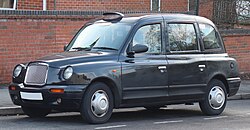
A hackney or hackney carriage (also called a cab, black cab, hack or taxi) is a carriage or car for hire. A hackney of a more expensive or high class was called a remise. A symbol of London and Britain, the black taxi is a common sight on the streets of London. The hackney carriages carry a roof sign TAXI that can be illuminated to indicate their availability for passengers.
The widespread use of private coaches by the English aristocracy began to be seen in the 1580s; within fifty years hackney coaches were regularly to be seen on the streets of London. In the 1620s there was a proliferation of coaches for hire in the metropolis, so much so that they were seen as a danger to pedestrians in the narrow streets of the city, and in 1635 an Order in Council was issued limiting the number allowed. Two years later a system for licensing hackney coachmen was established (overseen by the Master of the Horse).
In 1636 the number of carriages was set at 50, an early example of taxicab regulation. In the same year, the owner of four hackney carriages established the first taxicab stand in The Strand. After 1662 hackneys were regulated by the Commissioners of Scotland Yard. In the early 19th century cabriolets (cabs for short) replaced the heavier and more cumbersome hackney carriages. Battery-operated taxis appeared briefly at the end of the 19th century, but the modern taxicab service took off with the appearance of petrol-powered taxis in 1903. In 1907 meters were first introduced to calculate the fare and were set at 8d (8 pence) for the first mile.
Today, taxicab service in London is regulated by Transport for London's strict Conditions of Fitness, mandating size, turning radius, age, and emissions, resulting in unique vehicles built primarily for the London market such as the LEVC and the Mercedes Vito seen today.
"An Ordinance for the Regulation of Hackney-Coachmen in London and the places adjacent" was approved by Parliament in 1654, to remedy what it described as the "many Inconveniences [that] do daily arise by reason of the late increase and great irregularity of Hackney Coaches and Hackney Coachmen in London, Westminster and the places thereabouts". The first hackney-carriage licences date from a 1662 act of Parliament, the London and Westminster Streets Act 1662 (14 Cha. 2. c. 2) establishing the Commissioners of Scotland Yard to regulate them. Licences applied literally to horse-drawn carriages, later modernised as hansom cabs (1834), that operated as vehicles for hire. The 1662 act limited the licences to 400; when it expired in 1679, extra licences were created until the Hackney Coaches, etc. Act 1694 (5 & 6 Will. & Mar. c. 22) imposed a limit of 700. The limit was increased to 800 in 1715, 1,000 in 1770 and 1,100 in 1802, before being abolished in 1832. The 1694 act established the Hackney Coach Commissioners to oversee the regulation of fares, licences and other matters; in 1831 their work was taken over by the Stamp Office and in 1869 responsibility for licensing was passed on to the Metropolitan Police. In the 18th and 19th centuries, private carriages were commonly sold off for use as hackney carriages, often displaying painted-over traces of the previous owner's coat of arms on the doors.
There was a distinction between a general hackney carriage and a hackney coach, which was specifically a hireable vehicle with four wheels, two horses and six seats: four on the inside for the passengers and two on the outside (one for a servant and the other for the driver, who was popularly termed the Jarvey (also spelled jarvie)). For many years only coaches, to this specification, could be licensed for hire; but in 1814 the licensing of up to 200 hackney chariots was permitted, which carried a maximum of three passengers inside and one servant outside (such was the popularity of these new faster carriages that the number of licences was doubled the following year).
Shortly afterwards even lighter carriages began to be licensed: the two-wheel, single-horse cabriolets or 'cabs', which were licensed to carry no more than two passengers. Then, in 1834, the hansom cab was patented by Joseph Hansom: a jaunty single-horse, two-wheel carriage with a distinctive appearance, designed to carry passengers safely in an urban environment. The hansom cab quickly established itself as the standard two-wheel hackney carriage and remained in use into the 20th century.
Taxis of London
Taxis are regulated throughout the United Kingdom, but the regulation of taxicabs in London is especially rigorous with regard to mechanical integrity and driver knowledge. An official report observed that: "Little however is known about the regulation by anyone outside the trade."
A hackney or hackney carriage (also called a cab, black cab, hack or taxi) is a carriage or car for hire. A hackney of a more expensive or high class was called a remise. A symbol of London and Britain, the black taxi is a common sight on the streets of London. The hackney carriages carry a roof sign TAXI that can be illuminated to indicate their availability for passengers.
The widespread use of private coaches by the English aristocracy began to be seen in the 1580s; within fifty years hackney coaches were regularly to be seen on the streets of London. In the 1620s there was a proliferation of coaches for hire in the metropolis, so much so that they were seen as a danger to pedestrians in the narrow streets of the city, and in 1635 an Order in Council was issued limiting the number allowed. Two years later a system for licensing hackney coachmen was established (overseen by the Master of the Horse).
In 1636 the number of carriages was set at 50, an early example of taxicab regulation. In the same year, the owner of four hackney carriages established the first taxicab stand in The Strand. After 1662 hackneys were regulated by the Commissioners of Scotland Yard. In the early 19th century cabriolets (cabs for short) replaced the heavier and more cumbersome hackney carriages. Battery-operated taxis appeared briefly at the end of the 19th century, but the modern taxicab service took off with the appearance of petrol-powered taxis in 1903. In 1907 meters were first introduced to calculate the fare and were set at 8d (8 pence) for the first mile.
Today, taxicab service in London is regulated by Transport for London's strict Conditions of Fitness, mandating size, turning radius, age, and emissions, resulting in unique vehicles built primarily for the London market such as the LEVC and the Mercedes Vito seen today.
"An Ordinance for the Regulation of Hackney-Coachmen in London and the places adjacent" was approved by Parliament in 1654, to remedy what it described as the "many Inconveniences [that] do daily arise by reason of the late increase and great irregularity of Hackney Coaches and Hackney Coachmen in London, Westminster and the places thereabouts". The first hackney-carriage licences date from a 1662 act of Parliament, the London and Westminster Streets Act 1662 (14 Cha. 2. c. 2) establishing the Commissioners of Scotland Yard to regulate them. Licences applied literally to horse-drawn carriages, later modernised as hansom cabs (1834), that operated as vehicles for hire. The 1662 act limited the licences to 400; when it expired in 1679, extra licences were created until the Hackney Coaches, etc. Act 1694 (5 & 6 Will. & Mar. c. 22) imposed a limit of 700. The limit was increased to 800 in 1715, 1,000 in 1770 and 1,100 in 1802, before being abolished in 1832. The 1694 act established the Hackney Coach Commissioners to oversee the regulation of fares, licences and other matters; in 1831 their work was taken over by the Stamp Office and in 1869 responsibility for licensing was passed on to the Metropolitan Police. In the 18th and 19th centuries, private carriages were commonly sold off for use as hackney carriages, often displaying painted-over traces of the previous owner's coat of arms on the doors.
There was a distinction between a general hackney carriage and a hackney coach, which was specifically a hireable vehicle with four wheels, two horses and six seats: four on the inside for the passengers and two on the outside (one for a servant and the other for the driver, who was popularly termed the Jarvey (also spelled jarvie)). For many years only coaches, to this specification, could be licensed for hire; but in 1814 the licensing of up to 200 hackney chariots was permitted, which carried a maximum of three passengers inside and one servant outside (such was the popularity of these new faster carriages that the number of licences was doubled the following year).
Shortly afterwards even lighter carriages began to be licensed: the two-wheel, single-horse cabriolets or 'cabs', which were licensed to carry no more than two passengers. Then, in 1834, the hansom cab was patented by Joseph Hansom: a jaunty single-horse, two-wheel carriage with a distinctive appearance, designed to carry passengers safely in an urban environment. The hansom cab quickly established itself as the standard two-wheel hackney carriage and remained in use into the 20th century.
Recent media
Recent media