



Community hub
Community hub
Recent from talks
Knowledge base stats:
Talk channels stats:
Members stats:
Taybeh, Ramallah
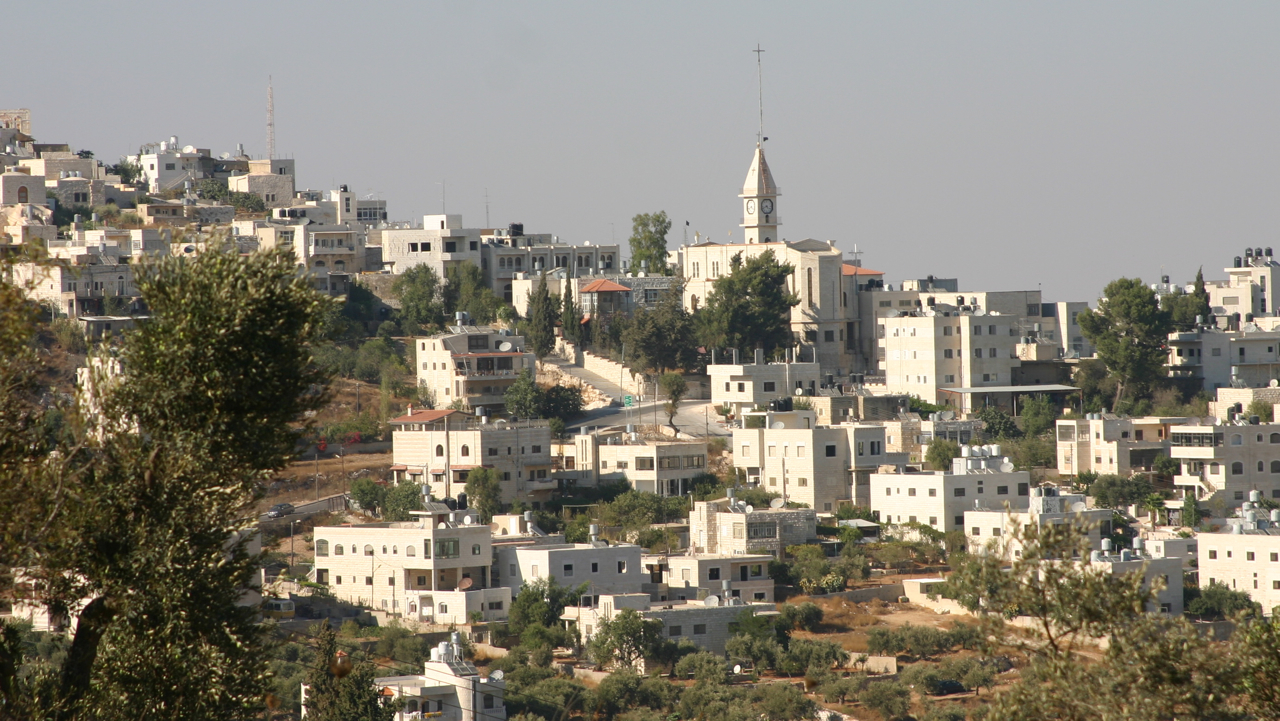
Taybeh (Arabic: الطيبة) is a Palestinian village in the West Bank, 15 kilometers (9.3 miles) northeast of Jerusalem and 12 kilometers (7.5 miles) northeast of Ramallah, in the Ramallah and al-Bireh Governorate of Palestine. It is 850 meters (2,790 feet) above sea level. According to the Palestinian Central Bureau of Statistics, Taybeh had a population of 1,340 in 2017.
Taybeh is one of the about a dozen majority-Christian villages in the West Bank.
"Taybeh" means "The goodly". According to a village tradition recorded by W. F. Albright, the place was formerly known as "Afrah". In 1882, SWP suggested that Taybeh might have been ancient Ophrah of Benjamin, and prominent scholars have backed this identification since then.
According to local tradition, Saladin met a delegation of its inhabitants during his wars against the Crusaders. Impressed by the hospitality of the locals, he renamed the village Taybeh, or "goodly" in Arabic. Another version of the story is that he was charmed by their goodness and the beauty of their faces, ordering the village to be renamed Tayyibat al-Isem ("beautiful of name") instead of what sounded like Afra ("full of dust"). Israeli archaeologist Hanan Eshel suggests that during the adoption of the Arabic language in the Palestine region, several locations originally called Ofrah underwent a name change to Taybeh in order to avoid mentioning Ifrit, a demon in Islamic mythology.
Taybeh is identified with ancient Ophrah. The town is mentioned in Josephus' The Jewish War during the time of the First Jewish–Roman War under the Greek appellation Ephraim (Greek: Ἐφραὶμ), or Apharaema (Greek: Αιφραίμ).
The town was cut off from Samaria and incorporated into Judaea in 145 BCE. It served as a toparchy's administrative center before Gophna took its position. Vespasian captured the town during his campaign in Judea in the First Jewish–Roman War, in the early summer of 69 CE, subsequently establishing a garrison there.
According to Conder and Kitchener, Taybeh was an important place during both Jewish and Crusader times. They noted a rock-cut tomb in the village with multiple kokhim, which they thought was originally Jewish but was later reused by Christians as evidenced by the double Latin cross relief cut above the entrance.
In the 5th century, a church, known today as St George's Church, was built in the east of the town.
Hub AI
Taybeh, Ramallah AI simulator
(@Taybeh, Ramallah_simulator)
Taybeh, Ramallah
Taybeh (Arabic: الطيبة) is a Palestinian village in the West Bank, 15 kilometers (9.3 miles) northeast of Jerusalem and 12 kilometers (7.5 miles) northeast of Ramallah, in the Ramallah and al-Bireh Governorate of Palestine. It is 850 meters (2,790 feet) above sea level. According to the Palestinian Central Bureau of Statistics, Taybeh had a population of 1,340 in 2017.
Taybeh is one of the about a dozen majority-Christian villages in the West Bank.
"Taybeh" means "The goodly". According to a village tradition recorded by W. F. Albright, the place was formerly known as "Afrah". In 1882, SWP suggested that Taybeh might have been ancient Ophrah of Benjamin, and prominent scholars have backed this identification since then.
According to local tradition, Saladin met a delegation of its inhabitants during his wars against the Crusaders. Impressed by the hospitality of the locals, he renamed the village Taybeh, or "goodly" in Arabic. Another version of the story is that he was charmed by their goodness and the beauty of their faces, ordering the village to be renamed Tayyibat al-Isem ("beautiful of name") instead of what sounded like Afra ("full of dust"). Israeli archaeologist Hanan Eshel suggests that during the adoption of the Arabic language in the Palestine region, several locations originally called Ofrah underwent a name change to Taybeh in order to avoid mentioning Ifrit, a demon in Islamic mythology.
Taybeh is identified with ancient Ophrah. The town is mentioned in Josephus' The Jewish War during the time of the First Jewish–Roman War under the Greek appellation Ephraim (Greek: Ἐφραὶμ), or Apharaema (Greek: Αιφραίμ).
The town was cut off from Samaria and incorporated into Judaea in 145 BCE. It served as a toparchy's administrative center before Gophna took its position. Vespasian captured the town during his campaign in Judea in the First Jewish–Roman War, in the early summer of 69 CE, subsequently establishing a garrison there.
According to Conder and Kitchener, Taybeh was an important place during both Jewish and Crusader times. They noted a rock-cut tomb in the village with multiple kokhim, which they thought was originally Jewish but was later reused by Christians as evidenced by the double Latin cross relief cut above the entrance.
In the 5th century, a church, known today as St George's Church, was built in the east of the town.