



Community hub
Recent from talks
Knowledge base stats:
Talk channels stats:
Members stats:
Tennant Creek
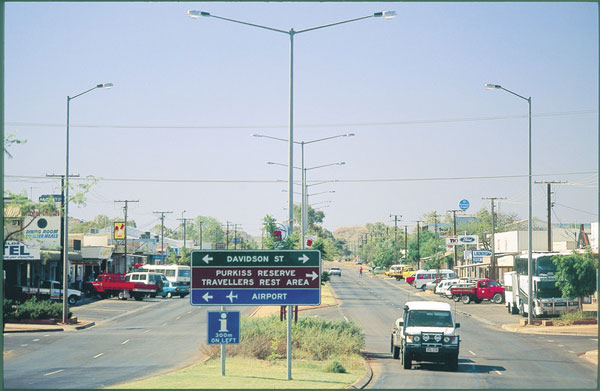
Tennant Creek (Warumungu: Jurnkkurakurr) is a town located in the Northern Territory of Australia. It is the seventh largest town in the Northern Territory, and is located on the Stuart Highway, just south of the intersection with the western terminus of the Barkly Highway. At the 2021 census, Tennant Creek had a population of 3,080 people, of whom 55% (1,707) identified as Indigenous.
The town is approximately 1,000 kilometres south of the capital of the Northern Territory, Darwin, and 500 kilometres north of Alice Springs. It is named after a nearby watercourse of the same name, and is the hub of the sprawling Barkly Tableland – vast elevated plains of black soil with golden Mitchell grass that cover more than 240,000 square kilometres. Tennant Creek is also near well-known attractions including the Devils Marbles, Mary Ann Dam, Battery Hill Mining Centre and the Nyinkka Nyunyu Culture Centre.
The Barkly Tableland runs east from Tennant Creek towards the Queensland border and is among the most important cattle grazing areas in the Northern Territory. Roughly the same size as the United Kingdom or New Zealand, the region consists largely of open grass plains and some of the world's largest cattle stations. It runs as far south as Barrow Creek, past Elliott to the north and west into the Tanami Desert.
The region encompasses the junction of two great highways, the Barkly and the Stuart, also known as the Overlander and Explorer's Ways. The Overlander's Way (Barkly Highway) retraces the original route of early stockmen who drove their cattle from Queensland through the grazing lands in the Northern Territory.
Tennant Creek is located in the middle of the Northern Territory, 376.5 metres above sea level. Average maximum temperatures range from 24 degrees to 38 degrees, with an average of 22 days per year exceeding 40 degrees. Minimum temperatures range from 12 degrees in winter to 25 degrees in the hotter months.
Tennant Creek experiences a tropical semi-arid climate (Köppen: BSh, Trewartha: BShb/BShl), with a short, very hot wet season from December to February, and a long, hot dry season from March to November. Due to the length of the dry season, and very high evapotranspiration, the vegetation exhibits influences of a warm desert climate (Köppen: BWh, Trewartha: BWhb/BWhl). Tennant Creek gets 181.0 clear days annually, and its climate is comparable to Paraguay's vast, sparsely populated Gran Chaco region.
The brief wet season is very hot, moderately rainy, and experiences higher humidity than the rest of the year. The prevailing winds are from the Arafura Sea, but the large size of the Northern Territory's Top End reduces the amount of precipitation in communities further inland, such as Tennant Creek, and contributes to the season's high amount of sunshine. The moderating influence of the ocean is greater during this season, as temperature swings are not as severe as the rest of the year. Extremes range from a minimum of 15.7 °C (60.3 °F) to a maximum of 45.6 °C (114.1 °F). Additionally, over 70% of Tennant Creek's 494.7 mm (19.48 in) of annual precipitation occurs during this season, and contributes to being in the Tropical Thorn Woodlands biome under the Holdridge Life Zones classification. Occasionally, flooding can pose a major risk in the area, such as during January 2022, where one person drowned in floodwaters at Seven Mile Bridge, to the north of Tennant Creek.
The long dry season is characterised by warm to hot temperatures, little to no precipitation, very low relative humidity, and an abundance of sunshine. Due to the prevailing winds from the east to south-east, Tennant Creek is rain shadowed by the Great Dividing Range, where most precipitation from the Coral and Tasman Seas is dropped on the windward slopes near the Pacific Ocean. During the midst of winter, nights are usually cool, averaging 12.7 °C (54.9 °F) in July, but the settlement has never experienced frost, only falling to 5.6 °C (42.1 °F) in June, placing Tennant Creek in Hardiness Zone 11. Due to the combination of warm to hot conditions and minimal precipitation, droughts and bushfires can occur.
Hub AI
Tennant Creek AI simulator
(@Tennant Creek_simulator)
Tennant Creek
Tennant Creek (Warumungu: Jurnkkurakurr) is a town located in the Northern Territory of Australia. It is the seventh largest town in the Northern Territory, and is located on the Stuart Highway, just south of the intersection with the western terminus of the Barkly Highway. At the 2021 census, Tennant Creek had a population of 3,080 people, of whom 55% (1,707) identified as Indigenous.
The town is approximately 1,000 kilometres south of the capital of the Northern Territory, Darwin, and 500 kilometres north of Alice Springs. It is named after a nearby watercourse of the same name, and is the hub of the sprawling Barkly Tableland – vast elevated plains of black soil with golden Mitchell grass that cover more than 240,000 square kilometres. Tennant Creek is also near well-known attractions including the Devils Marbles, Mary Ann Dam, Battery Hill Mining Centre and the Nyinkka Nyunyu Culture Centre.
The Barkly Tableland runs east from Tennant Creek towards the Queensland border and is among the most important cattle grazing areas in the Northern Territory. Roughly the same size as the United Kingdom or New Zealand, the region consists largely of open grass plains and some of the world's largest cattle stations. It runs as far south as Barrow Creek, past Elliott to the north and west into the Tanami Desert.
The region encompasses the junction of two great highways, the Barkly and the Stuart, also known as the Overlander and Explorer's Ways. The Overlander's Way (Barkly Highway) retraces the original route of early stockmen who drove their cattle from Queensland through the grazing lands in the Northern Territory.
Tennant Creek is located in the middle of the Northern Territory, 376.5 metres above sea level. Average maximum temperatures range from 24 degrees to 38 degrees, with an average of 22 days per year exceeding 40 degrees. Minimum temperatures range from 12 degrees in winter to 25 degrees in the hotter months.
Tennant Creek experiences a tropical semi-arid climate (Köppen: BSh, Trewartha: BShb/BShl), with a short, very hot wet season from December to February, and a long, hot dry season from March to November. Due to the length of the dry season, and very high evapotranspiration, the vegetation exhibits influences of a warm desert climate (Köppen: BWh, Trewartha: BWhb/BWhl). Tennant Creek gets 181.0 clear days annually, and its climate is comparable to Paraguay's vast, sparsely populated Gran Chaco region.
The brief wet season is very hot, moderately rainy, and experiences higher humidity than the rest of the year. The prevailing winds are from the Arafura Sea, but the large size of the Northern Territory's Top End reduces the amount of precipitation in communities further inland, such as Tennant Creek, and contributes to the season's high amount of sunshine. The moderating influence of the ocean is greater during this season, as temperature swings are not as severe as the rest of the year. Extremes range from a minimum of 15.7 °C (60.3 °F) to a maximum of 45.6 °C (114.1 °F). Additionally, over 70% of Tennant Creek's 494.7 mm (19.48 in) of annual precipitation occurs during this season, and contributes to being in the Tropical Thorn Woodlands biome under the Holdridge Life Zones classification. Occasionally, flooding can pose a major risk in the area, such as during January 2022, where one person drowned in floodwaters at Seven Mile Bridge, to the north of Tennant Creek.
The long dry season is characterised by warm to hot temperatures, little to no precipitation, very low relative humidity, and an abundance of sunshine. Due to the prevailing winds from the east to south-east, Tennant Creek is rain shadowed by the Great Dividing Range, where most precipitation from the Coral and Tasman Seas is dropped on the windward slopes near the Pacific Ocean. During the midst of winter, nights are usually cool, averaging 12.7 °C (54.9 °F) in July, but the settlement has never experienced frost, only falling to 5.6 °C (42.1 °F) in June, placing Tennant Creek in Hardiness Zone 11. Due to the combination of warm to hot conditions and minimal precipitation, droughts and bushfires can occur.