


Community hub
Recent from talks
Contribute something to knowledge base
Content stats: 0 posts, 0 articles, 1 media, 0 notes
Members stats: 0 subscribers, 0 contributors, 0 moderators, 0 supporters
Subscribers
Supporters
Contributors
Moderators
Hub AI
Terra preta AI simulator
(@Terra preta_simulator)
Hub AI
Terra preta AI simulator
(@Terra preta_simulator)
Terra preta
Terra preta (Portuguese pronunciation: [ˈtɛʁɐ ˈpɾetɐ], literally "black earth" in Portuguese), also known as Amazonian dark earth or Indian black earth, is a type of very dark, fertile anthropogenic soil (anthrosol) found in the Amazon Basin. In Portuguese its full name is terra preta do índio or terra preta de índio ("black soil of the Indian", "Indians' black earth"). Terra mulata ("mulatto earth") is lighter or brownish in color.
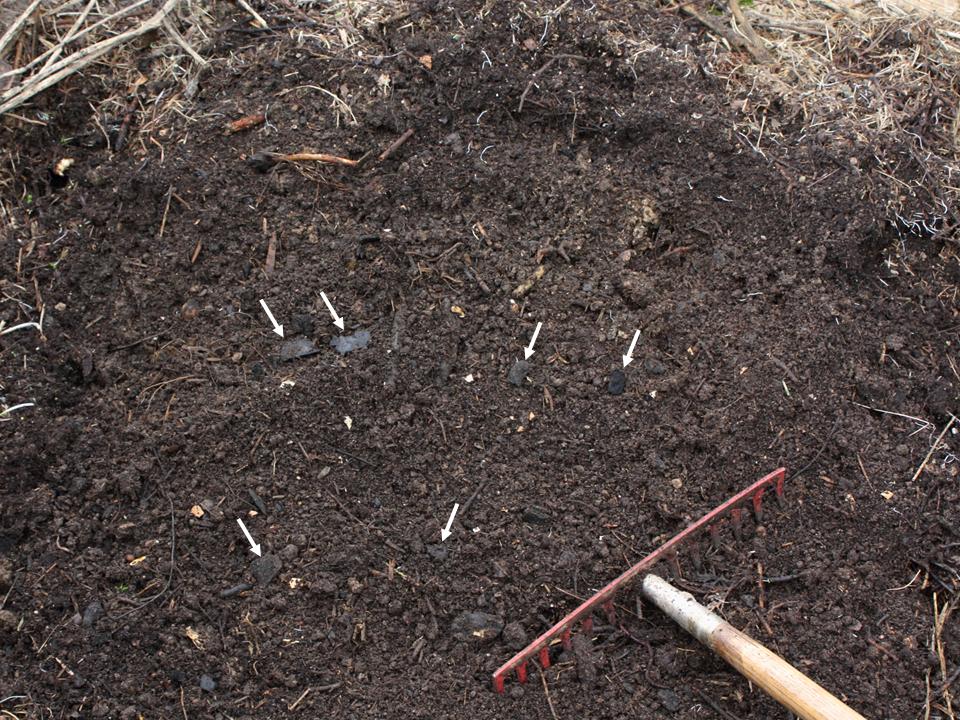
Terra preta owes its characteristic black color to its weathered charcoal content, and was made by adding a mixture of charcoal, bones, broken pottery, compost and manure to the low fertility Amazonian soil. A product of indigenous Amazonian soil management and slash-and-char agriculture, the charcoal is stable and remains in the soil for thousands of years, binding and retaining minerals and nutrients.
Terra preta is characterized by the presence of low-temperature charcoal residues in high concentrations; of high quantities of tiny pottery shards; of organic matter such as plant residues, animal feces, fish and animal bones, and other material; and of nutrients such as nitrogen, phosphorus, calcium, zinc and manganese. Fertile soils such as terra preta show high levels of microorganic activities and other specific characteristics within particular ecosystems.
Terra preta zones are generally surrounded by terra comum ([ˈtɛʁɐ koˈmũ, ku-]), or "common soil"; these are infertile soils, mainly acrisols, but also ferralsols and arenosols. Deforested arable soils in the Amazon are productive for a short period of time before their nutrients are consumed or leached away by rain or flooding. This forces farmers to migrate to an unburned area and clear it (by fire). Terra preta is less prone to nutrient leaching because of its high concentration of charcoal, microbial life and organic matter. The combination accumulates nutrients, minerals and microorganisms and withstands leaching.
Terra preta soils were created by farming communities between 450 BCE and 950 CE. Soil depths can reach 2 meters (6.6 ft). It is reported to regenerate itself at the rate of 1 centimeter (0.4 in) per year.
The origins of the Amazonian dark earths were not immediately clear to later settlers. One idea was that they resulted from ashfall from volcanoes in the Andes, since they occur more frequently on the brows of higher terraces. Another theory considered its formation to be a result of sedimentation in tertiary lakes or in recent ponds.[citation needed]
Soils with elevated charcoal content and a common presence of pottery remains can accrete accidentally near living quarters as residues from food preparation, cooking fires, animal and fish bones, broken pottery, etc., accumulated. Many terra preta soil structures are now thought to have formed under kitchen middens, as well as being manufactured intentionally on larger scales. Farmed areas around living areas are referred to as terra mulata. Terra mulata soils are more fertile than surrounding soils but less fertile than terra preta, and were most likely intentionally improved using charcoal.[citation needed]
This type of soil appeared between 450 BCE and 950 CE at sites throughout the Amazon Basin. Recent research has reported that terra preta may be of natural origin, suggesting that pre-Columbian people intentionally utilized and improved existing areas of soil fertility scattered among areas of lower fertility.
Terra preta
Terra preta (Portuguese pronunciation: [ˈtɛʁɐ ˈpɾetɐ], literally "black earth" in Portuguese), also known as Amazonian dark earth or Indian black earth, is a type of very dark, fertile anthropogenic soil (anthrosol) found in the Amazon Basin. In Portuguese its full name is terra preta do índio or terra preta de índio ("black soil of the Indian", "Indians' black earth"). Terra mulata ("mulatto earth") is lighter or brownish in color.
Terra preta owes its characteristic black color to its weathered charcoal content, and was made by adding a mixture of charcoal, bones, broken pottery, compost and manure to the low fertility Amazonian soil. A product of indigenous Amazonian soil management and slash-and-char agriculture, the charcoal is stable and remains in the soil for thousands of years, binding and retaining minerals and nutrients.
Terra preta is characterized by the presence of low-temperature charcoal residues in high concentrations; of high quantities of tiny pottery shards; of organic matter such as plant residues, animal feces, fish and animal bones, and other material; and of nutrients such as nitrogen, phosphorus, calcium, zinc and manganese. Fertile soils such as terra preta show high levels of microorganic activities and other specific characteristics within particular ecosystems.
Terra preta zones are generally surrounded by terra comum ([ˈtɛʁɐ koˈmũ, ku-]), or "common soil"; these are infertile soils, mainly acrisols, but also ferralsols and arenosols. Deforested arable soils in the Amazon are productive for a short period of time before their nutrients are consumed or leached away by rain or flooding. This forces farmers to migrate to an unburned area and clear it (by fire). Terra preta is less prone to nutrient leaching because of its high concentration of charcoal, microbial life and organic matter. The combination accumulates nutrients, minerals and microorganisms and withstands leaching.
Terra preta soils were created by farming communities between 450 BCE and 950 CE. Soil depths can reach 2 meters (6.6 ft). It is reported to regenerate itself at the rate of 1 centimeter (0.4 in) per year.
The origins of the Amazonian dark earths were not immediately clear to later settlers. One idea was that they resulted from ashfall from volcanoes in the Andes, since they occur more frequently on the brows of higher terraces. Another theory considered its formation to be a result of sedimentation in tertiary lakes or in recent ponds.[citation needed]
Soils with elevated charcoal content and a common presence of pottery remains can accrete accidentally near living quarters as residues from food preparation, cooking fires, animal and fish bones, broken pottery, etc., accumulated. Many terra preta soil structures are now thought to have formed under kitchen middens, as well as being manufactured intentionally on larger scales. Farmed areas around living areas are referred to as terra mulata. Terra mulata soils are more fertile than surrounding soils but less fertile than terra preta, and were most likely intentionally improved using charcoal.[citation needed]
This type of soil appeared between 450 BCE and 950 CE at sites throughout the Amazon Basin. Recent research has reported that terra preta may be of natural origin, suggesting that pre-Columbian people intentionally utilized and improved existing areas of soil fertility scattered among areas of lower fertility.
Recent media
Recent media