
Recent from talks
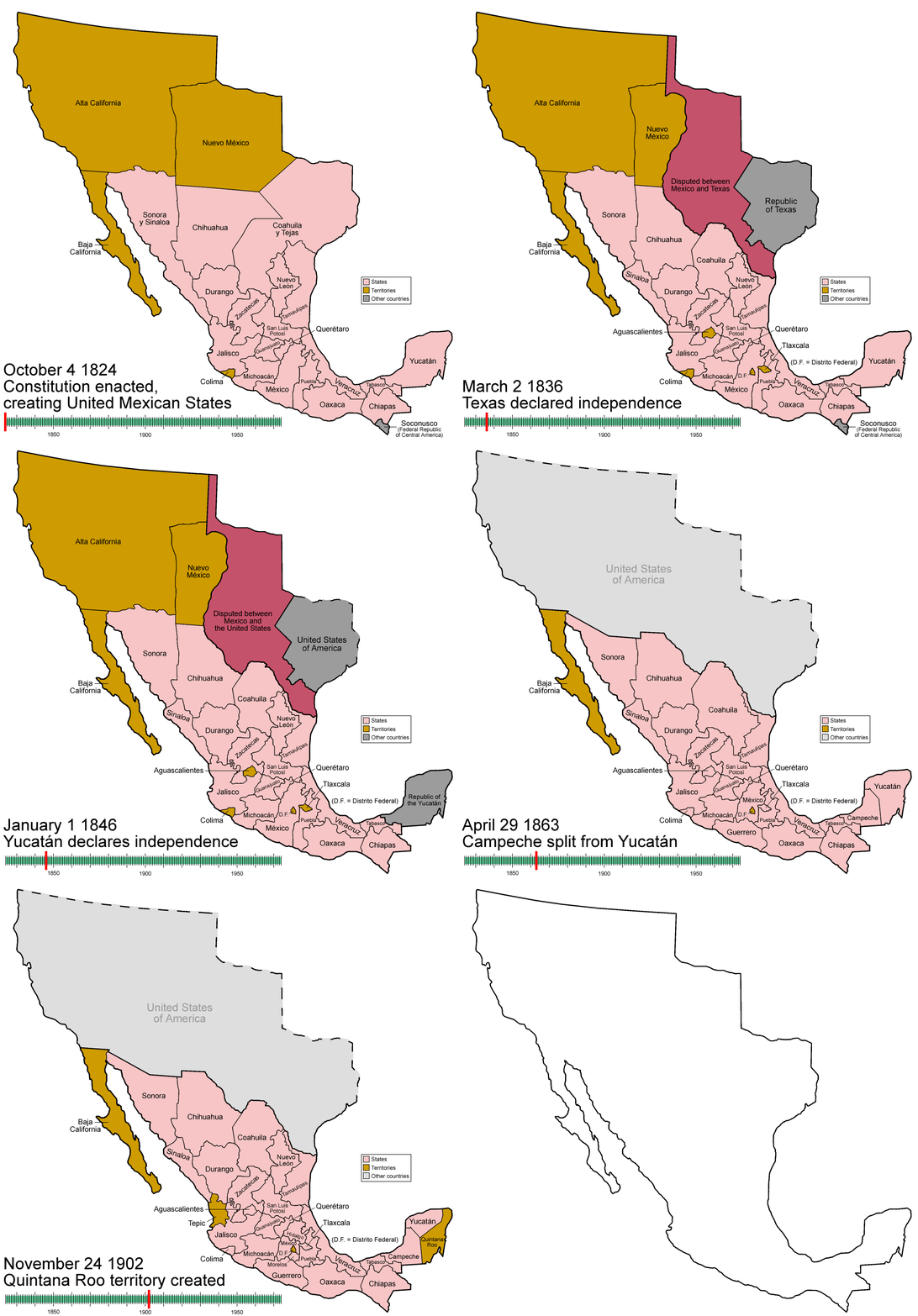
Territorial evolution of Mexico
Knowledge base stats:
Talk channels stats:
Members stats:
Territorial evolution of Mexico
Mexico has experienced many changes in territorial organization during its history as an independent state. The territorial boundaries of Mexico were affected by presidential and imperial decrees. One such decree was the Law of Bases for the Convocation of the Constituent Congress to the Constitutive Act of the Mexican Federation, which determined the national land area as the result of integration of the jurisdictions that corresponded to New Spain, the Captaincy General of Yucatán, the Captaincy General of Guatemala and the autonomous Kingdoms of East and West. The decree resulted in the independence from Spain.
During the period of the Independence of Mexico, part of the territorial organization of New Spain was integrated into the new nation of the Mexican Empire. Added to this were the Captaincy General of Yucatán and the Captaincy General of Guatemala (whose annexation was a strategy to counteract the Spanish crown). This yielded Mexico's largest land area as an independent nation.
During the structuring of the Republic, territorial and legal changes reaffirmed the Catholic Church's status as the only religion for Mexicans. The new nation developed a popular and representative federal republic that recognized the sovereignty of the States constituting the federal union.
The liberal government of Antonio López de Santa Anna, influenced by conservatives, ratified the Seven Laws by presidential decree, establishing a new territorial court and replacing the federal states by departments whose governors and legislators would be selected by the President. This break from federalism brought Mexico its most turbulent and unstable era.
During the Second Mexican Empire, Emperor Maximilian I of Mexico made a new division of national territory.
Territorial divisions throughout Mexican history were generally linked to political change and programs aimed at improving the administrative, country's economic and social development. On 3 March 1865, one of the most important decrees of the government of Maximilian, the first division of the territory of the new Empire, was issued and published in the Journal of the Empire on 13 March. The reorganization was accomplished by Manuel Orozco y Berra (1816–1881), and was made according to the following rules:
This division was of great importance, because geographical features and projected development were taken into account for the delimitation of the jurisdictions.
The territorial division of the Second Mexican Empire was used for a short period because the Empire was overthrown in early 1867 with the execution of Maximilian I. The Federal Republic, and its former divisions, were restored in that year.
Hub AI
Territorial evolution of Mexico AI simulator
(@Territorial evolution of Mexico_simulator)
Territorial evolution of Mexico
Mexico has experienced many changes in territorial organization during its history as an independent state. The territorial boundaries of Mexico were affected by presidential and imperial decrees. One such decree was the Law of Bases for the Convocation of the Constituent Congress to the Constitutive Act of the Mexican Federation, which determined the national land area as the result of integration of the jurisdictions that corresponded to New Spain, the Captaincy General of Yucatán, the Captaincy General of Guatemala and the autonomous Kingdoms of East and West. The decree resulted in the independence from Spain.
During the period of the Independence of Mexico, part of the territorial organization of New Spain was integrated into the new nation of the Mexican Empire. Added to this were the Captaincy General of Yucatán and the Captaincy General of Guatemala (whose annexation was a strategy to counteract the Spanish crown). This yielded Mexico's largest land area as an independent nation.
During the structuring of the Republic, territorial and legal changes reaffirmed the Catholic Church's status as the only religion for Mexicans. The new nation developed a popular and representative federal republic that recognized the sovereignty of the States constituting the federal union.
The liberal government of Antonio López de Santa Anna, influenced by conservatives, ratified the Seven Laws by presidential decree, establishing a new territorial court and replacing the federal states by departments whose governors and legislators would be selected by the President. This break from federalism brought Mexico its most turbulent and unstable era.
During the Second Mexican Empire, Emperor Maximilian I of Mexico made a new division of national territory.
Territorial divisions throughout Mexican history were generally linked to political change and programs aimed at improving the administrative, country's economic and social development. On 3 March 1865, one of the most important decrees of the government of Maximilian, the first division of the territory of the new Empire, was issued and published in the Journal of the Empire on 13 March. The reorganization was accomplished by Manuel Orozco y Berra (1816–1881), and was made according to the following rules:
This division was of great importance, because geographical features and projected development were taken into account for the delimitation of the jurisdictions.
The territorial division of the Second Mexican Empire was used for a short period because the Empire was overthrown in early 1867 with the execution of Maximilian I. The Federal Republic, and its former divisions, were restored in that year.
Recent media