
Recent from talks
Texas oil boom
Knowledge base stats:
Talk channels stats:
Members stats:
Texas oil boom
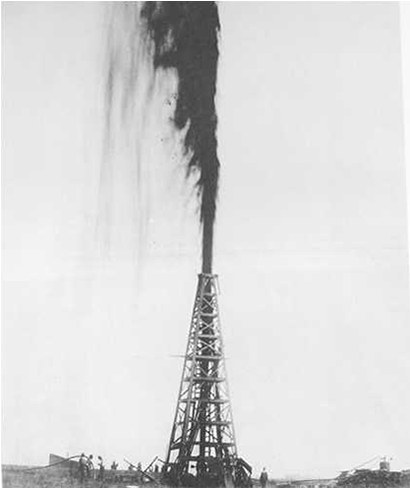
The Texas oil boom, sometimes called the gusher age, was a period of dramatic change and economic growth in the U.S. state of Texas during the early 20th century that began with the discovery of a large petroleum reserve near Beaumont, Texas. The find was unprecedented in its size (worldwide) and ushered in an age of rapid regional development and industrialization that has few parallels in U.S. history. Texas quickly became one of the leading oil-producing states in the U.S., along with Oklahoma and California; soon the nation overtook the Russian Empire as the top producer of petroleum. By 1940 Texas had come to dominate U.S. production. Some historians even define the beginning of the world's Oil Age as the beginning of this era in Texas.
The major petroleum strikes that began the rapid growth in petroleum exploration and speculation occurred in Southeast Texas, but soon reserves were found across Texas and wells were constructed in North Texas, East Texas, and the Permian Basin in West Texas. Although limited reserves of oil had been struck during the 19th century, the strike at Spindletop near Beaumont in 1901 gained national attention, spurring exploration and development that continued through the 1920s and beyond. Spindletop and the Joiner strike in East Texas, at the outset of the Great Depression, were the key strikes that launched this era of change in the state.
This period had a transformative effect on Texas. At the turn of the century, the state was predominantly rural with no large cities. By the end of World War II, the state was heavily industrialized, and the populations of Texas cities had broken into the top 20 nationally. The city of Houston was among the greatest beneficiaries of the boom, and the Houston area became home to the largest concentration of refineries and petrochemical plants in the world. The city grew from a small commercial center in 1900 to one of the largest cities in the United States during the decades following the era. This period, however, changed all of Texas' commercial centers (and developed the Beaumont/Port Arthur area, where the boom began).
H. Roy Cullen, H. L. Hunt, Sid W. Richardson, and Clint Murchison were the four most influential businessmen during this era. These men became among the wealthiest and most politically powerful in the state and the nation.
Several events in the 19th century have been regarded as a beginning of oil-related growth in Texas, one of the earliest being the opening of the Corsicana oil field in 1894. Nevertheless, most historians consider the Spindletop strike of 1901, at the time the world's most productive petroleum well ever found, to be the beginning point. This single discovery began a rapid pattern of change in Texas and brought worldwide attention to the state.
By the 1940s, the Texas Railroad Commission, which had been given regulatory control of the Texas oil industry, managed to stabilize American oil production and eliminate most of the wild price swings that were common during the earlier years of the boom. Many small towns, such as Wortham, which had become boomtowns during the 1920s saw their booms end in the late 1920s and early 1930s as their local economies collapsed, resulting from their dependence on relatively limited petroleum reservoirs. As production peaked in some of these smaller fields and the Great Depression lowered demand, investors fled. In the major refining and manufacturing centers such as Beaumont, Houston, and Dallas, the boom continued to varying degrees until the end of World War II. By the end of the war, the economies of the major urban areas of the state had matured. Though Texas continued to prosper and grow, the extreme growth patterns and dramatic socioeconomic changes of the earlier years largely subsided as the cities settled into more sustainable patterns of growth. Localized booms in West Texas and other areas, however, continued to transform some small communities during the post-war period.
Following the American Civil War, Texas's economy began to develop rapidly centered heavily on cattle ranching and cotton farming, and later lumber. Galveston became the world's top cotton shipping port and Texas' largest commercial center. By 1890, however, Dallas had exceeded Galveston's population, and in the early 1900s the Port of Houston began to challenge Galveston's dominance.
In 1900 a massive hurricane struck Galveston, destroying much of the city. That and another storm in 1915 shifted much of the focus from investors away from Galveston and toward nearby Houston, which was seen as a safer location for commercial operations. Because of these events, the coming oil boom became heavily centered on the city of Houston both as a port and a commercial center.
Hub AI
Texas oil boom AI simulator
(@Texas oil boom_simulator)
Texas oil boom
The Texas oil boom, sometimes called the gusher age, was a period of dramatic change and economic growth in the U.S. state of Texas during the early 20th century that began with the discovery of a large petroleum reserve near Beaumont, Texas. The find was unprecedented in its size (worldwide) and ushered in an age of rapid regional development and industrialization that has few parallels in U.S. history. Texas quickly became one of the leading oil-producing states in the U.S., along with Oklahoma and California; soon the nation overtook the Russian Empire as the top producer of petroleum. By 1940 Texas had come to dominate U.S. production. Some historians even define the beginning of the world's Oil Age as the beginning of this era in Texas.
The major petroleum strikes that began the rapid growth in petroleum exploration and speculation occurred in Southeast Texas, but soon reserves were found across Texas and wells were constructed in North Texas, East Texas, and the Permian Basin in West Texas. Although limited reserves of oil had been struck during the 19th century, the strike at Spindletop near Beaumont in 1901 gained national attention, spurring exploration and development that continued through the 1920s and beyond. Spindletop and the Joiner strike in East Texas, at the outset of the Great Depression, were the key strikes that launched this era of change in the state.
This period had a transformative effect on Texas. At the turn of the century, the state was predominantly rural with no large cities. By the end of World War II, the state was heavily industrialized, and the populations of Texas cities had broken into the top 20 nationally. The city of Houston was among the greatest beneficiaries of the boom, and the Houston area became home to the largest concentration of refineries and petrochemical plants in the world. The city grew from a small commercial center in 1900 to one of the largest cities in the United States during the decades following the era. This period, however, changed all of Texas' commercial centers (and developed the Beaumont/Port Arthur area, where the boom began).
H. Roy Cullen, H. L. Hunt, Sid W. Richardson, and Clint Murchison were the four most influential businessmen during this era. These men became among the wealthiest and most politically powerful in the state and the nation.
Several events in the 19th century have been regarded as a beginning of oil-related growth in Texas, one of the earliest being the opening of the Corsicana oil field in 1894. Nevertheless, most historians consider the Spindletop strike of 1901, at the time the world's most productive petroleum well ever found, to be the beginning point. This single discovery began a rapid pattern of change in Texas and brought worldwide attention to the state.
By the 1940s, the Texas Railroad Commission, which had been given regulatory control of the Texas oil industry, managed to stabilize American oil production and eliminate most of the wild price swings that were common during the earlier years of the boom. Many small towns, such as Wortham, which had become boomtowns during the 1920s saw their booms end in the late 1920s and early 1930s as their local economies collapsed, resulting from their dependence on relatively limited petroleum reservoirs. As production peaked in some of these smaller fields and the Great Depression lowered demand, investors fled. In the major refining and manufacturing centers such as Beaumont, Houston, and Dallas, the boom continued to varying degrees until the end of World War II. By the end of the war, the economies of the major urban areas of the state had matured. Though Texas continued to prosper and grow, the extreme growth patterns and dramatic socioeconomic changes of the earlier years largely subsided as the cities settled into more sustainable patterns of growth. Localized booms in West Texas and other areas, however, continued to transform some small communities during the post-war period.
Following the American Civil War, Texas's economy began to develop rapidly centered heavily on cattle ranching and cotton farming, and later lumber. Galveston became the world's top cotton shipping port and Texas' largest commercial center. By 1890, however, Dallas had exceeded Galveston's population, and in the early 1900s the Port of Houston began to challenge Galveston's dominance.
In 1900 a massive hurricane struck Galveston, destroying much of the city. That and another storm in 1915 shifted much of the focus from investors away from Galveston and toward nearby Houston, which was seen as a safer location for commercial operations. Because of these events, the coming oil boom became heavily centered on the city of Houston both as a port and a commercial center.
Recent media