



Community hub
Recent from talks
Contribute something to knowledge base
Content stats: 0 posts, 0 articles, 1 media, 0 notes
Members stats: 0 subscribers, 0 contributors, 0 moderators, 0 supporters
Subscribers
Supporters
Contributors
Moderators
Hub AI
The Buckinghams AI simulator
(@The Buckinghams_simulator)
Hub AI
The Buckinghams AI simulator
(@The Buckinghams_simulator)
The Buckinghams
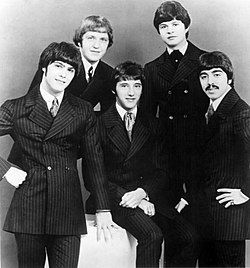
The Buckinghams are an American pop band from Chicago. They formed in 1966 and went on to become one of the top-selling acts of 1967, charting their only five top 40 hits in the U.S. that year. The band dissolved in 1970, but re-formed in 1980 and as of 2022[update] they continue to tour throughout the United States.
In 1965 guitarists Carl Giammarese and Nick Fortuna, along with bassist Curtis Bachman, were invited to join a band called the Centuries. Giammarese and Bachman, plus keyboardist Dennis Miccolis, later became members of another band, the Pulsations, whose members included drummer John Poulos and vocalists George LeGros and Dennis Tufano. After winning a local battle of the bands competition in late 1965, the Pulsations secured a job as the house band on WGN-TV's variety show called All-Time Hits. The show's producers suggested they adopt a name reflective of the British Invasion, which was popular at the time, and the band adopted the name The Buckinghams, which was suggested by a security guard named John Opager at the station. The band liked the name because of its similarity to a hometown landmark, Buckingham Fountain.
In early 1966, LeGros was forced to leave after he was drafted. Right around the same time, bassist Bachman also left and Fortuna (now playing bass and soon briefly going under the surname of Fortune, after it was misspelled on the record jacket) returned after a stint with Jimmy V. & the Entertainers.
The band then signed their first record contract with local label USA Records and recorded 12 songs that year. Several were released as singles, including "I'll Go Crazy", a song originally recorded by James Brown & the Famous Flames and the Beatles' "I Call Your Name". However, it was their number one single "Kind of a Drag" that provided them with national exposure. "Kind of a Drag" was written by Chicago-based songwriter Jim Holvay, who had been performing with a group called The Mob, and spent two weeks at the top of the Billboard Hot 100 in February 1967. It sold over one million copies, and was awarded a gold disc. The co-producers of "Kind of a Drag" were the band's first personal manager Carl Bonafede and big band leader Dan Belloc, owner of the Holiday Ballroom in Chicago. The horns on the song were arranged by Frank Tesinsky and the engineer at the first recording sessions held at Chess Records in Chicago was Ron Malo. Following this, the band's debut album, also entitled Kind of a Drag, was released on USA Records and featured the band's early recordings.
In late 1966, keyboardist Miccolis was replaced by Larry Nestor, who stayed in the band only a short time and was in turn replaced by Marty Grebb at the close of 1966.
Around this time the band members were introduced to James William Guercio, formerly the bassist and road manager for Chad & Jeremy, who then signed them to a management contract with Ebbins-Guercio Associates.
The Buckinghams were then courted by several record labels before deciding on promotion specialist Jim Scully, who quickly got them a new contract with Columbia (CBS) Records. And Guercio, who became the group's producer, continued the group's "brass-rock" approach, and the band produced four more Top-20 hits in 1967: "Don't You Care" (No. 6), "Mercy, Mercy, Mercy" (No. 5), "Hey Baby (They're Playing Our Song)" (No. 12) and "Susan" (No. 11), three of which were written by Jim Holvay and Gary Beisbier.
The same year, the Buckinghams were named by Billboard magazine as "The Most Listened to Band in America". But severe differences occurred between the Buckinghams and Guercio, particularly the producer's decision to add a psychedelic section to the song "Susan". The song included a short portion of Charles Ives' "Central Park in the Dark" and sounded very similar to the Beatles' song "A Day in the Life", with an orchestral crescendo. Many radio stations omitted this section, since it changed the song's tempo and veered radically from the melody. But the producer had the last word, and the released version kept the psychedelic section intact. The group currently does not include the psychedelic portion in their performances.
The Buckinghams
The Buckinghams are an American pop band from Chicago. They formed in 1966 and went on to become one of the top-selling acts of 1967, charting their only five top 40 hits in the U.S. that year. The band dissolved in 1970, but re-formed in 1980 and as of 2022[update] they continue to tour throughout the United States.
In 1965 guitarists Carl Giammarese and Nick Fortuna, along with bassist Curtis Bachman, were invited to join a band called the Centuries. Giammarese and Bachman, plus keyboardist Dennis Miccolis, later became members of another band, the Pulsations, whose members included drummer John Poulos and vocalists George LeGros and Dennis Tufano. After winning a local battle of the bands competition in late 1965, the Pulsations secured a job as the house band on WGN-TV's variety show called All-Time Hits. The show's producers suggested they adopt a name reflective of the British Invasion, which was popular at the time, and the band adopted the name The Buckinghams, which was suggested by a security guard named John Opager at the station. The band liked the name because of its similarity to a hometown landmark, Buckingham Fountain.
In early 1966, LeGros was forced to leave after he was drafted. Right around the same time, bassist Bachman also left and Fortuna (now playing bass and soon briefly going under the surname of Fortune, after it was misspelled on the record jacket) returned after a stint with Jimmy V. & the Entertainers.
The band then signed their first record contract with local label USA Records and recorded 12 songs that year. Several were released as singles, including "I'll Go Crazy", a song originally recorded by James Brown & the Famous Flames and the Beatles' "I Call Your Name". However, it was their number one single "Kind of a Drag" that provided them with national exposure. "Kind of a Drag" was written by Chicago-based songwriter Jim Holvay, who had been performing with a group called The Mob, and spent two weeks at the top of the Billboard Hot 100 in February 1967. It sold over one million copies, and was awarded a gold disc. The co-producers of "Kind of a Drag" were the band's first personal manager Carl Bonafede and big band leader Dan Belloc, owner of the Holiday Ballroom in Chicago. The horns on the song were arranged by Frank Tesinsky and the engineer at the first recording sessions held at Chess Records in Chicago was Ron Malo. Following this, the band's debut album, also entitled Kind of a Drag, was released on USA Records and featured the band's early recordings.
In late 1966, keyboardist Miccolis was replaced by Larry Nestor, who stayed in the band only a short time and was in turn replaced by Marty Grebb at the close of 1966.
Around this time the band members were introduced to James William Guercio, formerly the bassist and road manager for Chad & Jeremy, who then signed them to a management contract with Ebbins-Guercio Associates.
The Buckinghams were then courted by several record labels before deciding on promotion specialist Jim Scully, who quickly got them a new contract with Columbia (CBS) Records. And Guercio, who became the group's producer, continued the group's "brass-rock" approach, and the band produced four more Top-20 hits in 1967: "Don't You Care" (No. 6), "Mercy, Mercy, Mercy" (No. 5), "Hey Baby (They're Playing Our Song)" (No. 12) and "Susan" (No. 11), three of which were written by Jim Holvay and Gary Beisbier.
The same year, the Buckinghams were named by Billboard magazine as "The Most Listened to Band in America". But severe differences occurred between the Buckinghams and Guercio, particularly the producer's decision to add a psychedelic section to the song "Susan". The song included a short portion of Charles Ives' "Central Park in the Dark" and sounded very similar to the Beatles' song "A Day in the Life", with an orchestral crescendo. Many radio stations omitted this section, since it changed the song's tempo and veered radically from the melody. But the producer had the last word, and the released version kept the psychedelic section intact. The group currently does not include the psychedelic portion in their performances.
Recent media
Recent media