
Recent from talks
Football Battalion
Knowledge base stats:
Talk channels stats:
Members stats:
Football Battalion
The 17th (Service) Battalion, Middlesex Regiment was an infantry battalion of the Middlesex Regiment, part of the British Army, which was formed as a Pals battalion during the Great War. The core of the battalion was a group of professional footballers, which was the reason for its most commonly used name, The Football Battalion (also the footballers' or players' battalion). The 23rd (Service) Battalion, Middlesex Regiment was formed in June 1915 and became known as the 2nd Football Battalion. The battalions fought in the Battle of the Somme in 1916 among others. Soldiers who fought in the 17th and 23rd Battalions included Second Lieutenant Walter Tull, who was possibly the first black infantry officer in the British Army.
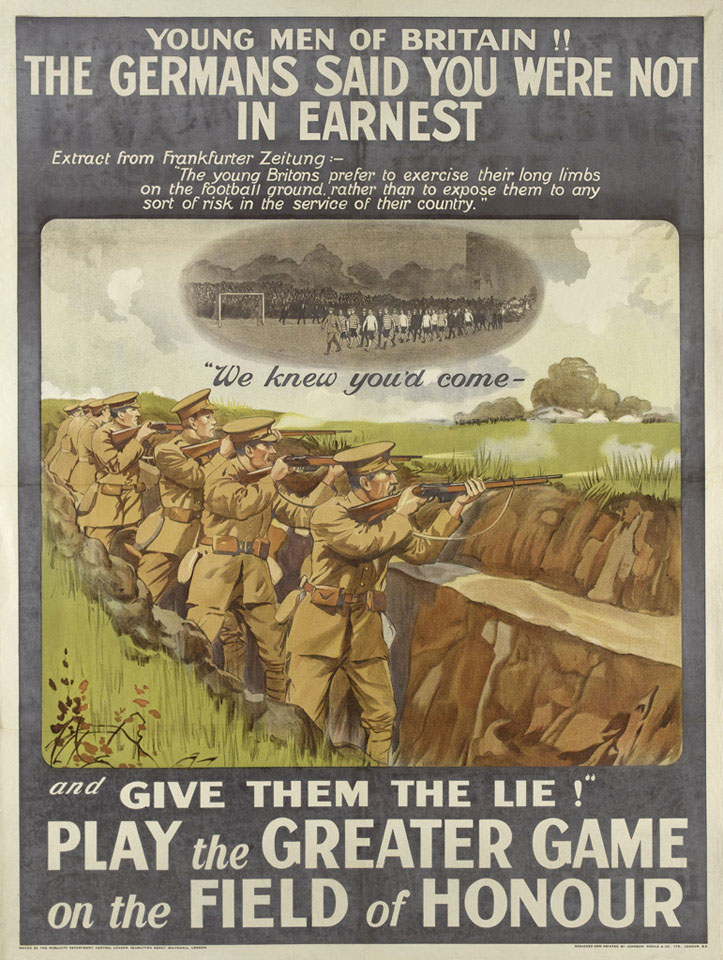
During the First World War there had been an initial push by clubs for professional football to continue, in order to keep the public's spirits up. This stance was not widely agreed with and public opinion turned against professional footballers. One soldier, serving in France, wrote to a British newspaper to complain that "hundreds of thousands of able-bodied young roughs were watching hirelings playing football" while others were serving their country. The suggestion was even made that King George V should cease being a patron of The Football Association.
William Joynson-Hicks formed the battalion on 12 December 1914 at Fulham Town Hall after Secretary of State for War, Lord Kitchener, suggested it as part of the Pals battalion scheme. England international Frank Buckley became the first player to join, out of thirty players who signed up at its formation. The formation was announced to the general public on 1 January 1915.
During training, the players were allowed leave on a Saturday to return to their clubs to take part in games. However, the clubs found themselves having to subsidise the train fares as the Army did not pay for them.
By March 1915, 122 professional footballers had signed up for the battalion, which led to press complaints as there were some 1800 eligible footballers. These recruits included 41 players, staff and supporters of Clapton Orient (later to be known as Leyton Orient) and 16 Heart of Midlothian players signed up for the 16th Royal Scots ('McCrae's Battalion'). In addition to footballers, officials and referees also joined the 17th, along with football fans themselves. Many football players deliberately chose to avoid the battalion by joining other regiments, causing the War Office to initially have difficulties filling the battalion.
A number of decorations were issued to the soldiers with the battalion. Lyndon Sandoe, of Cardiff City, was awarded the Distinguished Conduct Medal with bar, and the Military Medal. The battalion suffered heavy losses, including at the Battle of Delville Wood and the Battle of Guillemont during the Battle of the Somme. During the First World War, the battalion lost more than a thousand men, including 462 in one battle alone at the Battle of Arras in 1917.
The 17th was assigned to the 6th Infantry Brigade, part of the 2nd Infantry Division.
A second football battalion, the 23rd (Service) Battalion was formed in June 1915. Former Tottenham Hotspur and Clapton Orient footballer Alan Haig-Brown was appointed commanding officer in September 1916.
Hub AI
Football Battalion AI simulator
(@Football Battalion_simulator)
Football Battalion
The 17th (Service) Battalion, Middlesex Regiment was an infantry battalion of the Middlesex Regiment, part of the British Army, which was formed as a Pals battalion during the Great War. The core of the battalion was a group of professional footballers, which was the reason for its most commonly used name, The Football Battalion (also the footballers' or players' battalion). The 23rd (Service) Battalion, Middlesex Regiment was formed in June 1915 and became known as the 2nd Football Battalion. The battalions fought in the Battle of the Somme in 1916 among others. Soldiers who fought in the 17th and 23rd Battalions included Second Lieutenant Walter Tull, who was possibly the first black infantry officer in the British Army.
During the First World War there had been an initial push by clubs for professional football to continue, in order to keep the public's spirits up. This stance was not widely agreed with and public opinion turned against professional footballers. One soldier, serving in France, wrote to a British newspaper to complain that "hundreds of thousands of able-bodied young roughs were watching hirelings playing football" while others were serving their country. The suggestion was even made that King George V should cease being a patron of The Football Association.
William Joynson-Hicks formed the battalion on 12 December 1914 at Fulham Town Hall after Secretary of State for War, Lord Kitchener, suggested it as part of the Pals battalion scheme. England international Frank Buckley became the first player to join, out of thirty players who signed up at its formation. The formation was announced to the general public on 1 January 1915.
During training, the players were allowed leave on a Saturday to return to their clubs to take part in games. However, the clubs found themselves having to subsidise the train fares as the Army did not pay for them.
By March 1915, 122 professional footballers had signed up for the battalion, which led to press complaints as there were some 1800 eligible footballers. These recruits included 41 players, staff and supporters of Clapton Orient (later to be known as Leyton Orient) and 16 Heart of Midlothian players signed up for the 16th Royal Scots ('McCrae's Battalion'). In addition to footballers, officials and referees also joined the 17th, along with football fans themselves. Many football players deliberately chose to avoid the battalion by joining other regiments, causing the War Office to initially have difficulties filling the battalion.
A number of decorations were issued to the soldiers with the battalion. Lyndon Sandoe, of Cardiff City, was awarded the Distinguished Conduct Medal with bar, and the Military Medal. The battalion suffered heavy losses, including at the Battle of Delville Wood and the Battle of Guillemont during the Battle of the Somme. During the First World War, the battalion lost more than a thousand men, including 462 in one battle alone at the Battle of Arras in 1917.
The 17th was assigned to the 6th Infantry Brigade, part of the 2nd Infantry Division.
A second football battalion, the 23rd (Service) Battalion was formed in June 1915. Former Tottenham Hotspur and Clapton Orient footballer Alan Haig-Brown was appointed commanding officer in September 1916.
Recent media