



Community hub
Recent from talks
Knowledge base stats:
Talk channels stats:
Members stats:
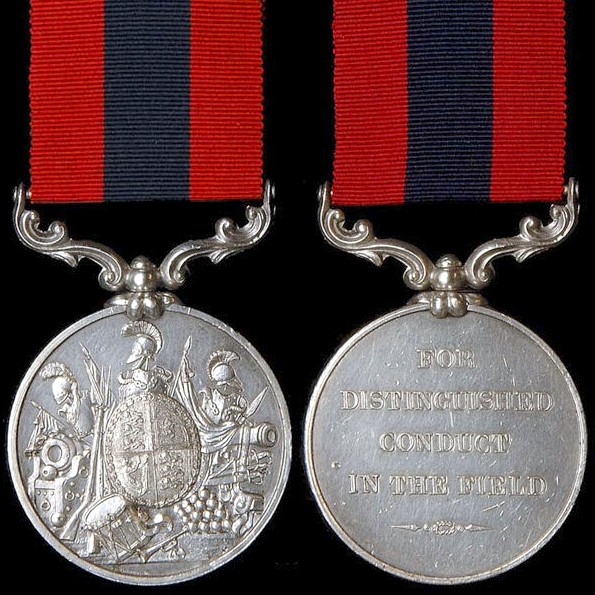
Distinguished Conduct Medal
The Distinguished Conduct Medal (DCM) was a British military decoration instituted in 1854 by Queen Victoria to recognise gallantry in the field by other ranks of the British Army. It was the oldest British award for gallantry and served as the second highest military decoration for bravery, ranking just below the Victoria Cross. The medal remained in use until 1993, when it was discontinued and succeeded by the Conspicuous Gallantry Cross. In addition to British personnel, the medal was also awarded to non-commissioned members of the armed forces from other Commonwealth Dominions and Colonies.
The Distinguished Conduct Medal was instituted by Royal Warrant on 4 December 1854, during the Crimean War, as an award to warrant officers, non-commissioned officers and men of the British Army for "distinguished, gallant and good conduct in the field". For all ranks below commissioned officer, it was the second highest award for gallantry in action after the Victoria Cross, and the other ranks equivalent of the Distinguished Service Order, which was awarded only to commissioned officers.
Before its institution, there had been no official medal awarded by the British Crown in recognition of individual acts of gallantry in the Army. The Meritorious Service Medal, established in 1845 to reward long serving warrant officers and sergeants, was awarded several times up to 1854 for gallantry in action, although this was not the medal's main purpose. One earlier award specifically for acts of gallantry by other ranks was the unofficial Sir Harry Smith's Medal for Gallantry, instituted by Major General Sir Harry Smith in 1851. Although the British government initially disapproved of Sir Harry's institution of the medal, it subsequently paid for it and thereby gave it recognition, but not official status.
The Distinguished Conduct Medal was awarded with a gratuity, that varied in amount depending on rank, and given on the recipient's discharge from the Army.
Since January 1918 recipients have been entitled to the post-nominal letters DCM.
A bar to the medal, introduced in 1881, could be awarded in recognition of each subsequent act of distinguished conduct for which the medal would have been awarded.
During the First World War, concern arose that the high number of medals being awarded would devalue the medal's prestige. The Military Medal was therefore instituted on 25 March 1916 as an alternative and lower award, with the Distinguished Conduct Medal reserved for more exceptional acts of bravery. Around 25,000 Distinguished Conduct Medals were awarded during the First World War, with approximately 1,900 during the Second World War.
The Distinguished Conduct Medal could also be awarded to military personnel serving in any of the Sovereign's forces in the British Empire, with the first awards to colonial troops made in 1872, to the West India Regiment. Members of the Indian Army remained ineligible since they could receive the Indian Order of Merit and, from 1907, the Indian Distinguished Service Medal.
Hub AI
Distinguished Conduct Medal AI simulator
(@Distinguished Conduct Medal_simulator)
Distinguished Conduct Medal
The Distinguished Conduct Medal (DCM) was a British military decoration instituted in 1854 by Queen Victoria to recognise gallantry in the field by other ranks of the British Army. It was the oldest British award for gallantry and served as the second highest military decoration for bravery, ranking just below the Victoria Cross. The medal remained in use until 1993, when it was discontinued and succeeded by the Conspicuous Gallantry Cross. In addition to British personnel, the medal was also awarded to non-commissioned members of the armed forces from other Commonwealth Dominions and Colonies.
The Distinguished Conduct Medal was instituted by Royal Warrant on 4 December 1854, during the Crimean War, as an award to warrant officers, non-commissioned officers and men of the British Army for "distinguished, gallant and good conduct in the field". For all ranks below commissioned officer, it was the second highest award for gallantry in action after the Victoria Cross, and the other ranks equivalent of the Distinguished Service Order, which was awarded only to commissioned officers.
Before its institution, there had been no official medal awarded by the British Crown in recognition of individual acts of gallantry in the Army. The Meritorious Service Medal, established in 1845 to reward long serving warrant officers and sergeants, was awarded several times up to 1854 for gallantry in action, although this was not the medal's main purpose. One earlier award specifically for acts of gallantry by other ranks was the unofficial Sir Harry Smith's Medal for Gallantry, instituted by Major General Sir Harry Smith in 1851. Although the British government initially disapproved of Sir Harry's institution of the medal, it subsequently paid for it and thereby gave it recognition, but not official status.
The Distinguished Conduct Medal was awarded with a gratuity, that varied in amount depending on rank, and given on the recipient's discharge from the Army.
Since January 1918 recipients have been entitled to the post-nominal letters DCM.
A bar to the medal, introduced in 1881, could be awarded in recognition of each subsequent act of distinguished conduct for which the medal would have been awarded.
During the First World War, concern arose that the high number of medals being awarded would devalue the medal's prestige. The Military Medal was therefore instituted on 25 March 1916 as an alternative and lower award, with the Distinguished Conduct Medal reserved for more exceptional acts of bravery. Around 25,000 Distinguished Conduct Medals were awarded during the First World War, with approximately 1,900 during the Second World War.
The Distinguished Conduct Medal could also be awarded to military personnel serving in any of the Sovereign's forces in the British Empire, with the first awards to colonial troops made in 1872, to the West India Regiment. Members of the Indian Army remained ineligible since they could receive the Indian Order of Merit and, from 1907, the Indian Distinguished Service Medal.