Hubbry Logo
Granite ClubGranite ClubMain
Open search
Granite Club
Community hub
Granite Club
logo
8 pages, 0 posts
0 subscribers
Be the first to start a discussion here.
Granite Club
Granite Club
from Wikipedia

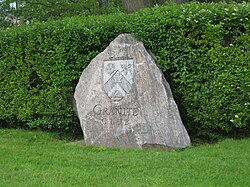
A sign outside the Granite Club, showing the club's coat of arms

The Granite Club (founded as the Toronto Granite Curling Club) is a private social and athletic club in Toronto, Ontario, Canada. Founded in 1875, it has a long history of sports competition. It is located at 2350 Bayview Avenue, north of midtown Toronto.

History

[edit]

The Granite Club was founded in 1875 on St. Mary's Street in downtown Toronto. It was initially a curling club. It provided a curling rink and a skating rink as facilities. After only five years on St. Mary's Street, expansion was needed in order to improve existing facilities and to accommodate the growing membership. In 1880, the club moved to 471 Church Street, where it added lawn bowling and tennis. By 1885, the membership had reached 447 members. Later in the 1880s, the club's members formed and sponsored an ice hockey team, considered the first or one of the first organized ice hockey teams in Toronto. The Toronto Granites ice hockey club would last into the 1900s and produce Canadian amateur champion and Olympic champion teams.

In the 1920s, the club organized competitive figure skating at the club. Over time, singles champions such as Kurt Browning, Patrick Chan and Barbara Ann Scott, have trained at the club. The pairs champions of Barbara Underhill and Paul Martini also trained at the club.[1]

In 1925, a piece of land on St. Clair Avenue West, near Yonge Street, was purchased to accommodate a growing membership, the changing face of recreational activities and conversion from a gentlemen's to a family club. The St. Clair location housed seven badminton courts, several five-pin bowling lanes, a swimming pool and two squash courts in addition to curling, skating, lawn bowling and tennis.

The fourth club home was opened in 1972 on a 22-acre site on Bayview Avenue north of Lawrence Avenue in the Lawrence Park district, bordering on the Don Valley. Alterations and additions to the new building have continued and the acquisition of adjacent properties to the north have both expanded the club's developable land and established the ability to add floor space to the clubhouse. In 1994, five new tennis courts were added to the property to the north. In 2006, the club added one tennis court and introduced a state-of-the-art aquatics complex with a retractable roof. In 2012, the club broke ground on its most significant capital project since moving to Bayview. The "Shiftingravity" expansion has expanded fitness offerings, a new children's area and activity centre, a consolidated pro shop and 200 additional parking spaces.[2]

The location on Church Street is now the site of Barbara Hall Park, and the 1906 clubhouse is now a community centre, "The 519". The north wall of the curling rink building on the south side of Monteith Street was partially retained, in use as a park fence. When the club moved in 1972, the St. Clair club was demolished, its front entrance becoming part of the Guild Park and Gardens collection.

Facilities

[edit]

The Granite Club has facilities for:

References

[edit]
[edit]
Revisions and contributorsEdit on WikipediaRead on Wikipedia
from Grokipedia
The Granite Club is a premier private family, athletic, recreation, and social club located at 2350 Bayview Avenue in North Toronto, Ontario, Canada. Founded in 1875 by six gentlemen seeking an uptown curling facility on Chapel Street and St. Mary's Street, it originated as a dedicated space for the sport of curling amid Toronto's growing interest in winter athletics. Over its 150-year history, the club has expanded multiple times, relocating to larger sites on Church Street, St. Clair Avenue West near Yonge Street in 1925, and finally to its current 22-acre Bayview Avenue campus near the Don Valley Parkway, evolving into a multifaceted institution that reflects Toronto's social and economic development. Today, the Granite Club serves approximately 12,000 diverse members as of 2025, emphasizing family camaraderie, athletic excellence, and cultural enrichment through state-of-the-art facilities—including a 2024 renewal project—and year-round programming. Its athletic offerings include two 25-meter six-lane pools for aquatics programs such as learn-to-swim lessons, , and competitive teams; eight curling sheets with social and instructional leagues; four badminton and courts; a skating rink supporting beginner to championship-level and hockey powerskating; 16 tennis courts (12 Har-Tru clay and four Plexicushion hard); seven squash courts; a fitness center with personal training and group classes like and spin; and an dome with simulators and lessons. Social and recreational programs cater to all ages, featuring the Granite School of Music for , , and vocal lessons; the Granite School of Dance & Gymnastics for , , and hip-hop; adult classes and seminars in , , and other topics; camps and family events like movie nights and guest speaker series; and games such as bridge. Dining at the club provides elevated experiences across several venues, including the adult-oriented Elements Lounge & Grill, family-friendly Hearth Mediterranean Kitchen & Cravery Marketplace, casual 1875 & Terrace, and quick-service Intersections Snack Shop, all supported by an executive chef, , and private event spaces for member celebrations as part of the 2024 Horizon 150 renewal. With a mission to exceed member expectations and a vision to be North America's leading family athletic and , the Granite Club maintains a waitlist for membership and hosts world-class events, fostering a legacy of quality, community, and tradition.

History

Founding and Early Development

The Granite Club, originally established as the Toronto Granite Curling Club, was founded in by a half-dozen gentlemen seeking to create an uptown facility dedicated to and skating amid 's growing urban landscape. Located at the corner of Chapel and St. Mary's Streets, the initial setup included a modest clubhouse with a covered outdoor rink supporting two sheets of curling ice and an adjacent skating area, reflecting the era's enthusiasm for among the city's professional and business elite. This venture addressed the limitations of outdoor play on frozen bays, providing a dedicated indoor space for consistent access. By 1880, rapid interest prompted the club's first major relocation to 471 Church Street, where a larger two-story red-brick building was constructed, incorporating an expansive enclosed rink at the rear. This move enabled the addition of lawn bowling greens and courts, broadening the club's offerings beyond winter activities to year-round and signaling its evolution into a multifaceted athletic institution. Membership swelled during the decade, attracting prominent local figures and underscoring the club's status as a hub for social and sporting camaraderie among Toronto's upper echelons. In the late 1880s, the Granite Club further diversified by sponsoring the Granites team, marking one of the city's earliest organized efforts in the emerging sport. The team's inaugural games occurred at the Church Street rink in 1888, introduced through equipment and guidance from hockey pioneer Tom Paton, and helped popularize structured play in urban . Throughout this period, the club's gentlemen-only membership reinforced its role as an exclusive venue for fostering and community ties among male professionals.

Major Relocations and Expansions

In 1880, the Granite Club relocated from its initial site to 471 Church Street in , where it expanded to include facilities for lawn bowling and alongside curling. By the early , the club's growing membership, increasingly family-oriented, necessitated further expansion beyond the Church Street location, which is now the site of Barbara Hall Park. In 1925, the Granite Club Corporation purchased land at West, south of , to build a larger clubhouse. The new St. Clair Avenue clubhouse, designed by architect William Frederick Sparling and completed in 1926, featured an elegant dining room, ballroom, seven badminton courts, several five-pin bowling lanes, a swimming pool, and two squash courts, accommodating the club's diversifying athletic programs. An addition in 1929, executed by Sparling, Martin & Forbes, further enhanced the structure's capacity for multiple sports while maintaining its classical . These developments reflected the club's shift toward broader recreational offerings, supporting memberships through versatile indoor facilities. By the late , urban pressures and the need for more expansive grounds prompted another relocation. In , the club moved to its current 22-acre site at 2350 Bayview Avenue, bordering the Don Valley, where the early 1970s clubhouse was designed as an L-shaped complex optimized for large-scale athletic activities, including multiple courts, rinks, and outdoor spaces. The St. Clair building was demolished in 1973, with its front archway entrance salvaged and relocated to in Scarborough, preserving a key architectural element from the 1926 structure. This move enabled the club to scale its infrastructure for sustained growth in sports programming.

Evolution of Programs and Sports

Originally established as a gentlemen's club in 1875, the Granite Club underwent a gradual transformation into a family-inclusive by the , accommodating growing membership and diversifying beyond its founding sport. This shift coincided with the club's relocation to St. Clair Avenue West in 1925, enabling expanded facilities that supported broader participation, including women and children. During this period, the club introduced competitive programs, hosting the Canadian Amateur Figure Skating Championships in 1928 and establishing itself as a key venue for training and competitions in the sport. From the 1980s onward, the Granite Club further evolved its offerings to become a multifaceted athletic and social hub, emphasizing family-oriented activities and modern wellness trends. A significant milestone was the 2006 opening of a state-of-the-art complex, featuring a retractable-roof pool that enabled year-round programs and recreational use, at a cost of $8.5 million Canadian. This addition enhanced the club's programming diversity, contributing to a waitlist exceeding two years and solidifying full membership capacity. The club's most transformative development came with the Shiftingravity project, initiated around 2012 and completed in 2015, which radically reoriented the facility toward contemporary family athletics. This Gold-certified expansion added a fitness center with studios, a children's play area and childcare center, and expanded parking via a new entrance drive, shifting the emphasis from traditional to inclusive health and youth programs. Serving approximately 10,000 members at the time, the project integrated modern fitness trends like wellness-focused amenities while preserving the club's legacy, with membership growing to over 12,000 by the mid-2020s. These enhancements, building on prior relocations, underscored the club's adaptation to evolving demographic and recreational demands.

Facilities

Athletic and Recreational Amenities

The Granite Club features a world-class eight-sheet curling facility designed for both competitive leagues and recreational play, accommodating members of all skill levels through organized programs and open sessions. Adjacent to this, a dedicated ice skating rink supports , hockey, and casual skating activities, with offerings including instructional clinics and training for athletes ranging from beginners to advanced competitors. The club's tennis amenities comprise 16 courts in total: 12 Har-Tru clay courts (4 red and 8 green) and 4 hard courts, with 12 covered by protective bubbles during winter months for year-round play. Six outdoor courts were added between 1994 and 2006 as part of expansions, enabling recreational matches, lessons, and tournaments. Complementing these are seven indoor squash courts—comprising singles and doubles options—used for social games, coaching sessions, and competitive fixtures across various age groups. Outdoor lawn bowling greens provide a dedicated space for leisurely and competitive , fostering community engagement through seasonal programs. Indoors, four badminton courts facilitate recreational drop-ins, skill-building clinics, and league play, emphasizing agility and strategy. These courts also accommodate programs. Supporting these sports is the Granite Gear pro shop, which stocks and sells specialized equipment such as racquets, paddles, footwear, and apparel tailored to , squash, , and other activities, while also providing rental options for select items to enhance accessibility. The club also features an indoor golf dome equipped with hitting stations, a area, simulators, swing analysis technology, and club-fitting services, offering programs and lessons for members of all skill levels.

Social and Support Spaces

The Granite Club's social and support spaces are designed to foster member interaction, family bonding, and relaxation, complementing its athletic offerings with dedicated areas for communal activities and ancillary services. These facilities emphasize accessibility and family-oriented features, providing environments for casual gatherings, wellness pursuits, and special events within the club's expansive 22-acre campus in . A key addition in 2006 was the state-of-the-art aquatics complex, featuring two 25-meter six-lane indoor pools with a retractable glass roof that opens to allow natural light and ventilation during warmer months, an activity pool with water features, and a tadpole pool for young swimmers, enabling year-round lap swimming, instructional lessons, and family swim sessions. This 75% retractable roof system, combined with fully operable perimeter walls, creates a versatile space that transitions seamlessly between enclosed and open-air use, enhancing the club's aquatics programming as part of broader facility expansions. The pools support general wellness activities while prioritizing safety and enjoyment for members of all ages. The 2012 "Shiftingravity" expansion introduced a modern fitness center equipped with contemporary exercise machinery and wellness amenities, alongside a dedicated children's play area and youth activity center to promote physical health and family engagement. These spaces include facilities with indoor and outdoor playgrounds, a homework lounge, and interactive zones for games and exergaming, all geared toward general wellness rather than competitive training. The fitness center offers programs for adults, youth, and families, integrating cardio, , and group classes to support holistic health initiatives. Dining facilities serve as central hubs for social interaction, with the Horizon 150 Food & Beverage Renewal project in 2024 upgrading several venues to provide diverse culinary options. Elements Lounge & Grill offers an adult-oriented space for refined dining and relaxed lounging, featuring multi-course menus curated by an executive chef and sommelier-led wine pairings. Hearth Mediterranean Kitchen & Cravery caters to families with casual, Mediterranean-inspired dishes and a marketplace for quick meals, while The Sports & Terrace—renewed in 2022—provides a vibrant, terrace-adjacent spot for pub fare and casual socializing. Intersections Shop rounds out the offerings with grab-and-go items for on-the-go members. These areas accommodate daily meals and informal meetups, emphasizing fresh, seasonal ingredients in a welcoming atmosphere. Event spaces further enhance the club's role as a social venue, with the Grand Ballroom and adjacent terrace accommodating 150 to 400 guests for weddings, anniversaries, birthdays, and club functions. These versatile rooms feature state-of-the-art audiovisual equipment, customizable setups, and professional event services, including themed children's parties with activities like crafts and swimming. Private dining rooms and lounges support smaller gatherings, such as holiday celebrations or memorials, allowing members to host personalized events with full culinary support. The integration of these spaces promotes community building and memorable occasions. Supportive infrastructure includes extensive facilities, with multiple levels of underground garages added during expansions to accommodate the club's 12,000 members and visitors without disrupting the landscape. Administrative areas, such as the accounts office and event services office, are seamlessly incorporated into the 22-acre site, providing efficient operational support for member services, reservations, and daily club functions. These elements ensure smooth access and management, allowing focus on social and recreational experiences.

Membership and Operations

Membership Structure and Access

The Granite Club, established in 1875 as an exclusive gentlemen's club, transitioned its membership structure to include women and families over the subsequent decades, with family memberships becoming a key feature by the to accommodate growing participation and relocations. This evolution reflected broader societal shifts toward inclusive recreational spaces, expanding from a male-only focus to a multi-generational model that now supports approximately 12,000 members across athletic, recreational, and social pursuits. Membership categories at the Granite Club encompass full athletic options, which grant comprehensive access to sports facilities and programs; social-only memberships for those prioritizing events and dining; junior categories for individuals under 30, often with reduced fees; and associate memberships for limited or legacy access. Initiation fees are tiered by age and category, typically ranging from $19,800 for juniors aged 16-29 to $49,350 for full adult memberships, accompanied by annual dues of $3,000 to $4,000; waiting lists for popular categories can extend 2-3 years, reinforcing the club's selective nature. Prospective members must initiate the application process by contacting the Membership Director for an information package and facility tour, followed by submission of an application supported by sponsorship from two current members, references, and an initial fee; the process includes interviews to assess fit, emphasizing values of and athletic commitment, with final approval by the club's governance. The club's current demographics feature primarily upper-middle-class families from the , with a strong emphasis on multi-generational participation that spans children in junior programs to grandparents in social events, creating a cohesive environment.

Governance and Administration

The Granite Club is governed by a composed of elected members who oversee the club's strategic direction, including finances, facility expansions, and programming initiatives. The board, which includes a president and various directors, is refreshed annually through member elections or appointments announced publicly, ensuring member involvement in leadership transitions. Administrative operations are led by Chief Executive Officer John Gravett, who manages overall club activities, including compliance, expansions, and daily programming. Supporting roles include Chief Financial Officer Brenda Arseneault, responsible for financial oversight and budgeting. Sport-specific directors handle targeted areas, such as former Director of Athletics Gary Caron, who retired in 2025 and supervised athletic facilities and programs, and Director of Racquets Uros Budimac, overseeing tennis, squash, and related racquet sports. Curling operations fall under dedicated managers who coordinate programs and events. The club maintains policies for facility upkeep through roles like the Director of Capital Projects, who ensures ongoing maintenance and upgrades to athletic and social spaces. Event hosting follows structured guidelines, allowing for weddings, corporate functions, and social gatherings while prioritizing member access and safety. All operations comply with municipal bylaws and the Code, as demonstrated in a 2022 tribunal ruling requiring accommodations for members with disabilities. Financially, the club operates primarily on membership dues, with initiation fees and annual contributions funding core activities and expansions. Historical expansions, such as the multi-million-dollar project adding secure access systems and new amenities, have involved strategic investments without publicly detailed corporate sponsorships.

Notable Contributions

Achievements in Sports

The Granite Club's team, known as the Toronto Granites, enjoyed remarkable success in the early 1920s, capturing the , Canada's senior amateur championship, in both 1922 and 1923 before representing the nation at the inaugural Winter Olympics in 1924, where they clinched the gold medal by defeating 6-1 in the final and outscoring opponents 137-5 overall. This triumph marked Canada's fourth consecutive Olympic hockey gold and solidified the club's early legacy in the sport. The club's figure skating program, established in the 1920s, has produced a lineage of elite competitors, serving as a training hub for Olympic medalists and world champions over nearly a century. , who began skating at the Granite Club under coach Osborne Colson, earned gold in the team event at the 2018 PyeongChang Olympics, along with silver medals in both the team and individual events at the 2014 Games, and secured three consecutive world titles from 2011 to 2013. Similarly, , a longtime club affiliate, claimed four world championships in 1989, 1990, 1991, and 1993, pioneering advanced jump techniques that influenced generations of skaters. In pairs skating, and Paul Martini, who trained at the facility, dominated as 1984 world champions after five straight Canadian titles from 1979 to 1983, showcasing innovative lifts and synchronization. The Granite Club's curling section, dating to the club's founding in , has fostered competitive play through its eight-sheet facility and hosted provincial and national events, contributing to the development of skilled curlers who have competed at high levels in Canadian championships. In squash, club members have excelled in national and international competitions, exemplified by Khan's victory in the City Athletic Club open invitation doubles final alongside his brother , highlighting the club's role in nurturing professional-level talent on its dedicated courts. Tennis members have similarly achieved tournament successes, with the club's Har-Tru and hard courts supporting provincial wins and junior national representation, as seen in recent hosting of the 2025 U16 Fischer Outdoor Junior National Championships.

Cultural and Community Impact

Since its founding in , the Granite Club has functioned as an exclusive for Toronto's elite, promoting camaraderie and networking through a range of private events and gatherings that strengthen interpersonal connections within the city's upper echelons. The club facilitates weddings, corporate functions, and social celebrations in its elegant ballrooms and venues, renowned for high-quality service and food and beverage offerings that cater to sophisticated tastes. The club's architectural legacy extends beyond its current site, as elements from its original 1926 St. Clair Avenue West building—demolished in 1972 upon relocation—were salvaged and repurposed in Guild Park and Gardens in Scarborough, including the main entrance with two fluted columns, thereby preserving fragments of early 20th-century Toronto design amid the park's sculptural landscape. In 2015, Montgomery Sisam Architects undertook a significant renovation and expansion, adding modern features such as an accessible entrance, child care facilities, fitness studios, and a ravine-overlooking courtyard, which harmoniously blend contemporary functionality with the wooded Don River valley setting to support ongoing social and recreational activities. Beyond member-focused programming, the Granite Club contributes to Toronto's community through youth initiatives, including summer and holiday camps, art and music lessons, and junior orientations that develop skills for younger participants. It collaborates with local private schools, such as Toronto French School, Northmount School, and Bannockburn School, via partnerships with organizations like Momentum Sports Group to deliver year-round sports development sessions and camps, enhancing access to athletic opportunities for students. These efforts underscore the club's role as a preserved architectural and social landmark in north Toronto, blending historical prestige with inclusive family-oriented outreach.

References

Add your contribution
Related Hubs
User Avatar
No comments yet.