


Community hub
Recent from talks
Contribute something
Nothing was collected or created yet.
Snack
View on Wikipedia

A snack is a small portion of food generally eaten between meals.[1] Snacks come in a variety of forms including packaged snack foods and other processed foods, as well as items made from fresh ingredients at home.
Traditionally, snacks are prepared from a number of ingredients commonly available at home without a great deal of preparation. Often cold cuts, fruits, leftovers, nuts, and sweets are used as snacks. With the spread of convenience stores, packaged snack foods became a significantly profitable business.
Snack foods are typically designed to be portable, quick, and satisfying. Processed snack foods, as one form of convenience food, are designed to be less perishable, more durable, and more portable than prepared foods. They often contain substantial amounts of sweeteners, preservatives, and appealing ingredients such as chocolate, peanuts, and specially designed flavors (such as flavored potato chips). Aside from the use of additives, the viability of packaging so that food quality can be preserved without degradation is also important for commercialization.[2]
A snack eaten shortly before going to bed or during the night may be called a "bedtime snack", "late night snack", or "midnight snack".
North America
[edit]Canada
[edit]In 2010, the average Canadian ate 300 snacks.[3] Canadian identity is often associated with snack foods that are sold in Canada[4] due to economic nationalism.[5] Some Canadian snacks include ketchup chips, Smarties, Coffee Crisp, Kinder Surprise, Jos Louis, Big Turk, and Nanaimo bars.[6]
United States
[edit]In the United States, a popular snack food is the peanut. Peanuts first arrived from South America via slave ships and became incorporated into African-inspired cooking on southern plantations. After the Civil War, the taste for peanuts spread north, where they were incorporated into the culture of such popular events as baseball games and vaudeville theaters.[7]
Along with popcorn (also of South American origin), snacks bore the stigma of being sold by unhygienic street vendors. The middle-class etiquette of the Victorian era (1837–1901) categorized any food that did not require proper usage of utensils as lower-class.[7]
Pretzels were introduced to North America by the Dutch, via New Amsterdam in the 17th century. In the 1860s, the snack was still associated with immigrants, unhygienic street vendors, and saloons. Due to loss of business during the Prohibition era (1920–1933), pretzels underwent rebranding to make them more appealing to the public. As packaging revolutionized snack foods, allowing sellers to reduce contamination risk, while making it easy to advertise brands with a logo, pretzels boomed in popularity, bringing many other types of snack foods with it. By the 1950s, snacking had become an all-American pastime, becoming an internationally recognized emblem of middle American life.[7][8]
Middle East
[edit]Nuts are a staple of snacks in the Middle East. Among the many varieties available within the region, the most popular are almonds, walnuts, hazelnuts, pine nuts, and pistachios.[9] According to archeological evidence, nuts have been part of the Middle Eastern diet for centuries with ancient civilizations taking advantage of them for their health benefits.[10] The health benefits of nuts comes from them being good sources of protein, healthy fats, fibers, vitamins and minerals.[11] Nuts have now become a regular snack with a 119 billion dollar market as of 2022 that is projected to continue growing into 2023.[12] Nuts can be prepared in a variety of ways, such as by roasting them with spices and lemon juice or incorporating them into food and desserts such as baklava, knafeh, and kibbeh.[13][14][15]


Spreads and dips are eaten with pita bread. The most popular dip in the middle east is hummus.[16] Hummus is a blend of chickpeas, tahini, lemon, and garlic usually served with olive oil and paprika on top.[17] Hummus's origins can be traced back to a Syrian cookbook from the 13th century.[18] Other dips are also popularly served such as mouhammara and baba ganoush.[16] Mouhammara is a walnut, tahini, and roasted red pepper dip served with olive oil on top originating from the Syrian city of Aleppo.[19] Baba ganoush is a spread made from roasted eggplants, olive oil, and other vegetables.[20] The origins of baba ganoush are not clear with many conflicting pieces of evidence pointing to multiple countries of origin.[21] A sweet dip is Ashta, a cream made from milk, rose or orange blossom water, and ghee, which is usually accompanied with honey.[22]
.jpg)
Many popular snacks in the Middle East are obtained from street vendors due to low cost and convenience of eating on the go.[23] Many of these snacks consist of a protein with bread.[23] Falafel consists of many little fried balls of ground chickpeas or fava beans with herbs, spices served in pita bread with tahini sauce and a choice of vegetables.[24] Falafel is believed to originate from Egypt around 1000 years ago by Egyptian Copts.[25] Shawarma is served in a similar fashion to falafel, pita bread with sauce and vegetables, but instead prepared by slowly cooking layers of meat on a spit before thinly slicing it.[26]

Asia
[edit]Japan
[edit]

In Japan, rice-based snacks such as Senbei (rice crackers) and Mochi (pounded rice cakes) have been part of traditional food culture for centuries, often consumed during festivals and tea ceremonies. Modern packaged snacks have also become highly popular, with products like Pocky and uniquely flavored Kit Kat bars (including Matcha green tea and Wasabi varieties) gaining both domestic and international recognition.[27] Convenience stores (konbini) play a central role in snack culture by offering ready-to-eat foods such as Onigiri (rice balls), Karaage (fried chicken), and sandwiches alongside packaged chips and sweets.
Street snacks are also common, particularly at festivals (matsuri). Popular examples include Takoyaki (octopus-filled batter balls), Taiyaki (fish-shaped pastries filled with sweet bean paste or custard), and Dorayaki (pancakes filled with sweet red bean paste). Seasonal snacks reflect local agricultural traditions, such as Sakura mochi (rice cake filled with red bean paste and wrapped in a cherry blossom leaf), which is associated with cherry blossom season in spring. Snack companies in Japan also collaborate with popular Anime and Manga franchises to produce limited-edition flavors, which become sought after by collectors and fans.
Nutrition
[edit] | The examples and perspective in this article may not represent a worldwide view of the subject. (April 2023) |
Government bodies, such as Health Canada, recommend that people make a conscious effort to eat more healthy, natural snacks, such as fruit, vegetables, nuts, and cereal grains while avoiding high-calorie, low-nutrient junk food.[28]
A 2010 study showed that children in the United States snacked on average six times per day, approximately twice as often as American children in the 1970s.[29] This represents consumption of roughly 570 calories more per day than U.S. children consumed in the 1970s.[30]
Types
[edit]- Bagel with cream cheese
- Bars
- Bitterballen
- Candy bar
- Carrot Chips
- Chaat
- Cheese, a larger cold prepared snack
- Cheese puffs/cheese curls
- Chocolate-coated marshmallow treats
- Corn chips and Tortilla chips
- Cocktail sausage
- Cookies
- Crackers
- Deviled eggs
- Doughnuts
- Dried fruits
- Drinkable yogurt
- Edamame, fresh or dried
- Granola bars
- Falafel
- Flour tortilla with a filling
- Frozen berries
- Fruit, whole, sliced, Fruit salad, Fruit cocktail
- Ice cream
- Jell-O
- Jerky
- Kaassoufflé
- Latiao
- Lunchables
- Milkshake
- Muffins
- Nuts
- Pound cake
- Papadum
- Peanuts
- Pita bread
- Popcorn
- Pork rinds
- Potato chips
- Pakoda
- Pretzels
- Raisins
- Ratatouille
- Rice cake
- Rice crackers, distinguished from the above
- Samosa
- Seeds
- Shortbread
- Smoked salmon
- Smoothie
- Teacake
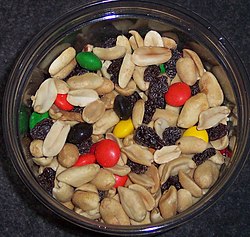
- Trail mix
- Vegetables (e.g., carrots, celery, cherry tomatoes)
- Yogurt
See also
[edit]
References
[edit]- ^ "Snack". Dictionary.com. Archived from the original on 4 March 2016. Retrieved 13 March 2011.
- ^ Willhoft, Edward M.A. (1990). "Packaging for Preservation of Snack Food". Snack Food. p. 349-371. doi:10.1007/978-1-4613-1477-6_18. ISBN 978-1-4612-8795-7.
- ^ Thiessen 2017, p. 12.
- ^ Goodman, Rob (2023). Why American Democracy Is Eroding and How Canada Can Protect Itself. Simon & Schuster. p. 175. ISBN 9781668012451.
- ^ Thiessen 2017, p. 30.
- ^ Skinner, RJ. "7 Canadian snacks you can't get in the U.S. and the backstory on why". CBC Life. Retrieved 9 August 2024.
- ^ a b c Carroll, Abigail (30 August 2013). "How Snacking Became Respectable". Wall Street Journal. ISSN 0099-9660. Archived from the original on 21 December 2019. Retrieved 29 May 2016.
- ^ "America: just one long snack bar". Ellensburg Daily Record. 3 April 1973. Archived from the original on 8 November 2022. Retrieved 14 December 2018 – via Google News.
- ^ Casas-Agustench, Patricia; Salas-Huetos, Albert; Salas-Salvadó, Jordi (December 2011). "Mediterranean nuts: origins, ancient medicinal benefits and symbolism". Public Health Nutrition. 14 (12A): 2296–2301. doi:10.1017/S1368980011002540. ISSN 1475-2727. PMID 22166187. S2CID 36384880.
- ^ Casas-Agustench, Patricia; Salas-Huetos, Albert; Salas-Salvadó, Jordi (December 2011). "Mediterranean nuts: origins, ancient medicinal benefits and symbolism". Public Health Nutrition. 14 (12A): 2296–2301. doi:10.1017/S1368980011002540. ISSN 1475-2727. PMID 22166187. S2CID 36384880.
- ^ Services, Department of Health & Human. "Nuts and seeds". www.betterhealth.vic.gov.au. Retrieved 6 October 2023.
- ^ ltd, Market Data Forecast. "MEA Nuts and Seeds Market | 2022 to 2027 | UAE, Israel, KSA, South Africa, Egypt". Market Data Forecast. Retrieved 6 October 2023.
- ^ Bergum, Vidar (11 December 2020). "Middle Eastern spiced nuts". A kitchen in Istanbul. Retrieved 6 October 2023.
- ^ Kravchuk, Natasha (21 December 2014). "Baklava Recipe, Honey Baklava, How to Make Best Baklava". NatashasKitchen.com. Retrieved 6 October 2023.
- ^ Mueller, Elizabeth (Beth) (5 October 2018). "Knafeh". Pear Tree Kitchen. Retrieved 6 October 2023.
- ^ a b "Middle Eastern dips and spreads to bump hummus off your summer menu". Chicago Tribune. 1 August 2019. Retrieved 6 October 2023.
- ^ Karadsheh, Suzy (20 April 2020). "BEST Classic Hummus Recipe you'll find!". The Mediterranean Dish. Retrieved 6 October 2023.
- ^ Shaheen, Kareem (24 March 2023). "The True Origins of Hummus". New Lines Magazine. Retrieved 6 October 2023.
- ^ Karadsheh, Suzy (29 May 2020). "Muhammara Recipe (Roasted Red Pepper Dip)". The Mediterranean Dish. Retrieved 6 October 2023.
- ^ Kate (17 October 2017). "Epic Baba Ganoush". Cookie and Kate. Retrieved 6 October 2023.
- ^ Lamoureux, Aimee (13 January 2023). "The Literal Meaning Of 'Baba Ganoush' Is Hilarious". The Daily Meal. Retrieved 6 October 2023.
- ^ Alphafoodie, Samira @ (25 October 2021). "Easy Kashta/Ashta (Lebanese Clotted Cream)". Alphafoodie. Retrieved 6 October 2023.
- ^ a b Bremner, Jade (12 July 2017). "20 top Middle Eastern foods: Which is the best?". CNN. Retrieved 9 October 2023.
- ^ Karadsheh, Suzy (6 February 2020). "Easy Authentic Falafel Recipe: Step-by-Step". The Mediterranean Dish. Retrieved 9 October 2023.
- ^ admin (8 December 2021). "The History of Falafel". Export IL. Retrieved 9 October 2023.
- ^ Nagi (6 February 2022). "Chicken Shawarma (Middle Eastern)". RecipeTin Eats. Retrieved 9 October 2023.
- ^ "20 Best Exotic Japanese Snacks To Absolutely Try in 2025". The Tasty Finds. 22 July 2024. Retrieved 5 September 2025.
- ^ "Smart Snacking - Canada's Food Guide". Health Canada. Archived from the original on 14 April 2011. Retrieved 13 March 2011.
- ^ "New Trend Shows Kids Snacking Every Few Hours". NPR. 2 March 2010. Archived from the original on 10 February 2011. Retrieved 11 March 2010.
- ^ "American Diet Then and Now: How Snacking Is Expanding the Country's Waistline - ABC News". ABC News. Archived from the original on 5 March 2016. Retrieved 20 February 2016.
Sources
[edit]- Thiessen, Janis (2017). Snacks: A Canadian Food History. University of Manitoba Press. ISBN 9780887555275.


| Common meals | |
|---|---|
| Components and courses | |
| Table service | |
| Presentation | |
| Dining | |
| Regional styles | |
| Packed | |
| Menus and meal deals | |
| Communal meals | |
| Catering and food delivery | |
| Places to eat | |
| Related | |


| International | |
|---|---|
| National | |
| Other | |

Snack
View on GrokipediaDefinition and Terminology
Core Definition
A snack is a small portion of food, typically consumed between main meals to alleviate hunger or provide quick energy, rather than serving as a primary source of daily nutrition.[8][9] This distinguishes it from full meals, which generally involve larger quantities, multiple food groups, and structured eating occasions, such as breakfast, lunch, or dinner. Snacks can range from unprocessed items like fruit or nuts to packaged products like crisps or biscuits, but their defining characteristic is brevity and informality in consumption.[1][10] In nutritional science, snacks are often categorized by their energy density and nutrient profile, with "snack foods" frequently referring to processed options high in sugars, fats, or sodium, such as cookies, chips, or sweetened beverages, which may contribute to excess calorie intake if overconsumed.[11] However, snacks are not inherently unhealthy; nutrient-dense examples, including yogurt, vegetables with dip, or whole grains, can support dietary balance by bridging gaps in macronutrient or micronutrient intake between meals.[1] Research indicates no universal caloric threshold separates snacks from meals—portions under 200-300 calories are common for snacks, but context matters, as a 500-calorie item eaten casually might still qualify as a snack, while the same amount in a seated, multi-component serving resembles a meal.[12] The boundary between snacks and meals remains subjective and culturally influenced, lacking a strict scientific consensus, though empirical studies emphasize snacks' role in episodic eating patterns rather than ritualized mealtimes.[14] For instance, a handful of nuts differs from a plate of protein, vegetables, and grains not just in size but in preparatory effort and satiation intent.[15] Snacking frequency has risen globally, with surveys showing over 90% of adults in developed nations engaging daily, often driven by convenience, boredom, or metabolic needs, yet excessive reliance on low-nutrient snacks correlates with obesity risks in longitudinal data.[1][11]Etymology and Linguistic Evolution
The English word snack originated as a verb in the late 14th century, denoting "to bite or snap," borrowed from Middle Dutch snacken, a term meaning to bite or snap at something, possibly with onomatopoeic roots mimicking the sound of snapping or crunching.[2][8] This verb form appears in Middle English texts around 1375–1425, reflecting phonetic and semantic parallels in Low German snacken and related Scandinavian dialects, where similar roots conveyed quick, sharp bites akin to a dog's snap.[16] By the early 15th century, snack evolved into a noun signifying a single bite, snap, or small mouthful, extending metaphorically from the verb's action to the result of that action—a modest portion of food consumed hastily.[2] This shift aligned with broader Indo-European patterns where verbs of consumption (e.g., biting or snapping) nominalized to describe portions, as seen in contemporaneous uses for "a share or portion" in non-food contexts by the 17th century, such as dividing spoils (go snacks meaning to share equally).[17] The food-specific sense solidified in the 1800s, with snack denoting a light, informal meal between main ones, driven by cultural shifts toward portable, bite-sized edibles amid urbanization and changing meal patterns.[8] Linguistically, the term's adoption in English exemplifies borrowing from trade-influenced continental languages during the medieval period, with minimal alteration due to phonetic compatibility; variants like snak persisted briefly in dialects but standardized to snack by the 18th century.[2] In modern usage, it retains core connotations of brevity and informality, influencing derivatives like snackable (easily eaten in bites) and extending to slang for attractive individuals by the 2000s, though the primary etymological thread remains tied to the mechanics of quick mastication rather than later cultural accretions.[8]Historical Development
Ancient and Pre-Industrial Snacks
In ancient Peru, archaeological analysis of plant remains from coastal sites, including corncobs and stalks dated to around 4700 BCE, indicates that early inhabitants prepared popped corn as a lightweight, portable food, likely serving as a snack for its ease of consumption and storage.[18] Ancient Egyptian diets, as evidenced by tomb artwork, textual records, and food residues from approximately 3000 BCE to 30 BCE, featured snacks such as dates, figs, grapes, sycamore figs, melons, and nuts like almonds and pistachios, which provided concentrated calories from natural sugars and fats for laborers and elites alike. These were often eaten raw or lightly processed with honey, reflecting practical adaptations to the Nile Valley's abundant fruits and limited preservation needs in a dry climate. Bread fragments or cheese might accompany them, but fruits dominated for their immediacy.[19][20] In the Roman Empire (c. 753 BCE–476 CE), urban snacks centered on street vendors and thermopolia—counter-style eateries uncovered in excavations at Pompeii and Ostia—offering roasted chickpeas, lentils, nuts, olives, and seasonal fruits such as peaches, plums, and berries for quick consumption during events or daily routines. Carbonized grains and legume remains from sites confirm these as staples, with vendors wrapping items like sausages or fish in leaves for portability, catering to a population reliant on efficient, affordable energy sources amid dense city life.[21][22] Pre-industrial snacks in medieval Europe (c. 500–1500 CE) extended these traditions, with lower classes favoring bread, cheese, nuts, dried fruits, and ale-dampened pottage remnants between sparse meals, as noted in manor records and archaeological middens revealing high consumption of barley-based items for sustained labor. By the 14th century, portable meat or vegetable pasties and pies emerged, documented in English cookbooks like The Forme of Cury (1390), enabling on-the-go eating for travelers and workers without formal dining. In Asia, Chinese military provisions from the Zhou Dynasty (1046–256 BCE) included early baked goods and dried meats, evolving into Tang-era (618–907 CE) street offerings like honeyed fruits and sesame clusters, per historical texts emphasizing durability for campaigns. Indian lentil-based pancakes, akin to ashishim, appear in Vedic-era references (c. 1500–500 BCE), underscoring regional reliance on legumes for nutrient-dense, non-perishable bites.[23][24][25]Industrialization and 20th-Century Innovations
The industrialization of snack production began in the late 19th century, driven by advances in manufacturing and packaging that enabled mass production and distribution beyond local bakeries and markets. Prior to 1900, items like crackers and potato chips were typically sold in bulk from barrels, with storekeepers portioning them into paper bags for customers.[26] In 1896, the National Biscuit Company (Nabisco) pioneered the use of folding cartons for packaging crackers, marking a shift toward sealed, branded products that extended shelf life and facilitated wider retail availability.[26] This innovation aligned with broader industrial trends, including canning machines commercialized in 1895, which supported the preservation and transport of perishable snack-like goods.[27] Early 20th-century milestones accelerated snack commercialization, particularly through expositions and factory-scale processing. The 1904 St. Louis World's Fair showcased mechanized production of novel snacks, including cotton candy via centrifugal machines and ice cream waffle cones, demonstrating how electric-powered equipment could scale confectionery output.[28] Mass production techniques, combined with advertising and railway distribution, propelled brands like Oreo cookies, introduced in 1912 by Nabisco, into national markets.[28] Potato chip manufacturing transitioned from small-batch kettles to continuous fryers invented in 1929, allowing for higher volumes and uniformity in products like thin-sliced, salted crisps.[29] Mid-century innovations focused on automation and flavor diversification, transforming snacks into everyday conveniences amid post-World War II economic growth. By the 1940s and 1950s, regions like Hanover, Pennsylvania, industrialized pretzel and chip production through mechanized baking and frying lines, with companies like Snyder's of Hanover scaling output via conveyor systems.[30] Between 1950 and 2000, U.S. manufacturers introduced hundreds of packaged options targeting cravings for salt, sweet, and crunch, including extruded snacks like Cheetos (1948) enabled by new puffing technologies.[4] Annual introductions of high-calorie snacks surged to about 250 by the 1960s-1970s, supported by food science advances in emulsifiers and preservatives.[31] Packaging evolutions in the late 20th century further innovated preservation and portability, with vacuum sealing and modified atmosphere techniques reducing oxidation in chips and nuts from the 1970s onward.[32] These developments, alongside supermarket expansion, embedded snacks into American routines, with per capita consumption rising as three-meal norms gave way to frequent grazing facilitated by portable, shelf-stable formats.[33]Post-2000 Global Expansion and Trends
The global snack market experienced substantial expansion after 2000, driven by rising disposable incomes, urbanization, and the proliferation of multinational food corporations into emerging economies. By 2023, the market reached an estimated USD 692.52 billion, reflecting a compound annual growth rate (CAGR) influenced by post-millennium shifts toward convenience foods amid changing work patterns and retail infrastructure development.[34] This growth paralleled broader globalization, with savory snacks—particularly potato chips—emerging as the largest segment, valued at over USD 250 billion worldwide by the mid-2020s, as companies like PepsiCo and Mondelēz adapted local tastes through localized production and distribution networks.[35] In emerging markets, snack consumption surged due to economic liberalization and western dietary influences. In Asia Pacific, where retail sales hit USD 160 billion by 2024, "snackification" trends saw consumers substituting traditional meals with portable options, fueled by urban migration and e-commerce platforms; annual growth averaged 0.7% post-contraction in the early 2020s.[36] Latin America mirrored this, with the snack food market expanding at a 4.7% CAGR from 2020 onward, reaching projections of USD 61.89 billion by 2026, as rising middle-class populations in Brazil and Mexico embraced packaged varieties amid busy lifestyles.[37] Africa and South Asia, though data-sparser, contributed to untapped potential through similar urbanization, with overall emerging market demand boosting global volumes by 4-6% annually since the early 2000s.[38][39] Post-2000 trends emphasized health-oriented innovations amid public awareness of obesity and nutritional deficiencies, though empirical benefits of many "functional" snacks remain debated beyond marketing claims. The healthy snack segment grew at a 5.5% CAGR into the 2020s, propelled by demands for high-protein, low-sugar, and gluten-free products like nut-based bars and seed mixes, with 58% of Latin American consumers opting for such options daily.[40][41] Snack bars, for instance, saw steady volume increases at 4% CAGR over the past five years, incorporating ingredients like superfoods for purported wellness benefits.[42] Concurrently, flavor globalization introduced spicy, ethnic fusions—such as Asian-inspired savory profiles—while sustainability concerns prompted reduced packaging and plant-based alternatives, aligning with consumer preferences for convenience without excess environmental impact.[43] Overall, these developments sustained a projected global CAGR of 4.2% through 2030, underscoring snacks' evolution from occasional indulgences to daily staples.[34]Cultural and Regional Contexts
North American Snacking Practices
Snacking in North America, encompassing the United States and Canada, is characterized by high frequency and integration into daily routines, with over 90% of U.S. adults reporting at least one snacking occasion per day and an average of 1.2 to 3.0 episodes.[5] In Canada, snacking accounts for 22.7% of total daily energy intake, reflecting its role as a substantial dietary component beyond traditional meals.[44] Practices emphasize convenience, driven by busy lifestyles, with 15% of consumers in both countries snacking on-the-go or while traveling, often facilitated by portable packaging and vending availability.[45] Common snacking times include mid-afternoon breaks and evening hours, extending to "day and night" patterns amid flexible schedules, where nearly half of Americans (48.8%) snack frequently across occasions like work or leisure.[46] Popular items vary by preference: in the U.S., potato chips (67% consumption), crackers (63%), and fruits (68%) lead, alongside chocolate and cookies at 58%, while salty snacks dominate at 95% adult penetration.[47][48] Canadians favor savory options, comprising 37.5% of the market, with potato-based and corn snacks prominent, though sweet indulgences like yogurt and caramel flavors are rising.[49] Snacking often replaces or supplements meals, contributing to market growth, with North American snack food revenue projected at $70.80 billion in 2025.[50] Recent trends reflect health awareness amid persistent indulgence, as 32% of U.S. and Canadian consumers opt for healthier snacks daily to mitigate sugar or carb intake, boosting protein and fiber-focused products like bars and nuts.[45] Yet, savory sales grew 8.1% annually from 2018-2022 in the U.S., underscoring flavor-driven habits over strict nutrition, with regional variations such as higher cheese snack indexing among Hispanic U.S. shoppers.[51][52] Cultural influences include multicultural flavors from immigration, but core practices prioritize accessibility and taste, with minimal formal rituals compared to meal structures.[53]European Traditions
In Southern Europe, snacking traditions frequently revolve around social drinking rituals that complement rather than interrupt formal meals. In Spain, tapas—small portions of foods such as olives, cured meats, or fried seafood—originated in the 13th century during the reign of King Alfonso X of Castile, who, while recovering from illness, decreed that wine be served only with accompanying morsels to aid digestion and prevent overconsumption.[54] This practice evolved into a cultural staple by the 19th century, where bar patrons received complimentary bites to cover drink glasses against flies or dust, fostering communal tasting across diverse regional variants like Andalusian gazpacho or Basque pintxos skewered on bread.[55] Similarly, Italy's aperitivo custom, traceable to 14th-century monastic infusions of herbs and roots for medicinal purposes, developed into a pre-dinner hour by the 18th century with the invention of vermouth in Turin.[56] Patrons sip bitters like Campari or Aperol alongside cicchetti or crostini—small bites of prosciutto, cheeses, or polenta—intended to stimulate appetite without spoiling the main meal, a ritual particularly entrenched in Milan and Venice since the early 20th century amid rising urban prosperity.[57] Northern European traditions emphasize hearty, bread-based snacks tied to daily routines. Denmark's smørrebrød, open-faced sandwiches on dense rye bread topped with pickled herring, smoked salmon, or roast beef and garnished with remoulade or dill, formalized in the 1880s as a lunch format but adapted for portable consumption. This reflects agrarian influences, with over 200 documented varieties by the mid-20th century, often sequenced from fish to meat in formal settings to balance flavors. In France, unstructured snacking conflicts with the codified three-meal structure, though le goûter—an afternoon pause for children since the 19th century—features pastries like madeleines or pain au chocolat, while adults favor apéritif hour with minimal nuts or radishes to preserve dinner appetite.[58][59] Historically, pre-industrial European snacks derived from local staples like grains, dairy, and preserved meats, shaped by feudal agriculture and trade; for instance, medieval records note cheese wheels and dried fruits as portable provisions for travelers, predating industrialized packaging. These practices underscore a causal link between scarcity, preservation techniques, and communal sharing, contrasting with post-19th-century shifts toward convenience amid urbanization.[60]Asian Variations
In East Asia, snacking traditions emphasize portable, rice- or dough-based items suited to busy urban lifestyles and historical labor needs. Chinese guotie, pan-fried dumplings filled with meat or vegetables, trace their popularity to street vendors serving quick bites to workers, with variations like baozi steamed buns appearing in records from the Song Dynasty (960–1279 CE), though modern forms proliferated in the 20th century amid urbanization.[61] In Japan, senbei rice crackers, made from glutinous rice pounded into sheets and grilled with soy or seaweed flavors, emerged during the Edo period (1603–1868) as affordable accompaniments to tea, reflecting samurai-era frugality and later mass production post-World War II.[62] Korean snacks such as myeolchi bokkeum—spicy stir-fried dried anchovies—serve as banchan side dishes but function as standalone nibbles, rooted in preservation techniques from the Joseon Dynasty (1392–1897) to combat food scarcity.[62] These items highlight a cultural preference for umami-driven, shelf-stable foods that balance convenience with communal sharing during festivals or daily breaks.[63] South Asian snacking centers on spiced, fried street foods influenced by ancient trade routes and Mughal-era (1526–1857) introductions, fostering vibrant vendor economies. In India, chaat—assortments of tangy, crispy elements like puffed rice, yogurt, and chutneys—evolved from royal court appetizers in the 16th century to ubiquitous sidewalk fare, with vendors in cities like Delhi serving over 10 million portions annually by the early 21st century.[64] Jalebi, a deep-fried coiled sweet soaked in syrup, draws from Persian confections introduced via 13th-century invasions, becoming a staple during festivals like Diwali, where its caramelized sugar content provides quick energy.[65] Pakistani variants, such as dahi barray (lentil fritters in yogurt), share Indo-Mughal roots but adapted post-1947 partition with Muhajir influences from Uttar Pradesh migrants, emphasizing yogurt's cooling effect against spicy climates.[66][67] These snacks underscore causal ties between arid environments, spice preservation, and social rituals, where affordability—often under 50 rupees per serving—drives mass consumption amid rapid population growth.[68] Southeast Asian variations blend indigenous fermentation with colonial imports, yielding tropical fruit- or fish-based bites sold at night markets. Thai khanom khrok, coconut pancakes cooked in cast-iron molds, date to pre-Angkorian eras (before 9th century) as ritual offerings, now vending millions daily in Bangkok for their crisp-sweet contrast.[69] Indonesian pisang goreng—banana fritters dusted in palm sugar—reflect Austronesian frying techniques enhanced by Dutch colonial sugars in the 17th century, providing caloric density for humid fieldwork.[69] In Vietnam, street snacks like banh mi-inspired rolls or dried fruit chips evolved from French baguettes post-1887 colonization, merging with native nuoc mam ferments for portable energy during 20th-century conflicts and modernization.[70] Regionally, snacking supports fluid eating patterns, with per capita consumption rising 15% annually since 2010 due to urbanization and tourism, prioritizing bold flavors over portion control.[71][72]Middle Eastern and African Influences
Falafel, deep-fried balls or patties typically made from ground chickpeas or fava beans seasoned with herbs and spices, originated in Egypt around the 10th century, with evidence linking it to Coptic fasting practices where it served as a meat substitute.[73] This portable snack spread across the Levant and broader Middle East through trade and migration, becoming a staple street food valued for its protein content and versatility when wrapped in pita with tahini or salads.[74] Hummus, a creamy dip of mashed chickpeas blended with tahini, lemon, and garlic, traces its documented recipe to 13th-century Cairo, though chickpeas have been cultivated in the region for approximately 10,000 years.[75] Eaten as a mezze or snack with flatbreads like pita, its preparation reflects ancient preservation techniques adapted for communal sharing, with regional variations emphasizing local sesame sources for tahini.[76] Baklava, layered filo pastry filled with nuts and drenched in syrup, evolved from Assyrian precursors around the 8th century BCE but was refined in the Ottoman imperial kitchens by the 15th century, using thin dough sheets achieved through specialized techniques.[77] As a sweet snack for celebrations and daily indulgence, it exemplifies the fusion of Persian nut usage and Byzantine layering methods, with pistachio or walnut variants tied to specific locales like Gaziantep in modern Turkey.[78] In African contexts, biltong emerged in southern regions during the 17th century among Dutch settlers adapting indigenous drying methods to cure beef or game meat with vinegar, salt, and spices for long-term preservation during treks.[79] This chewy, high-protein snack addressed logistical needs in arid environments lacking refrigeration, differing from European jerky in its coriander seasoning and air-drying process. West African fried dough snacks like puff-puff, balls of yeast-leavened batter deep-fried to a golden crisp, and chin-chin, crisp fried pastry strips often sweetened or spiced, developed as accessible treats using local flours and oils, commonly prepared for markets and festivals with roots in pre-colonial communal baking. These items highlight resource-efficient snacking influenced by tropical climates and staple grains like maize or cassava.Latin American and Oceanic Patterns
In Latin America, snacking practices blend indigenous staples with colonial and modern influences, often featuring portable items consumed between meals for energy or social occasions. Common snacks include empanadas—savory pastries filled with meat, cheese, or vegetables, popular across countries like Argentina, Chile, and Mexico due to their versatility and regional variations—and plantain or yuca chips, fried slices of starchy roots that provide a crunchy alternative to breads.[80] [81] Fruits and dairy products rank highly as morning choices, reflecting a preference for minimally processed options amid urban lifestyles.[82] Market data indicate robust growth in snack consumption, driven by urbanization and convenience demands, with the regional snack products market valued at USD 65.84 billion in 2024 and projected to reach USD 120.02 billion by 2033 at a compound annual growth rate of 6.9%.[83] "Snackification" of meals has accelerated, as consumers opt for on-the-go items over full repasts, with 18% reporting increased portable snacking in recent years.[84] [82] Health-oriented trends prevail, as 58% of consumers eat a healthy snack daily, favoring low-sugar or nutrient-dense variants over indulgent ones by a 62% margin, though salty and sweet processed snacks remain prevalent, particularly in Mexico where they follow fruits in popularity among youth.[41] [85] In Oceania, snacking patterns vary sharply between continental Australia and New Zealand, which emphasize savory and sweet baked goods rooted in British heritage, and Pacific Island nations, where traditional fresh foods increasingly yield to imported processed items. Australian favorites include meat pies—handheld pastries with minced meat fillings, often consumed at sporting events—and Tim Tams, chocolate-coated biscuits dunked in beverages, alongside fresh fruits (preferred by 70% of snackers) and cheese-based items.[86] [87] [88] New Zealand snacks feature hokey pokey ice cream with honeycomb bits and pineapple lumps—chewy fruit-flavored candies—reflecting a culture of indulgent, locally produced treats amid rising on-the-go consumption.[89] Pacific Island diets historically centered on unprocessed snacks like fresh fish, taro, and tropical fruits, but post-colonial shifts toward Western imports—rice, canned meats, sugary beverages—have elevated snacking's role in daily caloric intake, correlating with higher fat, sugar, and salt consumption.[90] [91] Cultural affinity influences adherence to "island foods," with stronger traditional ties linked to greater intake of local produce versus processed alternatives, though overall patterns show larger portion sizes and elevated fat among Pacific Islanders compared to European counterparts.[92] [93] This transition underscores causal links between imported snack dominance and rising obesity rates, as traditional foraging and communal eating give way to convenience-driven habits.[94]Classification of Snacks
By Flavor and Preparation
Snacks are classified by flavor profiles that correspond to the five basic human tastes—sweet, salty, sour, bitter, and umami—along with spicy as a trigeminal sensation often integrated into savory categories.[95] Sweet flavors dominate in confections like hard candies, chocolates, and baked items such as cookies, where sucrose or glucose provides the primary taste, appealing to preferences for energy-dense foods.[96] Salty flavors characterize snacks like pretzels and salted nuts, enhancing palatability through sodium chloride that stimulates electrolyte balance signals.[97] Umami, a savory depth from glutamates in ingredients like cheese or meat extracts, features in extruded puffs and jerky, amplifying overall flavor intensity.[98] Sour and bitter profiles appear less dominantly in snacks, often in fruit-based chews or dark chocolate varieties, signaling acidity or alkaloids respectively, while spicy variants incorporate capsaicin from peppers in chips or nuts for heat-induced endorphin release.[99] Preparation methods determine texture, shelf life, and flavor retention, with frying, baking, extrusion, and dehydration as primary techniques. Fried snacks, such as potato chips produced by slicing tubers to 1-2 mm thickness and immersing in oil at 160-190°C for 2-5 minutes, yield low-moisture (1-2%) crispiness via Maillard reactions that brown and flavor surfaces.[100] Baked preparations, applied to dough-based items like crackers at 150-220°C for 5-15 minutes, rely on convection and conduction heat transfer to evaporate water without oil, resulting in drier textures suited to sweet or mildly savory profiles.[100] Extrusion processes, using high-pressure (10-30 bar) and temperature (100-200°C) to gelatinize starches in corn or rice, create puffed snacks like cheese curls with expanded volumes up to 10 times original size, enabling uniform flavor coating post-forming.[101] Dehydrated or dried snacks, including fruit leathers or beef jerky processed at 50-70°C for hours to reduce moisture below 20%, preserve natural flavors through minimal heat while inhibiting microbial growth.[102] These methods often overlap, as in roasted nuts combining dry heat with salting for enhanced crunch and taste adhesion.[103]Hybrid classifications emerge when preparation influences flavor, such as oil-frying amplifying umami in savory items like falafel balls, deep-fried chickpea patties originating from Middle Eastern traditions and seasoned with cumin and garlic for a spiced profile.[98] Industry data from 2023 indicates savory fried snacks hold 40% market share in North America due to their sensory appeal, while sweet baked goods prevail in Europe at similar volumes, reflecting regional preparation preferences tied to equipment availability and ingredient sourcing.[96]
By Primary Ingredients
Snacks are classified by primary ingredients to reflect their foundational composition, which dictates processing techniques, shelf stability, and baseline nutritional attributes such as carbohydrate content in starch-heavy variants or protein density in nut-derived ones.[104] This approach aligns with industry taxonomy, where the core material—such as potatoes, corn, or legumes—forms over 50% of the product's mass before additives like oils or seasonings.[105] Empirical categorization aids nutritional profiling, as grain-based snacks typically provide higher caloric density from starches, while fruit-based ones offer micronutrients like vitamins without extensive processing.[106] Grain- and Starch-Based Snacks predominate in commercial production, utilizing cereals like corn or wheat flour as the base, often extruded into puffed forms or fried into chips. Corn serves as the primary ingredient in popcorn and tortilla chips, where whole kernels or masa dough comprise the bulk, yielding products with 70-80% carbohydrates post-processing.[104] Potato-based variants, such as sliced and fried chips, derive from tuber starch, contributing to their crisp texture via dehydration and oil absorption, with potatoes accounting for approximately 40-50% of global savory snack volume as of 2023.[105] These snacks' reliance on refined starches elevates glycemic impact, as evidenced by blood glucose studies on extruded products.[107] Nut- and Seed-Based Snacks feature whole or roasted nuts like almonds, peanuts, or sunflower seeds as the dominant component, providing 15-20 grams of protein and healthy fats per 30-gram serving without added grains.[101] Trail mixes exemplify this category, blending nuts with minimal binders, where empirical data from dietary intake surveys link them to satiety due to fiber and monounsaturated fats.[106] Processing preserves oleic acid content, though roasting can increase acrylamide levels if temperatures exceed 120°C.[108] Legume- and Vegetable-Based Snacks draw from pulses like chickpeas or root vegetables, forming dips such as hummus (chickpeas at 60-70% by weight) or baked veggie crisps.[109] Falafel patties, primarily chickpea flour, deliver plant protein at 20% dry basis, supporting their use in nutrient-dense profiles per compositional analyses.[110] These maintain higher fiber retention compared to grain equivalents, with studies confirming reduced postprandial insulin spikes.[111] Dairy- and Protein-Based Snacks center on milk solids or isolates, as in cheese crisps or yogurt-coated nuts, where casein provides 80% of the protein matrix.[106] Jerky from beef or poultry uses lean meat as 90%+ of the ingredient list post-dehydration, yielding 30-50 grams of protein per 100 grams with low moisture content under 15% for preservation.[105] Nutritional evaluations rank dairy variants highest for calcium bioavailability among snacks.[112] Fruit-Based Snacks employ dehydrated or pureed fruits like apples or raisins as the core, often formed into leathers with pectin for structure, retaining 85% of original vitamin C if minimally processed.[106] These contrast starch-heavy types by lower caloric density at 300-400 kcal per 100 grams, backed by intake data showing superior micronutrient delivery without added sugars.[111]Emerging Categories
Plant-based snacks represent a burgeoning category, substituting animal-derived ingredients with legumes, mushrooms, and grains to appeal to environmental and dietary preferences. Examples include lentil chips and mushroom jerky, which offer protein and fiber while reducing carbon footprints compared to traditional meat snacks.[113] This segment aligns with sustainability demands, as whole-food, minimally processed formulations minimize resource use.[113] Functional snacks, fortified with probiotics, adaptogens, or other bioactive compounds, target specific health outcomes like gut microbiome support or stress mitigation. These products, often in bar or chip formats, have proliferated as consumers seek snacks beyond basic energy provision, with industry reports noting their integration into daily routines for purported physiological advantages.[114] Protein-forward variants, such as chips delivering 19 grams of protein per serving from multiple sources, cater to active lifestyles, showing sales alignment with fitness trends.[113][115] Upcycled and zero-waste snacks utilize byproducts like fruit peels or vegetable scraps, transforming potential discards into nutrient-dense items such as banana bites or beet chips. This category addresses food waste reduction empirically, with formulations retaining vitamins and minerals through gentle processing.[113] Vegetable-based chips from kale or beets further exemplify this shift, providing lower carbohydrate alternatives with higher micronutrient profiles than potato counterparts.[113] Dehydrated and freeze-dried snacks emerge as preservation-focused innovations, retaining up to 95% of original nutrients in fruits and vegetables while achieving extended shelf lives without additives. These lightweight, portable options, like freeze-dried mango slices, support on-the-go consumption and have seen adoption in health-conscious markets.[113] Overall, these categories reflect a 4.8% industry sales increase to $156 billion in 2025, driven partly by health-labeled products like organic and low-sodium variants rising 12%.[114]Nutritional Characteristics
Macronutrients and Micronutrients
Snacks display considerable variation in macronutrient composition, influenced by processing level and primary ingredients. In a cross-sectional study of Norwegian adults, snacks provided 17-21% of daily energy intake, with carbohydrates comprising 52-53% of snack energy, fats 24-27%, and proteins 11-13%, compared to main meals that were lower in carbohydrates (42%) but higher in fats (35%) and proteins (19%).[116] Processed snacks such as potato chips and cookies typically derive 50-70% of calories from refined carbohydrates and added sugars, with fats often from vegetable oils contributing 30-40%, and proteins under 10%.[106] In contrast, whole-food-based snacks like nuts supply 10-20% carbohydrates, 60-70% fats (predominantly unsaturated), and 15-25% proteins per serving.[106] Micronutrient content in snacks is generally lower in ultra-processed varieties, which often lack significant vitamins or minerals beyond trace amounts of potassium and magnesium from base ingredients like potatoes.[106] Dairy-based snacks such as yogurt deliver substantial calcium (up to 30% daily value per 170g serving), vitamin D, and potassium, contributing to higher nutrient-rich foods (NRF) index scores of around 55.[106] Fruits and nut mixes provide vitamin C (from dried fruits), vitamin E, magnesium, and fiber, with NRF scores ranging 26-30, indicating moderate density relative to calories.[106] Snacks overall exhibit higher fiber density (3.2-3.5 g/MJ) than main meals, aiding micronutrient absorption, though added sugars in many commercial options (15-16% of energy) dilute overall nutrient quality.[116]| Snack Category | Example | Key Macronutrients (% Energy) | Key Micronutrients |
|---|---|---|---|
| Processed savory | Potato chips | Carbs: 55-65%, Fat: 30-35%, Protein: 5% | Potassium, magnesium (low overall)[106] |
| Dairy | Yogurt (plain) | Carbs: 20-30%, Fat: 10-20%, Protein: 30-40% | Calcium, vitamin D, potassium[106] |
| Nuts/seeds | Mixed nuts | Carbs: 10-15%, Fat: 65-70%, Protein: 20% | Magnesium, vitamin E, potassium[106] |
| Fruit-based | Dried fruit mix | Carbs: 80-90%, Fat: <5%, Protein: 5% | Vitamin C, fiber, potassium[106] |
Caloric Density and Processing Effects
Snacks, particularly those that are industrially processed, frequently possess high caloric density, typically measured as kilocalories per gram (kcal/g), which facilitates rapid energy intake with minimal volume consumption. Energy-dense snacks such as potato chips average approximately 5.3 kcal/g, compared to lower-density options like fresh fruits at 0.5–1.0 kcal/g, enabling consumers to ingest substantial calories before achieving satiety signals from gastric distension or nutrient absorption.[117] This density contributes to snacks accounting for 22–27% of daily caloric intake in various populations, with energy-dense varieties correlating with poorer diet quality and higher overall energy consumption among adolescents and adults.[118][117][119] Food processing significantly elevates caloric density in snacks through mechanisms such as dehydration, fat incorporation, and structural reconfiguration, which concentrate calories while diminishing fiber and water content that promote fullness. Ultra-processed snacks, characterized by additives and extrusion techniques, exhibit an average energy density of 2.07 kcal/g, roughly double that of minimally processed foods at 1.03 kcal/g, as processing disrupts cellular matrices to enhance palatability and eating speed.[120][121] In randomized controlled trials, ad libitum consumption of ultra-processed diets—prevalent in snack formulations—resulted in 813 kcal greater daily energy intake and 1.1 kg weight gain over two weeks compared to unprocessed equivalents, attributable to faster oral processing and reduced chewing time that bypasses satiety cues.[122][123] These processing-induced effects foster causal pathways to overconsumption: hyper-palatable textures accelerate intake rates, while engineered low-moisture profiles minimize volume per calorie, decoupling perceived quantity from energetic load and impairing homeostatic regulation. Empirical data from controlled feeding studies confirm that energy density independently predicts excess intake beyond palatability alone, with snacks' frequent ultra-processing amplifying risks for positive energy balance in habitual consumers.[124][122] Consequently, while nutrient-dense snacks like nuts may offer moderate density with satiety benefits, the dominance of processed varieties in modern diets underscores processing as a primary driver of elevated caloric throughput without commensurate nutritional returns.[117][125]Health and Physiological Impacts
Evidence-Based Benefits
Snacking, when involving nutrient-dense foods consumed between meals, has been associated with enhanced satiety and reduced subsequent meal intake in controlled studies, potentially aiding in appetite regulation and energy balance. A review of experimental trials indicated that snacks promote fullness and suppress hunger, with effects varying by protein content but consistently supporting reduced overconsumption at later meals.[117] Similarly, frequent small eating occasions, akin to grazing, correlate with improved cognitive performance and mood compared to fewer, larger meals, as evidenced by randomized interventions measuring psychological outcomes.[126] Stable blood glucose maintenance represents another empirical advantage, particularly for intervals exceeding three hours between meals, where snacks prevent dips that impair focus and energy. Clinical observations link regular snacking every 3-4 hours to sustained energy levels, better concentration, and sleep quality, with mechanisms tied to glycemic control rather than caloric excess.[127] Morning snacking patterns specifically show ties to higher fruit and vegetable intake, contributing to overall dietary quality without elevating body mass index in observational cohorts.[5] Nutrient delivery benefits emerge from quality-focused snacking, where adults engaging in such habits exhibit elevated consumption of micronutrients like vitamin C, potassium, fiber, and protein, filling gaps left by main meals. Peer-reviewed analyses confirm that high-quality snacks—defined by whole-food composition—improve cardiometabolic markers, including insulinemic and lipemic responses, alongside decreased hunger perceptions post-consumption.[6][128] These outcomes underscore causal links from distributed nutrient timing to physiological stability, though benefits diminish with processed or discretionary snacks lacking substantive nutritional value.[129]Empirical Risks and Causal Factors
Frequent snacking, particularly of energy-dense varieties, has been empirically linked to increased risk of metabolic syndrome (MetS), with longitudinal data showing that higher intake of such snacks elevates MetS odds by up to 20-30% over three years in cohort studies adjusting for confounders like age and activity levels.[130] This association stems causally from the snacks' high caloric load relative to nutrient density, promoting chronic positive energy balance and visceral fat accumulation, which impairs glucose homeostasis via elevated free fatty acids and inflammation.[131] Evening or bedtime snacking exacerbates this through circadian misalignment, where late-night consumption correlates with 10-15% higher BMI gains in observational analyses, likely due to reduced postprandial thermogenesis and insulin sensitivity during non-fasting states.[125] Ultra-processed snacks contribute to obesity via hyper-palatability engineered through combinations of sugars, fats, and salts, fostering overconsumption patterns akin to addiction; randomized crossover trials demonstrate participants self-select 500+ excess calories daily from such foods compared to minimally processed equivalents, driven by dopaminergic reward pathways overriding satiety signals.[132] Causal mediation involves gut-brain axis disruption, where rapid nutrient absorption spikes dopamine release, reinforcing habitual intake and leading to insulin resistance as repeated postprandial hyperglycemia exhausts beta-cell function—evidenced by short-term high-fat/sugar snack diets inducing hepatic steatosis and central insulin signaling deficits within weeks.[133] Prevalence of addiction-like responses to these snacks affects 12-14% of adults and children, per Yale Food Addiction Scale validations, with genetic predispositions amplifying vulnerability through altered mu-opioid receptor activity.[134] Dental caries risk rises with snacking frequency due to prolonged oral exposure to fermentable carbohydrates, which lower plaque pH below 5.5 for extended periods; cohort studies of children report 2-3 fold higher caries prevalence among daily chip or candy snackers versus infrequent consumers, independent of total sugar intake.[135] Causally, this stems from microbial shifts favoring Streptococcus mutans proliferation under frequent acid challenges, eroding enamel via demineralization—free sugars alone account for 40-60% of global caries burden in meta-analyses, with snacking patterns multiplying episodic attacks on tooth structure.[136] Adult data similarly show snacking beyond meals triples decayed surface odds, underscoring frequency over quantity as the proximal driver.[137]Controversies and Debunked Narratives
A persistent controversy surrounds the causal link between snacking frequency and obesity risk, with observational data showing mixed outcomes dependent on snack composition rather than frequency alone. Energy-dense snacks high in refined sugars and fats have been associated with increased body mass index (BMI) in multiple cohort studies, yet meta-analyses indicate no uniform elevation in overweight risk from snacking per se, as nutrient-dense options like fruits or nuts can enhance satiety and stabilize energy intake without promoting excess calories.[117][125] This variance underscores that causal factors lie in caloric surplus and processing level, not the act of snacking, challenging narratives framing all between-meal eating as inherently obesogenic. Another debated issue involves timing, particularly evening or late-night snacking, which some epidemiological evidence ties to higher obesity and cardiometabolic risks due to circadian misalignment and reduced postprandial metabolism efficiency. However, randomized controlled trials clarify that such effects stem from total daily energy imbalance rather than chronobiology alone, as controlled late intake does not independently drive fat accrual when calories match expenditure.[138][139] Longitudinal data further reveal that while ultra-processed snacks consumed nocturnally correlate with adverse lipid profiles and insulin resistance, these outcomes align with their poor nutrient density, not temporal prohibitions.[140] Debunked narratives include the blanket assertion that snacking disrupts meal appetite control or universally spoils dinners, as empirical reviews demonstrate that structured snacking often prevents compensatory overeating and supports glycemic stability in non-diabetic populations.[141] Similarly, the low-fat snacking paradigm promoted in the 1990s-2000s has been refuted by subsequent trials showing that fat-reduced, carbohydrate-heavy snacks fail to sustain satiety and may elevate hunger hormones like ghrelin compared to balanced alternatives, contributing to no net weight loss advantage.[141] Claims that post-7 p.m. consumption metabolically favors fat storage independent of intake volume lack mechanistic support, with calorimetry studies confirming equivalent oxidation rates across diurnal windows under isoenergetic conditions.[142] Ultra-processed snacks represent a focal controversy, with prospective cohorts linking their high consumption—often comprising 50-60% of U.S. snacking calories—to 31% elevated all-cause mortality over 19 years, attributed to additives disrupting gut microbiota and endocrine signaling rather than mere caloric content.[143] Yet, this risk is not extrapolated to all snacks, as meta-analyses of discretionary intake find only modest energy surpluses (50-100 kcal/day) without consistent BMI shifts, debunking alarmist views that equate occasional treats with inevitable metabolic harm.[144] Source biases in public health messaging, often amplified by advocacy groups favoring restrictive diets, have overstated these perils while underemphasizing individual variability in metabolic responses.Production, Industry, and Economics
Manufacturing Processes
Snack manufacturing encompasses a range of industrial processes tailored to the type of product, typically involving raw material preparation, forming, thermal processing, seasoning, and packaging to achieve desired texture, flavor, and shelf life. Raw ingredients such as potatoes, grains, or nuts undergo initial cleaning and sorting to remove impurities, followed by size reduction through slicing, grinding, or milling, with yields varying significantly—for instance, approximately 4 tonnes of raw potatoes are required to produce 1 tonne of finished chips due to moisture loss and waste.[145] These steps ensure uniformity and compliance with food safety standards, often employing automated optical sorting systems to select optimal raw materials based on size, color, and defects.[146] Thermal processing is central to snack production, with frying, baking, and extrusion as primary methods differentiated by their impact on product characteristics. Frying submerges formed pieces in hot oil (typically 160–190°C) for rapid moisture evaporation and crispiness development, as seen in potato chip lines where sliced potatoes are fried continuously on conveyor systems, resulting in high oil absorption (up to 40% by weight) but enhanced flavor from Maillard reactions.[147] In contrast, baking uses dry heat in ovens (around 200–250°C) for products like crackers or pretzels, minimizing oil content while achieving crunch through controlled dehydration, though it may require longer times and additives for texture.[148] Extrusion, prevalent for corn- or rice-based puffed snacks, forces a dough mixture through a die under high pressure (10–30 bar) and temperature (100–200°C), causing expansion upon exit due to steam flash-off, enabling versatile shapes and reduced cooking time compared to traditional methods.[149] [150] Post-thermal steps include cooling to halt cooking, application of seasonings via tumbling or spraying for even distribution, and packaging under modified atmospheres to extend shelf life by limiting oxidation and microbial growth. Quality controls, such as metal detection and acrylamide monitoring, are integrated throughout, with frying often scrutinized for higher potential formation of this compound at elevated temperatures unless mitigated by process adjustments.[151] Automation via continuous lines has scaled production, as evidenced by facilities processing thousands of kilograms per hour, though specific potato varieties like Saturna are cultivated for optimal fry stability.[145] These processes prioritize efficiency and sensory appeal, balancing empirical outcomes like texture firmness against variables such as ingredient moisture content.[152]Global Market Dynamics and Recent Trends
The global snack food market reached an estimated USD 280.24 billion in 2025, reflecting steady expansion driven by urbanization, rising disposable incomes in emerging economies, and evolving consumer preferences for convenient eating options.[153] This follows growth from USD 236.68 billion in 2024, with a projected compound annual growth rate (CAGR) of 4.23% through 2030, reaching USD 344.76 billion, according to market analysis attributing the trajectory to busier lifestyles and the "snackification" of meals where snacks substitute or complement traditional ones.[154] Alternative forecasts from Statista peg the 2025 revenue at USD 269.45 billion with a higher CAGR of 6.20% from 2025 to 2030, emphasizing confectionery-snack overlaps and regional variations in savory versus sweet categories.[155] Key drivers include demographic shifts, particularly in Asia-Pacific, where rapid urbanization and a growing middle class have fueled demand for packaged snacks, outpacing mature markets like North America.[153] In 2025, the U.S. segment alone generated USD 53.33 billion in revenue, growing at 3.48% annually, buoyed by innovation in portable, on-the-go formats amid sustained post-pandemic habits of at-home consumption.[156] Major players such as PepsiCo Inc., Mondelēz International, Nestlé SA, General Mills Inc., and Conagra Brands Inc. dominate, collectively influencing supply chains through vertical integration and flavor experimentation, though no single firm holds more than 10-15% global share based on fragmented competition.[157] [154] Recent trends highlight a bifurcation: while indulgent snacks maintain volume through global flavor fusions (e.g., spicy ethnic profiles), health-oriented segments like low-sugar and immune-boosting options expanded at CAGRs exceeding 8-9% into 2025, driven by empirical consumer data on wellness priorities rather than unsubstantiated regulatory pressures.[158] Premiumization—via innovative textures like crunchy hybrids or protein-enriched bars—gained traction, with reports noting AI-assisted product development accelerating launches by 20-30% in efficiency for companies targeting personalization.[159] Sustainability claims, such as reduced packaging, appear in 15-20% of new introductions, though verifiable impact remains limited to select supply chain pilots amid broader industry reliance on commodity inputs like corn and potatoes.[160] Economic headwinds, including 2024-2025 inflation in raw materials, tempered volume growth to 4-5% globally, prompting cost-pass-through strategies over aggressive discounting.[114]References
- https://njaes.rutgers.edu/sshw/message/message.php?p=[Health](/page/Health)&m=1511