




Community hub
Recent from talks
Contribute something to knowledge base
Content stats: 0 posts, 0 articles, 1 media, 0 notes
Members stats: 0 subscribers, 0 contributors, 0 moderators, 0 supporters
Subscribers
Supporters
Contributors
Moderators
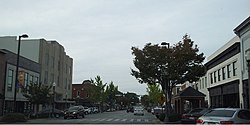
Florence, Alabama
Florence is a city in and the county seat of Lauderdale County, Alabama, United States, in the state's northwestern corner, and had a population of 40,184 in the 2020 census. Florence is located along the Tennessee River and is home to the University of North Alabama, the oldest public college in the state. Florence is located about 70 miles west of Huntsville, Alabama, via US-72, and about 115 miles northwest of Birmingham, Alabama.
Florence is the largest and principal city of the "Quad Cities," more commonly known as "The Shoals," which also includes the cities of Muscle Shoals, Sheffield, and Tuscumbia in Colbert County and had a population of 148,779 as of the 2020 census. Florence is considered northwestern Alabama's primary economic hub.
Annual tourism events include the W. C. Handy Music Festival in the summer and the Renaissance Faire in the fall. Landmarks in Florence include the 20th-century Rosenbaum House, the only Frank Lloyd Wright-designed home located in Alabama. The Florence Indian Mound, listed on the National Register of Historic Places, was constructed by indigenous people between 400 BCE and 100 BCE in the Woodland period and is the largest surviving earthen mound in the state.
Florence is located at 34°49′49.26″N 87°39′55.51″W / 34.8303500°N 87.6654194°W (34.8303495, -87.6654194).
According to the United States Census Bureau, the city has a total area of 27.293 square miles (70.69 km2), of which, 27.084 square miles (70.15 km2) is land and 0.209 square miles (0.54 km2) (0.40%) is water.
Florence is located on Wilson Lake and Pickwick Lake, bodies of water on the Tennessee River dammed by Pickwick Dam and Wilson Dams. Pickwick Lake was created by the Tennessee Valley Authority (TVA), an agency established under President Franklin Delano Roosevelt's New Deal. It was a public works program intended to build dams and hydroelectric power and related infrastructure to generate electricity for the rural region to stimulate economic development, provide flood control, and recreational opportunities. Wilson Dam (now operated by the TVA) was authorized by President Woodrow Wilson in 1918 and was the first dam constructed on the Tennessee River.[citation needed]
The climate in this area is characterized by hot, humid summers and generally mild to cool winters. According to the Köppen Climate Classification system, Florence has a humid subtropical climate, abbreviated "Cfa" on climate maps.
The average temperature of Florence is 59 °F (15 °C). The average yearly precipitation in Florence is 57.06 inches (144.9 cm). On average, Florence gets 2.25 inches (5.7 cm) of snow per year, which is above the average for Alabama of 0.57 inches (1.4 cm).
Florence, Alabama
Florence is a city in and the county seat of Lauderdale County, Alabama, United States, in the state's northwestern corner, and had a population of 40,184 in the 2020 census. Florence is located along the Tennessee River and is home to the University of North Alabama, the oldest public college in the state. Florence is located about 70 miles west of Huntsville, Alabama, via US-72, and about 115 miles northwest of Birmingham, Alabama.
Florence is the largest and principal city of the "Quad Cities," more commonly known as "The Shoals," which also includes the cities of Muscle Shoals, Sheffield, and Tuscumbia in Colbert County and had a population of 148,779 as of the 2020 census. Florence is considered northwestern Alabama's primary economic hub.
Annual tourism events include the W. C. Handy Music Festival in the summer and the Renaissance Faire in the fall. Landmarks in Florence include the 20th-century Rosenbaum House, the only Frank Lloyd Wright-designed home located in Alabama. The Florence Indian Mound, listed on the National Register of Historic Places, was constructed by indigenous people between 400 BCE and 100 BCE in the Woodland period and is the largest surviving earthen mound in the state.
Florence is located at 34°49′49.26″N 87°39′55.51″W / 34.8303500°N 87.6654194°W (34.8303495, -87.6654194).
According to the United States Census Bureau, the city has a total area of 27.293 square miles (70.69 km2), of which, 27.084 square miles (70.15 km2) is land and 0.209 square miles (0.54 km2) (0.40%) is water.
Florence is located on Wilson Lake and Pickwick Lake, bodies of water on the Tennessee River dammed by Pickwick Dam and Wilson Dams. Pickwick Lake was created by the Tennessee Valley Authority (TVA), an agency established under President Franklin Delano Roosevelt's New Deal. It was a public works program intended to build dams and hydroelectric power and related infrastructure to generate electricity for the rural region to stimulate economic development, provide flood control, and recreational opportunities. Wilson Dam (now operated by the TVA) was authorized by President Woodrow Wilson in 1918 and was the first dam constructed on the Tennessee River.[citation needed]
The climate in this area is characterized by hot, humid summers and generally mild to cool winters. According to the Köppen Climate Classification system, Florence has a humid subtropical climate, abbreviated "Cfa" on climate maps.
The average temperature of Florence is 59 °F (15 °C). The average yearly precipitation in Florence is 57.06 inches (144.9 cm). On average, Florence gets 2.25 inches (5.7 cm) of snow per year, which is above the average for Alabama of 0.57 inches (1.4 cm).
Recent media
Recent media