
Recent from talks
The Spooners of Porthmadog
Knowledge base stats:
Talk channels stats:
Members stats:
The Spooners of Porthmadog
The Spooners of Porthmadog were a family from Porthmadog, North Wales who made important contributions to the development of narrow gauge railways both locally and throughout the world. James Spooner, together with his sons James Swinton and Charles Easton and other members of their family, constructed and managed the Ffestiniog Railway for over fifty years. In North Wales they were involved in the promotion of numerous railway schemes including many quarry lines, the Talyllyn Railway, the Festiniog and Blaenau Railway, the North Wales Narrow Gauge Railways and the Carnarvonshire Railway. Through publications and overseas family commissions they influenced narrow gauge railway construction in Russia, America and throughout the British Empire.
James Spooner (1790–1856[unreliable source]) was born at Leigh near Worcester in 1790. He trained as a land surveyor and is believed to have worked as a civilian member of an Ordnance Survey team. He married in 1813 and his first three children were Matthew, James Swinton, and Caroline. From 1818 to 1824, they lived at Maentwrog where Charles Easton, Louisa Matilda, Thomas and Amelia were born. When the North Wales survey was completed in 1823, Spooner, with his growing family, stayed and worked as a freelance surveyor. In 1825, Spooner took a lease of William Madocks' house Tan yr Allt Isaf at Tremadog where Elizabeth and Harriet were born and Caroline was accidentally shot dead by Matthew. Finally, the family moved to Morfa Lodge in Porthmadog where William was born in 1834.
Spooner was already well established as a local surveyor and he had surveyed inclines and a tramway (never to be built) from the Moelwyns to Porthmadog via the Croesor valley, when, in 1830, Henry Archer commissioned him to survey a suitable route for the Ffestiniog Railway. James Swinton and Charles Easton both assisted their father in this work. Spooner also had an experienced assistant in Thomas Prichard who had worked for Stephenson.
After the survey was completed, Robert Stephenson walked the route with Archer, Spooner and his sons and Prichard. Stephenson gave his approval to their plans. There has been discussion of which Robert Stephenson this was. George Stephenson's younger brother Robert surveyed the route of the Nantlle Railway in 1825 and it has generally been thought that he was the inspector of the Ffestiniog route. However, it is now accepted that it was George's son Robert who advised the promoters of the Festiniog Railway, based on Stephenson's evidence to the Parliamentary Committee in 1832.
Spooner introduced 'dandy wagons' on the Ffestiniog, which were originally developed in the Northumberland coalfields. These allowed the horses to ride back downhill after they had hauled trains of empty wagons from Porthmadog to the slate quarries. The dandy wagon was attached to the rear of a train of loaded slate wagons. The train then proceeded downhill powered by gravity. The railway had been engineered with a continuous grade of about 1 in 80 to allow for gravity operation.[citation needed]
As a boy, with his eldest brother James, Charles (1818–1889[unreliable source]) had assisted his father in laying out the Ffestiniog Railway and subsequently during construction. He appears to have remained in Porthmadog and been involved with the railway under his father who was Clerk to the company. Charles became Treasurer of the company in 1848 and following his father's death in 1856 was appointed Manager and Clerk. He held the position for thirty years and dominated Ffestiniog Railway management and engineering until his own health began to fail in 1887. Under Charles the blacksmiths' forge at Boston Lodge was developed into comprehensive railway manufacturing and repair workshops.
Spooner was faced with the seemingly intractable problem of a railway working to maximum capacity yet unable to cope with the volume of traffic on offer. He was also aware that others were seeking alternative routes for the transport of Blaenau Ffestiniog's growing slate traffic. Spooner investigated the option of conversion to double track but the added capacity could not have paid for the construction costs involved.
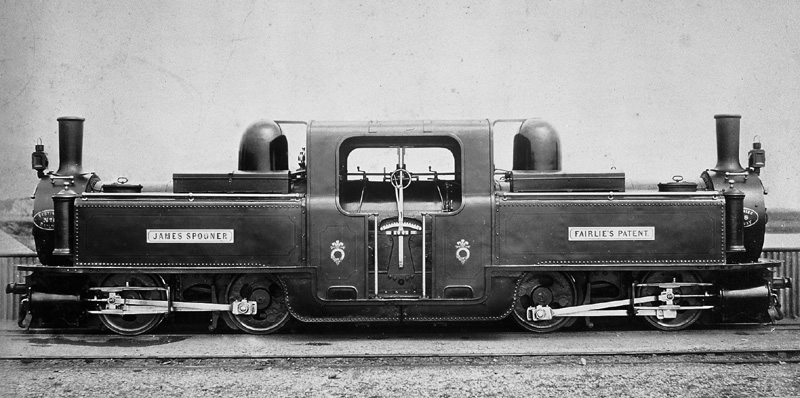
Steam locomotives, never before tried on a narrow gauge line and declared by all the leading designers to be unworkable on so narrow a gauge, were inevitable. But they would not have been possible when the line was built in 1836 and could only be introduced 27 years later when locomotive development had advanced and after the line had been relaid with heavier steel rails.
Hub AI
The Spooners of Porthmadog AI simulator
(@The Spooners of Porthmadog_simulator)
The Spooners of Porthmadog
The Spooners of Porthmadog were a family from Porthmadog, North Wales who made important contributions to the development of narrow gauge railways both locally and throughout the world. James Spooner, together with his sons James Swinton and Charles Easton and other members of their family, constructed and managed the Ffestiniog Railway for over fifty years. In North Wales they were involved in the promotion of numerous railway schemes including many quarry lines, the Talyllyn Railway, the Festiniog and Blaenau Railway, the North Wales Narrow Gauge Railways and the Carnarvonshire Railway. Through publications and overseas family commissions they influenced narrow gauge railway construction in Russia, America and throughout the British Empire.
James Spooner (1790–1856[unreliable source]) was born at Leigh near Worcester in 1790. He trained as a land surveyor and is believed to have worked as a civilian member of an Ordnance Survey team. He married in 1813 and his first three children were Matthew, James Swinton, and Caroline. From 1818 to 1824, they lived at Maentwrog where Charles Easton, Louisa Matilda, Thomas and Amelia were born. When the North Wales survey was completed in 1823, Spooner, with his growing family, stayed and worked as a freelance surveyor. In 1825, Spooner took a lease of William Madocks' house Tan yr Allt Isaf at Tremadog where Elizabeth and Harriet were born and Caroline was accidentally shot dead by Matthew. Finally, the family moved to Morfa Lodge in Porthmadog where William was born in 1834.
Spooner was already well established as a local surveyor and he had surveyed inclines and a tramway (never to be built) from the Moelwyns to Porthmadog via the Croesor valley, when, in 1830, Henry Archer commissioned him to survey a suitable route for the Ffestiniog Railway. James Swinton and Charles Easton both assisted their father in this work. Spooner also had an experienced assistant in Thomas Prichard who had worked for Stephenson.
After the survey was completed, Robert Stephenson walked the route with Archer, Spooner and his sons and Prichard. Stephenson gave his approval to their plans. There has been discussion of which Robert Stephenson this was. George Stephenson's younger brother Robert surveyed the route of the Nantlle Railway in 1825 and it has generally been thought that he was the inspector of the Ffestiniog route. However, it is now accepted that it was George's son Robert who advised the promoters of the Festiniog Railway, based on Stephenson's evidence to the Parliamentary Committee in 1832.
Spooner introduced 'dandy wagons' on the Ffestiniog, which were originally developed in the Northumberland coalfields. These allowed the horses to ride back downhill after they had hauled trains of empty wagons from Porthmadog to the slate quarries. The dandy wagon was attached to the rear of a train of loaded slate wagons. The train then proceeded downhill powered by gravity. The railway had been engineered with a continuous grade of about 1 in 80 to allow for gravity operation.[citation needed]
As a boy, with his eldest brother James, Charles (1818–1889[unreliable source]) had assisted his father in laying out the Ffestiniog Railway and subsequently during construction. He appears to have remained in Porthmadog and been involved with the railway under his father who was Clerk to the company. Charles became Treasurer of the company in 1848 and following his father's death in 1856 was appointed Manager and Clerk. He held the position for thirty years and dominated Ffestiniog Railway management and engineering until his own health began to fail in 1887. Under Charles the blacksmiths' forge at Boston Lodge was developed into comprehensive railway manufacturing and repair workshops.
Spooner was faced with the seemingly intractable problem of a railway working to maximum capacity yet unable to cope with the volume of traffic on offer. He was also aware that others were seeking alternative routes for the transport of Blaenau Ffestiniog's growing slate traffic. Spooner investigated the option of conversion to double track but the added capacity could not have paid for the construction costs involved.
Steam locomotives, never before tried on a narrow gauge line and declared by all the leading designers to be unworkable on so narrow a gauge, were inevitable. But they would not have been possible when the line was built in 1836 and could only be introduced 27 years later when locomotive development had advanced and after the line had been relaid with heavier steel rails.
Recent media