
Recent from talks
The Yeomen of the Guard
Knowledge base stats:
Talk channels stats:
Members stats:
The Yeomen of the Guard
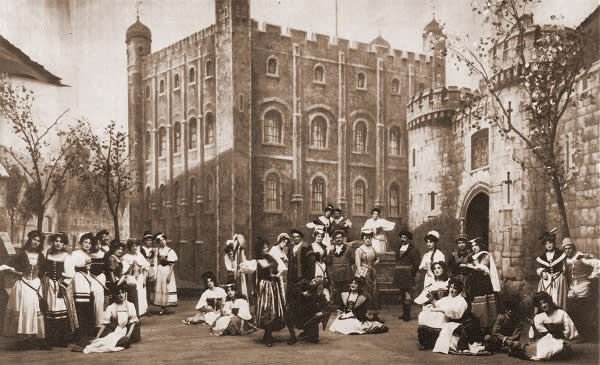
The Yeomen of the Guard; or, The Merryman and His Maid, is a Savoy Opera, with music by Arthur Sullivan and libretto by W. S. Gilbert. It premiered at the Savoy Theatre on 3 October 1888 and ran for 423 performances. This was the eleventh collaboration of fourteen between Gilbert and Sullivan.
The opera is set in the Tower of London during the 16th century, and is the darkest, and perhaps most emotionally engaging, of the Savoy Operas, ending with a broken-hearted main character and two very reluctant engagements, rather than the usual numerous marriages. The libretto does contain considerable humour, including a lot of pun-laden one-liners, but Gilbert's trademark satire and topsy-turvy plot complications are subdued in comparison with the other Gilbert and Sullivan operas. The dialogue, though in prose, is quasi-Shakespearean, or early modern English, in style.
Critics considered the score to be Sullivan's finest, including its overture, which is in sonata form, rather than being written as a sequential pot-pourri of tunes from the opera, as in most of the other Gilbert and Sullivan overtures. This was the first Savoy Opera to use Sullivan's larger orchestra, including a second bassoon and third trombone. Most of Sullivan's subsequent operas, including those not composed with Gilbert as librettist, use this larger orchestra.
When the previous Gilbert and Sullivan opera, Ruddigore, finished its run at the Savoy Theatre, no new Gilbert and Sullivan opera was ready, and for nearly a year the stage was devoted to revivals of the company's old successes H.M.S. Pinafore, The Pirates of Penzance and The Mikado. For several years leading up to the premiere of Yeomen, Sullivan had expressed the desire to leave his partnership with W.S. Gilbert in order to turn to writing grand opera and other serious works full-time. Before the premiere of Yeomen, Sullivan had recently been lauded for the successful cantata The Golden Legend and would produce his grand opera, Ivanhoe, only 15 months after Yeomen.
In the autumn of 1887, after another attempt to interest his collaborator in a plot where the characters, by swallowing a magic pill, became who they were pretending to be (Sullivan had rejected this idea before), Gilbert made an effort to meet his collaborator half way. Gilbert claimed that the idea for the opera came to him while he was waiting for the train in Uxbridge and spotted an advertisement for The Tower Furnishing and Finance Company, illustrated with a Beefeater. On Christmas Day, 1887, he read to Sullivan and Carte his plot sketch for an opera set at the Tower of London. Sullivan was "immensely pleased" and, with much relief, accepted it, writing in his diary, "Pretty story, no topsy turvydom, very human, & funny also".
Although not a grand opera, Yeomen provided Sullivan with the opportunity to write his most ambitious score to date. The two set to work on the new opera, taking longer to prepare it than they had taken with many of their earlier works. Gilbert made every effort to accommodate his collaborator, even writing alternative lyrics to some songs. Sullivan had trouble setting one lyric in particular, "I have a song to sing-O!", with its increasing length in each stanza. He asked Gilbert if he had anything in mind when writing it. Gilbert hummed a few lines from a sea shanty, and Sullivan knew what to do.
The first act was rather long and contained an unusual number of sentimental pieces. As opening night approached, Gilbert became increasingly apprehensive. Would the audience accept this serious, sentimental tone from one of the duo's "comic" operas? Gilbert and Sullivan cut two songs from Act I and part of the Act I finale, partly to decrease the number of sentimental pieces near the beginning of the opera. Gilbert, always nervous himself on opening nights, came backstage before the performance on opening night to "have a word" with some of the actors, inadvertently conveying his worries to the cast and making them even more nervous. Jessie Bond, who was to open the show with a solo song alone on stage, recalled saying to him, "For Heaven's sake, Mr. Gilbert, go away and leave me alone, or I shan't be able to sing a note!"
Phoebe Meryll sits at the spinning wheel, sighing about the pain of love. Wilfred Shadbolt – the head jailer and assistant torturer at the Tower of London – arrives, and Phoebe mocks him, disgusted by his profession. Wilfred, who is in love with Phoebe, has noticed her interest in one of the prisoners at the Tower, Colonel Fairfax. He gleefully conveys the news that Fairfax is to be beheaded, for the crime of sorcery, that very day. Phoebe replies that Fairfax is merely a scientist and alchemist, and also handsome, and leaves Wilfred to suffer from his love for her. The citizens and Yeomen arrive, singing of the Yeomen's bravery and valiant deeds. Dame Carruthers, the housekeeper of the Tower, dismisses protestations by Phoebe of Fairfax's innocence and, vexed by Phoebe's criticism of the Tower, sings its praises. After everyone leaves, Phoebe is joined by her father, Sergeant Meryll, who reports that her brother Leonard has been appointed a Yeoman for his valour in battle. Leonard is on his way from Windsor, where the court sits, and may bring with him a reprieve for the Colonel. Leonard Meryll enters bearing a dispatch for the Lieutenant of the Tower but no reprieve. Sergeant Meryll is eager to save Fairfax, for the Colonel served with him in battle and twice saved Sergeant Meryll's life. He hatches a plan: Leonard will hide away and Fairfax, sprung from his cell, will assume Leonard's guise. Phoebe is charged with getting the key to Fairfax's cell from the lovesick jailer, Wilfred.
Hub AI
The Yeomen of the Guard AI simulator
(@The Yeomen of the Guard_simulator)
The Yeomen of the Guard
The Yeomen of the Guard; or, The Merryman and His Maid, is a Savoy Opera, with music by Arthur Sullivan and libretto by W. S. Gilbert. It premiered at the Savoy Theatre on 3 October 1888 and ran for 423 performances. This was the eleventh collaboration of fourteen between Gilbert and Sullivan.
The opera is set in the Tower of London during the 16th century, and is the darkest, and perhaps most emotionally engaging, of the Savoy Operas, ending with a broken-hearted main character and two very reluctant engagements, rather than the usual numerous marriages. The libretto does contain considerable humour, including a lot of pun-laden one-liners, but Gilbert's trademark satire and topsy-turvy plot complications are subdued in comparison with the other Gilbert and Sullivan operas. The dialogue, though in prose, is quasi-Shakespearean, or early modern English, in style.
Critics considered the score to be Sullivan's finest, including its overture, which is in sonata form, rather than being written as a sequential pot-pourri of tunes from the opera, as in most of the other Gilbert and Sullivan overtures. This was the first Savoy Opera to use Sullivan's larger orchestra, including a second bassoon and third trombone. Most of Sullivan's subsequent operas, including those not composed with Gilbert as librettist, use this larger orchestra.
When the previous Gilbert and Sullivan opera, Ruddigore, finished its run at the Savoy Theatre, no new Gilbert and Sullivan opera was ready, and for nearly a year the stage was devoted to revivals of the company's old successes H.M.S. Pinafore, The Pirates of Penzance and The Mikado. For several years leading up to the premiere of Yeomen, Sullivan had expressed the desire to leave his partnership with W.S. Gilbert in order to turn to writing grand opera and other serious works full-time. Before the premiere of Yeomen, Sullivan had recently been lauded for the successful cantata The Golden Legend and would produce his grand opera, Ivanhoe, only 15 months after Yeomen.
In the autumn of 1887, after another attempt to interest his collaborator in a plot where the characters, by swallowing a magic pill, became who they were pretending to be (Sullivan had rejected this idea before), Gilbert made an effort to meet his collaborator half way. Gilbert claimed that the idea for the opera came to him while he was waiting for the train in Uxbridge and spotted an advertisement for The Tower Furnishing and Finance Company, illustrated with a Beefeater. On Christmas Day, 1887, he read to Sullivan and Carte his plot sketch for an opera set at the Tower of London. Sullivan was "immensely pleased" and, with much relief, accepted it, writing in his diary, "Pretty story, no topsy turvydom, very human, & funny also".
Although not a grand opera, Yeomen provided Sullivan with the opportunity to write his most ambitious score to date. The two set to work on the new opera, taking longer to prepare it than they had taken with many of their earlier works. Gilbert made every effort to accommodate his collaborator, even writing alternative lyrics to some songs. Sullivan had trouble setting one lyric in particular, "I have a song to sing-O!", with its increasing length in each stanza. He asked Gilbert if he had anything in mind when writing it. Gilbert hummed a few lines from a sea shanty, and Sullivan knew what to do.
The first act was rather long and contained an unusual number of sentimental pieces. As opening night approached, Gilbert became increasingly apprehensive. Would the audience accept this serious, sentimental tone from one of the duo's "comic" operas? Gilbert and Sullivan cut two songs from Act I and part of the Act I finale, partly to decrease the number of sentimental pieces near the beginning of the opera. Gilbert, always nervous himself on opening nights, came backstage before the performance on opening night to "have a word" with some of the actors, inadvertently conveying his worries to the cast and making them even more nervous. Jessie Bond, who was to open the show with a solo song alone on stage, recalled saying to him, "For Heaven's sake, Mr. Gilbert, go away and leave me alone, or I shan't be able to sing a note!"
Phoebe Meryll sits at the spinning wheel, sighing about the pain of love. Wilfred Shadbolt – the head jailer and assistant torturer at the Tower of London – arrives, and Phoebe mocks him, disgusted by his profession. Wilfred, who is in love with Phoebe, has noticed her interest in one of the prisoners at the Tower, Colonel Fairfax. He gleefully conveys the news that Fairfax is to be beheaded, for the crime of sorcery, that very day. Phoebe replies that Fairfax is merely a scientist and alchemist, and also handsome, and leaves Wilfred to suffer from his love for her. The citizens and Yeomen arrive, singing of the Yeomen's bravery and valiant deeds. Dame Carruthers, the housekeeper of the Tower, dismisses protestations by Phoebe of Fairfax's innocence and, vexed by Phoebe's criticism of the Tower, sings its praises. After everyone leaves, Phoebe is joined by her father, Sergeant Meryll, who reports that her brother Leonard has been appointed a Yeoman for his valour in battle. Leonard is on his way from Windsor, where the court sits, and may bring with him a reprieve for the Colonel. Leonard Meryll enters bearing a dispatch for the Lieutenant of the Tower but no reprieve. Sergeant Meryll is eager to save Fairfax, for the Colonel served with him in battle and twice saved Sergeant Meryll's life. He hatches a plan: Leonard will hide away and Fairfax, sprung from his cell, will assume Leonard's guise. Phoebe is charged with getting the key to Fairfax's cell from the lovesick jailer, Wilfred.
Recent media