Hubbry Logo
Thenmala DamThenmala DamMain
Open search
Thenmala Dam
Community hub
Thenmala Dam
logo
8 pages, 0 posts
0 subscribers
Be the first to start a discussion here.
Thenmala Dam
Thenmala Dam
from Wikipedia

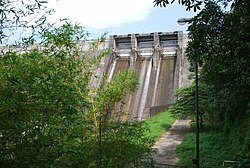
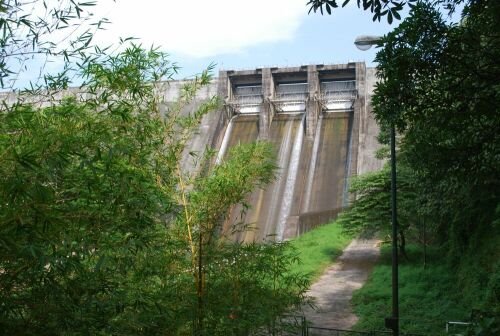
The Thenmala Dam also known as Parappar Dam is part of the largest irrigation project in Kerala, India. It is built along Kallada River in Kollam district of Kerala. The reservoir is used for irrigation and power generation.

Key Information

The dam project started in the 1960s under the Kallada Irrigation and Tree Crop development project.[1] The foundation stone of the dam was laid by T. K. Divakaran on 26 January 1972. It was completed in 1986 and was commissioned on 26 May 1986 by K. Karunakaran along with Kallada Irrigation Project. The reservoir is now a part of Thenmala Ecotourism Project.[2]

Location and Geography

[edit]

The dam site is in the confluence of three major tributaries of Kallada River namely Kulathupuzha river which arises from various streams originating in Ponmudi hills, Parappar river which originates from streams originating on Windward side of Agasthyamala Biosphere Reserve and Shendurney river originating from streams near Aryankavu - Sengottai Pass. The gravity dam opens up to downstream that flow westward towards Punalur.

The dam is situated 65 km east of Kollam, 72 km north of Thiruvananthapuram and 39 km west of Tenkasi.

Kallada Irrigation Project

[edit]

The KIP Project (Kallada Irrigation and Tree Crop development project) started with an original cost of Rs. 13.28 crores. The revised estimate of project is Rs. 728 crores (at the 1999 schedule of rates) and made cost escalation to the tune of 5,356 percent. The ayacut[3] targeted was 61,630 hectares (net) and 92,800 hectares (gross) but the achieved target was below 50,000 hectares[4] Though the project was targeted for completion, and priority in allocation was given during the Ninth Plan, it could not be completed and commissioned fully.[5]

Thenmala Ecotourism

[edit]

India's first planned Ecotourism was started around the reservoir in 1998. The ecotourism project uses reservoir as an ecotourism destination, with boating available, trekking and adventure activities on Shendurney Wildlife Sanctuary that surrounds the reservoir.[6][7]

See also

[edit]

References

[edit]
[edit]
Revisions and contributorsEdit on WikipediaRead on Wikipedia
from Grokipedia
The Thenmala Dam, also known as Parappar Dam, is a composite earthen and masonry structure situated across the in , , . Constructed as the centerpiece of the Kallada Irrigation Project—the largest such initiative in the state—it primarily facilitates for extensive farmlands, hydroelectric power generation, and flood mitigation, while impounding the largest reservoir in with a capacity of 524 million cubic meters. Initiated in 1961 at an initial estimated cost of Rs. 13.28 crores, the dam measures 85.35 meters in height from its deepest foundation and 335 meters in total length, incorporating spillways and supporting a 56-kilometer left bank canal network that irrigates over 42,000 hectares of land. Associated with a 15 MW hydroelectric station, the project enhances regional energy supply and agricultural productivity, though operational challenges such as occasional water level fluctuations and minor leaks have required ongoing maintenance by authorities. The reservoir's scenic expanse has also positioned the dam as a key attraction in , recognized as India's inaugural planned destination, drawing visitors for boating, wildlife proximity in the adjacent Shendurney Sanctuary, and vistas amid the foothills.

History

Planning and Initiation

The Thenmala Dam, also known as Parappar Dam, was planned as the central reservoir component of the Kallada Irrigation and Tree Crop Development Scheme, Kerala's largest irrigation initiative, intended to supply water for modernizing across approximately 37,600 hectares of paddy and hillside lands in and districts, thereby enhancing productivity and farmer incomes through integrated and treecrop support. The scheme emphasized gravity-based water distribution from a on the to mitigate seasonal shortages in a region with undulating terrain and monsoon-dependent . Planning originated in the late amid post-independence pushes for self-reliant agriculture in , culminating in government approval for the project's launch under state authorities, with early feasibility assessments focusing on the site's at Parappar near for optimal storage and minimal environmental disruption to the forested catchment. Initial estimates projected a cost of Rs. 13.28 crores for the dam and ancillary works, reflecting ambitions to harness the Kallada basin's 689 square kilometer catchment for year-round cultivation of , rubber, and other cash crops. Initiation marked the formal start of groundwork in , transitioning from surveys to site preparation, though delays in funding and land acquisition extended the pre-construction phase. The was laid on 26 January 1972 by T. K. Divakaran, then serving in a key , symbolizing commitment to the project's goals despite escalating costs that later required revisions. This phase underscored causal linkages between storage and downstream command area viability, prioritizing empirical hydrological data over expansive social programs.

Construction Phase

The construction of Thenmala Dam commenced in 1972 as part of the Kallada Irrigation and Tree Crop Development Scheme, Kerala's largest project. The was laid on 26 January 1972 by T. K. Divakaran, then Minister for in . Although broader project planning traces back to 1961 with an initial cost estimate of ₹13.28 crores, on-site dam building aligned with the 1972 start, reflecting phased implementation typical of large-scale infrastructure in the region. The dam's design as a straight gravity masonry structure with an integrated necessitated extensive earthworks, stone masonry placement, and concrete pouring across a 335-meter crest length. Progress involved sequential phases of foundation excavation, embankment stabilization, and spillway integration, drawing on local aggregates and labor amid the forested terrain of the . By the mid-1980s, structural completion allowed for reservoir impoundment testing, though the overall Kallada project faced delays from hydrological surveys and land acquisition. Cost escalations were pronounced, with revised estimates reaching ₹728 crores by 1999 schedule rates due to , material price hikes, and extended timelines exceeding two decades from . No major engineering failures were reported during erection, but the phase underscored challenges in coordinating stability with the Kallada River's seasonal flows. The effort employed conventional techniques without noted reliance on foreign contractors, prioritizing state-led execution under the Kerala Irrigation Department. Completion of the dam body occurred in May 1986, marking the end of the primary phase and enabling transition to commissioning. This timeline positioned Thenmala as a key node in regional , though subsequent networks extended project delays beyond the itself.

Commissioning and Early Operations

The Thenmala Dam was commissioned in 1986, marking the operational start of the Kallada Irrigation Project's primary storage infrastructure. The formal inauguration occurred on 26 May 1986, conducted by , then Chief Minister of Kerala, integrating the dam with the broader irrigation network designed to harness the Kallada River's flow. In its initial years, the reservoir's primary function centered on accumulating inflows to support gravity-fed releases via downstream , targeting paddy lands and tree across approximately 68,000 hectares in and adjacent districts. Water management emphasized seasonal storage and controlled outflows to mitigate flood risks while prioritizing agricultural needs, aligning with the project's original mandate for reliable supply to hillside gardens and lowlands. Early releases facilitated initial cycles, though full network utilization progressed gradually amid ongoing project expansions. Hydropower integration followed separately, with the adjacent Kallada Hydro Electric Project—exploiting tailwaters—achieving commissioning of its 7.5 MW units in November 1993 and September 1994, dedicating the facility to the nation on 5 January 1994. This downstream setup represented Kerala's inaugural use of releases for power generation, augmenting the dam's multifunctional role without disrupting early priorities.

Geography and Hydrology

Location and Catchment Area

The Thenmala Dam, also referred to as Parappar Dam, is situated in village, , , , across the at Parappar. It lies approximately 19 kilometers from town and 2 kilometers from Thenmala railway station, at the foothills of the mountain range. The dam's geographical coordinates are approximately 8°57′N 77°04′E, with the site situated about 160 meters above . The catchment area upstream of the Thenmala Dam covers 549 square kilometers (212 square miles), primarily consisting of hilly terrain in the that feeds the and its tributaries. This area includes forested regions and contributes to the reservoir's water inflow, supporting irrigation and hydropower functions within the Kallada Irrigation Project. The reservoir formed by the dam has a surface area of approximately 23 square kilometers when full.

Kallada River Integration

The Thenmala Dam, constructed as a straight gravity masonry structure across the at Parappar near in , serves as the primary impoundment point for the river's upper basin waters. Positioned at approximately 8°57' N latitude, the dam captures inflows from the 's catchment, which includes converging tributaries such as the , Parappar, and Chendurny rivers, enabling storage of monsoon-seasonal runoff for downstream utilization. This integration regulates the Kallada River's natural flow regime by storing excess water in the during high-rainfall periods and facilitating controlled releases thereafter, which supports canals and a 50 MW hydroelectric integrated with the dam. Tailrace waters from the power generation facility are discharged back into the , preserving a modified base flow while reducing peak discharges and hydrologic variability compared to pre-dam conditions. The dam's reservoir has trapped sediments since its commissioning in 1986, substantially decreasing downstream sediment delivery to the Kallada River estuary and coastal areas, which has contributed to altered geomorphic processes and potential exacerbated by reduced freshwater outflows. Such hydrological modifications underscore the dam's central role in reshaping the 's ecological and sediment dynamics.

Design and Technical Specifications

Structural Features

The Thenmala Dam is a straight gravity constructed across the near Parappar in , . Its total length measures 335 meters, with a maximum height of 85.35 meters from the deepest foundation level at +106.39 meters to the crest at +118.90 meters. The structure consists of 12 serially numbered masonry blocks, including two non-overflow masonry sections positioned on either side of the central . The is a gated type with three radial gates, each 12.19 meters wide and 9.14 meters high, spanning 42.06 meters in total length to manage flood discharges. The main body utilizes materials designed to resist water pressure through its weight and stability as a structure. An auxiliary earthen saddle , constructed with impervious fill, supplements the main structure, extending 225.7 meters in length and reaching a maximum of 12.51 meters. This earthen component addresses topographic variations in the saddle area, ensuring containment of the without reliance on the primary section.

Reservoir and Capacity Details

The Thenmala Dam impounds a with a gross storage capacity of 524 million cubic meters (Mm³) at full reservoir level (FRL). This increases to 536 Mm³ at maximum water level (MWL). Live storage at FRL stands at 507 Mm³, while dead storage capacity is 17 Mm³. The reservoir's measures approximately 542 square kilometers (km²). The FRL is maintained at 115.82 meters above mean , with MWL reaching 116.73 meters. These capacities support the Kallada Irrigation Project's objectives by storing monsoon inflows from the basin for regulated release during dry periods.
ParameterValue
Gross Storage at FRL524 Mm³
Gross Storage at MWL536 Mm³
Live Storage at FRL507 Mm³
Dead Storage17 Mm³
542 km²
Full Reservoir Level115.82 m
116.73 m
Slight variations in reported gross capacity, such as 504.92 Mm³ in some hydrological assessments, reflect potential differences in measurement methodologies or adjustments over time. Live storage estimates from engineering analyses confirm values around 488 Mm³, aligning closely with official figures when accounting for operational reserves.

Role in Kallada Irrigation Project

Irrigation Objectives and Coverage

The Thenmala Dam, as the key impounding structure of the Kallada Irrigation and Tree Crop Development Scheme, primarily aims to deliver regulated water supplies for irrigating lowland paddy fields and upland tree crops, thereby boosting agricultural output and farmer incomes in southern . This objective addresses chronic in rain-fed areas by storing inflows from the basin, enabling year-round cultivation of staples like alongside cash crops such as rubber, , and spices through gravity-fed canals. The scheme emphasizes integrated water management, including flood mitigation and , to sustain productivity across diverse topographies from hilly terrains to coastal plains. The project's culturable command area (CCA) encompasses 61,630 hectares, distributed across , , and districts, with intensity targeted at 151% to account for cycles. Water release from the Thenmala reservoir supports approximately 65% of this coverage via the Right Bank Main Canal (69.752 km long), which serves 39,530 hectares, while the Left Bank Main Canal (56.016 km) and branch systems handle the remainder, including distributaries for precise field-level distribution. This network facilitates composite , prioritizing paddy during kharif and rabi seasons, with supplemental flows for perennial plantations, though actual utilization has lagged due to delays in canal completion and land acquisition challenges. Beneficiaries include over 50,000 smallholder farmers, focusing on marginalized rural communities in the command zone, with the dam's commissioning in 1986 marking the onset of phased benefits despite ongoing modernization needs for efficiency. The scheme's gross ayacut extends to 92,806 hectares when factoring crop-specific targets, underscoring its scale as 's largest endeavor.

Water Management and Distribution

The Thenmala reservoir stores water primarily for under the Kallada Irrigation Project, with a gross storage capacity of 536 million cubic meters at maximum water level and live storage of 507 million cubic meters at full level (FRL). Dead storage is 17 million cubic meters, supporting regulated releases during dry seasons. operations prioritize irrigation demands, with releases controlled via the dam's three gated spillways (each 12.19 m wide by 9.14 m high) for flood control and outlet conduits for downstream diversion, ensuring water levels do not exceed FRL of 115.82 m to prevent overflow risks. Hydropower generation at the adjacent Kallada Hydro Electric Project (15 MW capacity) utilizes a portion of these irrigation releases, with tailrace water returning to the river before canal offtake. Downstream of the dam, water distribution occurs via a pickup at Ottakkal, where flow is regulated by gates into the project's network. The left bank main canal extends 56.016 km, feeding a left branch canal of 61.692 km, while the right bank main canal measures 69.752 km, connecting to a right branch canal of 47.573 km; these feed secondary distributaries and minors for field-level delivery. This gravity-fed system serves a culturable command area of approximately 53,514 hectares across , , and districts, targeting paddy fields and tree crops like rubber and , with ultimate potential estimated at 92,800 hectares. allocation favors agricultural needs during rabi and kharif seasons, with releases adjusted based on storage, rainfall, and crop requirements to optimize utilization amid variable inflows from the 549 km² catchment. Management involves real-time monitoring by the Department to balance , power (annual generation around 65 GWh), and minimal domestic supply, though inefficiencies such as seepage and uneven distribution have been noted in command areas, prompting periodic and modernization efforts. The system's design emphasizes equitable distribution, but challenges like reducing live storage over time necessitate desilting and rule curve-based operations for .

Environmental and Ecological Impacts

Hydrological Alterations

The Thenmala Dam impounds the Kallada River, creating a reservoir that stores monsoon runoff to regulate downstream flows as part of the Kallada Irrigation Project. This intervention attenuates peak flood discharges by capturing excess water during high-rainfall periods and releasing controlled volumes for irrigation and hydropower, thereby reducing flood risks in downstream areas. Downstream, the regulated releases have decreased average flow rates, particularly in non-monsoon seasons, contributing to heightened saltwater intrusion into the Kallada River estuary amid rising sea levels. This alteration diminishes freshwater dilution of saline water, affecting water quality and estuarine ecosystems. The dam traps sediments from upstream catchment, drastically reducing their transport to downstream reaches and the coast, which has led to morphological changes in the riverbed and diminished natural accretion in areas like Munroe Island. Hydrologic analyses show post-construction shifts in river discharge patterns, with reduced responsiveness to precipitation variability due to reservoir storage and release operations.

Biodiversity and Sediment Effects

The Thenmala Dam, commissioned in 1986 as part of the Kallada Irrigation Project, significantly alters sediment dynamics in the Kallada River basin by trapping upstream sediments within its Parappar Reservoir, which spans approximately 18.69 square kilometers. This impoundment has drastically reduced downstream sediment supply since the dam's construction in the 1980s, preventing the natural deposition of fertile alluvium essential for maintaining estuarine and coastal landforms. Consequently, the Kallada Riverbed has deepened from 5-6 meters in the 1980s to about 14 meters currently, exacerbating erosion and increasing vulnerability to tidal inundation in downstream areas such as the Ashtamudi estuary and Munroe Island. Over the period from 1960 to 2021, this sediment deficit contributed to a 14% loss of land area on Munroe Island, with specific sub-regions like Peringalam and Cheriyakadavu experiencing 11.78% and 46.95% degradation, respectively, over 32 years. These sediment trapping effects extend to reservoir sedimentation, a common outcome of dam operations that progressively reduces storage capacity through silt accumulation, though specific volumetric loss rates for Thenmala remain understudied in available data. Downstream, the diminished sediment flux, compounded by regulated flows, has intensified coastal erosion and subsidence, displacing over 500 households on Munroe Island since 2001 due to flooding and land instability. While check dams and flow diversions in the basin further attenuate sediment loads, the primary causal mechanism traces to the Thenmala structure's interruption of natural riverine transport. Regarding biodiversity, the dam's reservoir creation has introduced an artificial lake within the , fostering new aquatic habitats that attract avian and mammalian , thereby enhancing local in a characterized by tropical evergreen forests. However, upstream habitat fragmentation from inundation and construction likely displaced terrestrial flora and initially, though subsequent initiatives have promoted conservation, including protections for like macaques studied in projects. Downstream, reduced delivery and altered — including decreased freshwater inflows and elevated —have degraded riparian and estuarine ecosystems, shrinking suitable habitats for aquatic life and agriculture-dependent biodiversity; for instance, paddy cultivation on declined from 227 acres in 1950 to just 2 acres by 2018, signaling broader impacts on associated biocultural elements. General dam-induced changes, such as flow regulation, further limit nutrient cycling and in the Kallada system, contributing to observed declines in downstream ichthyofaunal diversity amid concurrent pressures like . Despite these alterations, the supports and fish communities adapted to lentic conditions, illustrating a partial shift from lotic riverine biodiversity to lacustrine forms.

Economic and Social Contributions

Agricultural Productivity Gains

The Thenmala Dam, integral to the Kallada Irrigation and Tree Crop Development Project, supplies water to irrigate approximately 37,285 hectares in , primarily supporting paddy fields and tree crop plantations such as rubber and . This expanded coverage has enabled more reliable cultivation in a region historically prone to seasonal water shortages, facilitating shifts toward higher-value cash crops and potential double-cropping in paddy areas. The project's design targets modernization of farming practices, with water distribution via canals and weirs to enhance overall agricultural output in the Kallada basin. Performance metrics highlight elevated land within the Kallada system relative to comparable irrigation schemes in , attributed to improved water availability that sustains crop growth during dry periods. For instance, paddy yields have increased from baseline levels around 1,800 kg per , contributing to broader gains in foodgrain production and incomes through diversified treecrop integration. These advancements align with the project's objectives of boosting smallholder via enhanced hydrological support, though realization depends on complementary factors like and adoption of efficient techniques. Despite these benefits, some crop categories have shown only marginal yield improvements, underscoring challenges such as uneven distribution and external pressures on . Overall, the dam's role has measurably expanded irrigated acreage since its commissioning in 1986, yielding net positive effects on regional agricultural resilience and output.

Regional Development Benefits

The Thenmala Dam, commissioned in 1986 as part of the Kallada Irrigation Project—the largest such initiative in —has enabled the irrigation of approximately 37,600 hectares of land, encompassing paddy fields and hillside gardens in . This expanded cultivable area supports year-round farming and tree crop development, including rubber and plantations, thereby stabilizing agricultural output in a region historically reliant on rainfed systems. The project's extensive infrastructure, featuring left and right bank main canals of 56 km and 70 km respectively, along with branch canals totaling over 100 km, facilitates efficient water distribution to command areas, reducing dependency on erratic monsoons and mitigating risks. These enhancements have directly bolstered local agrarian economies by improving yields and enabling diversification into higher-value horticultural produce. Complementing , the associated Kallada Hydro Electric Project at provides 15 MW of installed capacity, harnessing waters for power generation since its operational phase aligned with the dam's completion. This contributes to regional , powering and small-scale industries in , where hydroelectric output supports broader infrastructural reliability without the environmental footprint of fossil fuels. Overall, these water resource interventions have driven socioeconomic progress by generating in canal maintenance, farm labor, and ancillary services, while fostering ancillary developments like improved road access for produce transport, though long-term evaluations emphasize sustained to realize full potential amid silting challenges.

Ecotourism Development

Establishment as Ecotourism Site

The Thenmala Ecotourism Promotion Society (TEPS) was established in July 1998 as a registered society under the Societies Registration Act, serving as the nodal agency to develop and manage activities around the Thenmala Dam and surrounding in Kerala's . This initiative involved collaboration among state departments including Forests and Wildlife, , and Local Self Government, aiming to leverage the area's biodiversity, reservoirs, and forests for while promoting conservation. The project built on the dam's completion in 1986 under the Kallada Project, transforming the site from primarily an reservoir into a planned ecotourism hub with zones for adventure, leisure, culture, and nature trails. Development proceeded in phases, with the first phase launched in 1999, focusing on infrastructure like viewpoints, trekking paths, and eco-lodges to attract visitors without compromising ecological . By 2001, the project was commissioned, marking full operational establishment and earning recognition as India's inaugural planned destination by the Kerala Tourism Department. This model emphasized community involvement through groups like Vana Samrakshna Samithis for and revenue sharing, with TEPS overseeing permits and activities to ensure low-impact . The World Tourism Organization later selected it as one of eco-friendly projects, validating its structured approach to balancing visitor access with preservation.

Key Attractions and Infrastructure

The Thenmala ecotourism project, established as India's first planned ecotourism destination in the late 1990s, centers around the dam and its reservoir within the , offering visitors access to forested hills, water bodies, and hotspots. Key attractions include guided trekking trails along the reservoir's outskirts, which traverse dense forests and provide opportunities for , with programs requiring a minimum of five participants or equivalent payment. Boating facilities on the reservoir enable paddle, row, and activities, allowing exploration of serene waters surrounded by forests. The Leisure Zone features a swaying bridge, winding pathways, a boardwalk through woods, a , and Nakshatravanam—a garden aligned with planetary positions—alongside an for cultural events. Additional draws encompass the Adventure Zone with rope bridges, mountaineering, and biking routes; a butterfly safari highlighting local ; and a light-and-sound show narrating the area's . Trekking to the dam's crest offers panoramic views, often via forested return paths, while outbound learning programs emphasize . These elements integrate 10 satellite ecotourism spots across the region, promoting low-impact activities amid the basin's terrain. Infrastructure supporting these attractions includes eco-friendly facilities powered by , managed by the Thenmala Ecotourism Promotion Society at the junction. A central facilitation center handles bookings for treks (₹1,750 per adult domestically, ₹2,000 for international visitors), safaris starting at 2 p.m. in vehicles, and overnight camps accessible by or hard trekking. Pathways and zones emphasize , with minimal vehicular access to preserve habitats, though developments like and basic amenities align with conservation goals. Entry and activity fees fund maintenance, ensuring operations remain tied to ecological integrity rather than mass tourism expansion.

Controversies and Risk Assessments

Environmental Criticisms

The construction of Thenmala Dam in the as part of the Kallada Irrigation Project significantly reduced the downstream flux in the by trapping behind the , thereby exacerbating and land loss in deltaic regions. This deprivation has been identified as a primary anthropogenic factor in the degradation of Munroe Thuruthu (), a critically vulnerable estuarine approximately 70 km downstream, where reduced deposition has failed to counterbalance wave action and sea-level rise, leading to island shrinkage at rates of up to 4.5 meters per year in affected areas. The dam's role in choking natural supply underscores a causal chain from upstream impoundment to downstream geomorphic instability, independent of climatic variability. Additionally, the dam has contributed to diminished freshwater discharge into the Kallada , facilitating greater upstream, with levels rising by up to 5-10 ppt in non-monsoon periods compared to pre-dam baselines. This hydrological alteration disrupts estuarine mixing zones critical for and aquatic , potentially stressing species adapted to brackish conditions and promoting hypersaline pockets that degrade in adjacent wetlands. Studies attribute this primarily to the dam's storage and regulated release patterns, which prioritize over mimicking natural flow regimes, though compounded by regional sea-level rise of approximately 2.5 mm per year. While an for associated development was conducted by the Kerala Forest Research Institute in 1998, highlighting potential risks to adjacent habitats from increased human access, direct criticisms of the dam's core remain centered on these irreversible downstream effects rather than upstream inundation, which submerged limited forested extents without documented large-scale offsets. Local ecological monitoring has noted secondary pressures, such as altered patterns in the impounded , but quantitative data on species declines attributable solely to the are sparse. These impacts illustrate broader challenges of large-scale hydraulic in tropical river basins, where benefits like must be weighed against unmitigated disruptions to and flow continuity.

Dam Safety and Flooding Concerns

In 2015, inspections by the Water Authority identified two to three cracks in the Thenmala Dam structure during ongoing works as part of the Kallada Irrigation Scheme, with one crack subsequently sealed to mitigate potential risks. During the August , a failure incident caused significant seepage issues at the dam, highlighting vulnerabilities in the foundation under extreme hydrological stress, though no breach occurred. Multiple engineering studies have conducted hypothetical dam-break analyses for the Thenmala Dam using models like , simulating scenarios of sudden failure due to overtopping, seepage, or structural compromise from heavy rains. These simulations indicate that a breach could generate flood waves inundating downstream areas in , with maximum water depths exceeding 10 meters in proximity and affecting up to 2,527 residents directly, alongside agricultural lands and infrastructure along the . Velocity peaks in such models reach 5-7 m/s, posing risks of and habitat destruction, though actual failure probability remains low absent triggering events like earthquakes or unchecked overtopping. Operational flooding concerns arise during monsoons, when shutters have been raised—such as by 80 cm in October 2021 and incrementally in August 2022—to manage inflows, prompting alerts for riverbank communities but without reported downstream catastrophes attributable to the dam. Unlike many reservoirs that overflowed in the 2018 floods, Thenmala did not, with releases totaling around 2,015 million m³ contributing to controlled flows rather than exacerbation, underscoring the absence of standardized "rule curves" across state dams for optimal water level management during high-rainfall periods. No verified instances of dam-induced flooding breaches have been recorded for Thenmala since its commissioning in the early , but periodic risk assessments emphasize the need for enhanced monitoring given the region's seismic and vulnerabilities.

References

Add your contribution
Related Hubs
User Avatar
No comments yet.