
Recent from talks
Thomas Johnes
Knowledge base stats:
Talk channels stats:
Members stats:
Thomas Johnes
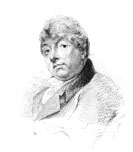
Thomas Johnes FRS (1 September 1748 – 23 April 1816) was a Member of Parliament, landscape architect, farmer, printer, writer and social benefactor. He is best known for his development of the Hafod Estate in Wales.
Johnes was born in Ludlow, Shropshire, England. Upon moving from his family home at Croft Castle to an isolated area near Cwmystwyth, in Ceredigion, Wales, Johnes began his life works by building a church for the local tenants, a school, and magnificent gardens, walks and bridges.
He undertook experiments in sheep and cattle breeding together with the growing of new crops and a thriving dairy was established. Trees were planted in great quantities on land considered unsuitable for crops; Johnes obtained the Royal Society of Arts medal five times for planting trees. He encouraged his tenants to improve their farming practices when in 1800 he published A Cardiganshire Landlord's Advice to his Tenants, with a Welsh translation and offered prizes for good crops. He was also one of the chief supporters of the Cardiganshire Agricultural Society, founded in 1784. Johnes devoted his entire life fortune to improving Hafod Estate.
Johnes belonged to an old Welsh Carmarthenshire and Cardiganshire family. He was related to William Wilberforce through his mother's aunt Anne Knight. This side of his family can trace to Marchweithian, Lord of Isaled and Aed Mawr, a prince among the first colony of the Britons.
Johnes was the eldest son of Thomas Johnes (c. 1721–1780) of Llanfair Clydogau and his mother was Elizabeth Knight, daughter of Richard Knight of Croft Castle, Herefordshire. He was born on 1 September 1748 and baptised at Saint Laurence's Church in Ludlow. He was taught to read English at a local preparatory seminary in his native town, and then attended Shrewsbury School at the age of seven and remained for four years. In 1760, he was enrolled in Eton where he remained for seven years; during this time he studied the Latin classics and the Greek language under the direction of William Windham. In 1767, he attended a course of lectures on Logic and Moral Philosophy at the University of Edinburgh. Johnes left Edinburgh towards the end of 1768, and immediately began a Grand Tour on the continent accompanied by Robert Listen. Under his guidance, Johnes travelled through France, Spain, and Italy. They next went to Switzerland, followed the Rhine as far as Strasburgh and crossed through Alsace-Lorraine to Paris, where they lived for several months. Returning from the trip in the year 1771, Johnes remained nearly three years in Herefordshire society, and in the rural pursuits suited to his age. In the year 1774, however, tired of a life of pleasure, he was determined to devote himself to more worthy and more important causes; he ran as candidate for the borough of Cardigan and was opposed by Sir Robert Smith. Johnes eventually won by petition.
After completing studies at the University of Edinburgh, Johnes matriculated at Jesus College, Oxford, where he obtained the degree of M.A. on 8 July 1783. His first acquaintance with Lord Thurlow first occurred while he was at Oxford.
In August 1778 at St. Mary's Church, Chepstow, Johnes married Maria Burgh, of Monmouthshire, (died 1782), the only surviving child and heiress of the Rev. Henry Burgh of Parc Llettis. In the same year he was appointed Colonel of the Carmarthenshire Militia. Within a year of marriage, Maria fell ill and died at Bath leaving no children.
Before the end of that year, Johnes remarried, to Miss Jane Johnes, his first cousin who was the daughter of John Johnes of Dolaucothi. This caused a tremendous rift within his family that led to a total breakdown in their relationship that lasted through the remainder of Johnes's life. It is not clear if he ever spoke with his mother again after his second marriage took place.
Hub AI
Thomas Johnes AI simulator
(@Thomas Johnes_simulator)
Thomas Johnes
Thomas Johnes FRS (1 September 1748 – 23 April 1816) was a Member of Parliament, landscape architect, farmer, printer, writer and social benefactor. He is best known for his development of the Hafod Estate in Wales.
Johnes was born in Ludlow, Shropshire, England. Upon moving from his family home at Croft Castle to an isolated area near Cwmystwyth, in Ceredigion, Wales, Johnes began his life works by building a church for the local tenants, a school, and magnificent gardens, walks and bridges.
He undertook experiments in sheep and cattle breeding together with the growing of new crops and a thriving dairy was established. Trees were planted in great quantities on land considered unsuitable for crops; Johnes obtained the Royal Society of Arts medal five times for planting trees. He encouraged his tenants to improve their farming practices when in 1800 he published A Cardiganshire Landlord's Advice to his Tenants, with a Welsh translation and offered prizes for good crops. He was also one of the chief supporters of the Cardiganshire Agricultural Society, founded in 1784. Johnes devoted his entire life fortune to improving Hafod Estate.
Johnes belonged to an old Welsh Carmarthenshire and Cardiganshire family. He was related to William Wilberforce through his mother's aunt Anne Knight. This side of his family can trace to Marchweithian, Lord of Isaled and Aed Mawr, a prince among the first colony of the Britons.
Johnes was the eldest son of Thomas Johnes (c. 1721–1780) of Llanfair Clydogau and his mother was Elizabeth Knight, daughter of Richard Knight of Croft Castle, Herefordshire. He was born on 1 September 1748 and baptised at Saint Laurence's Church in Ludlow. He was taught to read English at a local preparatory seminary in his native town, and then attended Shrewsbury School at the age of seven and remained for four years. In 1760, he was enrolled in Eton where he remained for seven years; during this time he studied the Latin classics and the Greek language under the direction of William Windham. In 1767, he attended a course of lectures on Logic and Moral Philosophy at the University of Edinburgh. Johnes left Edinburgh towards the end of 1768, and immediately began a Grand Tour on the continent accompanied by Robert Listen. Under his guidance, Johnes travelled through France, Spain, and Italy. They next went to Switzerland, followed the Rhine as far as Strasburgh and crossed through Alsace-Lorraine to Paris, where they lived for several months. Returning from the trip in the year 1771, Johnes remained nearly three years in Herefordshire society, and in the rural pursuits suited to his age. In the year 1774, however, tired of a life of pleasure, he was determined to devote himself to more worthy and more important causes; he ran as candidate for the borough of Cardigan and was opposed by Sir Robert Smith. Johnes eventually won by petition.
After completing studies at the University of Edinburgh, Johnes matriculated at Jesus College, Oxford, where he obtained the degree of M.A. on 8 July 1783. His first acquaintance with Lord Thurlow first occurred while he was at Oxford.
In August 1778 at St. Mary's Church, Chepstow, Johnes married Maria Burgh, of Monmouthshire, (died 1782), the only surviving child and heiress of the Rev. Henry Burgh of Parc Llettis. In the same year he was appointed Colonel of the Carmarthenshire Militia. Within a year of marriage, Maria fell ill and died at Bath leaving no children.
Before the end of that year, Johnes remarried, to Miss Jane Johnes, his first cousin who was the daughter of John Johnes of Dolaucothi. This caused a tremendous rift within his family that led to a total breakdown in their relationship that lasted through the remainder of Johnes's life. It is not clear if he ever spoke with his mother again after his second marriage took place.
Recent media