
Recent from talks
Thomas Kean
Knowledge base stats:
Talk channels stats:
Members stats:
Thomas Kean
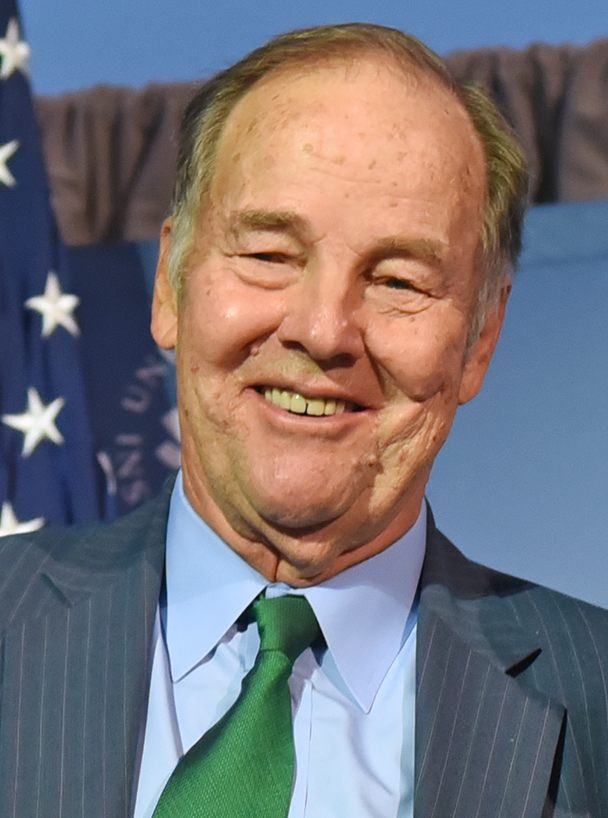
Thomas Howard Kean Sr. (/keɪn/ KAYN; born April 21, 1935) is an American statesman and academic administrator who served as the 48th governor of New Jersey from 1982 to 1990. A member of the Republican Party, he served in the New Jersey General Assembly and was chair of the 9/11 Commission from 2002 to 2004.
Kean is a member of the Kean political family. His father, Robert Kean, was a member of the U.S. House of Representatives, and his grandfather, Hamilton Fish Kean, served in the U.S. Senate. After graduating from Princeton University, Kean worked as a history teacher and obtained a master's degree from Teachers College at Columbia University. He served in the New Jersey General Assembly from 1968 to 1978 and held the role of speaker of the Assembly from 1972 to 1973. Kean was elected governor of New Jersey in 1981 and was re-elected in 1985. A moderate Republican, Kean is regarded as a popular governor who promoted New Jersey tourism.
Following his two terms as governor, Kean served as president of Drew University from 1990 until 2005. After the September 11 attacks, Kean was appointed by President George W. Bush as chairman of the National Commission on Terrorist Attacks Upon the United States, widely known as the 9/11 Commission. On July 22, 2004, Kean and the commission released their findings in the 9/11 Commission Report.
Kean is the father of U.S. Representative Thomas Kean Jr.
Kean was born in New York City to a long line of Dutch Americans and New Jersey politicians. His mother was Elizabeth Stuyvesant Howard and his father, Robert Kean, was a U.S. representative from 1939 until 1959. Kean's grandfather Hamilton Fish Kean and great-uncle John Kean both served as U.S. senators from New Jersey. His second great-uncle was Hamilton Fish, a U.S. senator, governor of New York, and U.S. secretary of state. Kean is also descended from William Livingston, who was a delegate to the Continental Congress, was the first governor of New Jersey, and is considered a founding father of New Jersey.
Kean first attended The Potomac School in McLean, Virginia. When he reached fourth grade, he entered St. Albans School, a college preparatory school in Washington, D.C. In 1946, at the age of eleven, Kean was enrolled at St. Mark's School, an Episcopalian private school in Southborough, Massachusetts that was the alma mater of his father and his two older brothers.
After graduating from St. Mark's, Kean attended Princeton University. At Princeton, he completed a senior thesis on Julian Ursyn Niemcewicz, a key architect of the Polish–Lithuanian Commonwealth's constitution, entitled Niemcewicz (The Biography of a Polish Patriot, 1756-1842, Including His Impressions of America, 1797-1807). While at Princeton, Kean participated in the American Whig–Cliosophic Society, a political, literary, and debating society with a lengthy list of distinguished members. He graduated from Princeton with a B.A. in history in 1957. After working on his father's unsuccessful U.S. senatorial campaign in 1958 and returning to St. Mark's School as a history teacher for three years, Kean attended Teachers College at Columbia University in New York City, where he earned his M.A. in history.
In 1967, running as a moderate Republican, Kean was elected to the New Jersey General Assembly. He ran with Philip D. Kaltenbacher, a Short Hills Republican who had served as an aide to Assemblyman Irwin I. Kimmelman from 1964 to 1966; Kimmelman later served as Attorney General in Kean's administration as New Jersey governor.[citation needed] In the Republican primary, Kean and Kaltenbacher defeated Donald Fitz Maurice, Vivian Tompkins Lange, the sister of former U.S. Attorney William F. Tompkins, and Joseph Shanahan to win seats in the New Jersey Assembly.
Hub AI
Thomas Kean AI simulator
(@Thomas Kean_simulator)
Thomas Kean
Thomas Howard Kean Sr. (/keɪn/ KAYN; born April 21, 1935) is an American statesman and academic administrator who served as the 48th governor of New Jersey from 1982 to 1990. A member of the Republican Party, he served in the New Jersey General Assembly and was chair of the 9/11 Commission from 2002 to 2004.
Kean is a member of the Kean political family. His father, Robert Kean, was a member of the U.S. House of Representatives, and his grandfather, Hamilton Fish Kean, served in the U.S. Senate. After graduating from Princeton University, Kean worked as a history teacher and obtained a master's degree from Teachers College at Columbia University. He served in the New Jersey General Assembly from 1968 to 1978 and held the role of speaker of the Assembly from 1972 to 1973. Kean was elected governor of New Jersey in 1981 and was re-elected in 1985. A moderate Republican, Kean is regarded as a popular governor who promoted New Jersey tourism.
Following his two terms as governor, Kean served as president of Drew University from 1990 until 2005. After the September 11 attacks, Kean was appointed by President George W. Bush as chairman of the National Commission on Terrorist Attacks Upon the United States, widely known as the 9/11 Commission. On July 22, 2004, Kean and the commission released their findings in the 9/11 Commission Report.
Kean is the father of U.S. Representative Thomas Kean Jr.
Kean was born in New York City to a long line of Dutch Americans and New Jersey politicians. His mother was Elizabeth Stuyvesant Howard and his father, Robert Kean, was a U.S. representative from 1939 until 1959. Kean's grandfather Hamilton Fish Kean and great-uncle John Kean both served as U.S. senators from New Jersey. His second great-uncle was Hamilton Fish, a U.S. senator, governor of New York, and U.S. secretary of state. Kean is also descended from William Livingston, who was a delegate to the Continental Congress, was the first governor of New Jersey, and is considered a founding father of New Jersey.
Kean first attended The Potomac School in McLean, Virginia. When he reached fourth grade, he entered St. Albans School, a college preparatory school in Washington, D.C. In 1946, at the age of eleven, Kean was enrolled at St. Mark's School, an Episcopalian private school in Southborough, Massachusetts that was the alma mater of his father and his two older brothers.
After graduating from St. Mark's, Kean attended Princeton University. At Princeton, he completed a senior thesis on Julian Ursyn Niemcewicz, a key architect of the Polish–Lithuanian Commonwealth's constitution, entitled Niemcewicz (The Biography of a Polish Patriot, 1756-1842, Including His Impressions of America, 1797-1807). While at Princeton, Kean participated in the American Whig–Cliosophic Society, a political, literary, and debating society with a lengthy list of distinguished members. He graduated from Princeton with a B.A. in history in 1957. After working on his father's unsuccessful U.S. senatorial campaign in 1958 and returning to St. Mark's School as a history teacher for three years, Kean attended Teachers College at Columbia University in New York City, where he earned his M.A. in history.
In 1967, running as a moderate Republican, Kean was elected to the New Jersey General Assembly. He ran with Philip D. Kaltenbacher, a Short Hills Republican who had served as an aide to Assemblyman Irwin I. Kimmelman from 1964 to 1966; Kimmelman later served as Attorney General in Kean's administration as New Jersey governor.[citation needed] In the Republican primary, Kean and Kaltenbacher defeated Donald Fitz Maurice, Vivian Tompkins Lange, the sister of former U.S. Attorney William F. Tompkins, and Joseph Shanahan to win seats in the New Jersey Assembly.
Recent media