Hubbry Logo
Hamilton FishHamilton FishMain
Open search
Hamilton Fish
Community hub
Hamilton Fish
logo
8 pages, 0 posts
0 subscribers
Be the first to start a discussion here.
Hamilton Fish
Hamilton Fish
from Wikipedia

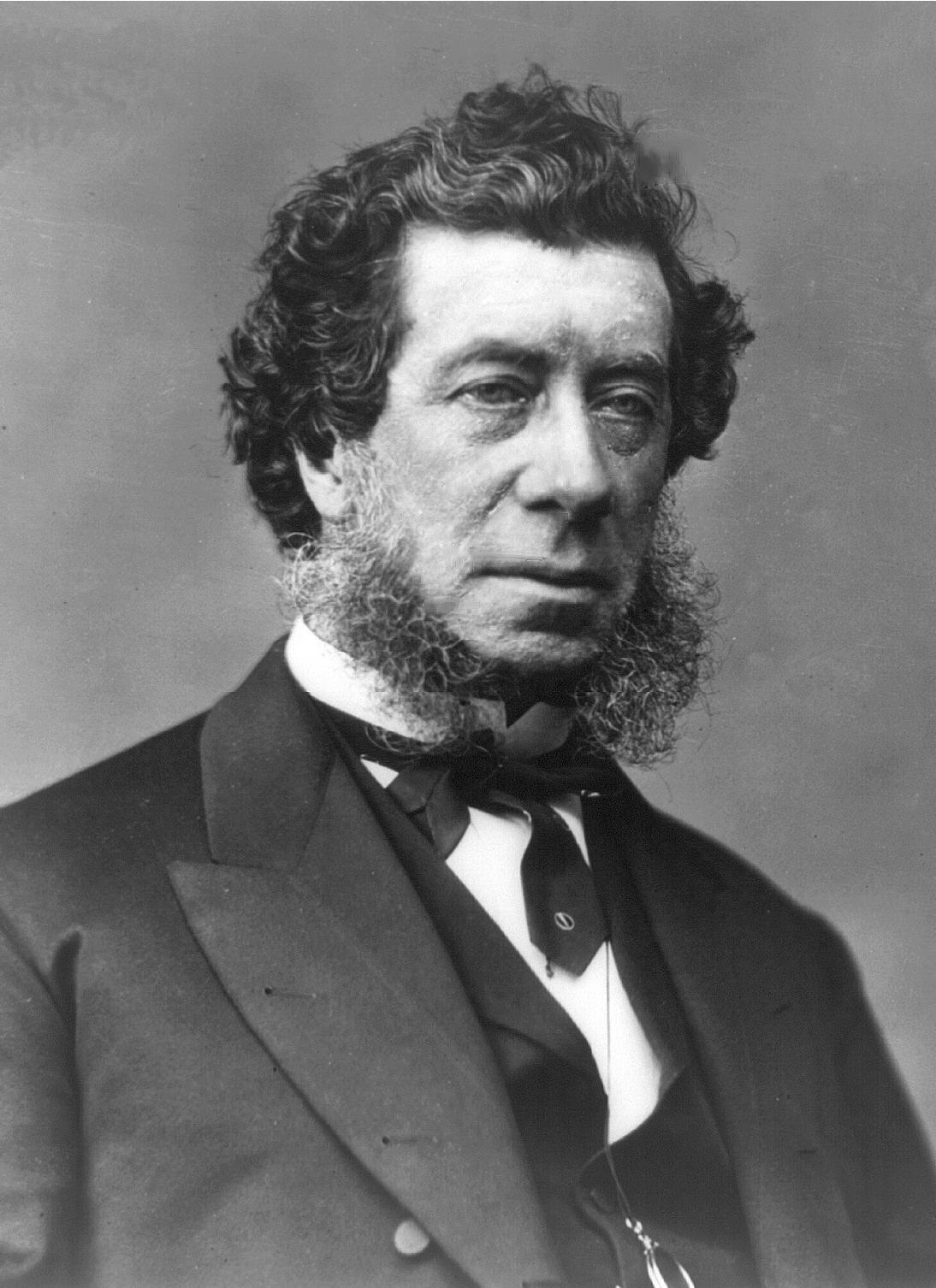
Hamilton Fish (August 3, 1808 – September 7, 1893) was an American statesman who served as the sixteenth governor of New York from 1849 to 1850, a United States senator from New York from 1851 to 1857, and the 26th U.S. secretary of state from 1869 to 1877. Fish was the most trusted advisor to President Ulysses S. Grant and recognized as the pillar of Grant's presidency.[1][2][3] He is considered one of the nation's most effective U.S. secretaries of state by scholars, known for his judiciousness and efforts towards reform and diplomatic moderation.[1][2][3] He settled the controversial Alabama Claims with the United Kingdom, developing the concept of international arbitration and avoided war with Spain over Cuban independence by coolly handling the volatile Virginius incident.[2] He also organized a peace conference and treaty between South American countries and Spain.[4] In 1875, Fish negotiated a reciprocal trade treaty for sugar production with the Kingdom of Hawai'i, initiating the process which ended in the 1893 overthrow of the House of Kalākaua and statehood.[2] Fish worked with James Milton Turner to settle the Liberia-Grebo War in 1876.[5]

Key Information

Fish came from prominence and wealth. His Dutch American family was long-established in New York City. He attended Columbia College and later passed the New York state bar. Initially working as commissioner of deeds, he ran unsuccessfully for New York State Assembly as a Whig candidate in 1834. After marrying, he returned to politics and was elected to the U.S. House of Representatives in 1843. Fish ran for New York's lieutenant governor in 1846, falling to a Democratic Anti-Rent Party contender. When the office was vacated in 1847, Fish ran and was elected to the position. In 1848, he ran and was elected governor of New York, serving one term. In 1851, he was elected U.S. Senator for New York, serving one term. Fish gained valuable experience serving on Committee on Foreign Relations. Fish was a moderate on the question of maintaining or dissolving slavery; he opposed the Kansas–Nebraska Act and the expansion of slavery.

After traveling to Europe, Fish returned to the United States and supported Abraham Lincoln, the Republican nominee for president in the 1860 U.S. presidential election. During the American Civil War, Fish raised money for the Union war effort and served on Lincoln's presidential commission that made successful arrangements for Union and Confederate troop prisoner exchanges. Fish returned to his law practice after the Civil War and was thought to have retired from political life. When Ulysses S. Grant was elected president in 1868, he appointed Fish as U.S. secretary of state in 1869. Fish took on the State Department with vigor, reorganized the office, and established civil service reform. During his tenure, Fish had to contend with Cuban belligerency, the settlement of the Alabama claims, Canada–U.S. border disputes, and the Virginius incident. Fish implemented the new concept of international arbitration, where disputes between countries were settled by negotiations, rather than military conflicts. Fish was involved in a political feud between U.S. senator Charles Sumner and President Grant in the latter's unsuccessful efforts to annex the Dominican Republic. Fish organized a naval expedition in an unsuccessful attempt to open trade with Korea in 1871. Leaving office and politics in 1877, Fish returned to private life and continued to serve on various historical associations. Fish died quietly of old age in his luxurious New York State home in 1893.

Fish has been praised by historians for his calm demeanor under pressure, honesty, loyalty, modesty, and talented statesmanship during his tenure under President Grant, as well as his brief service under President Hayes. The hallmark of his career was the Treaty of Washington, which peacefully settled the Alabama Claims. Fish also ably handled the Virginus incident, keeping the United States out of war with Spain. Fish, while Secretary of State, lacked empathy for the plight of African Americans,[6] and opposed annexation of Latin American countries.[7] Fish has been traditionally viewed to be one of America's top ranked Secretaries of State by historians. Fish's male descendants would later serve in the U.S. House of Representatives for three generations.

Early life and education

[edit]

Fish was born on August 3, 1808, in what is the present-day Hamilton Fish House in Greenwich Village in New York City, to Nicholas Fish and Elizabeth Stuyvesant, a daughter of Peter Stuyvesant and direct descendant of New Amsterdam's Director-General Peter Stuyvesant. He was named after his parents' friend Alexander Hamilton, a Founding Father and the nation's first U.S. Secretary of the Treasury under George Washington.[8] Nicholas Fish (1758–1833) was a leading Federalist politician and notable figure of the American Revolutionary War. Colonel Fish was active in the Yorktown Campaign, which featured the final battles of the American Revolutionary War and led to the surrender of Lord Cornwallis and American independence.[8] Peter Stuyvesant was a prominent founder of New York, then a Dutch Colony, and his family owned much property in Manhattan.[9]

Fish received his primary education at M. Bancel, a private school.[10] In 1827, Fish graduated from Columbia College, having obtained high honors.[10] At Columbia, Fish became fluent in French, a language that would later help him as U.S. Secretary of State.[11] After his graduation, Fish studied law for three years in the law office of Peter A. Jay, served as president of the Philolexian Society, and was admitted to the New York bar in 1830, practicing briefly with William Beach Lawrence.[10][11] Influenced politically by his father, Fish aligned himself to the Whig Party.[10] He served as commissioner of deeds for the city and county of New York from 1831[12] through 1833, and was an unsuccessful Whig candidate for New York State Assembly in 1834.[11]

On December 15, 1836, Fish married Julia Kean, a sister of Col. John Kean, both descendants of William Livingston, a New Yorker who went on to become New Jersey's first governor.[13] The couple's lengthy married life was described as happy, and Mrs. Fish was known for her "sagacity and judgement."[13] The couple had three sons and five daughters.[13]

Career

[edit]

New York political career

[edit]
Sketch of young Rep. Hamilton Fish showing head and shoulders with narrow trim beard.
U.S. Representative Fish depicted in an 1844 illustration

U.S. Congress

[edit]

For eight years after his defeat as a Representative in the New York State Assembly, Fish was reluctant to run for office.[14] However, Whig party leaders in 1842 convinced him to run for the House of Representatives.[14] In November, Fish was elected to the House of Representatives, having defeated Democrat John McKeon and serving in the 28th Congress from New York's 6th District between 1843 and 1845.[14] The Whigs at this time were in the minority in the House; however, Fish gained valuable national experience serving on the Committee of Military Affairs.[14] Fish failed to win a re-election bid for a second term in the House.[10]

Lieutenant governor

[edit]
Fish's portrait as New York governor

Fish was the Whig candidate for Lieutenant Governor of New York in 1846, but was defeated by Democrat Addison Gardiner, who had been endorsed by the Anti-Rent Party.[15] Leasing farmers in New York refused to pay rent to large land tract owners and sometimes resorted to violence and intimidation.[15] Fish had opposed the Anti-Rent Party for the use of illegal tactics, not to pay rent.[15][10] Gardiner was elected in May 1847 a judge of the New York Court of Appeals and vacated the office of lieutenant governor.[15] Fish was then in November 1847 elected to fill the vacancy, and was Lieutenant Governor in 1848.[15] Lieut. Gov. Fish had a favorable reputation for being "conciliatory" and for his "firmness" over the New York Senate.[16]

Governor

[edit]

In November 1848, he was elected Governor of New York, defeating John A. Dix and Reuben H. Walworth, and served from January 1, 1849, to December 31, 1850.[17] At 40 years of age, Fish was one of the youngest governors to be elected in New York history.[17] Fish advocated and signed into law free public education facilities throughout New York state.[17] He also advocated and signed into law the building of an asylum and school for the intellectually disabled.[17] During his tenure, the canal system in the state of New York was increased.[10] In 1850, Fish recommended that the state legislature form a committee to collect and publish the Colonial Laws of New York.[17] None of the bills that Governor Fish vetoed were overturned by the New York legislature.[17] In his annual messages, Fish spoke out against the extension of slavery from land acquired from the Mexican–American War, including California and New Mexico.[17][10] His anti-slavery messages gave Fish national attention, and President Zachary Taylor, also a Whig, was going to nominate Fish to the Treasury Department in a cabinet shakeup.[10] However, Taylor died in office before he could nominate Fish.[10] Despite his national popularity, Fish was not renominated for Governor.[10]

U.S. Senator

[edit]
Studio portrait photo of Sen. Hamilton Fish seated position showing head and shoulders with top hat and cane held in right hand
Fish as U.S. Senator

After Fish retired from office as governor, he did not openly seek the nomination to be elected U.S. Senator.[18] However, Fish's supporters, the William H. Seward-Thurlow Weed Whigs, in January 1851 nominated him as a candidate for U.S. Senator.[10] A deadlock ensued over his nomination because one New York legislature Whig Senator was upset about Fish not publicly supporting the Compromise of 1850.[18][19][10] Before the election, Fish had only stated that the government should enforce the laws.[18] Although Fish did not favor the spread of slavery, he was hesitant to support the free soil movement.[20] Finally, when two Democratic Senators who were against Fish's nomination were conspicuously absent, the Senate took action and voted.[21] On March 19, 1851, Fish was elected a U.S. Senator from New York and he took his seat on December 1, serving alongside future Secretary of State William H. Seward.[18]

In the U.S. Senate, he was a member of the U.S. Senate Committee on Foreign Relations until the end of his term on March 4, 1857.[22] Fish became friends with President Franklin Pierce's Secretary of State William L. Marcy and Attorney General Caleb Cushing.[22] He was a Republican for the latter part of his term and was part of a moderately anti-slavery faction.[23] During the 1850s, the Republican Party replaced the Whig Party as the central party against the Democratic Party.[18] By 1856, Fish privately considered himself a Whig although he knew that the Whig Party was no longer viable politically. Fish was a quiet Senator, rather than an orator, who liked to keep to himself.[18] Fish often was in disagreement with Senator Sumner, who was firmly opposed to slavery and advocated equality for blacks.[18] His policy was to vote for legislation on the side of "justice, economy, and public virtue."[18] He strongly opposed the repeal of the Missouri Compromise.[18] Fish often voted with the Free Soil faction and was strongly against the Kansas-Nebraska Bill.[24] In February 1855, merchants represented by Moses H. Grinnell, criticized Fish's bill on immigration and maritime commerce. Fish's bill was designed to protect Irish and German immigrants who were dying on merchant ships during oceanic passage to America. The merchants believed that Fish's bill was oppressive to commercial interests over human interests.[25]

During his tenure, the nation and Congress were in tremendous political upheaval over slavery, that included violence, disorder, and disturbances of the peace.[18] In 1856, pro-slavery advocates invaded Kansas and used violent tactics against those who were anti-slavery.[18][26] In May 1856, Senator Charles Sumner was viciously attacked by Preston Brooks in the Senate Chamber.[26] At the expiration of his term, he traveled with his family to Europe and remained there until shortly before the opening of the American Civil War, when he returned to begin actively campaigning for the election of Abraham Lincoln.[18] While in France, Fish studied foreign policy with diplomats and distinguished Americans, and gained valuable experience that would eventually benefit his tenure as U.S. Secretary of State.[18]

American Civil War

[edit]
Painting of Winfield Scott.
Winfield Scott and Fish dined regularly in New York during the onset of the American Civil War.

Fish had several important roles during the American Civil War. Fish's private secretary was involved in the attempt of the merchant ship Star of the West to bring relief supplies to Fort Sumter in Charleston harbor. During this period, Fish often met with General Winfield Scott, commander-in-chief of the US Army. Fish was dining with Scott in New York when a telegram reported that Confederates had fired on Star of the West. Fish said that this meant war; Scott replied "Don't utter that word, my friend. You don't know what a horrid thing war is."[27]

In 1861–1862, Fish participated in the Union Defense Committee of the State of New York, which cooperated with New York City in raising and equipping Union Army troops, and disbursed more than $1 million for the relief of New York volunteers and their families. The committee included chairman John A. Dix, William M. Evarts, William E. Dodge, A.T. Stewart, John Jacob Astor, and other New York men. Fish was appointed chairman of the committee after Dix joined the Union Army.[27]

In 1862, President Lincoln appointed Fish and Bishop Edward R. Ames as commissioners to visit Union prisoners in Richmond, Virginia. The Confederate government, however, would not allow them to enter the city. Instead, Fish and Rev. Ames started the prisoner exchange program which continued virtually unchanged throughout the war. After the war ended, Fish went back to private practice as a lawyer in New York.[27]

From 1860 to 1869, Fish was trustee of The Bank for Savings in the City of New-York stepping down from that role when he became US Secretary of State.[28]

U.S. Secretary of State

[edit]

Fish was appointed Secretary of State by President Ulysses S. Grant and served between March 17, 1869, and March 12, 1877. He was President Grant's longest-serving Cabinet officer. Upon assuming office in 1869, Fish was initially underrated by some statesmen including former Secretaries of State William H. Seward and John Bigelow. Fish, however, immediately took on the responsibilities of his office with diligence, zeal, and intelligence.[29] Fish's tenure as Secretary of State was lengthy, almost eight years, and he had to contend with many foreign policy issues including the Cuban insurrection, the Alabama Claims, and the Franco-Prussian War.[30]

During Reconstruction, Fish was not known to sympathize with Grant's policy to eradicate the Ku Klux Klan, racism in the Southern states, and promote African American equality. Fish complained of being bored at Grant's cabinet meetings when Grant's U.S. Attorney General Amos T. Akerman told of atrocities of the Klan against black citizens.[6]

Alabama Claims

[edit]

Throughout Fish's tenure during Grant's first term in office, Fish periodically threatened to resign. After Fish's and Grant's high-water mark accomplishment of settling the Alabama Claims, Fish told Grant he would resign on August 1, 1871. Grant, however, needed Fish's professional advice and pleaded with Fish to remain in office. Grant told Fish he could not replace him. Fish remained in office, 13 years Grant's senior, even under ill health.[31]

When Fish assumed office he immediately began a series of reforms in the Department of State.[32] After appropriations were given to his office by Congress, Fish cataloged and organized 700 volumes of miscellaneous State Department documents and created the Bureau of Indexes and Archives.[32][33] Fish introduced indexing of State Department files so subordinates could easily find documents.[32] Fish implemented civil service reform by having State Department applicants be required to pass an entry examination before being appointed consultant.[32] This policy was sometimes hampered, since President Grant could appoint any person to office without the person having to take an examination.[32] However, the policy of testing overall improved the staff at the State Department.[32] Fish's methods of organization included disciplined staff and prompt copying of dispatches.[33]

The method of record keeping, however, was cumbersome and had remained unchanged since John Quincy Adams' presidency.[33] Rather than world regions, countries were listed in alphabetical order; the correspondence was embedded in bound diplomatic and consular category archives, rather than by subject matter.[33] Added to countries' information was a miscellaneous category filed chronologically.[33] This resulted in a tedious and time-consuming process to make briefings for Congress.[33] Diplomatic ministers, only 23 in 1877, were not kept informed of current world events that took place in other parts of the world.[33]

By 1869, Cuban nationals were in open rebellion against their mother country Spain, due to the unpopularity of Spanish rule. American sentiment favored the Cuban rebels and President Grant appeared to be on the verge of acknowledging Cuban belligerency. Fish, who desired settlement over the Alabama Claims, did not approve of recognizing the Cuban rebels, since Queen Victoria and her government had recognized Confederate belligerency in 1861. Recognizing Cuban belligerency would have jeopardized settlement and arbitration with Great Britain.[34] In February 1870, Senator John Sherman authored a Senate resolution that would have recognized Cuban belligerency. Working behind the scenes Fish counseled Sherman that Cuban recognition would ultimately lead to war with Spain. The resolution went to the House of Representatives and was ready to pass, however, Fish worked out an agreement with President Grant to send a special message to Congress that urged not to acknowledge the Cuban rebels.[35] On June 13, 1870, the message written by Fish was sent to Congress by the President and Congress, after much debate, decided not to recognize Cuban belligerency. President Grant continued the policy of Cuban belligerent non recognition for the rest of his two administrations. This policy, however, was tested in 1873 with the Virginius Affair.[36]

Annexation of Santo Domingo

[edit]
President Ulysses S. Grant was determined to annex Santo Domingo

After President Grant assumed office on March 4, 1869, one of his immediate foreign policy interests was the annexation of the Caribbean island nation of the Dominican Republic, at that time referred to as Santo Domingo, to the United States.[37] Grant believed the annexation of Santo Domingo would increase the United States' mineral resources and alleviate the effects of racism against African Americans in the South.[38] Hamilton Fish, though loyal to Grant, racially opposed annexation of Latin American countries, saying "the incorporation of those peopled by the Latin race would be but the beginnings of years of conflict and anarchy."[39] The divided island nation, run by mulatto leader President Buenaventura Báez, had been troubled with civil strife.[40] Báez had controversially imprisoned an American citizen, Davis Hatch, for speaking out against the Báez government, susceptible to a Haitian military take over.[41]

Fish told Grant that the U.S. Senate would not be ready to pass a Santo Domingo annexation treaty.[40] In April 1869, Fish gave Grant's private secretary Orville Babcock "special agent" status to search the island.[40] Babcock, a military aide, who had served with merit in the Civil War, was a proponent of annexation, and racially open to annexing a Latin American mixed race country, by the United States. In September 1869, Babcock made a preliminary treaty that would annex Santo Domingo to the United States and give it the opportunity to apply for statehood.[40] In October 1869, Fish drew up a formal treaty that included: a $1,500,000 payment of the Dominican national debt; Samaná Bay would be leased to the United States for $150,000 yearly payment; Santo Domingo would eventually be given statehood.[42]

In a private conference with Grant, Fish agreed to support the Santo Domingo annexation if Grant sent Congress a non-belligerency statement not to get involved with the Cuban rebellion against Spain.[43] Charles Sumner, chairman of the Senate Foreign Relations Committee, was against the treaty, believing that Santo Domingo needed to remain independent, and that racism against U.S. black citizens in the South needed to be dealt with in the continental United States. Sumner believed that blacks on Santo Domingo did not share Anglo-American values.[44] On January 10, 1870, Grant submitted the Santo Domingo treaty to the United States Senate.[45] Fish believed senators would vote for annexation only if statehood was withdrawn; however, President Grant refused this option.[46][47] The Senate took its time deliberating, and finally rejected the treaty on June 30, 1870. Eighteen senators led by Charles Sumner defeated the treaty.[47] Grant, angered at Sumner's refusal to support the treaty, fired Sumner's friend J. Lothrop Motley, Grant's ambassador to England, for disregarding Fish's instructions regarding the Alabama Claims. Grant believed that Sumner had in January 1870 stated his support for the Santo Domingo treaty. Sumner was then deprived of his chairmanship of the Senate Foreign Relations Committee in 1871 by Grant's allies in the Senate.[48]

1870: Colombian inter-oceanic canal treaty

[edit]

President Grant and Secretary Fish were interested in establishing an inter-oceanic canal through Panama.[30] Secretary Fish organized a treaty signing on January 26, 1870, in Bogota between the United States and Colombia that established a Panama route for the inter-oceanic canal.[30] The Colombian Senate, however, amended the treaty so much that the strategic value of the inter-oceanic canal construction became ineffective. As a result, the United States Senate refused to ratify the treaty.[30]

1871: Treaty of Washington

[edit]
Studio black and white portrait of American High Commissioners. Sec. Hamilton Fish seated in center.
An 1871 portrait, Brady, depicting the American High Commissioners meeting in Washington D.C., with Fish as chairman
John Bull dwarfed by "Alabama Claim" in Joseph Swain's 1871 Punch—or the London Charivari cartoon

During the previous administration of President Andrew Johnson, Secretary of State Seward attempted to resolve the Alabama Claims with the Johnson-Clarendon convention and treaty. The Alabama Claims had arisen out of the American Civil War, when Confederate raiding ships built in British ports (most notably the C.S.S. Alabama) had sunk a significant number of Union merchant ships. Sumner also stated the Civil War would have ended by 1863 if the British weren't complicit in allowing its blockade runners to smuggle hundreds of thousands of weapons through the Union blockade to the Confederacy.[49][50] As such, Sumner demanded that Britain pay $2 billion or simply cede Canada to the United States for the Alabama Claims.

The Johnson-Clarendon treaty, presented to Congress by President Ulysses S. Grant, was overwhelmingly defeated by the Senate and the claims remained unresolved.[51] Anglophobia led by Charles Sumner was at an all-time high when Fish became Secretary of State. In late 1870, an opportunity arrived to settle the Alabama Claims under Prime Minister William Gladstone. Fish, who was determined to improve relations with Britain, along with President Grant and Senate supporters, had Charles Sumner removed by vote from the Senate Foreign Relations Committee, and the door was open for renewed negotiations with Britain.[52]

On January 9, 1871, Fish met with British representative Sir John Rose in Washington and an agreement was made, after much negotiation, to establish a Joint Commission to settle the Alabama Claims to be held in Washington under the direction of Hamilton Fish. At stake was the financing of America's debt with British bankers during the Civil War, and peace with Britain was required.[53] On February 14, 1871, both distinguished High Commissioners representing Britain, led by the Earl of Ripon, George Robinson, and the United States, led by Fish, met in Washington, D.C., and negotiations over settlement went remarkably well. Also representing Britain was Canadian Prime Minister John A. Macdonald. After 37 meetings, on May 8, 1871, the Treaty of Washington was signed at the State Department and became a "landmark of international conciliation". The Senate ratified the treaty on May 24, 1871.[54] On August 25, 1872, the settlement for the Alabama claims was made by an international arbitration committee meeting in Geneva and the United States was awarded $15,500,000 (~$361 million in 2024) in gold only for damage done by the Confederate warships.[50] Under the treaty settlement over disputed Atlantic fisheries and the San Juan Boundary (concerning the Oregon boundary line) was made. The treaty was considered an "unprecedented accomplishment", having solved border disputes, reciprocal trade, and navigation issues. A friendly perpetual relationship between Great Britain and America was established, with Britain having expressed regret over the Alabama damages.[55]

1871: South American détente and armistice

[edit]
Color caricature sketch of Sec. Hamilton Fish with extended beard in standing position holding top hat in hand.
Caricature of Hamilton Fish in Vanity Fair in 1872

On April 11, 1871, a peace-trade conference, presided over by Hamilton Fish, was held in Washington D.C., between Spain and the South American republics of Peru, Chile, Ecuador, and Bolivia, which resulted in an armistice between the countries.[4] These countries had been in a "technical" state of war since 1866, and the United States in 1871 served as mediator under the direction of Hamilton Fish.[4] Representing Spain was Mauricio Lopez Roberts; Manuel Freyer represented both Peru and Bolivia; Joaquín Godoy represented Chile; and Antonio Flores represented Ecuador. President Grant gave Fish full powers to control negotiations at the détente meeting between the five countries. The signed armistice treaty consisted of seven articles; hostilities were to cease for a minimum of three years and the countries would allow commercial trade with neutral countries.[4]

1871: Korean expedition and conflict

[edit]
Black and white photo of U.S. Naval Officers on ship off the coast of Korea in 1871.
U.S. Naval officers from the Asiatic Squadron on board the U.S.S. Colorado off Korea in June 1871

In 1871, Korea was known as the "Hermit Kingdom", a country determined to remain isolated from other nations, specifically from commerce and trade from Western nations, including the United States.[56] In 1866, U.S. relations with Korea were troubled when Christian missionaries were beheaded by the Korean Daewongun, regent to King Kojong, and the crew of the General Sherman, a U.S. trading ship, were massacred.[56] Secretary Seward, under President Johnson, demanded redress for what was perceived as the outrageous actions of the Korean government.[56] U.S. Naval warships were ordered to the Orient, however, when Seward's term ended in 1869, he was unable to organize a naval expedition.[56] When Fish took office, he organized the Korean naval expedition and broadened the purposes.[56] In April 1871, Fish ordered Frederick F. Low, minister to China, to take the Asiatic Fleet and voyage to Seoul.[56] The purpose of the expedition was to seek retribution for the assaulted sailors and to open up a commercial treaty with the King of Korea.[56] Fish had told the fleet not to use force unless the honor of the U.S. flag was infringed by the Koreans.[56]

On May 8, 1871, Low and Rear Admiral John Rodgers, commander of the Asiatic Squadron, voyaged to Korea with five warships, 85 guns, and 1,230 sailors and marines.[56] On May 16, the naval squadron reached Nagasaki Bay, and a week later lowered anchor near the mouth of the Han River. The Koreans sent unofficial representatives to stall for time and hope the American squadron would leave.[56] In June, the American fleet was performing a nautical survey and was fired upon by the Korean forts on the Han River leading to Seoul. The American fleet fired back, damaging the forts. The Americans demanded an apology on the grounds that the honor of the American flag had been violated.[56] On June 10, a U.S. military expedition was launched after the Koreans failed to apologize for the attack; the objective was to destroy the Korean forts on Ganghwa Island. The U.S.S. Monocacy pounded the forts with 9 inch guns while 546 sailors and 105 marines landed on the island and captured and destroyed the Korean forts.[56] The "Citadel" fortress, on a steep 115-foot hillside, put up the stiffest resistance to the American troops, who fought in hand-to-hand combat with the Korean Tiger Hunters. All of the Korean forts taken were destroyed and leveled on June 11. Three hundred fifty Korean Tiger Hunters were killed, compared with only one American officer and two American sailors.[56] Lieut. Hugh W. McKee was the first U.S. Navy officer to die in battle in Korea.[56]

The Asiatic Squadron remained on the Han River for three weeks, but the Koreans would not open negotiations for a commercial treaty.[56] As the American squadron left, the Koreans believed that they had won a great victory over the Americans.[56] The attempt to open Korea up to trade was similar to how Commodore Matthew Perry in 1854 had approached the opening of Japan. Korea, however, proved to be more isolated than Japan. In 1881, Commodore Robert W. Shufeldt, without using a naval fleet, went to a more conciliatory Korean government and made a commercial treaty. The U.S. was the first Western nation to establish formal trade with Korea.[56]

1873: Virginius affair

[edit]
Black and white sketch of people celebrating Virginius prisoner release.
A January 1874 illustration of celebrations in New York following release of Virginius prisoners, which Fish negotiated from Spanish authorities

During the 1870s, Cuba was in a state of rebellion against Spain. In the United States, Americans were divided on whether to militarily aid the rebel Cubans. Many jingoists believed the United States needed to fight for the Cuban rebels and pressured the Grant Administration to take action.[57] A privately owned ship, the Virginius, was used to run guns, ammunition, and vital supplies to the Cuban rebels. The captain of the Virginius was Joseph Fry, former officer of the Confederate and Federal Navies. On October 31, 1873, the Virginius was run down in neutral waters by the Spanish warship, the Tornado, off of Morant Bay, Jamaica.[57] After being hit, the Virginius took on water and was forced to surrender to the Spanish authorities. The 103 crew members consisted of Cuban rebel recruits and 52 American and British citizens.[57] The Spanish hauled down and trampled the American flag, and brought the prisoners to Santiago. A total of 53 Virginius crew members were executed by the Spanish authorities.[57] The Spanish finally stopped the carnage as a British warship appeared with guns ready to fire on Santiago. The American Navy, at this time, although formidable worldwide, was in decline after the American Civil War.[57]

When news reached the United States of the executions, President Grant and Secretary Fish were forced to make an immediate response.[57] Many Americans demanded a full-scale war with Spain.[57] Fish found out that the registration was falsified under American ownership, however, the executions of Americans demanded action.[57] Fish coolly handled the situation, calling upon Spanish minister, Admiral José Polo de Bernabé in Washington D.C., and holding a conference.[57] A settlement was made where Spain relinquished the severely damaged Virginius to the U.S. Navy, while survivors were released that included 13 Americans.[57] The Spanish Captain who ordered the executions was censured, and Spain paid $80,000 reparations to American families whose family members were executed in Santiago.[57] The national honor of both Spain and the United States was preserved and it was chiefly due to the restraint and moderation of Fish and Bernabé that a satisfactory settlement of the Virginius Affair was reached by the United States and Spain.[57]

1875: Hawaiian reciprocal trade treaty

[edit]

Fish also negotiated the Reciprocity Treaty of 1875 with the Hawaiian Kingdom under the reign of King Kalākaua. Hawaiian sugar was made duty-free, while the importation of manufactured goods and clothing was allowed into the island kingdom.[58] By opening Hawaii to free trade the process for annexation and eventual statehood into the United States had begun.

1876: Liberian-Grebo War

[edit]
Fish seated left of Grant in Grant's Cabinet

The U.S. settled the Liberian-Grebo War in 1876 when Hamilton Fish dispatched the USS Alaska, under President Grant's authority, to Liberia. Liberia was in practice an American colony. U.S. envoy James Milton Turner, the first African American ambassador, requested a warship to protect American property in Liberia. Turner, bolstered by U.S. naval presence in harbor and support of the USS Alaska captain, negotiated the incorporation of Grebo people into Liberian society and the ousting of foreign traders from Liberia.[5]

1876: Republican convention

[edit]

As the 1876 Republican convention approached during the U.S. presidential election, President Grant, unknown to Fish, had written a letter to Republican leaders to nominate Fish for the Presidential ticket. The letter was never read at the convention and Fish was never nominated. President Grant believed that Fish was a good compromise choice between the rival factions of James G. Blaine and Roscoe Conkling. Cartoonist Thomas Nast drew a caricature of Fish and Rutherford B. Hayes as the Republican Party ticket. Fish, who was ready to retire to private life, did not desire to run for president and was content at returning to private life. Fish found out later that President Grant had written the letter to the convention.[59]

1877: Nicaragua inter-oceanic canal negotiations

[edit]

President Grant at the close of his second term, and Secretary Fish, remained interested in establishing an inter-oceanic canal treaty.[30] Fish and the State Department negotiated with a special envoy from Nicaragua in February 1877 for an inter-oceanic treaty.[30] Negotiations, however, failed as the status of the neutral zone could not be established.[30]

Later life and health

[edit]
Studio black and white portrait of Hamilton Fish in his elder years.
Elder statesman Hamilton Fish

After leaving the Grant Cabinet in 1877 and briefly serving under President Hayes, Fish retired from public office and returned to private life practicing law and managing his real estate in New York City. Fish was revered in the New York community and enjoyed spending time with his family.

Fish resided in Glen Clyffe, his estate near Garrison, New York, in Putnam County, New York, in the Hudson River Valley. His health remained good until around 1884, having suffered from neuralgia.

Death, funeral, and burial

[edit]

On September 6, 1893, Fish had retired from the evening having played cards with his daughter. The following morning on September 7, Fish, at the age of 85, suddenly died. His death was attributed to advanced age.[60]

The gravesite of Hamilton Fish

On September 11, 1893, Fish was buried in Garrison at St. Philip's Church in the Highlands Cemetery under waving trees on the hills along the Hudson River shoreline. He was buried next to his wife and oldest daughter near the grave of Edwards Pierrepont, President Grant's U.S. Attorney General. Many notable persons attended Fish's funeral, and Bishop Potter conducted services. Julia Grant, widowed wife of Grant, attended Fish's funeral.[61]

Historical reputation

[edit]
The Hamilton Fish Memorial at the Cathedral of All Saints in Albany, New York

Charles Francis Adams described Fish as "a quiet and easy-going man; but, when aroused, by being, as he thought, 'put upon', he became very formidable. Neither was it possible to placate him." Fish's 20th Century biographer, A. Elwood Corning, stated that Fish was free from "petty jealousies and prejudices which so often drag the reputation of statesmen down to the level of politicians" and that Fish "used the language and practiced the manners of a gentleman." As an invaluable member of the Grant Administration, Fish commanded "men's confidence, and respect by his firmness, candor, and justice."[62]

A survey of scholars in the December 1981 American Heritage magazine ranked Fish third on a list of top ten Secretaries of State, noting his settlement of the Alabama Claims in 1871, his settlement of the Virginius Incident, and his role in the Hawaiian treaty ratified by the Senate in 1875.[2]

There is a memorial to Fish at the Cathedral of All Saints in Albany, New York. The Hamilton Fish Newburgh-Beacon Bridge, which spans the Hudson River 50 miles north of New York City between Dutchess and Orange counties, is named after Fish.[63] A street in the Bronx, New York, is named after Fish,[64] as is Hamilton Fish Park in Manhattan.[65]

Fish was a long time member of the New York Society of the Cincinnati by right of his father's service as an officer in the Continental Army. Fish succeeded to his father's seat in the Society in 1834, following his father's death the previous year. In 1848, Fish became the Vice President General of the national society and, in 1854, he became its president general.[66] In 1855, Fish was elected president of the New York Society. Fish served as both president general of the national society and president of the New York Society until his death in 1893.[67]

Notable descendants

[edit]

Three of Fish's direct descendants, all named Hamilton, served in the U.S. House of Representatives, representing New York state. Hamilton Fish II, Fish's son, served one term as U.S. Representative from 1909 to 1911.[68] Fish II also served as assistant to his father at the U.S. State Department.

Hamilton Fish III, Fish's grandson, served as U.S. Representative from 1920 to 1945.[69] Hamilton Fish IV, Fish's great-grandson, served as U.S. Representative from 1969 to 1995.[70] Another son Stuyvesant Fish was an important railroad executive.[71] Another son, Nicholas Fish II, was a U.S. diplomat, who was appointed second secretary of legation at Berlin in 1871, became secretary in 1874, and was chargé d'affaires at Berne in 1877–1881, and minister to Belgium in 1882–1886, after which he engaged in banking in New York City.[72] Hamilton Fish, Fish's grandson by Nicholas, was an 1895 graduate of Columbia College, saw service in the Spanish–American War as one of the storied Rough Riders. He was the first member of that regiment to be killed in action, at the Battle of Las Guasimas, Cuba.[73]

His great nephew Thomas Kean was New Jersey governor from 1982 until 1990 and chairman of the 9/11 Commission following the September 11, 2001 attacks.[74][75]

References

[edit]

Sources

[edit]

Books

[edit]

Journals and newspapers

[edit]

American Heritage

[edit]

The New York Times

[edit]

Internet

[edit]

Archives

[edit]
[edit]
Revisions and contributorsEdit on WikipediaRead on Wikipedia
from Grokipedia
Hamilton Fish (August 3, 1808 – September 7, 1893) was an American lawyer and statesman from New York who served as the 16th from March 11, 1869, to March 11, 1877, under President . Born into a prominent family as the son of Revolutionary War veteran Colonel Nicholas Fish and Elizabeth Stuyvesant, a descendant of the early Dutch director-general of Peter , Fish graduated from Columbia College in 1827 and practiced law before entering politics as a Whig, later aligning with the Republican Party. His earlier political career included service as a U.S. Representative from New York (1843–1845), (1847–1848), (1849–1850), and U.S. Senator (1851–1857), positions in which he advocated for and opposed the spread of . Appointed despite initial reluctance, Fish provided steady counsel to Grant, rejecting aggressive expansionist policies like the Johnson-Clarendon Convention and focusing on over confrontation. Among his most notable achievements, Fish orchestrated the Treaty of Washington in 1871, which submitted the —U.S. demands for compensation from Britain over Confederate ships built in British yards during the Civil War—to , yielding a $15.5 million award to the and easing Anglo-American tensions. He also navigated the 1873 , in which Spanish forces seized a U.S.-flagged ship aiding Cuban rebels, executing crew members including Americans; through firm and British mediation, Fish secured the release of prisoners and reparations without escalating to war. These efforts underscored Fish's emphasis on legalistic, peaceful , earning him recognition as one of the most effective 19th-century Secretaries of State despite the administration's domestic scandals.

Early Life and Family Background

Ancestry and Upbringing

Hamilton Fish was born on August 3, 1808, in to Nicholas Fish (1758–1833) and Elizabeth Stuyvesant (1775–1854). His father, a New York native and close associate of , enlisted in the Continental Army at the outset of the Revolutionary War, receiving a commission as lieutenant in a New York regiment before promotion to major of the 2nd New York Regiment in 1776; he rose to lieutenant colonel by war's end, serving as a division inspector under Baron von Steuben and participating in battles such as (1776) and Monmouth (1778), as well as enduring the Valley Forge winter of 1777–1778. Nicholas Fish later held the inaugural post of of New York and remained active in politics. Fish's mother descended from the prominent Stuyvesant family of Dutch colonial origin, landowners and merchants long established in New York; she was the daughter of Peter Stuyvesant (1727–1805), a wealthy real estate developer and great-grandson of Peter Stuyvesant, the last Dutch Director-General of New Netherland (1655–1664), making Elizabeth a great-great-granddaughter of the governor. The couple's Greenwich Village residence, an early Federal-style house constructed circa 1804 as a wedding gift from Elizabeth's father, reflected the family's elite status amid New York's Knickerbocker society. Fish, the eldest surviving son in a lineage tracing to earlier Hamilton and Fish forebears, was raised in this milieu of wealth and political influence, attending Doctor Bancel's French School in New York City during his early years.

Education and Early Influences

Hamilton Fish was born on August 3, 1808, in to Nicholas Fish, a prominent lawyer and Revolutionary War veteran who served as an to , and Elizabeth Stuyvesant, a descendant of the early Dutch director-general . This elite family background, rooted in New York's Dutch-American establishment and marked by wealth from extensive estates, instilled in Fish a sense of public duty and conservative political values aligned with principles of strong governance and property rights. Fish received his early education at Doctor Bancel's French School in , where he developed fluency in French, a skill that later aided his diplomatic career./) He then enrolled at Columbia College, graduating in 1827 with high academic distinction, reflecting the rigorous classical curriculum emphasizing , logic, and moral philosophy that characterized early 19th-century American higher education. Following graduation, Fish pursued legal studies, apprenticing in a law office before being admitted to the New York bar in 1830; he briefly practiced in partnership with William Beach Lawrence, though family estate management soon took precedence. These formative years were profoundly shaped by his family's political legacy and the post-War of 1812 environment of New York Whiggery, which emphasized anti-Jacksonian reform, , and opposition to executive overreach—values Fish internalized through paternal guidance and social circles. His long tenure as a Columbia College trustee, beginning later but rooted in alumni loyalty, underscored the institution's influence in fostering a network of like-minded public servants. This educational foundation and familial ethos propelled Fish toward a career in law and elective office, prioritizing constitutional fidelity over populist appeals.

Pre-War Political Career

Service in New York State Legislature

Fish was elected Lieutenant Governor of New York as the Whig running mate to Governor John Young in the November 1843 state election, assuming office on January 1, 1844, and serving a full two-year term until December 31, 1845. In this role, he presided over sessions of the as its president, maintaining order, facilitating debate, and voting to break ties on legislation. The Whig-controlled legislature during this period focused on fiscal reforms, including revisions to banking laws and infrastructure funding, though Fish's specific contributions as presiding officer are not prominently documented in contemporary records. In 1847, following Addison Gardiner's appointment to the , Fish won a special election on November 2 to complete the unexpired term, entering office immediately and serving until December 31, 1848. He again presided over the State Senate amid partisan tensions between Whigs and Democrats over issues like and anti-slavery measures, reflecting the national debates dividing the Whig Party. This service positioned Fish as a rising Whig leader in state politics, bridging his prior congressional experience and subsequent gubernatorial candidacy.

U.S. House of Representatives

Hamilton Fish entered national politics as a Whig Party member when he was elected to the in November 1842, representing . He defeated incumbent Democrat John McKeon and served in the 28th Congress from March 4, 1843, to March 3, 1845. ) As a freshman representative from , Fish aligned with Whig priorities, which emphasized protective tariffs, a national bank, and over the Democratic focus on and . His tenure coincided with debates over and territorial expansion, though Fish did not emerge as a leading voice on major bills during this short term.) Fish sought reelection in but was defeated amid the Whig Party's mixed fortunes in that year's contests. This loss marked the end of his House service, after which he shifted focus to state-level campaigns.

Lieutenant Governor and Governorship

Fish was elected as the Whig candidate for of New York in a special election in 1847, following the vacancy of the office, and served from 1848 to 1849 under Governor John Young. In this role, he presided over the state and supported Whig priorities such as and opposition to Democratic policies on issues like the Anti-Rent movement, though specific legislative actions attributed directly to his tenure as are limited in historical records. In the 1848 gubernatorial election, Fish secured the Whig nomination and defeated Democrat Samuel Young, winning with a popular vote plurality on November 7, 1848, to become the 16th , serving from January 1, 1849, to January 1, 1851. His single-term administration focused on fiscal and institutional reforms, including advocacy for a state-funded agricultural college to promote scientific farming amid growing rural demands, revisions to the tax code to enhance revenue efficiency, updates to for clearer penalties and procedures, and enhancements to public school systems through increased funding and oversight. These efforts aligned with Whig emphases on education, infrastructure, and economic development, though Fish faced challenges from factional divisions within the party and opposition from Democrats on spending measures. He chose not to seek re-election, transitioning to a successful U.S. campaign in 1851.

U.S. Senate Tenure

Hamilton Fish was elected to the from New York on March 4, 1851, succeeding Democrat Daniel S. Dickinson, and served a single six-year term until March 3, 1857. Initially affiliated with the Whig Party, Fish's tenure coincided with the party's dissolution amid intensifying sectional tensions over , leading him to align with the emerging Republican Party by the mid-1850s. During his Senate service, Fish was appointed to the Committee on Foreign Relations, where he gained diplomatic experience that later informed his role as . The committee addressed matters such as and relations with European powers, though Fish's contributions were preparatory rather than headline-making. Fish adopted a moderate stance on , opposing its expansion into new territories but stopping short of advocating immediate abolition. He voted against the Kansas-Nebraska Act of 1854, which repealed the of 1820 and permitted territories to decide 's status through , viewing it as a threat to national balance. This position aligned him with anti-expansion Whigs and early Republicans, though he did not emerge as a leading voice in the ensuing debates. Fish did not seek re-election at the term's end, retiring from the in 1857 amid personal and political transitions, including a brief period of private life before the Civil War. His legislative record emphasized restraint and institutional stability over partisan fervor.

Civil War Military Service

Commission and Battlefield Roles

Fish received his primary Civil War commission from President in 1862, appointing him to a three-member tasked with inspecting the conditions of Union prisoners of war held in the and negotiating exchanges with Confederate authorities. This panel, which included Salmon P. Chase and Major General John A. Dix, successfully facilitated early prisoner swaps and highlighted the dire plight of captured Union soldiers, influencing federal policy on parole and treatment. Fish's involvement stemmed from his prior organizational experience, but the commission operated primarily through correspondence and diplomatic channels rather than direct field operations. Prior to this federal role, Fish had assumed leadership of New York City's Union Defense Committee in April 1861, succeeding who entered active military service as a major general. As chairman from 1861 to 1862, he oversaw the rapid mobilization of volunteers, procurement of arms and supplies, and coordination with state authorities to equip regiments for deployment, raising funds and personnel that bolstered Union forces in the war's opening months. The committee's efforts expedited the dispatch of over 20,000 troops from New York harbors in the first year, though Fish's position remained civilian and administrative. Fish did not participate in battlefield commands or engagements, as his age—53 at the war's outset—and established political stature directed him toward home-front contributions rather than frontline service. No records indicate he held a formal or led troops in combat, distinguishing his involvement from contemporaries who mustered into regiments. His roles emphasized logistical and diplomatic support, aligning with his expertise in governance over tactical leadership.

Injuries, Recognition, and Post-War Reflections

Fish did not serve in a combat role during the Civil War and thus sustained no battlefield injuries, having contributed instead through civilian leadership at age 53 upon the war's outbreak. As chairman of the Union Defense Committee of New York from April 1861 to April 1862, succeeding General John A. Dix, he coordinated with authorities to raise and equip Union regiments, facilitating the deployment of 66 regiments to the field. In August 1862, President appointed him to a three-member commission, alongside Bishop Edward Raymond Ames and Cornelius Agnew, to inspect conditions among Union prisoners held in , and negotiate potential exchanges, though the mission yielded limited immediate results due to Confederate restrictions. His organizational efforts earned commendation for bolstering New York's mobilization, with contemporaries noting his prominence in sustaining public support amid early war uncertainties, including resupply attempts for . No military decorations were awarded, as his service remained non-combatant, but his role enhanced his stature within Republican circles, contributing to his later endorsement of . Post-war, Fish reflected on the conflict as essential for preserving the Union, expressing dismay at events like New York's July 1863 draft riots, which he viewed as undermining national resolve. He advocated sectional reconciliation while opposing radical Reconstruction measures, favoring moderate policies to reintegrate the South without excessive punitive actions, consistent with his pre-war Unionism and post-war alignment with Grant despite occasional policy divergences. In private correspondence and political activities, he emphasized the war's lessons in federal authority and fiscal prudence, influencing his subsequent push for reforms and diplomatic over .

Tenure as Secretary of State

Appointment Amid Grant Administration Challenges

President , inaugurated on March 4, 1869, faced early criticism for his limited political experience and reliance on personal loyalties in cabinet selections, which included appointing associates and friends to key posts despite their lack of administrative expertise. To honor a longtime , Grant initially named as , but Washburne's tenure lasted only eleven days—from March 5 to March 15, 1869—due to illness, though contemporaries suspected it was a symbolic role paving the way for his ambassadorship . This abrupt vacancy exacerbated perceptions of instability in the fledgling administration, which was already navigating post-Civil War reconstruction, fiscal strains from war debt exceeding $2.6 billion, and simmering international tensions inherited from the prior administration. Grant turned to Hamilton Fish, a former U.S. Senator, Governor of New York, and Whig-turned-Republican with a reputation for integrity and diplomatic acumen, offering him the position on March 11, 1869; Fish assumed duties on March 16. Fish initially declined the role, citing health concerns and reluctance to enter partisan politics after years in private life, but relented following personal persuasion from Grant and advisors who emphasized the need for seasoned leadership amid the department's disarray. Upon taking office, Fish confronted a State Department plagued by inefficiency, outdated records, and understaffing—a legacy of wartime disruptions—requiring immediate reorganization to handle pressing issues like British-American disputes over Civil War-era damages. His appointment marked a deliberate shift toward competence over patronage, contrasting with other early cabinet choices that fueled accusations of cronyism and foreshadowed later scandals, though Fish himself remained untainted by corruption throughout his tenure. ![Ulysses S. Grant seated by Brady (cropped)](./assets/lossy-page1-250px-Ulysses_S.Grant_seated_by_Brady%28cropped%29[float-right] Fish's selection stabilized the administration's foreign policy apparatus at a time when Grant's domestic agenda, including Reconstruction enforcement under the Enforcement Acts of 1870-1871, demanded undivided executive focus, allowing the president to delegate diplomacy without immediate crisis. By prioritizing merit over loyalty—evident in Fish's overhaul of consular appointments and insistence on standards—he helped mitigate early critiques of administrative amateurism, though Grant's overall cabinet turnover remained high, with multiple resignations by 1870 due to emerging improprieties elsewhere. This appointment underscored Grant's pragmatic flexibility, as Fish's aristocratic background and aligned with efforts to restore public confidence amid economic recovery challenges, including the 1869 gold market panic triggered by speculative manipulations involving Grant's inner circle.

Domestic Reforms and Anti-Corruption Stance

During his tenure as , Hamilton Fish prioritized administrative efficiency and merit-based appointments within the Department of State, implementing reforms that anticipated broader changes by requiring official examinations for consular candidates to curb and favoritism. This policy reduced political interference in diplomatic postings, ensuring selections based on competence rather than loyalty to inner circle, and served as a model for limiting in federal bureaucracy. Fish's anti-corruption stance contrasted sharply with the Grant administration's scandals, positioning him as a voice of integrity amid widespread graft, including the Whiskey Ring fraud that defrauded the Treasury of millions in excise taxes from 1869 onward. In May 1875, when Attorney General Benjamin Bristow informed Fish of evidence implicating White House aide Orville Babcock in the ring, Fish recorded the details in his diary and urged Grant to permit unhindered prosecution, emphasizing accountability over protection of associates. Despite Grant's eventual pardon of Babcock in 1876 following acquittal, Fish's advocacy aligned with reformers like Bristow, who exposed the scheme leading to over 100 indictments and convictions, though Fish lamented the administration's tolerance of cronyism that eroded public trust. Fish repeatedly counseled Grant against shielding corrupt officials, threatening over interventions that undermined investigations, as seen in his pleas to allow judicial processes to proceed without executive interference. His efforts, though limited by his foreign policy focus and Grant's loyalties, helped preserve departmental integrity amid cabinet upheavals, including the departures of Bristow and others tied to drives. By fostering a meritocratic ethos in State operations, Fish exemplified and ethical governance, influencing later pushes for comprehensive legislation despite the administration's overall vulnerability to scandal.

Foreign Policy Under Secretary Fish

Arbitration of Alabama Claims and Relations with Britain

As , Hamilton Fish addressed longstanding tensions in U.S.-British relations stemming from the , which arose from the depredations inflicted on Union merchant shipping by Confederate raiders such as the , constructed in British shipyards during the Civil War despite Britain's neutrality obligations. The initially demanded compensation exceeding $100 million for direct losses and alleged indirect damages, including the prolongation of the war, amid domestic pressures from figures like Senator advocating confrontation. Fish, prioritizing diplomatic resolution over escalation, convinced President Grant to pursue , rejecting belligerent rhetoric and emphasizing legal adjudication to preserve peace. Fish initiated negotiations through preliminary discussions with British diplomat Sir John Rose in 1870, paving the way for the Joint High Commission convened in Washington in 1871. As the U.S. lead commissioner, Fish skillfully balanced concessions on ancillary issues—such as North Atlantic fisheries rights and the boundary—to secure British agreement on submitting the to neutral . The resulting Treaty of Washington, signed on May 8, 1871, established a five-member in , , comprising representatives from the U.S., Britain, , , and , with rules of procedure that bound both parties to impartial judgment under . Fish's insistence on this framework marked a pioneering application of to interstate disputes. The Geneva tribunal convened in December 1871, with the U.S. arguing Britain's failure to exercise in preventing the raiders' outfitting violated neutrality duties under the 1856 Paris Declaration, while Britain countered that its actions met prevailing standards. On September 14, 1872, the arbitrators—by a 4-1 vote—rejected U.S. claims for indirect but held Britain liable for direct losses, awarding the $15.5 million in gold, equivalent to approximately £3.2 million sterling at the time. Britain promptly paid the sum in June 1873, fulfilling the treaty's terms without reservation. This resolution, orchestrated by Fish, defused a potential casus belli that had strained relations since 1865 and set a precedent for peaceful dispute settlement, fostering improved Anglo-American amity that endured into subsequent decades. Fish's approach contrasted with earlier failed attempts, such as the 1869 Johnson-Clarendon Convention, by embedding arbitration within a broader treaty package that addressed mutual interests, thereby enhancing U.S. prestige without resort to force.

Caribbean and Latin American Engagements

As , Hamilton Fish pursued a policy of restraint and in the and , prioritizing peaceful resolutions over military intervention or territorial expansion despite President Ulysses S. Grant's occasional expansionist inclinations. Fish opposed formal recognition of Cuban insurgents as belligerents during their 1868–1878 revolt against , arguing it would escalate U.S. involvement and risk , a stance that moderated Grant's more aggressive impulses toward intervention in . This approach reflected Fish's broader commitment to , avoiding entanglements that could undermine U.S. neutrality and fiscal stability post-Civil War. A primary focus was Grant's push to annex the (then ), motivated by concerns over European influence, Haitian threats, and potential naval basing at Samaná Bay. In 1869, Dominican President sought U.S. protection amid instability, leading Fish to negotiate and draft a signed on February 8, 1870, which proposed U.S. of the entire republic for $1.5 million and a on Samaná Bay for $150,000 annually. Though Fish privately harbored reservations about the venture's feasibility and constitutionality, he facilitated Grant's efforts, including dispatching an assessor to evaluate Dominican finances and defenses, amid opposition from Senator , chair of the Foreign Relations Committee. The Senate rejected the on June 30, 1870, by a 28–28 vote (with breaking tie in favor but insufficient for two-thirds majority), effectively ending the initiative and highlighting Fish's role in navigating domestic political resistance without endorsing unchecked expansion. The 1873 Virginius affair tested Fish's diplomatic acumen amid Cuban unrest. On October 31, Spanish authorities in Cuba seized the U.S.-registered steamer Virginius—engaged in filibustering arms to rebels—off Santiago, executing 53 crew and passengers (including Americans) by firing squad over subsequent days, prompting U.S. outrage and war fever. Fish, assuming initial validity of the U.S. flag and papers, issued an ultimatum on November 14 to Spanish Minister José Polo de Bernabé, demanding release of the ship, surviving crew, and acknowledgment of U.S. maritime rights within 12 days. Through intensive negotiations, Fish secured an agreement on November 29, under which Spain returned the Virginius and 12 surviving prisoners to U.S. custody at Bahia Honda, Cuba, on December 9, while affirming mutual respect for flags but deferring full ownership disputes; this averted war, with Fish later coordinating the prisoners' safe transport to New York amid public celebrations. The resolution underscored Fish's preference for arbitration over force, preserving U.S. prestige without entanglement in Spain's colonial suppression. Fish's engagements extended cautiously to other Latin American matters, such as informal discussions on a Central American canal route, where he explored Nicaraguan and Panamanian options in his diary entries from late 1869 but prioritized feasibility studies over commitments, reflecting wariness of European rivalry without pursuing acquisition. Overall, these efforts reinforced a pattern of , contrasting with later U.S. and earning Fish credit for stabilizing relations amid regional volatility.

Pacific and Asian Diplomacy

In 1870, Hamilton Fish directed U.S. Minister to Frederick F. Low to investigate Korean and seek diplomatic relations following the destruction of the merchant ship General Sherman by Korean forces, aiming to secure redress and open trade without territorial ambitions. This initiative culminated in the Low-Rodgers Expedition of 1871, where Low accompanied Admiral John Rodgers' , including the USS Colorado, to . On June 1, 1871, after Korean shore batteries fired on U.S. vessels attempting to deliver a letter demanding an audience, American marines and sailors landed, engaging in combat that destroyed five forts and resulted in approximately 350 Korean deaths with only three U.S. casualties. Despite the military success, Korean officials refused further negotiations, leading Rodgers to withdraw without a treaty; Fish endorsed the limited punitive action but prioritized subsequent peaceful overtures over escalation, reflecting a policy of restrained engagement to protect commerce rather than impose "civilizational" change. Fish's approach to Japan emphasized diplomatic education and treaty adherence amid the Meiji era's reforms. During the Iwakura Mission's visit to Washington in 1872, led by Iwakura Tomomi to study Western institutions and revise unequal treaties, Fish met the delegation and delivered a detailed exposition on international law, sovereignty, and negotiation protocols, insisting they lacked full plenipotentiary powers for revisions and upholding existing 1858 terms. This "catechism," as described in contemporary accounts, informed Japanese envoys on Western diplomatic norms without conceding revisions, fostering mutual respect and stabilizing relations through dialogue rather than confrontation. In the Pacific, Fish pursued economic reciprocity to bolster U.S. trade influence without expansionism. On January 30, 1875, he negotiated and signed the Reciprocity Treaty with the Kingdom of Hawaii, granting duty-free access to the U.S. market for Hawaiian and other products in exchange for exclusive U.S. privileges in Hawaiian sugar production and prohibitions on ceding territory to foreign powers other than the . Ratified in 1875 and effective from September 1876, the treaty increased Hawaiian sugar exports from about 21 million pounds in 1876 to over 50 million by 1880, deepening economic ties while aligning with Fish's broader non-interventionist stance that favored commercial incentives over military or annexationist policies in and the Pacific.

African Interventions and Broader Non-Expansionism

During the mid-1870s, Liberia faced a severe internal crisis known as the Grebo War, in which the indigenous Grebo ethnic group, estimated at around 30,000 people, rose against the Americo-Liberian settler government, besieging key coastal settlements including Cape Palmas and Harper. The conflict stemmed from longstanding tensions over land rights, taxation, and governance dominance by the minority Americo-Liberian elite, who had declared independence in 1847 with U.S. moral and financial backing as a haven for freed American slaves. Facing military defeat and potential collapse, Liberian President James Skivring Smith appealed to the United States for intervention, invoking historical ties to the American Colonization Society and shared anti-slavery heritage. Secretary of State Hamilton Fish responded with measured diplomatic and naval support rather than direct military engagement. In coordination with U.S. Minister to Liberia James Milton Turner—the first African American to hold such a diplomatic post—Fish authorized the dispatch of the USS Alaska to Liberian waters in early 1876, under President Ulysses S. Grant's explicit approval, to provide a show of force, protect American citizens and property, and facilitate negotiations. The naval presence, involving the screw sloop USS Alaska and supporting vessels, deterred further Grebo advances without U.S. troops engaging in ; Turner leveraged this backing to broker a and in July 1876, restoring provisional stability to the government. This action marked one of the rare instances of U.S. naval involvement in African affairs during the , limited to and deterrence amid Liberia's pleas for protection against indigenous resistance. Fish's handling of the Liberian crisis exemplified his broader commitment to non-expansionism, prioritizing the preservation of existing international norms and U.S. commercial interests over territorial acquisition or imperial commitments. Unlike contemporaneous European powers eyeing partitions, Fish eschewed any notion of U.S. status or in , reiterating long-standing American policy against entanglement in foreign internal strife while providing aid to uphold Liberia's nominal . His approach contrasted with expansionist impulses elsewhere in the Grant administration, such as the failed 1869–1870 push for , which Fish ultimately counseled against to avoid fiscal burdens and diplomatic isolation; in , this translated to symbolic support for Liberia as a bulwark against slave trade resurgence without assuming defensive obligations or seeking bases. This restraint aligned with Fish's first-principles emphasis on and voluntary alliances, fostering stability through naval rather than conquest, and reflected a realist assessment that overextension in remote regions risked domestic resources needed for Reconstruction-era priorities.

Ideological Positions and Reforms

Views on Slavery, Reconstruction, and Sectional Unity

Hamilton Fish held moderate views on , consistently opposing its expansion into new territories while avoiding the fervent of . As a Whig congressman in the 1840s and later U.S. senator from New York (1851–1857), he criticized the Kansas-Nebraska Act of 1854 for repealing restrictions on 's spread, aligning with northern conservatives who prioritized containment over immediate eradication. He reluctantly backed the Republican Party in 1856 and 1860, uncomfortable with its on the issue, and supported primarily as the least disruptive option amid threats. During the Civil War, Fish's antislavery stance evolved into firm Union loyalty, as he chaired New York's Union Defense Committee, raised funds and troops for the federal effort, and participated in negotiations with Confederate authorities. Postwar, his reservations about slavery's legacy surfaced in ; as , he opposed U.S. recognition of Cuban belligerency in , fearing it could lead to annexing the island and importing its enslaved population, which would exacerbate domestic Reconstruction burdens. On Reconstruction, Fish favored leniency toward the South, initially endorsing President Andrew Johnson's 1865 policies of quick readmission with minimal federal oversight, reflecting his preference for restoring order over punitive measures. By , disillusioned with Johnson's intransigence against congressional Republicans, he shifted to support Ulysses S. Grant's 1868 candidacy as a moderating force against radical excesses, though he remained detached from aggressive enforcement against southern violence, showing little concern for suppression or advancing African American political rights. His conservative temperament prioritized stability, viewing radical Reconstruction as prolonging sectional strife rather than resolving it. Fish actively promoted sectional unity through pragmatic Unionism and reconciliation efforts. Amid the 1860–1861 secession crisis, he advocated compromise to avert war, including attempts to resupply peacefully. He condemned the 1863 New York draft riots as antithetical to national cohesion and, during Grant's administration, leveraged his influence to back policies fostering postwar healing, such as Grant's campaigns emphasizing unity over vengeance. Fish's overall approach emphasized federal authority without alienating former Confederates, embodying a conservative vision of reintegration that subordinated racial justice to restored harmony.

Advocacy for Civil Service and Fiscal Conservatism

Fish championed merit-based appointments in federal service, particularly during his tenure as from March 11, 1869, to March 11, 1877, where he required all candidates for consular positions to undergo official examinations prior to appointment. This policy, implemented shortly after assuming office, effectively curbed the within the State Department by emphasizing qualifications over partisan loyalty, resulting in the rejection of unfit applicants whose written responses were reviewed without controversy by congressional supporters. His actions prefigured national reforms, including the of 1883, and aligned with broader efforts in the Grant administration to professionalize government operations amid widespread abuses. Complementing these initiatives, Fish reorganized the State Department by indexing over 700 volumes of and introducing a comprehensive filing system, which enhanced administrative efficiency and reduced redundancy in operations. He personally supervised clerical staff to ensure , fostering an environment of orderly and cost-effective that minimized associated with political favoritism. Fish's manifested in his advocacy for restrained government expenditure and prudent resource allocation, rooted in his Whig heritage and Republican affiliation emphasizing sound financial principles. As from 1849 to 1850, he revised the state's tax laws to promote equity and , curbing potential excesses in revenue collection and public outlays. In the executive branch, his departmental reforms prioritized economical administration over expansionist spending, reflecting a broader ideological commitment to fiscal discipline that contrasted with the era's inflationary pressures and extravagance. This stance underscored his belief in intervention, prioritizing balanced budgets and avoidance of unnecessary debt accumulation.

Later Years and Personal Life

Retirement and Family Affairs

Following his resignation as on March 11, 1877, Hamilton Fish retired from national politics and returned to private life at Glenclyffe, his estate in , , which he had acquired and developed earlier in his career. There, he maintained involvement in civic organizations, including serving as president of the , the , and the New-York Historical Society. Fish married Julia Ursin Niemcewicz Kean, daughter of John Kean, on December 15, 1836. The couple had seven children: daughters Sarah Morris Fish Webster, Elizabeth Stuyvesant Fish d'Hauteville, Julia Kean Fish Benjamin, and Susan LeRoy Fish Rogers; and sons Nicholas Fish II, , and . Two of his sons, and Nicholas, pursued public service, with Hamilton II serving as a U.S. Representative, continuing the family's political tradition. Julia Kean Fish died on October 15, 1887, predeceasing her husband by six years. In retirement, Fish focused on family estates and holdings, passing Glenclyffe to his eldest surviving son, Nicholas Fish II, upon his own death. The family's prominence extended through descendants, including grandsons and great-grandsons who held congressional seats, reflecting the enduring influence of the Fish lineage in American politics.

Decline, Death, and Commemoration

Following his retirement from public office in 1877, Hamilton Fish resided quietly at his estate in , eschewing further political involvement. No records indicate significant health decline prior to his final days, though his advanced age contributed to his eventual passing. On September 7, 1893, Fish died suddenly at his Garrison home at the age of 85, with the cause attributed to natural causes associated with old age. He was buried four days later, on , in the Fish Family Plot at Saint Philip's Church Cemetery in Garrison, . Fish's commemoration centers on his gravesite at Saint Philip's, a site reflecting his family's longstanding ties to the area. The published an "In Memoriam" volume honoring his service shortly after his death.

Historical Assessment and Descendants

Diplomatic Legacy: Achievements Versus Criticisms

Hamilton Fish's diplomatic tenure is widely regarded for establishing precedents in and averting conflicts through negotiation rather than force. His orchestration of the Treaty of Washington on May 8, 1871, successfully addressed the , stemming from British-built Confederate raiders during the Civil War that inflicted over $15 million in damages on U.S. shipping. The treaty submitted the disputes to a tribunal in , which awarded the United States $15.5 million in 1872, paid by Britain in 1873, marking a pivotal shift toward judicial resolution of interstate grievances and strengthening U.S.-British relations. Fish's advocacy for arbitration over retaliation underscored a commitment to legalism, influencing future American frameworks. In Latin American affairs, Fish navigated tensions with during the of 1873, where Spanish forces seized a U.S.-flagged ship aiding Cuban insurgents, executing 53 crew members including Americans. Through firm , including naval mobilization and negotiations via U.S. Minister , Fish secured the release of 54 surviving prisoners and reparations without escalating to war, demonstrating restraint amid domestic pressures for intervention. His opposition to President Grant's push for annexation in 1869–1870, culminating in the treaty's rejection on June 30, 1870, prevented entanglement in a volatile prone to instability, prioritizing non-expansionism over territorial acquisition. Critics, however, faulted Fish's policies for excessive caution that curtailed U.S. influence and opportunities. The 1871 Korean Expedition, authorized under his guidance to open trade and punish attacks on American ships, resulted in clashes with Korean forces, killing three U.S. sailors and over 350 but yielding no diplomatic or commercial access, reinforcing Korea's . Expansionist factions, including Grant allies, lambasted Fish's resistance to annexing as shortsighted, arguing it forfeited a strategic and ignored Dominican pleas for protection against European recolonization. In Cuban matters, his balanced approach—rejecting belligerent status for rebels while pressuring —drew ire from filibuster sympathizers who viewed it as capitulation, potentially delaying U.S. hemispheric assertiveness evident in later interventions. These critiques often emanated from congressional hawks and journalistic outlets favoring maximalism, contrasting Fish's and aversion to entangling alliances.

Influence on Conservative Statecraft

Hamilton Fish's administrative reforms within the State Department exemplified a conservative emphasis on and institutional integrity, countering the patronage-driven prevalent in post-Civil War politics. Upon assuming office on March 11, 1869, he reorganized the department by indexing over 700 volumes of and implementing a systematic filing approach, enhancing and . More significantly, he instituted mandatory examinations for consular appointments, requiring candidates to demonstrate competence rather than relying on political connections—a pioneering step toward merit selection that predated the of 1883. This approach reflected a Whig-Republican tradition of fiscal and , prioritizing professional expertise to safeguard public resources against partisan abuse. In , Fish advanced a realist framework of restrained statecraft, favoring legal over militaristic adventurism to protect American interests without entangling alliances or unnecessary expenditures. He orchestrated the Treaty of Washington on May 8, 1871, which submitted the —stemming from British-built Confederate raiders during the Civil War—to the Tribunal, resulting in a $15.5 million award to the in 1872 while averting potential war. Similarly, during the of 1873, Fish negotiated the release of imprisoned American filibusters from Spanish custody, opting for diplomatic pressure on rather than belligerent recognition of Cuban rebels, thereby maintaining neutrality amid the Ten Years' War. These maneuvers embodied conservative principles of national sovereignty through rule-based diplomacy, eschewing expansionism—as evidenced by his eventual opposition to President Grant's annexation scheme in 1870—and establishing precedents for resolving disputes via international tribunals, influencing subsequent U.S. approaches to hemispheric stability. Fish's legacy in conservative statecraft lies in modeling as a bulwark against radicalism and inefficiency, as chronicled in Allan Nevins's Pulitzer-winning , which portrays him as a "conservative nationalist" whose counsel stabilized the Grant administration amid domestic scandals. His insistence on evidentiary and merit-based bureaucracy informed later reformers, reinforcing a of cautious, interest-driven policymaking that prioritized constitutional order and economic restraint over ideological crusades.

Prominent Family Legacy

Hamilton Fish hailed from a lineage of colonial elites intertwined with American founding events. His father, Nicholas Fish (1758–1833), was a in the Continental Army during the Revolutionary War, serving as an aide-de-camp to General and maintaining a close friendship with , the statesman after whom his son was named. Nicholas's likeness appears in John Trumbull's 1820 painting The Surrender of Cornwallis at Yorktown, underscoring his role in key Revolutionary victories. Fish's mother, Elizabeth Stuyvesant Fish (1775–1865), descended from , the final Dutch director-general of , linking the family to early New York governance and landholding prominence. Fish married Julia Ursin Niemcewicz Kean (1816–1887) in 1836; she was the daughter of John Kean, a U.S. Senator from , and a descendant of , New Jersey's first governor under the U.S. Constitution and a signer of the Declaration of Independence. The couple had eight children, including three sons who perpetuated the family's public service tradition. Their son (1849–1935) represented as a Republican from March 4, 1909, to March 3, 1911. This political dynasty extended across generations: grandson (1888–1991), son of , served as a U.S. Representative from New York's 26th district from March 4, 1920, to January 3, 1945, known for advocating non-interventionist . Great-grandson (1926–1996) held the 21st district seat from January 3, 1969, to January 3, 1995, focusing on and . The family's consistent Republican representation in over 85 years—from 1909 to 1995—reflected enduring influence in New York , rooted in the original Hamilton Fish's gubernatorial and senatorial tenures.

References

Add your contribution
Related Hubs
User Avatar
No comments yet.