



Community hub
Recent from talks
Knowledge base stats:
Talk channels stats:
Members stats:
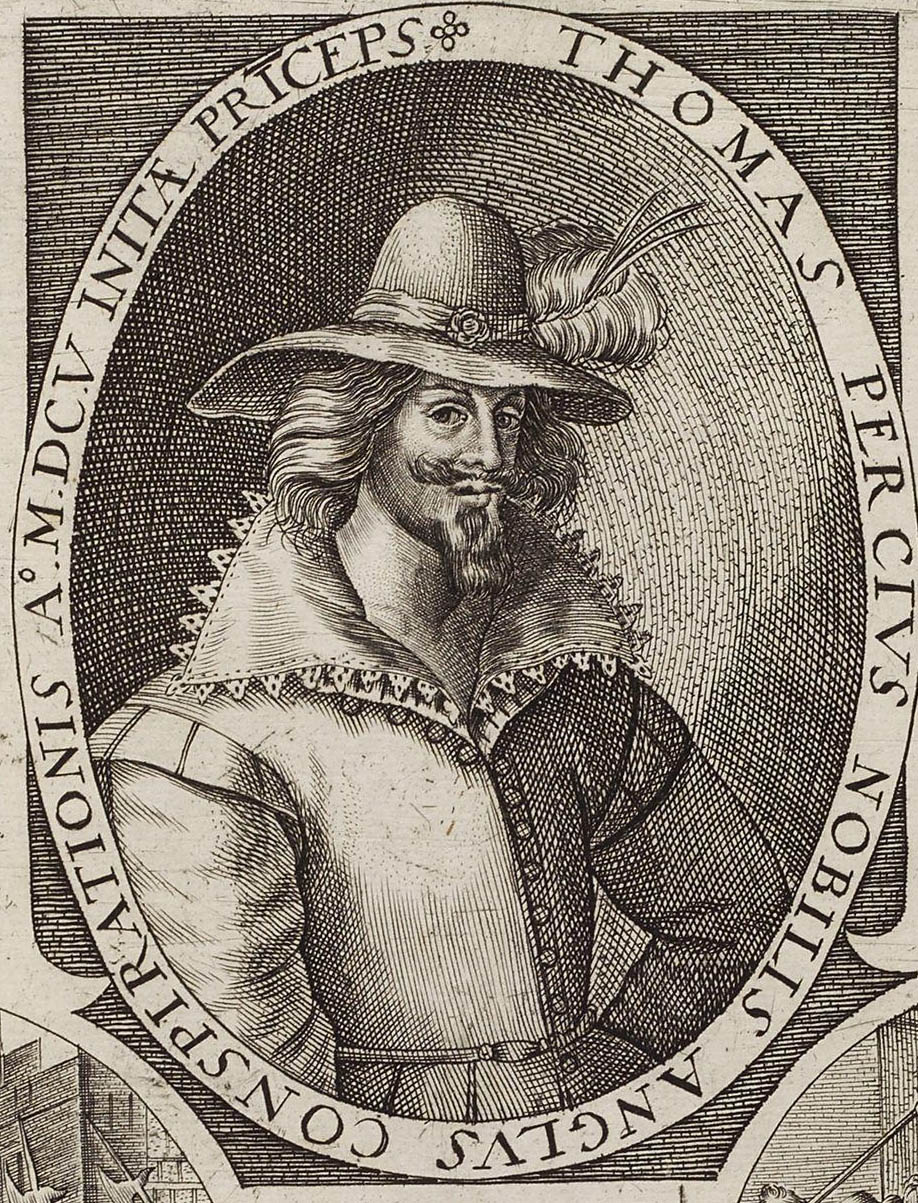
Thomas Percy (Gunpowder Plot)
Thomas Percy (c. 1560 – 8 November 1605) was a member of the group of provincial English Catholics who planned the failed Gunpowder Plot of 1605. He was a tall, physically impressive man; little is known of his early life beyond his matriculation in 1579 at the University of Cambridge, and his marriage in 1591 to Martha Wright. In 1596 his second cousin once removed, Henry Percy, 9th Earl of Northumberland, appointed him constable of Alnwick Castle and made him responsible for the Percy family's northern estates. He served the earl in the Low Countries in about 1600–1601, and in the years before 1603 was his intermediary in a series of confidential communications with King James VI of Scotland.
Following James's accession to the English throne in 1603, Percy became disenchanted with the new king, who he supposed had reneged on his promises of toleration for English Catholics. His meeting in June 1603 with Robert Catesby, a religious zealot similarly unimpressed with the new royal Stuart dynasty, led the following year to his joining Catesby's conspiracy to kill the king and his ministers by blowing up the House of Lords with gunpowder. Percy helped fund the group and secured the leases to certain properties in London, one of which was the undercroft directly beneath the House of Lords, in which the gunpowder was finally placed. The conspirators also planned to instigate an uprising in the Midlands and to simultaneously kidnap James's daughter, Elizabeth. Percy was to remain in London and secure the capture of her brother, Henry.
When the plot was exposed early on 5 November 1605, Percy immediately fled to the Midlands, catching up with some of the other conspirators en route to Dunchurch in Warwickshire. Their flight ended on the border of Staffordshire, at Holbeche House, where they were besieged early on 8 November by the pursuing sheriff of Worcester and his men. Percy was reportedly killed by the same musketball as Catesby, and was buried nearby. His body was later exhumed, and his head exhibited outside Parliament. His membership in the plot proved extremely damaging to his patron, the Earl of Northumberland, who although uninvolved was imprisoned in the Tower of London until 1621.
Thomas Percy was the younger of two sons born to Edward Percy of Beverley and his wife Elizabeth (née Waterton). His father was a son of Jocelyn/Josceline Percy (died 1532), whose father was Henry Percy, 4th Earl of Northumberland. Thomas was a second cousin once removed of the 4th Earl's descendant, Henry Percy, 9th Earl of Northumberland.
He was born around 1560 and matriculated at the University of Cambridge as a member of Peterhouse in 1579. Little is known of his early life. He may have been a papist before he was at some point received into the Catholic Church, and he may have sailed with George Clifford, 3rd Earl of Cumberland, in 1589. In 1591 he married Martha Wright, daughter of Ursula Wright (a convicted recusant) and sister to Christopher and John Wright (both later involved in the Gunpowder Plot). Claims by several authors that Percy may have left Martha "mean and poor" for an unidentified woman in Warwickshire are disputed, but the two were at least estranged: in 1605 Martha and her daughter were living on an annuity funded by the Catholic William Parker, 4th Baron Monteagle. Thomas and Martha's son, Robert, married Emma Mead at Wiveliscombe in Somerset on 22 October 1615.
I understand by this bearer, my servant Meyricke of your willing disposition to favour Thomas Percy, a near kinsman to my brother of Northumberland, who is in trouble for some offence imputed unto him. I pray you to continue the same, that thereby his life may not be in hazard. He is a gentleman well descended and of good parts, and very able to do his country good service; you shall do a thing very acceptable to us both and not disagreeable with equity, which we will upon all occasions deserve of you.
Despite not being a close relative, in 1595 the 9th Earl of Northumberland made Thomas responsible for collecting rents from his northern estates, and the following year appointed him constable of Alnwick Castle. Thomas exercised his authority in a manner which gave some cause for complaint, not least from an officer he replaced, and contemporary reports of his dealings with the earl's tenants include claims of mismanagement and bribery. During a border skirmish he killed James Burne, a Scot, for which he was imprisoned at a London gaol, but his release was secured by the intervention of Robert Devereux, 2nd Earl of Essex. Thomas subsequently aided Essex in a conspiracy against the Scottish warden of the middle marches, although unlike several others who later joined the Gunpowder Plot, he was not a member of the earl's failed rebellion of 1601.
Percy was a tall, physically impressive man, "of serious expression but with an attractive manner". He has been variously described as belligerent and eccentric, with "surges of wild energy subsiding into sloth". The Jesuit priest Father John Gerard wrote that in his youth Percy had "been very wild more than ordinary, and much given to fighting", while the Jesuit Oswald Tesimond thought he had been "rather wild and given to the gay life, a man who relied much on his sword and personal courage." According to both men, Percy's conversion to Catholicism was a calming influence, but biographer Mark Nicholls, who calls Percy "a pugnacious character", says that this was only true to a point. His excesses did not prevent him from joining Northumberland during his command in the Low Countries, held from 1600 to 1601, for which he was rewarded with £200. The earl also appointed Percy his receiver of rents in Cumberland and Northumberland, in 1603. Henry Percy was considered a supporter of the Catholic cause, and on several occasions before 1603, suspecting that Queen Elizabeth I did not have long to live, he entrusted Thomas with the delivery of secret correspondence to and from her probable successor, King James VI of Scotland. Northumberland's uncle had been executed for his involvement in the Rising of the North, a plot to replace Elizabeth with James's mother, Mary, Queen of Scots. He planned to make up for his family's disgrace by building a strong relationship with James, but also wished to counter the influence of Robert Cecil, 1st Earl of Salisbury, whose father Lord Burghley (it was rumoured) James believed had been responsible for Mary's death.
Hub AI
Thomas Percy (Gunpowder Plot) AI simulator
(@Thomas Percy (Gunpowder Plot)_simulator)
Thomas Percy (Gunpowder Plot)
Thomas Percy (c. 1560 – 8 November 1605) was a member of the group of provincial English Catholics who planned the failed Gunpowder Plot of 1605. He was a tall, physically impressive man; little is known of his early life beyond his matriculation in 1579 at the University of Cambridge, and his marriage in 1591 to Martha Wright. In 1596 his second cousin once removed, Henry Percy, 9th Earl of Northumberland, appointed him constable of Alnwick Castle and made him responsible for the Percy family's northern estates. He served the earl in the Low Countries in about 1600–1601, and in the years before 1603 was his intermediary in a series of confidential communications with King James VI of Scotland.
Following James's accession to the English throne in 1603, Percy became disenchanted with the new king, who he supposed had reneged on his promises of toleration for English Catholics. His meeting in June 1603 with Robert Catesby, a religious zealot similarly unimpressed with the new royal Stuart dynasty, led the following year to his joining Catesby's conspiracy to kill the king and his ministers by blowing up the House of Lords with gunpowder. Percy helped fund the group and secured the leases to certain properties in London, one of which was the undercroft directly beneath the House of Lords, in which the gunpowder was finally placed. The conspirators also planned to instigate an uprising in the Midlands and to simultaneously kidnap James's daughter, Elizabeth. Percy was to remain in London and secure the capture of her brother, Henry.
When the plot was exposed early on 5 November 1605, Percy immediately fled to the Midlands, catching up with some of the other conspirators en route to Dunchurch in Warwickshire. Their flight ended on the border of Staffordshire, at Holbeche House, where they were besieged early on 8 November by the pursuing sheriff of Worcester and his men. Percy was reportedly killed by the same musketball as Catesby, and was buried nearby. His body was later exhumed, and his head exhibited outside Parliament. His membership in the plot proved extremely damaging to his patron, the Earl of Northumberland, who although uninvolved was imprisoned in the Tower of London until 1621.
Thomas Percy was the younger of two sons born to Edward Percy of Beverley and his wife Elizabeth (née Waterton). His father was a son of Jocelyn/Josceline Percy (died 1532), whose father was Henry Percy, 4th Earl of Northumberland. Thomas was a second cousin once removed of the 4th Earl's descendant, Henry Percy, 9th Earl of Northumberland.
He was born around 1560 and matriculated at the University of Cambridge as a member of Peterhouse in 1579. Little is known of his early life. He may have been a papist before he was at some point received into the Catholic Church, and he may have sailed with George Clifford, 3rd Earl of Cumberland, in 1589. In 1591 he married Martha Wright, daughter of Ursula Wright (a convicted recusant) and sister to Christopher and John Wright (both later involved in the Gunpowder Plot). Claims by several authors that Percy may have left Martha "mean and poor" for an unidentified woman in Warwickshire are disputed, but the two were at least estranged: in 1605 Martha and her daughter were living on an annuity funded by the Catholic William Parker, 4th Baron Monteagle. Thomas and Martha's son, Robert, married Emma Mead at Wiveliscombe in Somerset on 22 October 1615.
I understand by this bearer, my servant Meyricke of your willing disposition to favour Thomas Percy, a near kinsman to my brother of Northumberland, who is in trouble for some offence imputed unto him. I pray you to continue the same, that thereby his life may not be in hazard. He is a gentleman well descended and of good parts, and very able to do his country good service; you shall do a thing very acceptable to us both and not disagreeable with equity, which we will upon all occasions deserve of you.
Despite not being a close relative, in 1595 the 9th Earl of Northumberland made Thomas responsible for collecting rents from his northern estates, and the following year appointed him constable of Alnwick Castle. Thomas exercised his authority in a manner which gave some cause for complaint, not least from an officer he replaced, and contemporary reports of his dealings with the earl's tenants include claims of mismanagement and bribery. During a border skirmish he killed James Burne, a Scot, for which he was imprisoned at a London gaol, but his release was secured by the intervention of Robert Devereux, 2nd Earl of Essex. Thomas subsequently aided Essex in a conspiracy against the Scottish warden of the middle marches, although unlike several others who later joined the Gunpowder Plot, he was not a member of the earl's failed rebellion of 1601.
Percy was a tall, physically impressive man, "of serious expression but with an attractive manner". He has been variously described as belligerent and eccentric, with "surges of wild energy subsiding into sloth". The Jesuit priest Father John Gerard wrote that in his youth Percy had "been very wild more than ordinary, and much given to fighting", while the Jesuit Oswald Tesimond thought he had been "rather wild and given to the gay life, a man who relied much on his sword and personal courage." According to both men, Percy's conversion to Catholicism was a calming influence, but biographer Mark Nicholls, who calls Percy "a pugnacious character", says that this was only true to a point. His excesses did not prevent him from joining Northumberland during his command in the Low Countries, held from 1600 to 1601, for which he was rewarded with £200. The earl also appointed Percy his receiver of rents in Cumberland and Northumberland, in 1603. Henry Percy was considered a supporter of the Catholic cause, and on several occasions before 1603, suspecting that Queen Elizabeth I did not have long to live, he entrusted Thomas with the delivery of secret correspondence to and from her probable successor, King James VI of Scotland. Northumberland's uncle had been executed for his involvement in the Rising of the North, a plot to replace Elizabeth with James's mother, Mary, Queen of Scots. He planned to make up for his family's disgrace by building a strong relationship with James, but also wished to counter the influence of Robert Cecil, 1st Earl of Salisbury, whose father Lord Burghley (it was rumoured) James believed had been responsible for Mary's death.