


Community hub
Recent from talks
Contribute something to knowledge base
Content stats: 0 posts, 0 articles, 1 media, 0 notes
Members stats: 0 subscribers, 0 contributors, 0 moderators, 0 supporters
Subscribers
Supporters
Contributors
Moderators
Hub AI
Tintoretto AI simulator
(@Tintoretto_simulator)
Hub AI
Tintoretto AI simulator
(@Tintoretto_simulator)
Tintoretto
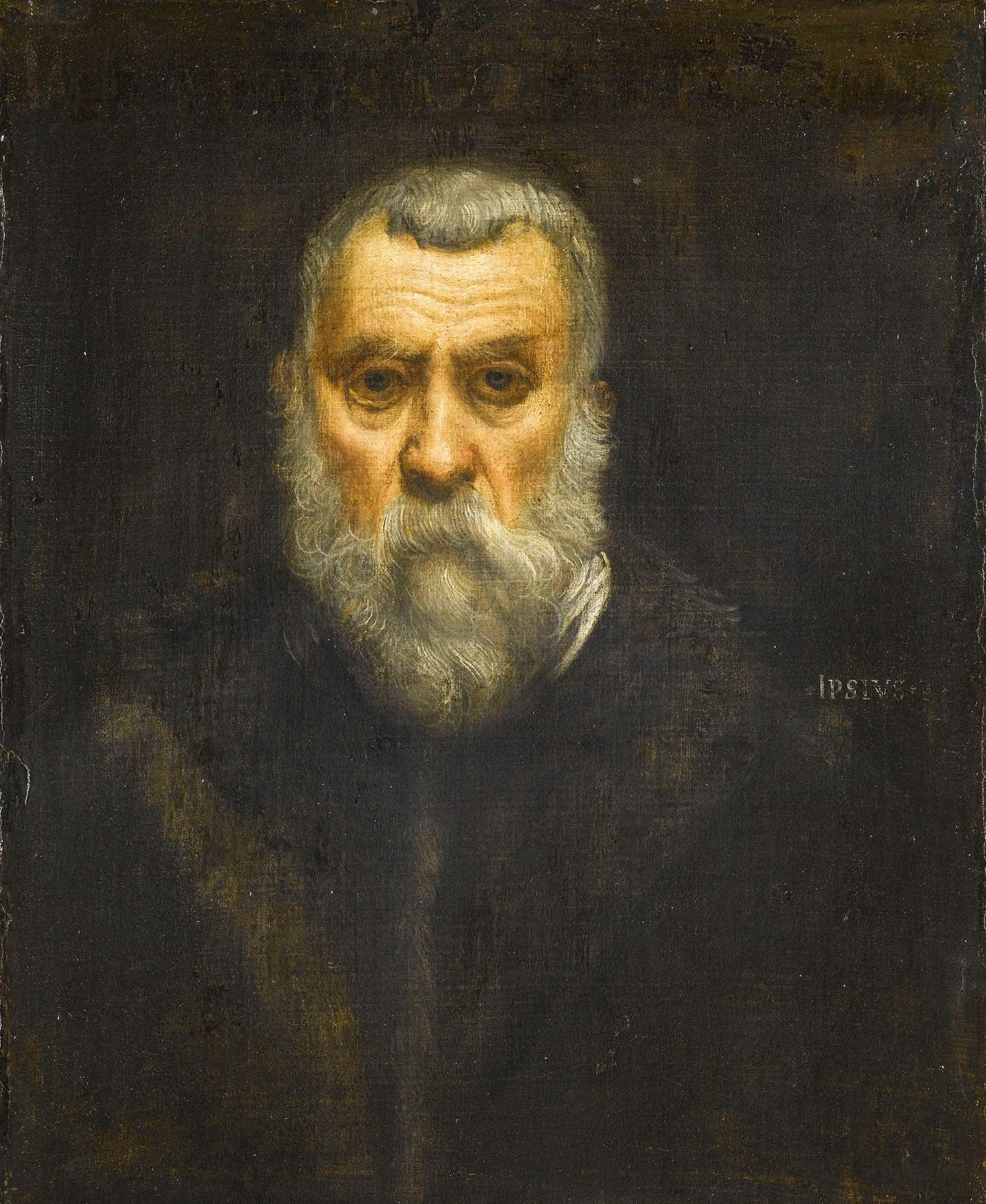
Jacopo Robusti (late September or early October 1518 – 31 May 1594), best known as Tintoretto (/ˌtɪntəˈrɛtoʊ/ TIN-tə-RET-oh; Italian: [tintoˈretto], Venetian: [tiŋtoˈɾeto]), was an Italian Renaissance painter of the Venetian school. His contemporaries both admired and criticized the speed with which he painted and the unprecedented boldness of his brushwork. For his phenomenal energy in painting he was termed il Furioso (Italian for 'the Furious'). His work is characterised by muscular figures, dramatic gestures and bold use of perspective, in the Mannerist style.
Tintoretto was born in Venice in 1518. His father, Battista, was a dyer – tintore in Italian and tintor in Venetian; hence the son got the nickname of Tintoretto, "little dyer", or "dyer's boy". Tintoretto is known to have had at least one sibling, a brother named Domenico, although an unreliable 17th-century account says his siblings numbered 22. The family was believed to have originated from Brescia, in Lombardy, then part of the Republic of Venice. Older studies gave the Tuscan town of Lucca as the origin of the family.
Little is known of Tintoretto's childhood or training. According to his early biographers Carlo Ridolfi (1642) and Marco Boschini (1660), his only formal apprenticeship was in the studio of Titian, who angrily dismissed him after only a few days—either out of jealousy of so promising a student (in Ridolfi's account) or because of a personality clash (in Boschini's version). From this time forward the relationship between the two artists remained rancorous, despite Tintoretto's continued admiration for Titian. For his part, Titian actively disparaged Tintoretto, as did his adherents.
Tintoretto sought no further teaching but studied on his own account with laborious zeal. According to Ridolfi, he gained some experience by working alongside artisans who decorated furniture with paintings of mythological scenes, and studied anatomy by drawing live models and dissecting cadavers. He lived poorly, collecting casts, bas-reliefs, and prints, and practising with their aid. At some time, possibly in the 1540s, Tintoretto acquired models of Michelangelo's Dawn, Day, Dusk and Night, which he and his workshop studied in numerous drawings made from all angles on blue paper. Now and afterward he very frequently worked by night as well as by day. His noble conception of art and his high personal ambition were both evidenced in the inscription which he placed over his studio Il disegno di Michelangelo ed il colorito di Tiziano ("Michelangelo's drawing and Titian's colour").
The young painter Andrea Schiavone, four years Tintoretto's junior, was much in his company. Tintoretto helped Schiavone at no charge with wall paintings, and in many subsequent instances, he also worked for nothing, and thus succeeded in obtaining commissions. The two earliest mural paintings of Tintoretto—done, like others, for next to no pay—are said to have been Belshazzar's Feast and a Cavalry Fight. These have both long since perished, as have all his frescoes, early or later. The first work of his to attract some considerable notice was a portrait group of himself and his brother — the latter playing the guitar — with a nocturnal effect; this has also been lost. It was followed by some historical subject, which Titian was candid enough to praise.
One of Tintoretto's early pictures still extant is in the church of the Carmine in Venice, the Presentation of Jesus in the Temple (c. 1542); also in S. Benedetto are the Annunciation and Christ with the Woman of Samaria. For the Scuola della Trinità (the scuole or schools of Venice were confraternities, more in the nature of charitable foundations than of educational institutions) he painted four subjects from Genesis. Two of these, now in the Gallerie dell'Accademia in Venice, are Adam and Eve and the Death of Abel, both noble works of high mastery, which indicate that Tintoretto was by this time a consummate painter—one of the few who have attained to the highest eminence in the absence of any recorded formal training. Until 2012, The Embarkation of St Helena in the Holy Land was attributed to Schiavone. But a new analysis of the work has revealed it as one of a series of three paintings by Tintoretto, depicting the legend of St Helena and the Holy Cross. The error was uncovered during work on a project to catalogue continental European oil paintings in the United Kingdom. The Embarkation of St Helena was acquired by the Victoria and Albert Museum in 1865. Its sister paintings, The Discovery of the True Cross and St Helen Testing the True Cross, are held in galleries in the United States.
In 1548 Tintoretto was commissioned to paint a large decoration for the Scuola di S. Marco: the Miracle of the Slave. Realizing that the commission presented him with a singular opportunity to establish himself as a major artist, he took extraordinary care in arranging the composition for maximum effect. The painting represents the legend of a Christian slave or captive who was to be tortured as a punishment for some acts of devotion to the evangelist, but was saved by the miraculous intervention of the latter, who shattered the bone-breaking and blinding implements which were about to be applied. Tintoretto's conception of the narrative is distinguished by a marked theatricality, unusual colour choices, and vigorous execution.
The painting was a triumphant success, despite some detractors. Tintoretto's friend Pietro Aretino praised the work, calling particular attention to the figure of the slave, but warned Tintoretto against hasty execution. As a result of the painting's success, Tintoretto received numerous commissions. For the church of San Rocco he painted Saint Roch Cures the Plague Victims (1549), one of the first of Tintoretto's many laterali (horizontal paintings). These were large-scale paintings intended for the side walls of Venetian chapels. Knowing that the congregation would view them from an angle, Tintoretto composed the paintings with off-centre perspective so the illusion of depth would be effective when seen from a viewpoint near the end of the painting that was closer to the worshippers.
Tintoretto
Jacopo Robusti (late September or early October 1518 – 31 May 1594), best known as Tintoretto (/ˌtɪntəˈrɛtoʊ/ TIN-tə-RET-oh; Italian: [tintoˈretto], Venetian: [tiŋtoˈɾeto]), was an Italian Renaissance painter of the Venetian school. His contemporaries both admired and criticized the speed with which he painted and the unprecedented boldness of his brushwork. For his phenomenal energy in painting he was termed il Furioso (Italian for 'the Furious'). His work is characterised by muscular figures, dramatic gestures and bold use of perspective, in the Mannerist style.
Tintoretto was born in Venice in 1518. His father, Battista, was a dyer – tintore in Italian and tintor in Venetian; hence the son got the nickname of Tintoretto, "little dyer", or "dyer's boy". Tintoretto is known to have had at least one sibling, a brother named Domenico, although an unreliable 17th-century account says his siblings numbered 22. The family was believed to have originated from Brescia, in Lombardy, then part of the Republic of Venice. Older studies gave the Tuscan town of Lucca as the origin of the family.
Little is known of Tintoretto's childhood or training. According to his early biographers Carlo Ridolfi (1642) and Marco Boschini (1660), his only formal apprenticeship was in the studio of Titian, who angrily dismissed him after only a few days—either out of jealousy of so promising a student (in Ridolfi's account) or because of a personality clash (in Boschini's version). From this time forward the relationship between the two artists remained rancorous, despite Tintoretto's continued admiration for Titian. For his part, Titian actively disparaged Tintoretto, as did his adherents.
Tintoretto sought no further teaching but studied on his own account with laborious zeal. According to Ridolfi, he gained some experience by working alongside artisans who decorated furniture with paintings of mythological scenes, and studied anatomy by drawing live models and dissecting cadavers. He lived poorly, collecting casts, bas-reliefs, and prints, and practising with their aid. At some time, possibly in the 1540s, Tintoretto acquired models of Michelangelo's Dawn, Day, Dusk and Night, which he and his workshop studied in numerous drawings made from all angles on blue paper. Now and afterward he very frequently worked by night as well as by day. His noble conception of art and his high personal ambition were both evidenced in the inscription which he placed over his studio Il disegno di Michelangelo ed il colorito di Tiziano ("Michelangelo's drawing and Titian's colour").
The young painter Andrea Schiavone, four years Tintoretto's junior, was much in his company. Tintoretto helped Schiavone at no charge with wall paintings, and in many subsequent instances, he also worked for nothing, and thus succeeded in obtaining commissions. The two earliest mural paintings of Tintoretto—done, like others, for next to no pay—are said to have been Belshazzar's Feast and a Cavalry Fight. These have both long since perished, as have all his frescoes, early or later. The first work of his to attract some considerable notice was a portrait group of himself and his brother — the latter playing the guitar — with a nocturnal effect; this has also been lost. It was followed by some historical subject, which Titian was candid enough to praise.
One of Tintoretto's early pictures still extant is in the church of the Carmine in Venice, the Presentation of Jesus in the Temple (c. 1542); also in S. Benedetto are the Annunciation and Christ with the Woman of Samaria. For the Scuola della Trinità (the scuole or schools of Venice were confraternities, more in the nature of charitable foundations than of educational institutions) he painted four subjects from Genesis. Two of these, now in the Gallerie dell'Accademia in Venice, are Adam and Eve and the Death of Abel, both noble works of high mastery, which indicate that Tintoretto was by this time a consummate painter—one of the few who have attained to the highest eminence in the absence of any recorded formal training. Until 2012, The Embarkation of St Helena in the Holy Land was attributed to Schiavone. But a new analysis of the work has revealed it as one of a series of three paintings by Tintoretto, depicting the legend of St Helena and the Holy Cross. The error was uncovered during work on a project to catalogue continental European oil paintings in the United Kingdom. The Embarkation of St Helena was acquired by the Victoria and Albert Museum in 1865. Its sister paintings, The Discovery of the True Cross and St Helen Testing the True Cross, are held in galleries in the United States.
In 1548 Tintoretto was commissioned to paint a large decoration for the Scuola di S. Marco: the Miracle of the Slave. Realizing that the commission presented him with a singular opportunity to establish himself as a major artist, he took extraordinary care in arranging the composition for maximum effect. The painting represents the legend of a Christian slave or captive who was to be tortured as a punishment for some acts of devotion to the evangelist, but was saved by the miraculous intervention of the latter, who shattered the bone-breaking and blinding implements which were about to be applied. Tintoretto's conception of the narrative is distinguished by a marked theatricality, unusual colour choices, and vigorous execution.
The painting was a triumphant success, despite some detractors. Tintoretto's friend Pietro Aretino praised the work, calling particular attention to the figure of the slave, but warned Tintoretto against hasty execution. As a result of the painting's success, Tintoretto received numerous commissions. For the church of San Rocco he painted Saint Roch Cures the Plague Victims (1549), one of the first of Tintoretto's many laterali (horizontal paintings). These were large-scale paintings intended for the side walls of Venetian chapels. Knowing that the congregation would view them from an angle, Tintoretto composed the paintings with off-centre perspective so the illusion of depth would be effective when seen from a viewpoint near the end of the painting that was closer to the worshippers.
Recent media
Recent media