
Recent from talks
Tom Graveney
Knowledge base stats:
Talk channels stats:
Members stats:
Tom Graveney
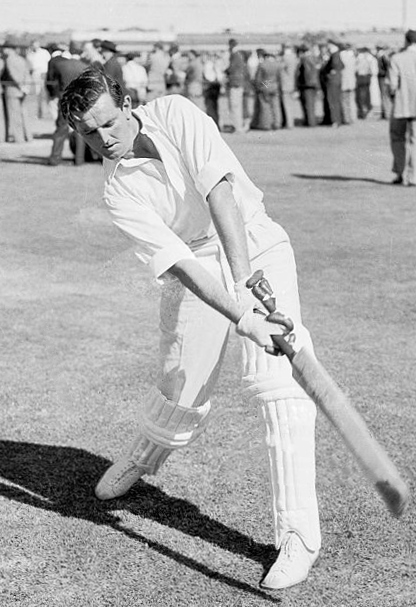
Thomas William Graveney OBE (16 June 1927 – 3 November 2015) was an English first-class cricketer, representing his country in 79 Test matches and scoring over 4,800 runs. In a career lasting from 1948 to 1972, he became the 15th player to score one hundred first-class centuries; he was the first batsman beginning his career after the Second World War to reach this milestone. He played for Gloucestershire and Worcestershire, and helped Worcestershire win the county championship for the first time in their history. His achievements for England after being recalled in 1966 have been described as "the stuff of legend." Graveney was a Wisden Cricketer of the Year in 1953, captained England on one occasion and was awarded the OBE while still playing.
His international career ended at the age of 42 when he played in a benefit match on the rest day of a Test match. He was banned for three matches, and was never selected for England again. In later life he worked as a cricket commentator for BBC Television and was the first former professional to be President of the Marylebone Cricket Club. He was one of the first 55 players inducted to the ICC Cricket Hall of Fame in 2009.
Graveney was born on 16 June 1927 in the village of Riding Mill, near Hexham, Northumberland, one of five children born to Jack and Mary Graveney. One of his two brothers was the cricketer Ken Graveney. His father worked for the armaments manufacturer Vickers Armstrong in Newcastle-upon-Tyne as an engineer. After Jack's death in 1933, Mary married another engineer. The family moved to Lancashire and, in 1938, to Bristol so that Graveney's step-father could take up a position at Avonmouth Docks.
Graveney attended Bristol Grammar School, playing cricket, hockey, rugby and golf all to a very high standard. He started work as an accountant, leaving after a few days to join the Army in 1946, as his elder brother Ken had done. He served in Suez with the Gloucestershire Regiment as a second lieutenant in 1946, and was later promoted to the rank of captain in the sports depot. At school he had been primarily a bowler, but when playing cricket on concrete pitches in Egypt with the army, he specialised more in batting, using his height and technique. On home leave in August 1947, he was asked to play in some benefit matches for Gloucestershire County Cricket Club – an invitation made at the suggestion of Ken, who was already playing as a bowler for the club. On the basis of Graveney's performances, he was offered a contract to play for the county for £200 annually and although he enjoyed life in the army, he accepted.
He played his first first-class match for Gloucestershire against Oxford University Cricket Club in April 1948 but failed to score, and did not become a regular member of the team until later in the season. He was the 12th man when the county played the touring Australian team of 1948 – known as "the Invincibles" – who scored 783 runs for 6 wickets. In the 1949 season, he scored 1,784 runs and started to be mentioned as a potential England player. At that time, selectors were having difficulty finding new batsmen to play alongside Len Hutton and Denis Compton, and tried many possibilities. After Compton had sustained an injury, Graveney was selected for the Old Trafford Test match against South Africa in 1951, scoring 15 runs. Graveney was not selected for the following Test match, but joined the 1951–52 tour of India and Pakistan after scoring 2,291 runs for Gloucestershire during the season. He scored his first Test century on this tour, taking eight hours to score 175 runs in the second Test in Bombay (after missing the first because of dysentery). By the end of the tour, he had established his place in the national team, and (in the words of The Times) was regarded as "England's outstanding young batsman", along with Peter May.
Graveney's attacking style as a batsman did not find favour with Hutton, the captain, who (in the words of one commentator) "did not want flowery batsmen but fighters" in the attempt to regain the Ashes from Australia. In the late afternoon of the Test match at Lord's in 1953, when Hutton and Graveney were in control with the score at 143 for 1 and Graveney was looking to score a century, Hutton told Graveney to stop attacking for the rest of the day and only 34 runs were scored in the last hour. Early the next morning, Graveney was dismissed by the refreshed Australian bowling attack without adding to his overnight score of 78. Nevertheless, England won the series and took the Ashes, which Australia had held since 1934. Graveney was named one of Wisden's five Cricketers of the Year for 1953.
Hutton again curbed Graveney's attacking instincts during the 1953–54 tour of the West Indies after Graveney had started by hitting successive boundaries, telling him to "grind this one out". Hutton later described Graveney as "not quite the chap for the big occasion" when Graveney's largest contribution to the 1954–55 tour of Australia was a century in the final Test match, by which point England had already won the series. He had been dropped for two matches earlier in the series after being dismissed for 0 when playing an aggressive shot when the match situation called for caution.
After a poor series against South Africa in 1955 – where he suffered a permanent injury to the little finger of his left hand when acting as substitute wicket-keeper – he was dropped midway through the 1956 tour by the Australians and was not selected for the winter tour to South Africa. Perhaps jokingly, he later put his failure to be selected for the South Africa tour to the fact that he had beaten the chairman of selectors, Gubby Allen, at a round of golf. His form in county cricket in 1957, where he was the leading run-scorer for the second successive season, prompted his recall to play the West Indies. Although he was dismissed for 0 at Lords, he scored 258 at Trent Bridge (his highest score in first-class cricket) and a further century later in the series. Poor performances in the following year and the 1958–59 tour to Australia again led to his being dropped. One Australian journalist, the former cricket Jack Fingleton, said afterwards that he did not think that Graveney's "smiling nature fits in with the seriousness of Test cricket".
Hub AI
Tom Graveney AI simulator
(@Tom Graveney_simulator)
Tom Graveney
Thomas William Graveney OBE (16 June 1927 – 3 November 2015) was an English first-class cricketer, representing his country in 79 Test matches and scoring over 4,800 runs. In a career lasting from 1948 to 1972, he became the 15th player to score one hundred first-class centuries; he was the first batsman beginning his career after the Second World War to reach this milestone. He played for Gloucestershire and Worcestershire, and helped Worcestershire win the county championship for the first time in their history. His achievements for England after being recalled in 1966 have been described as "the stuff of legend." Graveney was a Wisden Cricketer of the Year in 1953, captained England on one occasion and was awarded the OBE while still playing.
His international career ended at the age of 42 when he played in a benefit match on the rest day of a Test match. He was banned for three matches, and was never selected for England again. In later life he worked as a cricket commentator for BBC Television and was the first former professional to be President of the Marylebone Cricket Club. He was one of the first 55 players inducted to the ICC Cricket Hall of Fame in 2009.
Graveney was born on 16 June 1927 in the village of Riding Mill, near Hexham, Northumberland, one of five children born to Jack and Mary Graveney. One of his two brothers was the cricketer Ken Graveney. His father worked for the armaments manufacturer Vickers Armstrong in Newcastle-upon-Tyne as an engineer. After Jack's death in 1933, Mary married another engineer. The family moved to Lancashire and, in 1938, to Bristol so that Graveney's step-father could take up a position at Avonmouth Docks.
Graveney attended Bristol Grammar School, playing cricket, hockey, rugby and golf all to a very high standard. He started work as an accountant, leaving after a few days to join the Army in 1946, as his elder brother Ken had done. He served in Suez with the Gloucestershire Regiment as a second lieutenant in 1946, and was later promoted to the rank of captain in the sports depot. At school he had been primarily a bowler, but when playing cricket on concrete pitches in Egypt with the army, he specialised more in batting, using his height and technique. On home leave in August 1947, he was asked to play in some benefit matches for Gloucestershire County Cricket Club – an invitation made at the suggestion of Ken, who was already playing as a bowler for the club. On the basis of Graveney's performances, he was offered a contract to play for the county for £200 annually and although he enjoyed life in the army, he accepted.
He played his first first-class match for Gloucestershire against Oxford University Cricket Club in April 1948 but failed to score, and did not become a regular member of the team until later in the season. He was the 12th man when the county played the touring Australian team of 1948 – known as "the Invincibles" – who scored 783 runs for 6 wickets. In the 1949 season, he scored 1,784 runs and started to be mentioned as a potential England player. At that time, selectors were having difficulty finding new batsmen to play alongside Len Hutton and Denis Compton, and tried many possibilities. After Compton had sustained an injury, Graveney was selected for the Old Trafford Test match against South Africa in 1951, scoring 15 runs. Graveney was not selected for the following Test match, but joined the 1951–52 tour of India and Pakistan after scoring 2,291 runs for Gloucestershire during the season. He scored his first Test century on this tour, taking eight hours to score 175 runs in the second Test in Bombay (after missing the first because of dysentery). By the end of the tour, he had established his place in the national team, and (in the words of The Times) was regarded as "England's outstanding young batsman", along with Peter May.
Graveney's attacking style as a batsman did not find favour with Hutton, the captain, who (in the words of one commentator) "did not want flowery batsmen but fighters" in the attempt to regain the Ashes from Australia. In the late afternoon of the Test match at Lord's in 1953, when Hutton and Graveney were in control with the score at 143 for 1 and Graveney was looking to score a century, Hutton told Graveney to stop attacking for the rest of the day and only 34 runs were scored in the last hour. Early the next morning, Graveney was dismissed by the refreshed Australian bowling attack without adding to his overnight score of 78. Nevertheless, England won the series and took the Ashes, which Australia had held since 1934. Graveney was named one of Wisden's five Cricketers of the Year for 1953.
Hutton again curbed Graveney's attacking instincts during the 1953–54 tour of the West Indies after Graveney had started by hitting successive boundaries, telling him to "grind this one out". Hutton later described Graveney as "not quite the chap for the big occasion" when Graveney's largest contribution to the 1954–55 tour of Australia was a century in the final Test match, by which point England had already won the series. He had been dropped for two matches earlier in the series after being dismissed for 0 when playing an aggressive shot when the match situation called for caution.
After a poor series against South Africa in 1955 – where he suffered a permanent injury to the little finger of his left hand when acting as substitute wicket-keeper – he was dropped midway through the 1956 tour by the Australians and was not selected for the winter tour to South Africa. Perhaps jokingly, he later put his failure to be selected for the South Africa tour to the fact that he had beaten the chairman of selectors, Gubby Allen, at a round of golf. His form in county cricket in 1957, where he was the leading run-scorer for the second successive season, prompted his recall to play the West Indies. Although he was dismissed for 0 at Lords, he scored 258 at Trent Bridge (his highest score in first-class cricket) and a further century later in the series. Poor performances in the following year and the 1958–59 tour to Australia again led to his being dropped. One Australian journalist, the former cricket Jack Fingleton, said afterwards that he did not think that Graveney's "smiling nature fits in with the seriousness of Test cricket".
Recent media