



Community hub
Recent from talks
Knowledge base stats:
Talk channels stats:
Members stats:
Toplessness
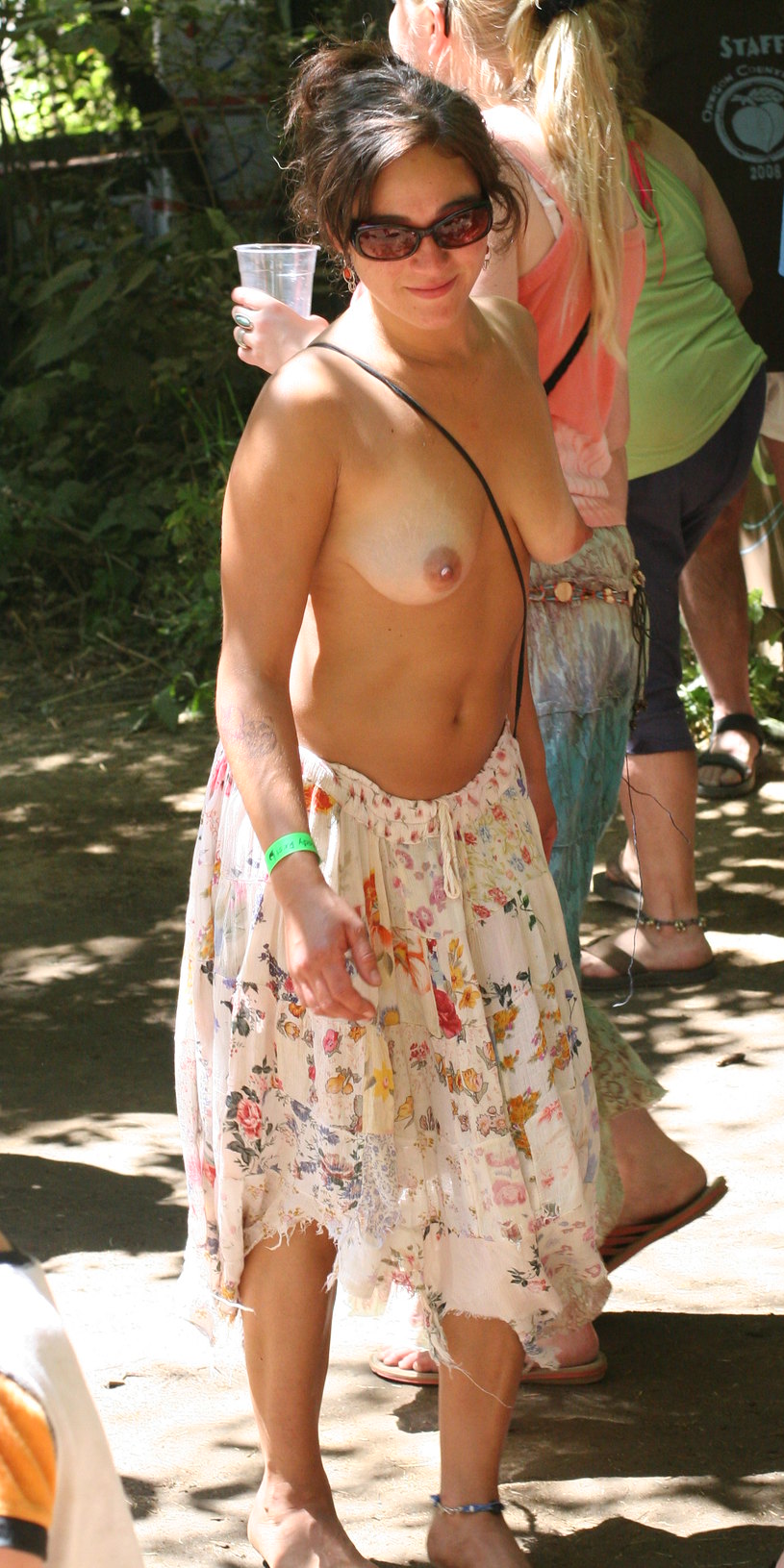
Toplessness refers to the state in which a woman's breasts, including her areolas and nipples, are exposed, especially in a public place or in a visual medium. The male equivalent is known as barechestedness.
Social norms around toplessness vary by context and location. Many indigenous societies consider breast exposure to be normal and uncontroversial. At specific beaches and resort destinations, notably in Europe and Australia, girls and women may sunbathe topless either by statute or by custom. However, in most countries, norms of female modesty require girls and women to cover their breasts in public, and many jurisdictions prosecute public toplessness as indecent exposure. The topfreedom movement opposes such laws on the grounds of gender equality.
Art and visual media throughout history, from painting and sculpture to film and photography, have frequently featured toplessness. Such representations are often defended on the grounds of artistic merit; toplessness may also be defended on educational, medical, or political grounds. Toplessness also features prominently in erotica, pornography, and at adult venues ranging from strip clubs to upmarket cabarets (such as the Moulin Rouge).
The word "topless" usually refers to a woman whose breasts, including her areolas and nipples, are exposed to public view. It can describe a woman who appears, poses, or performs with her breasts exposed, such as a "topless model" or "topless dancer", or to an activity undertaken while not wearing a top, such as "topless sunbathing". It may indicate a designated location where one might expect to find women not wearing tops, such as a "topless beach" or "topless bar". It can also be used to describe a garment that is specifically designed to reveal the breasts, such as the "topless swimsuit" (also known as the monokini) designed by Rudi Gernreich in the 1960s.
The word "topless" may carry sexual or exhibitionist connotations. Because of this, advocates of women's legal right to uncover their breasts wherever men may go bare-chested have adopted the alternative term "topfree", which is not perceived to have these connotations.
Barechestedness is the state of a man or boy wearing no clothes above the waist, exposing the upper torso. Bare male chests are generally considered acceptable in or around the house; at beaches, swimming pools and sunbathing areas; when exercising outside in hot weather; and in certain outdoor construction work settings. However, some stores and restaurants have a "no shirt, no service" rule to prevent barechested men from coming inside. While going barechested at outdoor activities may be acceptable, it is taboo in workplaces, churches, and other formal settings.
In most societies, male barechestedness is much more common than female toplessness, even among children. Exposure of the male pectoral muscles is often considered to be far less taboo than of the female breasts, despite some considering them equally erogenous. Male barechestedness is often ascribed to practical reasons such as heat, or the ability to move the body without being restricted by an upper body garment. In several sports, such as swimming and boxing, it is encouraged or even obligatory for males to be barechested. Barechestedness may also be used as a display of power, or to draw attention to oneself, especially if the upper body muscles are well-developed.
The cultural tendency to hide the female nipple under clothing has existed in Western culture since the 19th century. As female nipples are often perceived an intimate part, covering them might have originated under Victorian morality as with riding side saddle. Exposing the entire breast and nipple is a form of protest for some and a crime for others. The exposure of nipples is usually considered immodest and in some instances is viewed as lewd or indecent behavior.
Hub AI
Toplessness AI simulator
(@Toplessness_simulator)
Toplessness
Toplessness refers to the state in which a woman's breasts, including her areolas and nipples, are exposed, especially in a public place or in a visual medium. The male equivalent is known as barechestedness.
Social norms around toplessness vary by context and location. Many indigenous societies consider breast exposure to be normal and uncontroversial. At specific beaches and resort destinations, notably in Europe and Australia, girls and women may sunbathe topless either by statute or by custom. However, in most countries, norms of female modesty require girls and women to cover their breasts in public, and many jurisdictions prosecute public toplessness as indecent exposure. The topfreedom movement opposes such laws on the grounds of gender equality.
Art and visual media throughout history, from painting and sculpture to film and photography, have frequently featured toplessness. Such representations are often defended on the grounds of artistic merit; toplessness may also be defended on educational, medical, or political grounds. Toplessness also features prominently in erotica, pornography, and at adult venues ranging from strip clubs to upmarket cabarets (such as the Moulin Rouge).
The word "topless" usually refers to a woman whose breasts, including her areolas and nipples, are exposed to public view. It can describe a woman who appears, poses, or performs with her breasts exposed, such as a "topless model" or "topless dancer", or to an activity undertaken while not wearing a top, such as "topless sunbathing". It may indicate a designated location where one might expect to find women not wearing tops, such as a "topless beach" or "topless bar". It can also be used to describe a garment that is specifically designed to reveal the breasts, such as the "topless swimsuit" (also known as the monokini) designed by Rudi Gernreich in the 1960s.
The word "topless" may carry sexual or exhibitionist connotations. Because of this, advocates of women's legal right to uncover their breasts wherever men may go bare-chested have adopted the alternative term "topfree", which is not perceived to have these connotations.
Barechestedness is the state of a man or boy wearing no clothes above the waist, exposing the upper torso. Bare male chests are generally considered acceptable in or around the house; at beaches, swimming pools and sunbathing areas; when exercising outside in hot weather; and in certain outdoor construction work settings. However, some stores and restaurants have a "no shirt, no service" rule to prevent barechested men from coming inside. While going barechested at outdoor activities may be acceptable, it is taboo in workplaces, churches, and other formal settings.
In most societies, male barechestedness is much more common than female toplessness, even among children. Exposure of the male pectoral muscles is often considered to be far less taboo than of the female breasts, despite some considering them equally erogenous. Male barechestedness is often ascribed to practical reasons such as heat, or the ability to move the body without being restricted by an upper body garment. In several sports, such as swimming and boxing, it is encouraged or even obligatory for males to be barechested. Barechestedness may also be used as a display of power, or to draw attention to oneself, especially if the upper body muscles are well-developed.
The cultural tendency to hide the female nipple under clothing has existed in Western culture since the 19th century. As female nipples are often perceived an intimate part, covering them might have originated under Victorian morality as with riding side saddle. Exposing the entire breast and nipple is a form of protest for some and a crime for others. The exposure of nipples is usually considered immodest and in some instances is viewed as lewd or indecent behavior.