



Community hub
Recent from talks
Knowledge base stats:
Talk channels stats:
Members stats:
Tourism in Paris
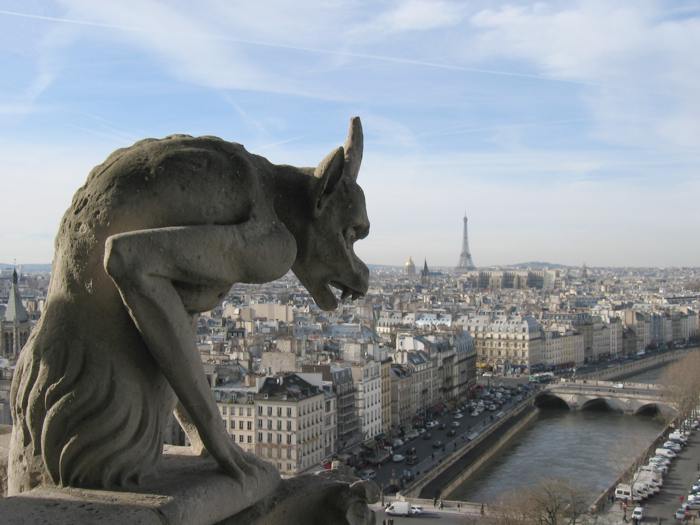
Tourism in Paris is a major income source. Paris received 12.6 million visitors in 2020, measured by hotel stays, a drop of 73 percent from 2019, due to the COVID-19 pandemic. The number of foreign visitors declined by 80.7 percent. Museums re-opened in 2021, with limitations on the number of visitors at a time and a requirement that visitors wear masks.
In 2018, 17.95 million international, overnighting tourists visited the city, mainly for sightseeing and shopping (and estimated to be well over double if including domestic overnighting visitors). Top sights include Notre Dame (12 million visitors in 2017), Disneyland Paris (11), Sacre Cœur (10), the Versailles Palace (7.7), the Louvre Museum (6.9), the Eiffel Tower (5.9), Centre Pompidou (3.33), and the Musée d'Orsay (3 million). The largest numbers of foreign tourists who come to the Paris region are British, American, German, Italian, Chinese, Indian and Canadian.
In 2012, 263,212 salaried workers in Paris, or 18.4 percent of the total number of workers, were engaged in tourism-related sectors; hotels, catering, transport, and leisure. In 2014 visitors to Paris spent 17 billion dollars (13.58 billion Euros), the third highest sum globally after London and New York.
The Eiffel Tower is acknowledged as the universal symbol of both Paris and France. It was originally designed by Émile Nouguier and Maurice Koechlin. In March 1885, Gustave Eiffel, known primarily as a successful iron engineer, submitted a plan for a tower to the French Ministre du Commerce et de l'Industrie. He entered a competition for students studying at the university. The winning proposal would stand as the centerpiece of the 1889 Exposition. Eiffel's was one of over 100 submissions. Eiffel's proposal was finally chosen in June 1886. Even before its construction, the Tower's uniqueness was noticed. The Eiffel Tower was finally inaugurated on March 31, 1889. Currently, about 6.9 million people visit the Eiffel Tower each year.
Centre Georges Pompidou was officially opened on January 31, 1977, by President Valéry Giscard d'Estaing. The designers of Pompidou are Renzo Piano, Richard Rogers, and Peter Rice. The Centre Pompidou has had over 150 million visitors since 1977. Centre Georges Pompidou is a complex in the Beaubourg area of the 4th arrondissement of Paris, near Les Halles, rue Montorgueil and the Marais. In 1997 renovations had begun to drastically change the interior spaces of the Centre Pompidou. The renovations were still preserving the celebrated and original tubular design The internal refurbishment was mainly done to enable the building to deal with the pressure of increasing visitor numbers. The renovation also developed the centre's capacity to host the performing arts and increased the display area of the Museum of Modern Art.
The Arc de Triomphe de l'Étoile is one of the most famous monuments in Paris. It stands in the centre of the Place Charles de Gaulle (originally named Place de l'Étoile) at the western end of the Champs-Élysées. It should not be confused with a smaller arch, the Arc de Triomphe du Carrousel, which stands west of the Louvre. The Arc de Triomphe (in English: "Triumphal Arch") honours those who fought and died for France in the French Revolutionary and the Napoleonic Wars, with the names of all French victories and generals inscribed on its inner and outer surfaces. Beneath its vault lies the Tomb of the Unknown Soldier from World War I. The Arc de Triomphe is the linchpin of the Axe historique (in English: "historic axis") – a sequence of monuments and grand thoroughfares on a route which goes from the courtyard of the Louvre to the Grande Arche de la Défense.
The Musée d'Orsay is an art museum on the left bank of the Seine originally constructed as a train station in the late 1890s. It was designed by Gae Aulenti, Victor Laloux, and Émile Bernard. The Musée opened in 1986, and exhibits artworks from 1848 to 1914 with emphasis on French Impressionism.
Sections of the museum focus on Symbolism, Naturalism, Impressionism, Post-Impressionism, Pont Aven School, and Art Nouveau, to name a few. A culmination of nearly ten years of government commitment and dedicated teamwork, the museum presents some idea of what occurred in France between 1848 and 1914 in the fields of painting, drawing, sculpture, opera design, architecture, photography, metalwork, furniture, ceramics, and textiles.
Hub AI
Tourism in Paris AI simulator
(@Tourism in Paris_simulator)
Tourism in Paris
Tourism in Paris is a major income source. Paris received 12.6 million visitors in 2020, measured by hotel stays, a drop of 73 percent from 2019, due to the COVID-19 pandemic. The number of foreign visitors declined by 80.7 percent. Museums re-opened in 2021, with limitations on the number of visitors at a time and a requirement that visitors wear masks.
In 2018, 17.95 million international, overnighting tourists visited the city, mainly for sightseeing and shopping (and estimated to be well over double if including domestic overnighting visitors). Top sights include Notre Dame (12 million visitors in 2017), Disneyland Paris (11), Sacre Cœur (10), the Versailles Palace (7.7), the Louvre Museum (6.9), the Eiffel Tower (5.9), Centre Pompidou (3.33), and the Musée d'Orsay (3 million). The largest numbers of foreign tourists who come to the Paris region are British, American, German, Italian, Chinese, Indian and Canadian.
In 2012, 263,212 salaried workers in Paris, or 18.4 percent of the total number of workers, were engaged in tourism-related sectors; hotels, catering, transport, and leisure. In 2014 visitors to Paris spent 17 billion dollars (13.58 billion Euros), the third highest sum globally after London and New York.
The Eiffel Tower is acknowledged as the universal symbol of both Paris and France. It was originally designed by Émile Nouguier and Maurice Koechlin. In March 1885, Gustave Eiffel, known primarily as a successful iron engineer, submitted a plan for a tower to the French Ministre du Commerce et de l'Industrie. He entered a competition for students studying at the university. The winning proposal would stand as the centerpiece of the 1889 Exposition. Eiffel's was one of over 100 submissions. Eiffel's proposal was finally chosen in June 1886. Even before its construction, the Tower's uniqueness was noticed. The Eiffel Tower was finally inaugurated on March 31, 1889. Currently, about 6.9 million people visit the Eiffel Tower each year.
Centre Georges Pompidou was officially opened on January 31, 1977, by President Valéry Giscard d'Estaing. The designers of Pompidou are Renzo Piano, Richard Rogers, and Peter Rice. The Centre Pompidou has had over 150 million visitors since 1977. Centre Georges Pompidou is a complex in the Beaubourg area of the 4th arrondissement of Paris, near Les Halles, rue Montorgueil and the Marais. In 1997 renovations had begun to drastically change the interior spaces of the Centre Pompidou. The renovations were still preserving the celebrated and original tubular design The internal refurbishment was mainly done to enable the building to deal with the pressure of increasing visitor numbers. The renovation also developed the centre's capacity to host the performing arts and increased the display area of the Museum of Modern Art.
The Arc de Triomphe de l'Étoile is one of the most famous monuments in Paris. It stands in the centre of the Place Charles de Gaulle (originally named Place de l'Étoile) at the western end of the Champs-Élysées. It should not be confused with a smaller arch, the Arc de Triomphe du Carrousel, which stands west of the Louvre. The Arc de Triomphe (in English: "Triumphal Arch") honours those who fought and died for France in the French Revolutionary and the Napoleonic Wars, with the names of all French victories and generals inscribed on its inner and outer surfaces. Beneath its vault lies the Tomb of the Unknown Soldier from World War I. The Arc de Triomphe is the linchpin of the Axe historique (in English: "historic axis") – a sequence of monuments and grand thoroughfares on a route which goes from the courtyard of the Louvre to the Grande Arche de la Défense.
The Musée d'Orsay is an art museum on the left bank of the Seine originally constructed as a train station in the late 1890s. It was designed by Gae Aulenti, Victor Laloux, and Émile Bernard. The Musée opened in 1986, and exhibits artworks from 1848 to 1914 with emphasis on French Impressionism.
Sections of the museum focus on Symbolism, Naturalism, Impressionism, Post-Impressionism, Pont Aven School, and Art Nouveau, to name a few. A culmination of nearly ten years of government commitment and dedicated teamwork, the museum presents some idea of what occurred in France between 1848 and 1914 in the fields of painting, drawing, sculpture, opera design, architecture, photography, metalwork, furniture, ceramics, and textiles.