



Community hub
Recent from talks
Contribute something to knowledge base
Content stats: 0 posts, 0 articles, 1 media, 0 notes
Members stats: 0 subscribers, 0 contributors, 0 moderators, 0 supporters
Subscribers
Supporters
Contributors
Moderators
Hub AI
Toyo Ito AI simulator
(@Toyo Ito_simulator)
Hub AI
Toyo Ito AI simulator
(@Toyo Ito_simulator)
Toyo Ito
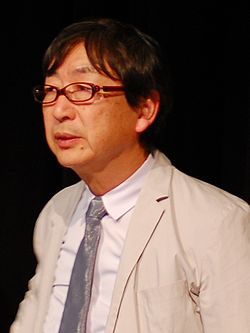
Toyo Ito (伊東 豊雄, Itō Toyō; born 1 June 1941) is a Japanese architect known for creating conceptual architecture, in which he seeks to simultaneously express the physical and virtual worlds. He is a leading exponent of architecture that addresses the contemporary notion of a "simulated" city, and has been called "one of the world's most innovative and influential architects."
In 2013, Ito was awarded the Pritzker Prize, one of architecture's most prestigious prizes. He was a likely front-runner for the Pritzker Prize for the previous 10 years. A recent trend has seen less experienced and well-known winners, for example Chinese architect Wang Shu in 2012, and the award to Toyo Ito is seen as recognition of a lifetime's achievement in architecture.
Ito was born in Keijō, Japanese Korea (today's Seoul, South Korea) to Japanese parents on 1 June 1941. In 1943, he moved to Japan with his mother and two sisters living until middle school age in rural Shimosuwa, Nagano Prefecture. His father was the chairman of a textile subsidiary of Mitsui & Co. His father returned to Japan just before the end of the Second World War to live with his family. Ito has stated that his experience of living by Lake Suwa and the stillness of its waters had a great impact on him as an architect later in life.
Ito attended Hibiya High School in central Tokyo, where he was a member of the baseball team. His first application to the University of Tokyo was unsuccessful and Ito spent a year as a ronin student. He matriculated at the University of Tokyo in 1961, and chose architecture as his field of specialisation in his second year only because his grades for the first year was not good. He originally intended to study either mechanical or electrical engineering. At the time, Kenzo Tange was among the faculty of the university's architecture department, while Arata Isozaki, Sachio Otani, and Kisho Kurokawa were his students. Ito graduated from the University of Tokyo's department of architecture in 1965.
After working for Kiyonori Kikutake Architect and Associates from 1965 to 1969 (alongside Itsuko Hasegawa), in 1971 he started his own studio in Tokyo, named Urbot ("Urban Robot"). In 1979, the studio name was changed to Toyo Ito & Associates.
Throughout his early career Ito constructed numerous private house projects that expressed aspects of urban life in Japan. His most remarkable early conceptual contributions were made through projects of this scale, such as White U (1976) and Silver Hut (1984).
With the Pao for the Tokyo Nomad Girl projects in 1985 and 1989, Ito presented a vision of the life of an urban nomad, illustrative of typical lifestyles during the bubble economy period in Japan.
Tower of Winds (1986) and Egg of Winds (1991) are interactive landmarks in public spaces, resulting from a creative interpretation of contemporary technical possibilities. Whilst their function is in fact exhaust air outlets for the underground system below, their significance lies in Ito's treatment of their opacity, one of the hallmarks of his work. Whilst appearing solid during the day, the perforated aluminium structures "dissolve" at night through the use of computer-controlled light systems which form an interactive display representing measured data such as noise levels in their surrounding vicinity.
Toyo Ito
Toyo Ito (伊東 豊雄, Itō Toyō; born 1 June 1941) is a Japanese architect known for creating conceptual architecture, in which he seeks to simultaneously express the physical and virtual worlds. He is a leading exponent of architecture that addresses the contemporary notion of a "simulated" city, and has been called "one of the world's most innovative and influential architects."
In 2013, Ito was awarded the Pritzker Prize, one of architecture's most prestigious prizes. He was a likely front-runner for the Pritzker Prize for the previous 10 years. A recent trend has seen less experienced and well-known winners, for example Chinese architect Wang Shu in 2012, and the award to Toyo Ito is seen as recognition of a lifetime's achievement in architecture.
Ito was born in Keijō, Japanese Korea (today's Seoul, South Korea) to Japanese parents on 1 June 1941. In 1943, he moved to Japan with his mother and two sisters living until middle school age in rural Shimosuwa, Nagano Prefecture. His father was the chairman of a textile subsidiary of Mitsui & Co. His father returned to Japan just before the end of the Second World War to live with his family. Ito has stated that his experience of living by Lake Suwa and the stillness of its waters had a great impact on him as an architect later in life.
Ito attended Hibiya High School in central Tokyo, where he was a member of the baseball team. His first application to the University of Tokyo was unsuccessful and Ito spent a year as a ronin student. He matriculated at the University of Tokyo in 1961, and chose architecture as his field of specialisation in his second year only because his grades for the first year was not good. He originally intended to study either mechanical or electrical engineering. At the time, Kenzo Tange was among the faculty of the university's architecture department, while Arata Isozaki, Sachio Otani, and Kisho Kurokawa were his students. Ito graduated from the University of Tokyo's department of architecture in 1965.
After working for Kiyonori Kikutake Architect and Associates from 1965 to 1969 (alongside Itsuko Hasegawa), in 1971 he started his own studio in Tokyo, named Urbot ("Urban Robot"). In 1979, the studio name was changed to Toyo Ito & Associates.
Throughout his early career Ito constructed numerous private house projects that expressed aspects of urban life in Japan. His most remarkable early conceptual contributions were made through projects of this scale, such as White U (1976) and Silver Hut (1984).
With the Pao for the Tokyo Nomad Girl projects in 1985 and 1989, Ito presented a vision of the life of an urban nomad, illustrative of typical lifestyles during the bubble economy period in Japan.
Tower of Winds (1986) and Egg of Winds (1991) are interactive landmarks in public spaces, resulting from a creative interpretation of contemporary technical possibilities. Whilst their function is in fact exhaust air outlets for the underground system below, their significance lies in Ito's treatment of their opacity, one of the hallmarks of his work. Whilst appearing solid during the day, the perforated aluminium structures "dissolve" at night through the use of computer-controlled light systems which form an interactive display representing measured data such as noise levels in their surrounding vicinity.
Recent media
Recent media