



Community hub
Recent from talks
Knowledge base stats:
Talk channels stats:
Members stats:
Toyohiko Kagawa
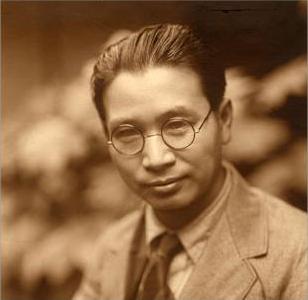
Toyohiko Kagawa (賀川 豊彦, Kagawa Toyohiko; 10 July 1888 – 23 April 1960) was a Japanese Evangelical Christian pacifist, Christian reformer, and labour activist. Kagawa wrote, spoke, and worked at length on ways to employ Christian principles in the ordering of society and in cooperatives. His vocation to help the poor led him to live among them. He advocated for women's suffrage and promoted a peaceful foreign policy.
Kagawa was born in Kobe, Japan to a philandering businessman and a concubine. Both parents died while he was young. He was sent away to school, where he learned from two American missionary teachers, Drs. Harry W. Myers and Charles A. Logan, who took him into their homes.
Kagawa learned English from these missionaries and converted to evangelical Protestant Christianity after taking a Bible class in his youth, which led to his being disowned by his remaining extended family. Kagawa studied at Tokyo Presbyterian College, and later enrolled in Kobe Theological Seminary. While studying there, Kagawa was troubled by the seminarians' concern for technicalities of doctrine. He believed that Christianity in action was the truth behind Christian doctrines. Impatiently, he would point to the parable of the Good Samaritan. From 1914 to 1916 he studied at Princeton Theological Seminary. In addition to theology, through the university's curricular exchange program he also studied embryology, genetics, comparative anatomy, and paleontology while at Princeton.
In 1909 Kagawa moved into a Kobe slum with the intention of acting as a missionary, social worker, and sociologist. In 1914 he went to the United States to study ways of combating the sources of poverty. In 1916 he published Researches in the Psychology of the Poor based on this experience in which he recorded many aspects of slum society that were previously unknown to middle-class Japanese. Among these were the practices of illicit prostitution (i.e., outside of Japan's legal prostitution regime), informal marriages (which often overlapped with the previous category), and the practice of accepting money to care for children and then killing them.
Kagawa was arrested in Japan in 1921 and again in 1922 for his part in labour activism during strikes. While in prison he wrote the novels Crossing the Deathline and Shooting at the Sun. The former was a semi-autobiographical depiction of his time among Kobe's destitute. After his release, Kagawa helped organize relief work in Tokyo following the 1923 Great Kantō earthquake and assisted in bringing about universal adult male suffrage in 1925.
He organized the Japanese Federation of Labour as well as the National Anti-War League in 1928. Throughout this period, he continued to evangelize to Japan's poor, advocate women's suffrage and call for a peaceful foreign policy. Between 1926 and 1934 he focused his evangelical work through the Kingdom of God Movement.
Arthur Miller writes about hearing Kagawa give an evangelical lecture in Hill Auditorium at the University of Michigan in Ann Arbor, in 1935, and describes him as "a merchant of the sublime."
Like most Japanese at the time, Kagawa fervently opposed the Italian invasion of Ethiopia. In May 1936, during a visit to the United States, Kagawa participated in an assembly held in St. Louis where he addressed 100,000 people, mostly black, with a speech against Italian imperialism.
Hub AI
Toyohiko Kagawa AI simulator
(@Toyohiko Kagawa_simulator)
Toyohiko Kagawa
Toyohiko Kagawa (賀川 豊彦, Kagawa Toyohiko; 10 July 1888 – 23 April 1960) was a Japanese Evangelical Christian pacifist, Christian reformer, and labour activist. Kagawa wrote, spoke, and worked at length on ways to employ Christian principles in the ordering of society and in cooperatives. His vocation to help the poor led him to live among them. He advocated for women's suffrage and promoted a peaceful foreign policy.
Kagawa was born in Kobe, Japan to a philandering businessman and a concubine. Both parents died while he was young. He was sent away to school, where he learned from two American missionary teachers, Drs. Harry W. Myers and Charles A. Logan, who took him into their homes.
Kagawa learned English from these missionaries and converted to evangelical Protestant Christianity after taking a Bible class in his youth, which led to his being disowned by his remaining extended family. Kagawa studied at Tokyo Presbyterian College, and later enrolled in Kobe Theological Seminary. While studying there, Kagawa was troubled by the seminarians' concern for technicalities of doctrine. He believed that Christianity in action was the truth behind Christian doctrines. Impatiently, he would point to the parable of the Good Samaritan. From 1914 to 1916 he studied at Princeton Theological Seminary. In addition to theology, through the university's curricular exchange program he also studied embryology, genetics, comparative anatomy, and paleontology while at Princeton.
In 1909 Kagawa moved into a Kobe slum with the intention of acting as a missionary, social worker, and sociologist. In 1914 he went to the United States to study ways of combating the sources of poverty. In 1916 he published Researches in the Psychology of the Poor based on this experience in which he recorded many aspects of slum society that were previously unknown to middle-class Japanese. Among these were the practices of illicit prostitution (i.e., outside of Japan's legal prostitution regime), informal marriages (which often overlapped with the previous category), and the practice of accepting money to care for children and then killing them.
Kagawa was arrested in Japan in 1921 and again in 1922 for his part in labour activism during strikes. While in prison he wrote the novels Crossing the Deathline and Shooting at the Sun. The former was a semi-autobiographical depiction of his time among Kobe's destitute. After his release, Kagawa helped organize relief work in Tokyo following the 1923 Great Kantō earthquake and assisted in bringing about universal adult male suffrage in 1925.
He organized the Japanese Federation of Labour as well as the National Anti-War League in 1928. Throughout this period, he continued to evangelize to Japan's poor, advocate women's suffrage and call for a peaceful foreign policy. Between 1926 and 1934 he focused his evangelical work through the Kingdom of God Movement.
Arthur Miller writes about hearing Kagawa give an evangelical lecture in Hill Auditorium at the University of Michigan in Ann Arbor, in 1935, and describes him as "a merchant of the sublime."
Like most Japanese at the time, Kagawa fervently opposed the Italian invasion of Ethiopia. In May 1936, during a visit to the United States, Kagawa participated in an assembly held in St. Louis where he addressed 100,000 people, mostly black, with a speech against Italian imperialism.