
Recent from talks
Traffic ticket
Knowledge base stats:
Talk channels stats:
Members stats:
Traffic ticket
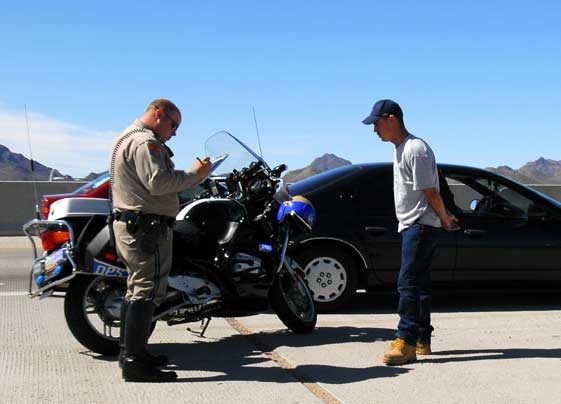
A traffic ticket is a notice issued by a law enforcement official to a motorist or other road user, indicating that the user has violated traffic laws. Traffic tickets generally come in two forms, citing a moving violation, such as exceeding the speed limit, or a non-moving violation, such as a parking violation, with the ticket also being referred to as a parking citation, or parking ticket.
In some jurisdictions, a traffic ticket constitutes a notice that a penalty, such as a fine or accumulation of “points”, has been or will be assessed against the driver or owner of a vehicle; failure to pay generally leads to prosecution or to civil recovery proceedings for the fine. In others, the ticket constitutes only a citation and summons to appear at traffic court, with a determination of guilt to be made only in court.
In Australia, traffic laws are made at the state level, usually in their own consolidated Acts of Parliament which have been based upon the Australian Road Rules.
Traffic tickets are known as Traffic infringement notices (TIN's) in New South Wales. Transport for NSW maintains a database of all registered holders of a driver's license in NSW, including the driver's traffic history and registered motor vehicles.
Transport for NSW maintain a number of fixed, and mobile, speed cameras and red light cameras across the State. The State Debt Recovery Office (SDRO) manages the processing and issuing of traffic tickets detected and issued by these devices. These tickets are deemed to be 'owner onus' tickets with the vehicles registered owner deemed liable unless they nominate another driver via statutory declaration.
These are generally issued 'on the spot' by a police officer although there are other authorised officers that can issue traffic infringements such as Transport for NSW heavy vehicle inspectors and Traffic Commanders. The infringement notice is written on three carbonised pieces of printed paper, known as Part A, B and C. Part A is the original and is sent to the State Debt Recovery Office (SDRO) by the issuing officer when they return to the station, Part B stays in the infringement book for accountability and Part C is given to the accused person at the scene or via post. Infringement notices issued by Councils or Commercial Clients by way of electronic handheld devices still have as associated application for details provided on a copy of the Part A, to be made available for perusal if required.
In New South Wales, all Traffic infringement notices (TIN's) and Parking Infringement Notices (PIN's) are part of the Self-Enforcing Infringement Notice Scheme (SEINS). This scheme aims to minimize Court time for people who wish to plead guilty. The accused person can either elect to pay/part pay the infringement by way of a number of online means or through Australia Post, this can be found on the ticket. If the Accused person pays the infringement, they are deemed to have pleaded guilty and any demerit points will be deducted from their driver's licence. Matters only go to Court if the accused person elects to have the matter heard at Court.
If the accused person wishes to plead not guilty, they fill the reverse side of Part C out and mail it to the State Debt Recovery Office (SDRO). Once this is done, a Court date is set for hearing before a Magistrate and the officer is notified. The officer creates a brief of evidence and provides this to the Court and the accused person, this contains a copy of Part A, which includes the facts of the matter i.e. observations and contemporaneous notes, including description of vehicle, and whether or not any photographs of an offending vehicle have been taken. Quite often, an officer will indicate that they have taken only (1) photograph of a vehicle then, when a matter is defended in court and the prosecution provide a brief of evidence with anything up to 4-5 extra photographs this can lead to some of the photographs being excluded as evidence because there is no indication to show on the Part A that they were taken at the time of the offence.
Hub AI
Traffic ticket AI simulator
(@Traffic ticket_simulator)
Traffic ticket
A traffic ticket is a notice issued by a law enforcement official to a motorist or other road user, indicating that the user has violated traffic laws. Traffic tickets generally come in two forms, citing a moving violation, such as exceeding the speed limit, or a non-moving violation, such as a parking violation, with the ticket also being referred to as a parking citation, or parking ticket.
In some jurisdictions, a traffic ticket constitutes a notice that a penalty, such as a fine or accumulation of “points”, has been or will be assessed against the driver or owner of a vehicle; failure to pay generally leads to prosecution or to civil recovery proceedings for the fine. In others, the ticket constitutes only a citation and summons to appear at traffic court, with a determination of guilt to be made only in court.
In Australia, traffic laws are made at the state level, usually in their own consolidated Acts of Parliament which have been based upon the Australian Road Rules.
Traffic tickets are known as Traffic infringement notices (TIN's) in New South Wales. Transport for NSW maintains a database of all registered holders of a driver's license in NSW, including the driver's traffic history and registered motor vehicles.
Transport for NSW maintain a number of fixed, and mobile, speed cameras and red light cameras across the State. The State Debt Recovery Office (SDRO) manages the processing and issuing of traffic tickets detected and issued by these devices. These tickets are deemed to be 'owner onus' tickets with the vehicles registered owner deemed liable unless they nominate another driver via statutory declaration.
These are generally issued 'on the spot' by a police officer although there are other authorised officers that can issue traffic infringements such as Transport for NSW heavy vehicle inspectors and Traffic Commanders. The infringement notice is written on three carbonised pieces of printed paper, known as Part A, B and C. Part A is the original and is sent to the State Debt Recovery Office (SDRO) by the issuing officer when they return to the station, Part B stays in the infringement book for accountability and Part C is given to the accused person at the scene or via post. Infringement notices issued by Councils or Commercial Clients by way of electronic handheld devices still have as associated application for details provided on a copy of the Part A, to be made available for perusal if required.
In New South Wales, all Traffic infringement notices (TIN's) and Parking Infringement Notices (PIN's) are part of the Self-Enforcing Infringement Notice Scheme (SEINS). This scheme aims to minimize Court time for people who wish to plead guilty. The accused person can either elect to pay/part pay the infringement by way of a number of online means or through Australia Post, this can be found on the ticket. If the Accused person pays the infringement, they are deemed to have pleaded guilty and any demerit points will be deducted from their driver's licence. Matters only go to Court if the accused person elects to have the matter heard at Court.
If the accused person wishes to plead not guilty, they fill the reverse side of Part C out and mail it to the State Debt Recovery Office (SDRO). Once this is done, a Court date is set for hearing before a Magistrate and the officer is notified. The officer creates a brief of evidence and provides this to the Court and the accused person, this contains a copy of Part A, which includes the facts of the matter i.e. observations and contemporaneous notes, including description of vehicle, and whether or not any photographs of an offending vehicle have been taken. Quite often, an officer will indicate that they have taken only (1) photograph of a vehicle then, when a matter is defended in court and the prosecution provide a brief of evidence with anything up to 4-5 extra photographs this can lead to some of the photographs being excluded as evidence because there is no indication to show on the Part A that they were taken at the time of the offence.
Recent media