


Community hub
Recent from talks
Contribute something to knowledge base
Content stats: 0 posts, 0 articles, 1 media, 0 notes
Members stats: 0 subscribers, 0 contributors, 0 moderators, 0 supporters
Subscribers
Supporters
Contributors
Moderators
Hub AI
Cutting fluid AI simulator
(@Cutting fluid_simulator)
Hub AI
Cutting fluid AI simulator
(@Cutting fluid_simulator)
Cutting fluid
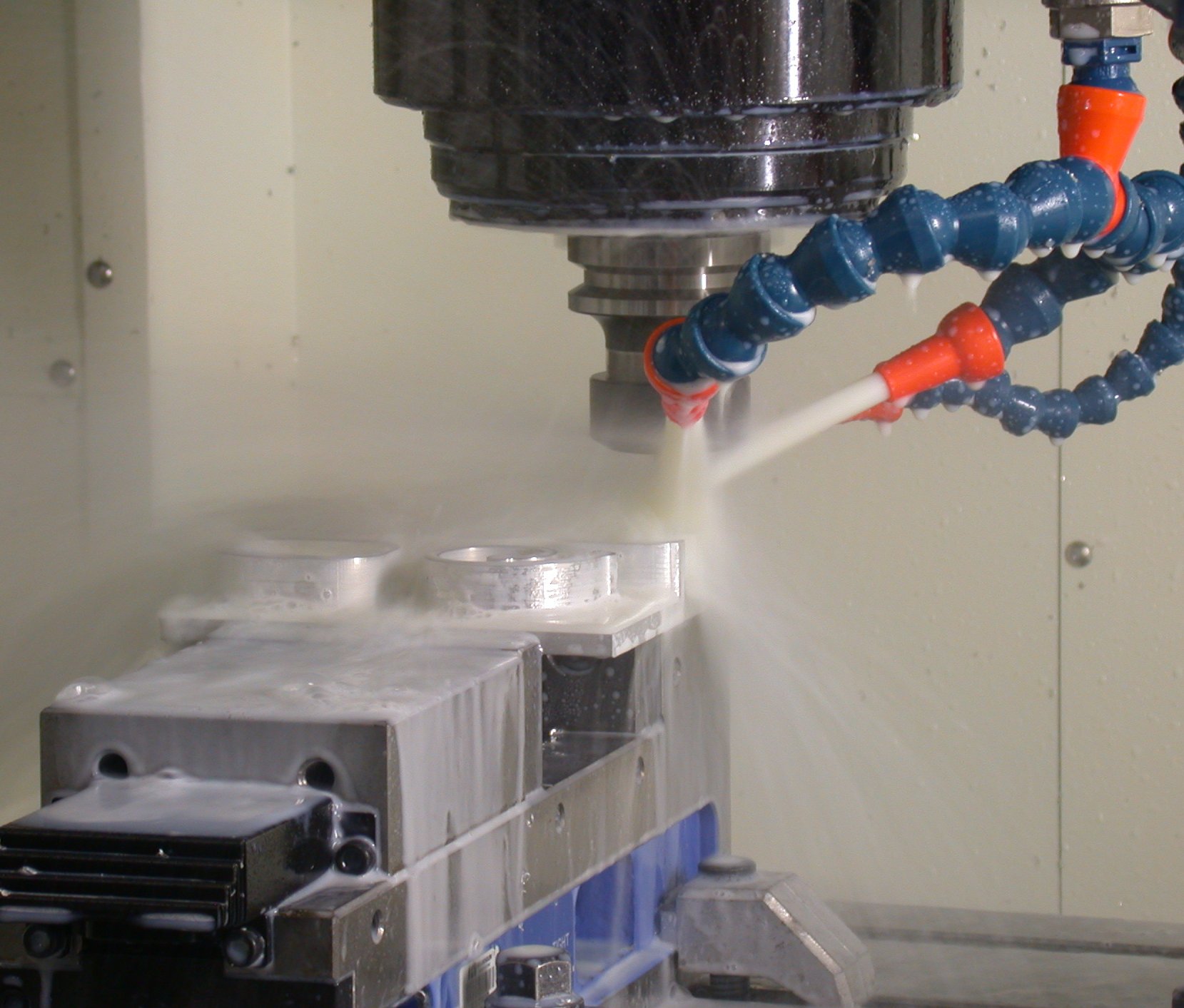
Cutting fluid is a type of coolant and lubricant designed specifically for metalworking processes, such as machining and stamping. There are various kinds of cutting fluids, which include oils, oil-water emulsions, pastes, gels, aerosols (mists), and air or other gases. Cutting fluids are made from petroleum distillates, animal fats, plant oils, water and air, or other raw ingredients. Depending on context and on which type of cutting fluid is being considered, it may be referred to as cutting fluid, cutting oil, cutting compound, coolant, or lubricant.
Most metalworking and machining processes can benefit from the use of cutting fluid, depending on workpiece material. Common exceptions to this are cast iron and brass, which may be machined dry (though this is not true of all brasses, and any machining of brass will likely benefit from the presence of a cutting fluid).[contradictory]
The properties that are sought after in a good cutting fluid are the ability to:
Metal cutting generates heat due to friction and energy lost deforming the material. The surrounding air has low thermal conductivity (conducts heat poorly) meaning it is a poor coolant. Ambient air cooling is sometimes adequate for light cuts and low duty cycles typical of maintenance, repair and operations (MRO) or hobbyist work. Production work requires heavy cutting over long time periods and typically produces more heat than air cooling can remove. Rather than pausing production while the tool cools, using liquid coolant removes significantly more heat more rapidly, and can also speed cutting and reduce friction and tool wear.
However, it is not just the tool which heats up but also the work surface. Excessive temperature in the tool or work surface can ruin the temper of both, soften either to the point of uselessness or failure, burn adjacent material, create unwanted thermal expansion or lead to unwanted chemical reactions such as oxidation.
Regulating the heat created during machining processes is necessary to extend tool life, prevent the alteration of the workpieces heat treatment, and prevent warping of the piece. The use of cutting fluids allows machinists to cut faster than they would be capable of if relying on surrounding air to cool the workpiece.
Besides cooling, cutting fluids also aid the cutting process by lubricating the interface between the tool's cutting edge and the chip. By preventing friction at this interface, some of the heat generation is prevented. This lubrication also helps prevent the chips from being welded onto the tool, which would interfere with subsequent cutting.
The Rehbinder effect is the reduction in strength of a material when a surfactant, available in cutting fluids, is applied. Cutting fluid coats the cutting surface and reduces its surface energy, effectively weakening the material. This decreases the force required to make cuts, the wear on tools, and the time required for machining processes. The Rehbinder effect is complicated, relying on the chemical properties and structures of both the cutting fluid and working material, and is therefore difficult for machinists to factor into the planning of machining processes. Experienced machinists may utilize "rules of thumb" or trial and error methods if they consider the effect at all.
Cutting fluid
Cutting fluid is a type of coolant and lubricant designed specifically for metalworking processes, such as machining and stamping. There are various kinds of cutting fluids, which include oils, oil-water emulsions, pastes, gels, aerosols (mists), and air or other gases. Cutting fluids are made from petroleum distillates, animal fats, plant oils, water and air, or other raw ingredients. Depending on context and on which type of cutting fluid is being considered, it may be referred to as cutting fluid, cutting oil, cutting compound, coolant, or lubricant.
Most metalworking and machining processes can benefit from the use of cutting fluid, depending on workpiece material. Common exceptions to this are cast iron and brass, which may be machined dry (though this is not true of all brasses, and any machining of brass will likely benefit from the presence of a cutting fluid).[contradictory]
The properties that are sought after in a good cutting fluid are the ability to:
Metal cutting generates heat due to friction and energy lost deforming the material. The surrounding air has low thermal conductivity (conducts heat poorly) meaning it is a poor coolant. Ambient air cooling is sometimes adequate for light cuts and low duty cycles typical of maintenance, repair and operations (MRO) or hobbyist work. Production work requires heavy cutting over long time periods and typically produces more heat than air cooling can remove. Rather than pausing production while the tool cools, using liquid coolant removes significantly more heat more rapidly, and can also speed cutting and reduce friction and tool wear.
However, it is not just the tool which heats up but also the work surface. Excessive temperature in the tool or work surface can ruin the temper of both, soften either to the point of uselessness or failure, burn adjacent material, create unwanted thermal expansion or lead to unwanted chemical reactions such as oxidation.
Regulating the heat created during machining processes is necessary to extend tool life, prevent the alteration of the workpieces heat treatment, and prevent warping of the piece. The use of cutting fluids allows machinists to cut faster than they would be capable of if relying on surrounding air to cool the workpiece.
Besides cooling, cutting fluids also aid the cutting process by lubricating the interface between the tool's cutting edge and the chip. By preventing friction at this interface, some of the heat generation is prevented. This lubrication also helps prevent the chips from being welded onto the tool, which would interfere with subsequent cutting.
The Rehbinder effect is the reduction in strength of a material when a surfactant, available in cutting fluids, is applied. Cutting fluid coats the cutting surface and reduces its surface energy, effectively weakening the material. This decreases the force required to make cuts, the wear on tools, and the time required for machining processes. The Rehbinder effect is complicated, relying on the chemical properties and structures of both the cutting fluid and working material, and is therefore difficult for machinists to factor into the planning of machining processes. Experienced machinists may utilize "rules of thumb" or trial and error methods if they consider the effect at all.
Recent media
Recent media