
Recent from talks
Treaty of Paris (1763)
Knowledge base stats:
Talk channels stats:
Members stats:
Treaty of Paris (1763)
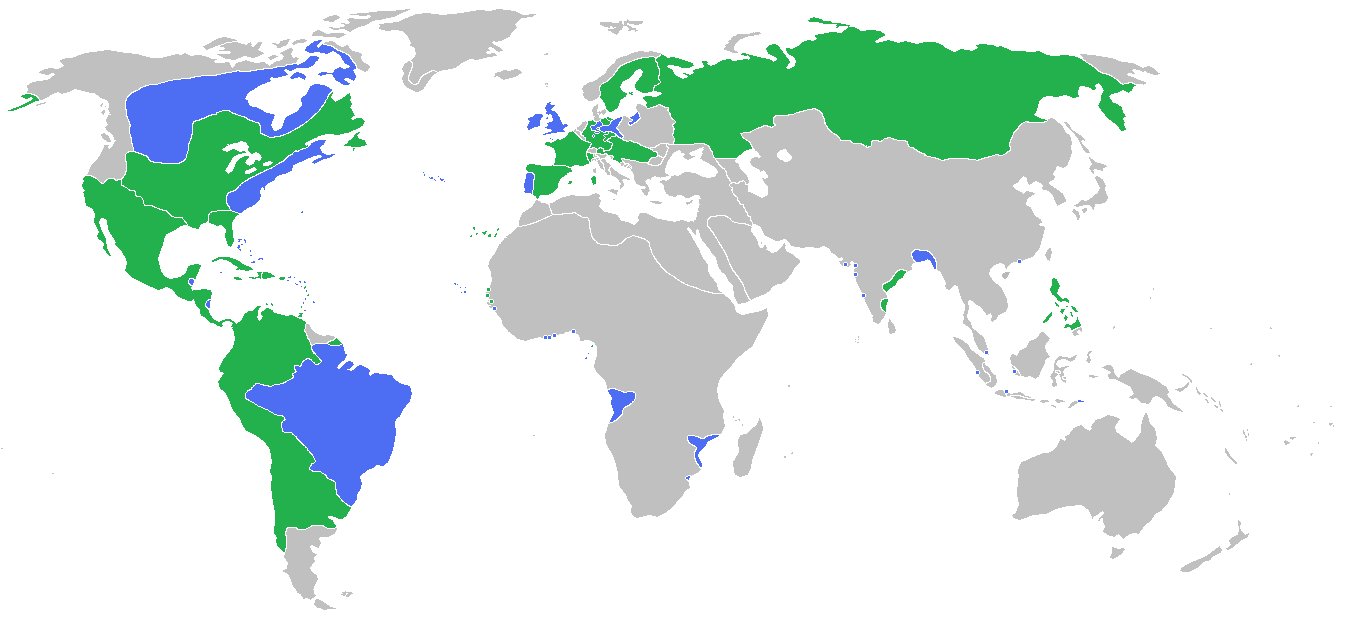
The Treaty of Paris, also known as the Treaty of 1763, was signed on 10 February 1763 by the kingdoms of Great Britain, France and Spain, with Portugal in agreement, following Great Britain and Prussia's victory over France and Spain during the Seven Years' War.
The signing of the treaty formally ended the conflict between France and Great Britain over control of North America (the Seven Years' War, known as the French and Indian War in the United States), and marked the beginning of an era of British dominance outside Europe. Great Britain and France each returned much of the territory that they had captured during the war, but Great Britain gained much of France's possessions in North America. Additionally, Great Britain agreed to protect Roman Catholicism in the New World. The treaty did not involve Prussia and Austria, as they signed a separate agreement, the Treaty of Hubertusburg, five days later.
During the war, Great Britain had conquered the French colonies of Canada, Guadeloupe, Saint Lucia, Martinique, Dominica, Grenada, Saint Vincent and the Grenadines, and Tobago, the French factories (trading posts) in India including Chandernagore and Pondicherry, the slave-trading station at Gorée, the Sénégal River and its settlements, and the Spanish colonies of Manila (in the Philippines) and Havana (in Cuba). France had captured Minorca and British trading posts in Sumatra, while Spain had captured the border fortress of Almeida in Portugal, and Colonia del Sacramento in South America.[citation needed]
The treaty restored most of the territories to their original owners, but Britain was allowed to keep considerable gains. France and Spain restored all their conquests to Britain and Portugal. Britain restored Manila and Havana to Spain, and Guadeloupe, Martinique, Saint Lucia, Gorée, and the Indian factories to France. In return, France recognized the sovereignty of Britain over Canada, Dominica, Grenada, Saint Vincent and the Grenadines, and Tobago.
France also ceded the eastern half of French Louisiana to Britain; that is, the area from the Mississippi River to the Appalachian Mountains. France had already secretly given Louisiana to Spain three months earlier in the Treaty of Fontainebleau, but Spain did not take possession until 1769. Spain ceded Florida to Britain. In addition, France regained its factories in India but recognized British clients as the rulers of key Indian native states and pledged not to send troops to Bengal. Britain agreed to demolish its fortifications in British Honduras (now Belize) but retained a logwood-cutting colony there. Britain confirmed the right of its new subjects to practise Catholicism.
France lost all its territory in mainland North America except for the territory of Louisiana west of the Mississippi River. France retained fishing rights off Newfoundland and the two small islands of Saint Pierre and Miquelon, where its fishermen could dry their catch. In turn, France gained the return of its sugar colony, Guadeloupe, which it considered more valuable than Canada. Voltaire had notoriously dismissed Acadia as quelques arpents de neige (a few acres of snow).
The Treaty of Paris is notable because it furthered the transfer of Louisiana from France to Spain. However, the agreement to transfer had occurred with the Treaty of Fontainebleau, but it was not publicly announced until 1764. The Treaty of Paris gave Britain the east side of the Mississippi (including Baton Rouge, Louisiana, which was to be part of the British territory of West Florida). On the east side, New Orleans remained in French hands (albeit temporarily). The Mississippi River corridor in what is now Louisiana was later reunited following the Louisiana Purchase in 1803 and the Adams–Onís Treaty in 1819.
The 1763 treaty states in Article VII:
Hub AI
Treaty of Paris (1763) AI simulator
(@Treaty of Paris (1763)_simulator)
Treaty of Paris (1763)
The Treaty of Paris, also known as the Treaty of 1763, was signed on 10 February 1763 by the kingdoms of Great Britain, France and Spain, with Portugal in agreement, following Great Britain and Prussia's victory over France and Spain during the Seven Years' War.
The signing of the treaty formally ended the conflict between France and Great Britain over control of North America (the Seven Years' War, known as the French and Indian War in the United States), and marked the beginning of an era of British dominance outside Europe. Great Britain and France each returned much of the territory that they had captured during the war, but Great Britain gained much of France's possessions in North America. Additionally, Great Britain agreed to protect Roman Catholicism in the New World. The treaty did not involve Prussia and Austria, as they signed a separate agreement, the Treaty of Hubertusburg, five days later.
During the war, Great Britain had conquered the French colonies of Canada, Guadeloupe, Saint Lucia, Martinique, Dominica, Grenada, Saint Vincent and the Grenadines, and Tobago, the French factories (trading posts) in India including Chandernagore and Pondicherry, the slave-trading station at Gorée, the Sénégal River and its settlements, and the Spanish colonies of Manila (in the Philippines) and Havana (in Cuba). France had captured Minorca and British trading posts in Sumatra, while Spain had captured the border fortress of Almeida in Portugal, and Colonia del Sacramento in South America.[citation needed]
The treaty restored most of the territories to their original owners, but Britain was allowed to keep considerable gains. France and Spain restored all their conquests to Britain and Portugal. Britain restored Manila and Havana to Spain, and Guadeloupe, Martinique, Saint Lucia, Gorée, and the Indian factories to France. In return, France recognized the sovereignty of Britain over Canada, Dominica, Grenada, Saint Vincent and the Grenadines, and Tobago.
France also ceded the eastern half of French Louisiana to Britain; that is, the area from the Mississippi River to the Appalachian Mountains. France had already secretly given Louisiana to Spain three months earlier in the Treaty of Fontainebleau, but Spain did not take possession until 1769. Spain ceded Florida to Britain. In addition, France regained its factories in India but recognized British clients as the rulers of key Indian native states and pledged not to send troops to Bengal. Britain agreed to demolish its fortifications in British Honduras (now Belize) but retained a logwood-cutting colony there. Britain confirmed the right of its new subjects to practise Catholicism.
France lost all its territory in mainland North America except for the territory of Louisiana west of the Mississippi River. France retained fishing rights off Newfoundland and the two small islands of Saint Pierre and Miquelon, where its fishermen could dry their catch. In turn, France gained the return of its sugar colony, Guadeloupe, which it considered more valuable than Canada. Voltaire had notoriously dismissed Acadia as quelques arpents de neige (a few acres of snow).
The Treaty of Paris is notable because it furthered the transfer of Louisiana from France to Spain. However, the agreement to transfer had occurred with the Treaty of Fontainebleau, but it was not publicly announced until 1764. The Treaty of Paris gave Britain the east side of the Mississippi (including Baton Rouge, Louisiana, which was to be part of the British territory of West Florida). On the east side, New Orleans remained in French hands (albeit temporarily). The Mississippi River corridor in what is now Louisiana was later reunited following the Louisiana Purchase in 1803 and the Adams–Onís Treaty in 1819.
The 1763 treaty states in Article VII:
Recent media