
Recent from talks
Trials of the Knights Templar
Knowledge base stats:
Talk channels stats:
Members stats:
Trials of the Knights Templar
The downfall of the Knights Templar was initiated by King Philip IV of France. Philip, who was heavily in debt due to his lavish policies and military endeavours, saw the Templars as a way of alleviating his financial hardship and at the same time eliminating a powerful rival. In addition, the Templars were difficult to control by secular authorities due to their international networks and their special rights, which placed them directly under the Church, which Philip perceived as a threat. At the same time, Philip had been embroiled in a bitter conflict with Pope Boniface VIII over the question of the division of power between the Church and the Crown. After Boniface's death and the election of the French Pope Clement V, Philip saw his opportunity to further extend his control over ecclesiastical affairs.
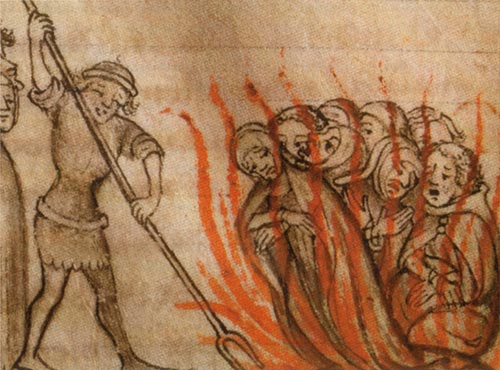
On Friday 13 October 1307, Philip had numerous Templars arrested in France, including the Grand Master Jacques de Molay. The arrests came as a surprise and took place simultaneously, which was made possible by careful planning. The Templars were accused of serious offences, including heresy, blasphemy, idolatry, homosexual practices and financial corruption. These accusations were most likely contrived to mobilise public opinion against the order and secure ecclesiastical approval for its actions.
Pope Clement V was initially reluctant to take action against the Templars, as they were directly subordinate to the Church and had been loyal for centuries. However, under the strong influence of Philip IV and his threats, Clement felt compelled to act. In November 1307, he issued the papal bull Pastoralis praeeminentiae, which ordered the arrest of the Templars throughout Europe. In the following years, ecclesiastical and royal investigations took place in various countries to examine the accusations against the order. While some countries, such as England and Portugal, treated the Templars less harshly, the procedure in France was particularly rigorous, as Philip had control over the trials there.
In 1312, the Order of the Knights Templar was finally officially dissolved by the papal bull Vox in excelso. This decision was made during the Council of Vienne, where the accusations against the Templars were discussed. Although many of the accusations could not be clearly proven, Clement decided in favour of Philip and dissolved the order for political reasons in order to end the conflict with the French king. The Templars' enormous fortune was officially transferred to the Order of St. John, but much of it ended up in the hands of secular rulers, particularly in France.
The Poor Fellow-Soldiers of Jesus Christ, commonly known as the Knights Templar, originally began c. 1120, when a group of eight Christian Knights approached Warmund, Patriarch of Jerusalem and requested permission to defend the Kingdom of Jerusalem. Baldwin II of Jerusalem gave them quarters in the Temple of Solomon. Hugues de Payens was elected their master and the Patriarch Warmund charged them with the duty of keeping the roads safe from thieves and others who were routinely robbing and killing pilgrims en route to Jerusalem, which they did for nine years until the Council of Troyes in 1129, when they became a military order sanctioned by the Church encouraged substantially by the patronage of Bernard of Clairvaux, a leading churchman of the time. The Rule of the Order was based on that of the Cistercian Order, that of obedience, poverty and chastity. Their role was eventually expanded to fight in the Crusades. The Crusades wound down, and crusaders were eventually expelled from the area.
Throughout these years, the Templar order became wealthy and powerful. They received massive donations of money, manors, churches, even villages and the revenues thereof, from kings and European nobles interested in helping with the fight for the Holy Land. The Templars, by order of the Pope, were exempt from all taxes, tolls and tithes, their houses and churches were given the right to asylum and were exempt from feudal obligations. They were answerable only to the Pope.
While the Templars had started off well and were at times considered the model of Christian knighthood, it was not long before resentment of their privileges, of their being "rich as kings", and criticism of some of their actions in war began to surface. For example, at the siege of Damascus in 1148, the Templars and Hospitallers were accused of accepting bribes to convince King Conrad III of Germany to abandon the effort. There was other criticism of their actions as well. Following the disastrous battle at the Horns of Hattin and the subsequent fall of Jerusalem, which some blamed on the Templars, they were left with almost no discernible military purpose in the Holy Land. Other critics also questioned their morals. The chronicler William of Tyre was often critical of the order and in one instance accused them of ransoming Nasr-al-Din, the sultan's son, for 6,000 gold florins. When Grand Master Odo de St Amand died in 1179, William called him "a wicked man, haughty and arrogant, in whose nostrils dwelt the spirit of a fury, one who neither feared God nor revered man" and that he was "mourned by no one". When the Templars took up banking and lending, the criticism only increased. Both Walter Map and John of Salisbury accused the Templars of avarice. Matthew Paris sometimes praised them while at other times was severely critical of the Templars. The loss of the last foothold in Syria, Tortosa in 1302, was yet another failure that left them vulnerable to their critics. As the obvious surprise and shock of their arrests in 1307 indicate, nobody thought the Order was flawed to the point it needed disbanding.
During this time period the power of the papacy had declined and most of the popes of the twelfth and thirteenth centuries found themselves either fleeing Rome or not allowed to enter at all. Also at this time antipopes backed by the German Emperors were common fixtures in the Emperors' bitter struggle with the Church. One of the last thirteenth century popes was Peter Morrone, an old man selected to be pope as a compromise, who as Pope Celestine V proved too old and too ineffective to rule the Church and upon realizing this himself, he abdicated. This caused a tremendous protest throughout the western Church and had a divisive effect on the next pope, Boniface VIII.[citation needed]
Hub AI
Trials of the Knights Templar AI simulator
(@Trials of the Knights Templar_simulator)
Trials of the Knights Templar
The downfall of the Knights Templar was initiated by King Philip IV of France. Philip, who was heavily in debt due to his lavish policies and military endeavours, saw the Templars as a way of alleviating his financial hardship and at the same time eliminating a powerful rival. In addition, the Templars were difficult to control by secular authorities due to their international networks and their special rights, which placed them directly under the Church, which Philip perceived as a threat. At the same time, Philip had been embroiled in a bitter conflict with Pope Boniface VIII over the question of the division of power between the Church and the Crown. After Boniface's death and the election of the French Pope Clement V, Philip saw his opportunity to further extend his control over ecclesiastical affairs.
On Friday 13 October 1307, Philip had numerous Templars arrested in France, including the Grand Master Jacques de Molay. The arrests came as a surprise and took place simultaneously, which was made possible by careful planning. The Templars were accused of serious offences, including heresy, blasphemy, idolatry, homosexual practices and financial corruption. These accusations were most likely contrived to mobilise public opinion against the order and secure ecclesiastical approval for its actions.
Pope Clement V was initially reluctant to take action against the Templars, as they were directly subordinate to the Church and had been loyal for centuries. However, under the strong influence of Philip IV and his threats, Clement felt compelled to act. In November 1307, he issued the papal bull Pastoralis praeeminentiae, which ordered the arrest of the Templars throughout Europe. In the following years, ecclesiastical and royal investigations took place in various countries to examine the accusations against the order. While some countries, such as England and Portugal, treated the Templars less harshly, the procedure in France was particularly rigorous, as Philip had control over the trials there.
In 1312, the Order of the Knights Templar was finally officially dissolved by the papal bull Vox in excelso. This decision was made during the Council of Vienne, where the accusations against the Templars were discussed. Although many of the accusations could not be clearly proven, Clement decided in favour of Philip and dissolved the order for political reasons in order to end the conflict with the French king. The Templars' enormous fortune was officially transferred to the Order of St. John, but much of it ended up in the hands of secular rulers, particularly in France.
The Poor Fellow-Soldiers of Jesus Christ, commonly known as the Knights Templar, originally began c. 1120, when a group of eight Christian Knights approached Warmund, Patriarch of Jerusalem and requested permission to defend the Kingdom of Jerusalem. Baldwin II of Jerusalem gave them quarters in the Temple of Solomon. Hugues de Payens was elected their master and the Patriarch Warmund charged them with the duty of keeping the roads safe from thieves and others who were routinely robbing and killing pilgrims en route to Jerusalem, which they did for nine years until the Council of Troyes in 1129, when they became a military order sanctioned by the Church encouraged substantially by the patronage of Bernard of Clairvaux, a leading churchman of the time. The Rule of the Order was based on that of the Cistercian Order, that of obedience, poverty and chastity. Their role was eventually expanded to fight in the Crusades. The Crusades wound down, and crusaders were eventually expelled from the area.
Throughout these years, the Templar order became wealthy and powerful. They received massive donations of money, manors, churches, even villages and the revenues thereof, from kings and European nobles interested in helping with the fight for the Holy Land. The Templars, by order of the Pope, were exempt from all taxes, tolls and tithes, their houses and churches were given the right to asylum and were exempt from feudal obligations. They were answerable only to the Pope.
While the Templars had started off well and were at times considered the model of Christian knighthood, it was not long before resentment of their privileges, of their being "rich as kings", and criticism of some of their actions in war began to surface. For example, at the siege of Damascus in 1148, the Templars and Hospitallers were accused of accepting bribes to convince King Conrad III of Germany to abandon the effort. There was other criticism of their actions as well. Following the disastrous battle at the Horns of Hattin and the subsequent fall of Jerusalem, which some blamed on the Templars, they were left with almost no discernible military purpose in the Holy Land. Other critics also questioned their morals. The chronicler William of Tyre was often critical of the order and in one instance accused them of ransoming Nasr-al-Din, the sultan's son, for 6,000 gold florins. When Grand Master Odo de St Amand died in 1179, William called him "a wicked man, haughty and arrogant, in whose nostrils dwelt the spirit of a fury, one who neither feared God nor revered man" and that he was "mourned by no one". When the Templars took up banking and lending, the criticism only increased. Both Walter Map and John of Salisbury accused the Templars of avarice. Matthew Paris sometimes praised them while at other times was severely critical of the Templars. The loss of the last foothold in Syria, Tortosa in 1302, was yet another failure that left them vulnerable to their critics. As the obvious surprise and shock of their arrests in 1307 indicate, nobody thought the Order was flawed to the point it needed disbanding.
During this time period the power of the papacy had declined and most of the popes of the twelfth and thirteenth centuries found themselves either fleeing Rome or not allowed to enter at all. Also at this time antipopes backed by the German Emperors were common fixtures in the Emperors' bitter struggle with the Church. One of the last thirteenth century popes was Peter Morrone, an old man selected to be pope as a compromise, who as Pope Celestine V proved too old and too ineffective to rule the Church and upon realizing this himself, he abdicated. This caused a tremendous protest throughout the western Church and had a divisive effect on the next pope, Boniface VIII.[citation needed]
Recent media